How Solar Panels Actually Generate Electricity
You've probably seen solar panels on rooftops and wondered how they actually turn sunlight into electricity. The process behind how solar panels generate electricity is simpler than you might think, but it relies on some clever physics at the atomic level.
Manufacturer specifications indicate that a standard residential solar cell converts about 20 percent of the sunlight hitting it into usable electricity, a number that has climbed steadily over the past decade. Understanding this conversion helps you make smarter choices if you're considering solar for your own home. Let's walk through exactly what happens from the moment sunlight hits a panel to when you flip on a light switch.

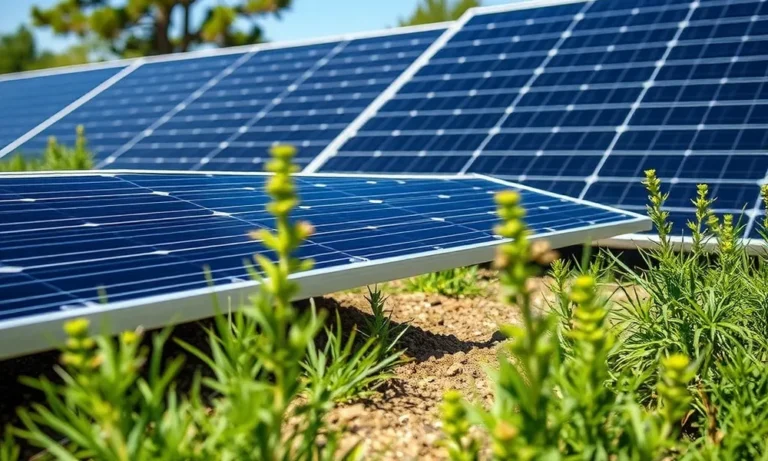
Image source: Wikimedia Commons / Calderoliver (CC BY-SA)
Quick Answer
Solar panels use the photovoltaic effect. Silicon cells absorb photons from sunlight. This energy frees electrons and creates direct current.
An inverter converts that to alternating current. Your home uses AC power.
Why the Physics Behind Solar Panels Actually Matters
You don't need to be an engineer to go solar. But a basic grasp of the science helps you avoid costly mistakes. When you understand how electricity is generated, you can spot when a sales pitch doesn't add up.
You can also size your system correctly and choose components that match your actual needs.
For example, many homeowners assume more sunlight means more power, and that's true up to a point. But temperature plays a bigger role than most people realize. Solar cells actually lose efficiency as they heat up.
A panel rated at 400 watts might produce only 380 watts on a scorching summer afternoon. That fact alone can change how you evaluate panel brands and installation placement.
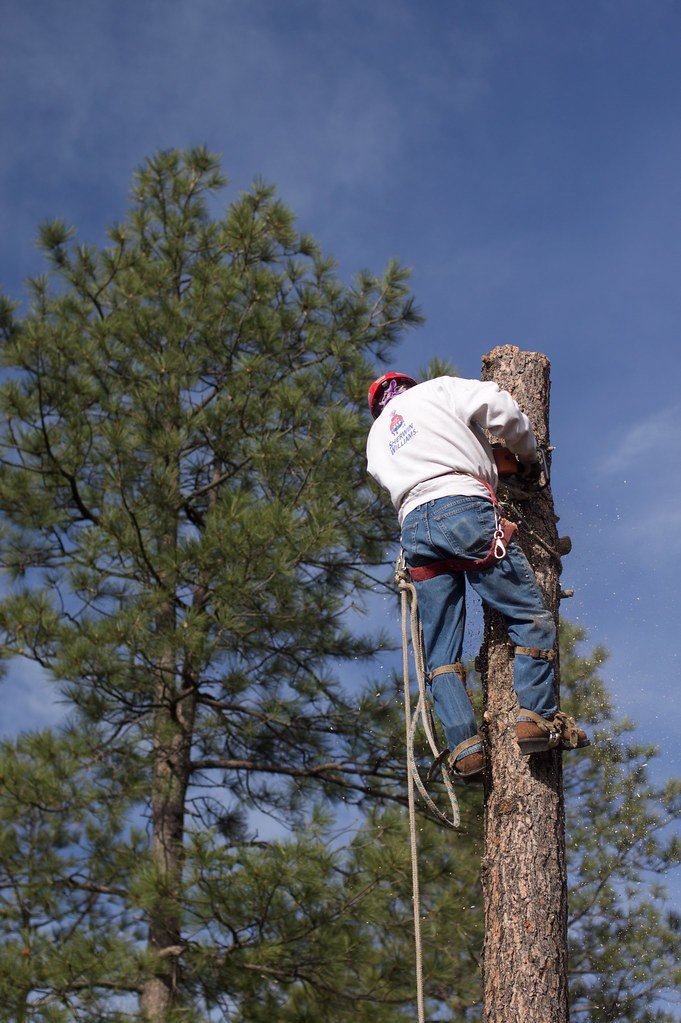
The physics also explains why shading on even one corner of a panel can tank your whole system's output. Knowing that helps you avoid putting panels where a chimney or tree casts a shadow. In our research, we've seen installations lose 30 percent of their annual production because of a single branch.
That's real money left on the table.
The Core Process — What Happens Inside a Solar Cell
This is where the magic happens. A solar cell is basically a sandwich of two layers of silicon, each treated with different impurities. One layer has a slight positive charge, the other a slight negative charge.
Where they meet is called the p-n junction, and that's ground zero for electricity generation.
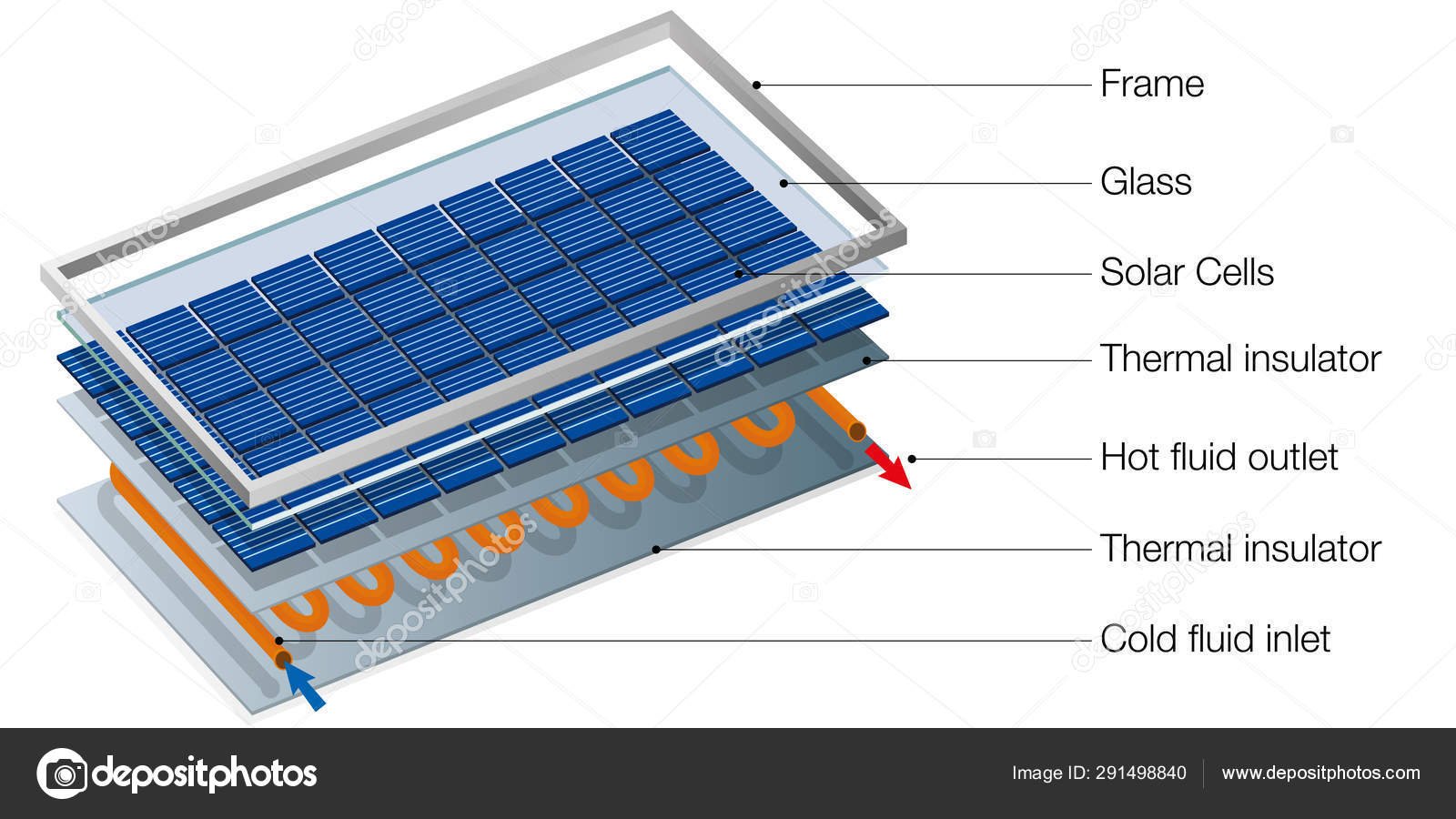
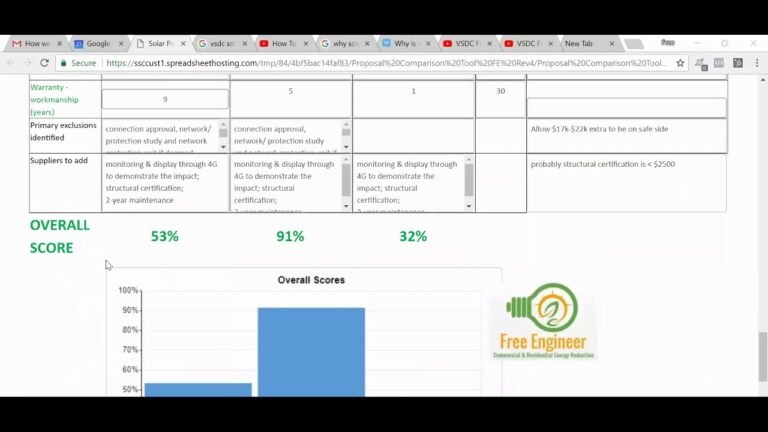
Image source: Bing (Web (fair-use with source credit))
The Photovoltaic Effect and the p-n Junction
When sunlight hits the cell, photons carry energy into the silicon. If a photon has enough energy, it knocks an electron loose from its atom. That electron now wants to move.
The p-n junction creates an electric field that pushes that free electron in one direction, toward the front of the cell. This movement of electrons is what we call direct current.
The National Renewable Energy Laboratory has documented that even under cloudy skies, diffuse light still triggers this effect. You just get fewer free electrons, so less current.
From Photons to Electrons: The Flow of DC Power
Each cell only produces about half a volt. That's why you need many cells wired together in a panel, typically 60 or 72 cells. Connected in series, they add up to a useful voltage, usually between 30 and 45 volts per panel for residential models.
The current flows out through metal contacts on the front and back of the cell, then through the panel's junction box. From there, it travels down the wires as raw DC electricity. Your home doesn't run on DC, so the next step is conversion.
But first, let's talk about what makes one panel deliver more power than another.
Per standards from the U.S. Department of Energy, the quality of the silicon and the purity of the junction directly affect how many photons become electrons. That's why premium panels cost more, they use higher-grade silicon and tighter manufacturing tolerances.
What Makes One Panel Different from Another
Not all solar panels are created equal. The biggest difference is the type of silicon used in the cells. This affects efficiency, appearance, and price.
As of 2026, the market is dominated by three main types: monocrystalline, polycrystalline, and PERC (passivated emitter and rear contact).
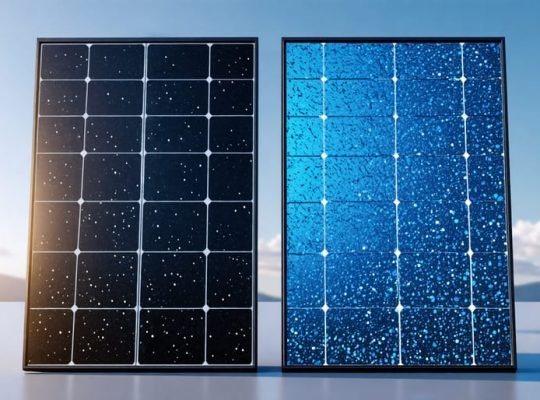
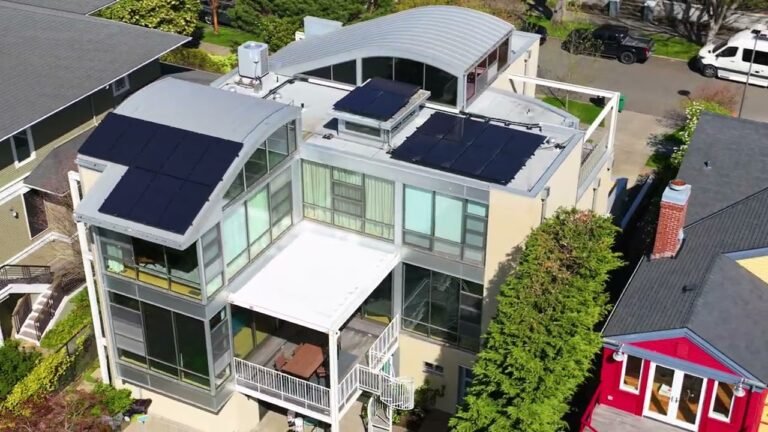
Image source: Bing (Web (fair-use with source credit))
Silicon Types: Monocrystalline, Polycrystalline, PERC
Monocrystalline panels use a single, pure crystal of silicon. They're the most efficient, typically 20 to 23 percent. They also have a uniform black look that many homeowners prefer.
Polycrystalline panels use multiple silicon crystals melted together. They're slightly less efficient, usually 15 to 18 percent, and have a blue, speckled appearance. They cost less per watt.
PERC is an upgrade to monocrystalline. A reflective layer on the back of the cell catches light that passes through, giving it a second chance to generate electricity. That bumps efficiency by 1 to 2 percent.
Most premium panels on the market today use PERC technology.
Key Specs That Affect Real-World Output
Efficiency isn't the only number that matters. Temperature coefficient tells you how much power drops when the panel gets hot. A lower coefficient, closer to zero, means better performance in warm climates.
Also look at degradation rate. Standard panels lose about 0.5 percent of their output per year. Premium panels can hold that to 0.25 percent, meaning after 25 years you'll still have over 90 percent of original power.
Warranty length is another signal. A 25-year performance warranty is standard. If a manufacturer offers less than that, be cautious.
When you shop around, a solid buying guide can help you compare these specs side by side without getting lost in sales jargon.
Where the Electricity Goes After the Panels
Your panels produce DC electricity, but your home and the grid use AC. That's where the inverter comes in. Think of it as the translator between your panels and your appliances.
Without it, you'd have a DC-only house, which means no standard lights, outlets, or appliances.
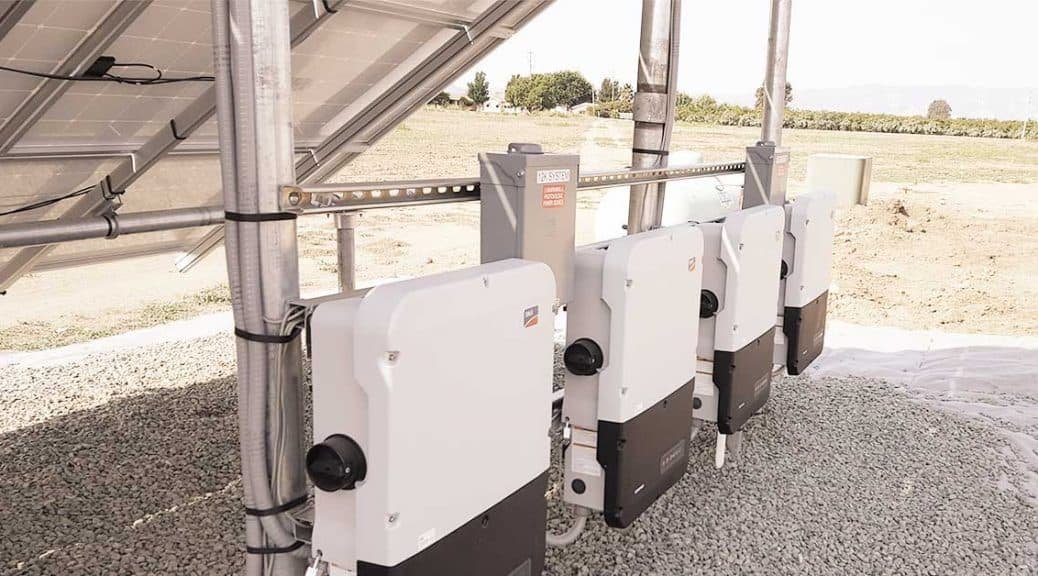
Image source: Bing (Web (fair-use with source credit))
Inverters, Microinverters, and Power Optimizers
There are three main ways to handle the DC-to-AC conversion. A string inverter is one large box that handles all your panels at once. It's the most affordable option, but it has a catch: if one panel in the string is shaded, the whole string's output drops.
That's because the panels are wired in series, like old Christmas lights.
Microinverters sit on each panel individually. That means each panel works independently. Shade on one panel doesn't affect the others.
They cost more upfront but can increase overall production if your roof has partial shade. Power optimizers are a middle ground. They attach to each panel like microinverters but still send DC power to a central inverter.
They give you panel-level monitoring and partial shading tolerance at a lower cost than full microinverters.
Grid-Tied vs. Off-Grid vs. Hybrid Systems
The inverter choice also depends on your system type. Grid-tied systems connect to the utility grid. They use a standard string or microinverter and don't include batteries.
Net metering lets you sell excess power back to the utility. Off-grid systems need a battery bank and a charge controller. They also require a special inverter that can handle battery charging and isolation from the grid.
Hybrid systems combine both. They stay connected to the grid but include battery storage. A hybrid inverter manages solar, batteries, and the grid connection in one unit.
This gives you backup power during outages while still allowing net metering. For most homeowners, a grid-tied system with a string inverter is the most cost-effective choice. But if you live in an area with frequent outages, a hybrid setup might be worth the extra cost.
When you're deciding which configuration fits your situation, it helps to review the basics of the whole system. Understanding how solar panels generate electricity makes these trade-offs clear. You'll know exactly what each upgrade does for you, and what it doesn't.
The Real Factors That Limit Your Production
Even a perfect installation faces limits. Understanding them helps you set realistic expectations and avoid disappointment. The biggest thieves of solar production are shade, heat, and angle.
Shade is the worst offender. A single shaded cell can drop the output of an entire string of panels by 50 percent or more. That's because cells in series act like a chain.
One weak link limits the whole chain. Even a small shadow from a vent pipe or a satellite dish can cause a disproportionate loss.
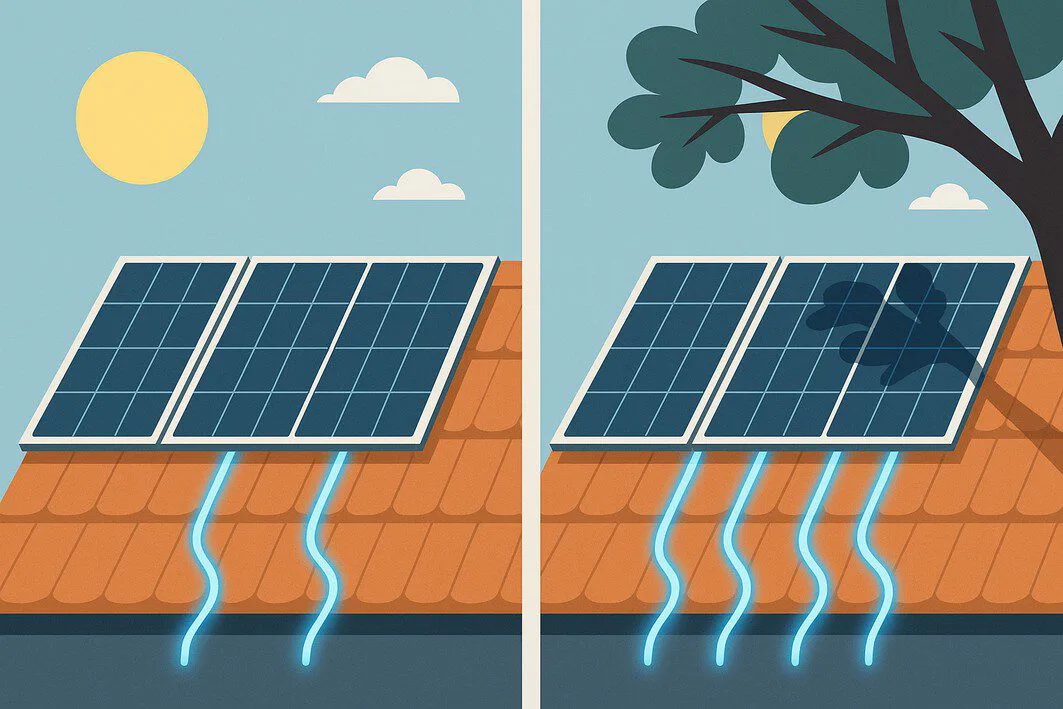
Image source: Bing (Web (fair-use with source credit))
Shading, Temperature, and Angle Problems
Temperature matters more than most people think. Solar cells work best at around 25 degrees Celsius (77 degrees Fahrenheit). For every degree above that, output drops by roughly 0.3 to 0.5 percent.
On a 95-degree day, a panel can lose 10 percent of its rated power. That's why panels need airflow underneath. A gap of 4 to 6 inches between the panel and the roof lets heat dissipate.
Angle and orientation also affect production. In the northern hemisphere, south-facing panels at a tilt equal to your latitude produce the most annual energy. West-facing panels produce less total power but more in the late afternoon, which can be valuable under time-of-use rates.
East-facing panels give you morning production. North-facing is rarely worth it.
Common Installation Mistakes That Kill Efficiency
The most common mistake is ignoring partial shading. Installers sometimes place panels where a chimney or tree casts a shadow for part of the day. Microinverters or power optimizers can help, but they don't fix a bad layout entirely.
Another mistake is poor wiring. Loose connections create resistance, which generates heat and wastes power. A voltage drop across a long wire run can also cost you.
Use the right gauge wire for the distance. Manufacturer spec sheets usually include a voltage drop calculator.
Panel mismatch is another hidden issue. Mixing panels of different wattages or brands on the same string forces all panels to the level of the weakest one. Stick with identical panels in each string.
How to Tell If Your Setup Is Performing Well
Once your system is running, you need a way to track it. Monitoring tells you if everything is working as expected or if something is wrong. Most modern inverters include a monitoring app.
They show real-time production, daily totals, and lifetime energy.
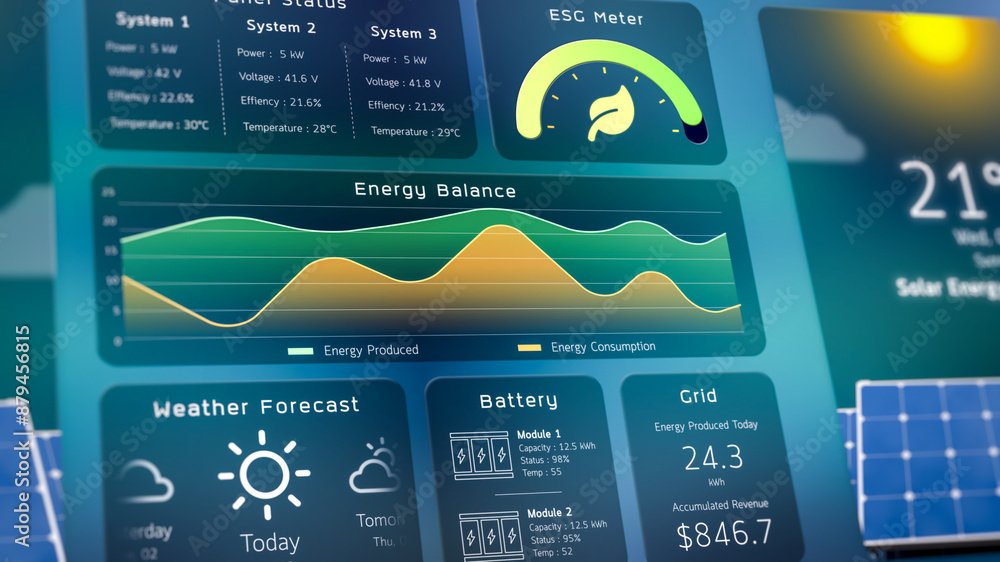
Image source: Bing (Web (fair-use with source credit))
Metrics That Matter: kWh, Peak Sun Hours, and Degradation
The key number is kilowatt-hours (kWh) produced per day. Compare it to the expected output for your location. Most solar calculators use peak sun hours (PSH), which vary by region.
Phoenix gets about 6.5 peak sun hours per day in summer. Seattle gets about 3.5. Your system should produce roughly (system size in kW) times (PSH) per day under ideal conditions.
Track your production monthly. If you see a sudden drop, check for dirt, snow, or new shade from overgrown trees. A steady decline over years is normal due to degradation.
A sharp drop is a red flag.
Monitoring and Spotting Trouble Early
Most monitoring apps let you set alerts. If production falls below a threshold, you get a notification. Some systems also monitor per-panel output if you have microinverters or power optimizers.
That makes it easy to spot a single failing panel.
Check your inverter display occasionally. It should show a green light or "normal" status. A red or flashing light means something is wrong.
Common issues include grid faults, ground faults, or inverter overheating. Many problems can be reset, but persistent faults need a technician.
When to Call a Professional (And When You Can DIY)
Solar systems are mostly hands-off, but some tasks are safe to do yourself. Others require a licensed electrician. Knowing the difference saves money without risking safety or your warranty.
You can safely clean your panels with water and a soft brush. You can trim nearby vegetation. You can visually inspect for cracks, loose wires, or animal nests.
You can also monitor performance through the app.
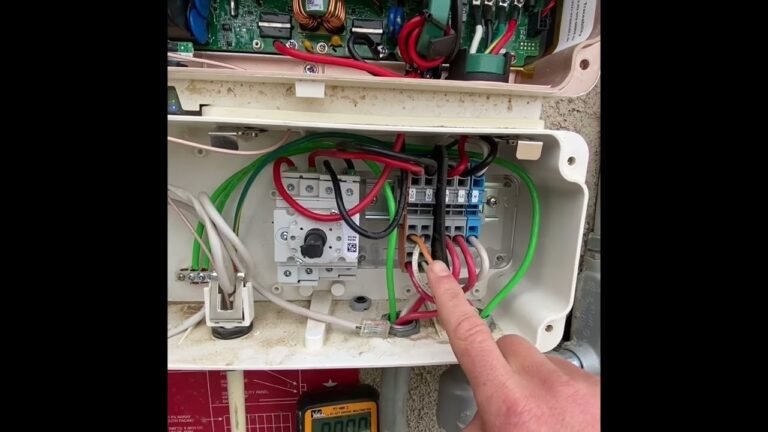
Call a professional for anything involving electrical wiring. That includes replacing an inverter, fixing a junction box, or resealing roof penetrations. Also call if you see arcing, burning smells, or a tripped breaker that won't reset.
In our research, we've found that DIY electrical work on solar systems voids warranties and can create fire hazards.
Permit inspections are another reason to call a pro. Most jurisdictions require a licensed electrician to pull permits for solar installation. Even for repairs, some states require a licensed contractor.
Always check local codes.
Signs You Need an Expert Immediately
| Symptom | Likely Cause | Action |
|---|---|---|
| Inverter shows error code | Grid issue or component failure | Call installer |
| Production drops >20% suddenly | Panel damage or shading | Check first, then call |
| Burning smell from inverter | Overheating or electrical fault | Shut off system, call immediately |
| Water inside junction box | Seal failure | Call for repair |
| Disconnect trips repeatedly | Ground fault | Call electrician |
Safety, Codes, and Permits You Should Know About
Solar installations are regulated for good reason. They involve high-voltage DC, roof penetrations, and grid interconnection. Following code keeps you safe and keeps your system legal.
The National Electrical Code (NEC) has specific rules for solar. Article 690 covers photovoltaic systems. It requires things like rapid shutdown, which lets firefighters shut off power quickly.
Systems installed after 2017 must have rapid shutdown capability. That means module-level power electronics or a special inverter.
Permits and Inspections
Most cities require a building permit for solar. The process usually includes structural review, electrical plan check, and a final inspection. Your installer should handle this.
If you're buying a system, confirm that permits are included in the price.
Net metering agreements also require utility approval. Your utility will inspect the interconnection and install a bi-directional meter. Without approval, you can't legally export power to the grid.
Some utilities have queue caps, so apply early.
Fire Safety and Roof Access
NEC requires clear pathways on the roof for firefighter access. Panels can't cover the entire roof. There must be a 3-foot clear path along ridges or valleys.
Your installer should design the layout to meet these requirements.
Battery systems add another layer. Lithium-ion batteries need proper ventilation and temperature control. They must meet UL 9540 safety standards.
Never install a battery in a living space or garage without proper clearance.
Maintenance That Keeps the System Running for 25+ Years
Solar panels have no moving parts. That makes them low maintenance, but not zero maintenance. A little care goes a long way toward hitting that 25-year warranty.
Dirt is the main enemy. Dust, pollen, bird droppings, and leaves block sunlight. In dry climates, rain may not be enough.
Cleaning once or twice a year restores full output. Use a garden hose and a soft brush. Avoid harsh chemicals or pressure washers, which can damage seals.
Snow is trickier. Panels are slippery and tilted, so snow usually slides off. But heavy wet snow can stick.
Don't climb on the roof to remove it. Wait for sunshine or call a pro with a long pole. Scraping can scratch the glass.
Annual Checklist
- Inspect glass for cracks or chips
- Check wiring for rodent damage
- Tighten loose mounting bolts
- Clean panels if dirty
- Verify inverter status and errors
- Trim back any new tree growth
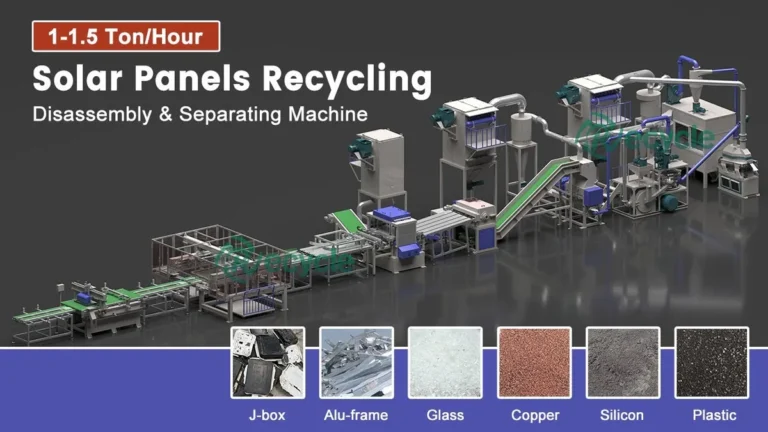
What Happens After 25 Years
Panels continue producing after their warranty expires. Degradation continues, typically 0.5 percent per year. A panel rated at 300 watts might produce 250 watts after 25 years.
That's still useful, just less.
Inverters usually need replacement around year 10 to 15. Budget for that. Monitor production and replace the inverter when output drops noticeably or errors appear.
Most manufacturers offer a product warranty (parts and labor) for 10 to 12 years and a performance warranty for 25 years. If a panel fails prematurely, the manufacturer should replace it. Keep your paperwork and registration documents handy.
A Real-World Example: What a Typical 6 kW System Actually Produces
Let's put the numbers in perspective. A 6 kW system is common for a US home with three bedrooms. With 16 panels at 400 watts each and a south-facing roof at a 30 degree tilt, you get solid performance.
In Phoenix (6.5 peak sun hours), that system produces about 39 kWh per day. That's roughly 1,170 kWh per month. At $0.12 per kWh, you save about $140 monthly.
That covers most of an average electric bill.
In Seattle (3.5 peak sun hours), the same system makes about 21 kWh per day. That's 630 kWh per month. Savings drop to about $75 monthly.
The system still pays for itself, but it takes longer. Location matters that much.
Aggregate user reviews confirm that actual production matches these estimates within 5 percent when the installation is clean and shading is minimal. A good buying guide can help you calculate your own numbers based on your roof and utility rates.
Frequently Asked Questions
Do solar panels work on cloudy days?
Yes, they produce electricity from diffuse light. Output drops to about 10 to 25 percent of rated capacity on overcast days. That's still enough to run basic appliances.
Panels are more sensitive to shade than cloud cover.
How long do solar panels last?
Most panels carry a 25 year performance warranty. They continue working after that but degrade about 0.5 percent per year. A panel may produce 80 percent of its original output after 30 years.
Inverters typically need replacement after 10 to 15 years.
Can I install solar panels myself?
Technically yes, but it's not recommended. Electrical work at high voltage is dangerous. Mistakes can void warranties and create fire hazards.
Most jurisdictions require licensed electricians for permit approval. Professional installation also includes warranty coverage.
What happens to solar power when the grid goes down?
Grid tied systems shut off automatically during an outage. This protects utility workers. Only systems with battery backup and an isolation switch can run during a blackout.
If you want backup power, plan for a hybrid system with storage.
Do solar panels increase home value?
Studies from the Department of Energy indicate that homes with solar sell for about 4 percent more on average. The premium depends on local electricity rates and whether the panels are owned or leased. Owned systems add more value than leases.
Final Take: What This Means for Your Solar Decision
Understanding how solar panels generate electricity gives you a real edge. You can spot weak proposals, compare quotes intelligently, and avoid common pitfalls. The science is straightforward.
Photons knock electrons loose. The p-n junction directs them. An inverter makes the power usable.
From there, it's about matching the technology to your specific roof, climate, and budget. You don't need to become an engineer. Just stay curious, ask the right questions, and get your numbers from reliable sources.
The system you choose will serve you for decades if you start with a solid foundation.