Solar Panel Buying Guide
Solar Panel Buying Guide: Everything You Need to Know
Sizing, wattage, efficiency, the right panel for your specific setup, the mistakes that cost people the most money, and a checklist to run through before you buy. One guide, start to finish.
Buying a solar panel sounds simple until you actually try to do it. Type “best solar panel” into any search bar and you’ll land in a swamp of wattage numbers, efficiency percentages, panel types, and reviews that all contradict each other. Most of that confusion isn’t necessary — it exists because solar retailers benefit from you not understanding the basics well enough to compare confidently.
This guide fixes that. It’s organized as one complete path: how to think about choosing a panel, how to size and calculate exactly what you need, how that changes depending on whether you’re powering a house, an RV, or a weekend cabin, the mistakes that quietly waste people’s money, and a final checklist to run through before you actually buy. Read it top to bottom, or jump straight to the section you need.
A quick note on how to actually use this guide: solar buying decisions go wrong less often because of a bad panel and more often because of a skipped step earlier in the process. Someone buys a panel before calculating their real energy use, or compares wattage without checking efficiency, or picks based on price alone without reading the warranty terms. Every section below exists because it’s the step people skip — read them in order at least once, even if you think you already know the basics.
How to Choose the Right Solar Panel
Every solar panel decision really comes down to five factors. Get these right and the specific model you pick matters far less than people assume.
It helps to think of these factors as a funnel rather than a checklist you tackle in random order. Panel type and physical constraints narrow your options first, since they’re determined by where the panel will actually live. Wattage and efficiency narrow things further based on how much power you need and how much space you have to get it. Budget, warranty, and certifications are the final filter applied to whatever’s left — not the starting point most buyers mistakenly begin with.
1. Panel type
Almost everything sold today falls into one of three categories. Monocrystalline panels are the most efficient and the most expensive — made from a single continuous silicon crystal, they squeeze more power into less surface area. Polycrystalline panels are made from multiple silicon fragments melted together; they’re cheaper and slightly less efficient, but for many buyers the difference is small enough not to matter. Thin-film panels are lightweight and flexible, ideal where weight or rigidity is the real constraint — RV roofs, boats, portable kits — but they’re the least efficient of the three and degrade faster over time.
2. Wattage
Wattage is the panel’s power output under ideal lab conditions. It’s the number everyone fixates on, and it’s important — but only in the context of how much energy you actually need, which we’ll calculate properly in the sizing sections below.
3. Efficiency
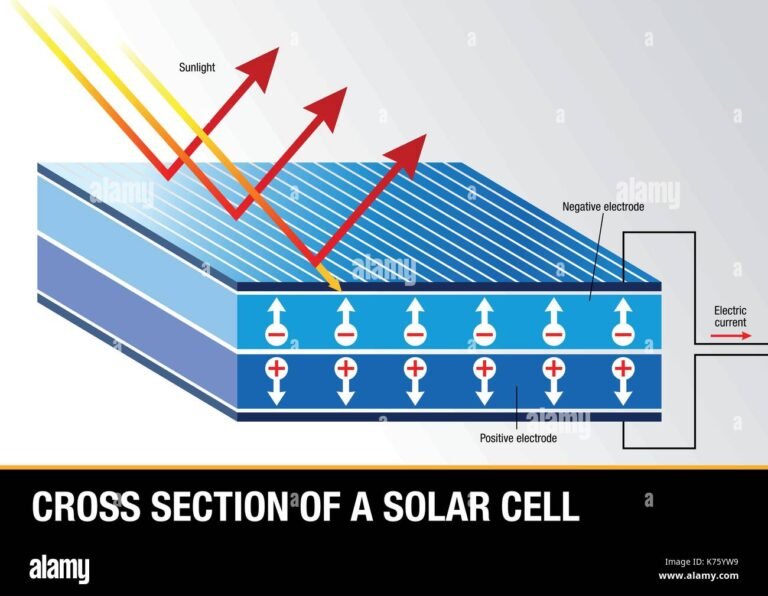
Efficiency tells you how much of the sunlight hitting the panel actually converts to usable electricity. A more efficient panel produces more power from the same physical size — which matters enormously when roof space or surface area is limited, and matters much less when space is abundant.
4. Durability and warranty
A panel sitting outdoors for 20+ years needs to survive hail, wind, temperature swings, and UV degradation. Look for a manufacturer’s product warranty (covering physical defects, typically 10–12 years) separately from the performance warranty (guaranteeing a percentage of original output after 25 years) — these are two different promises, and a confident seller will quote both clearly.
5. Budget — and what it actually buys
More expensive almost always means higher efficiency, better warranties, and tighter manufacturing tolerances. It rarely means “more watts for the same size” by a dramatic margin — that’s mostly physics, not brand. We’ll dig much deeper into when paying more is worth it later in this guide.
6. Temperature coefficient (the factor almost nobody checks)
Every panel has a temperature coefficient — a number, usually expressed as a negative percentage per degree Celsius above 25°C, that tells you how much output drops as the panel heats up. This sounds technical, but it matters a lot in hot climates: a panel sitting on a black roof in summer can easily run 25–40°C above ambient air temperature, and a poor temperature coefficient can quietly cost you 10–15% of rated output on exactly the sunny days you’re counting on most. If you live somewhere genuinely hot, this number deserves as much attention as efficiency.
7. Certifications that actually matter
Not all certifications are equally meaningful, but a few are worth specifically checking for depending on your use case: fire safety ratings for roof-mounted residential panels, IP67 or higher water-resistance ratings for anything exposed to rain or marine spray, and recognized international quality and safety certifications that indicate the panel passed independent testing rather than just the manufacturer’s own claims. A panel without any of these isn’t automatically bad, but the absence is worth asking about directly before you buy.
The one-sentence version
Pick the panel type that fits your physical constraints, size it to your actual energy use (not a guess), and only then start comparing brands on efficiency, warranty, and price.
What Size Solar Panel Do You Need?
“Size” is really a stand-in for two separate questions people mix together: the panel’s physical dimensions, and its power output. They’re related but not the same thing, and untangling them is the first real step toward buying the right system.
Physical size matters when you have a fixed space — a specific patch of roof, a defined RV roofline, a shed wall. Power output matters for everything else: it’s the number that actually determines whether your system can run what you need it to run. In almost every buying decision, you should size based on power output first, then check that a panel producing that output will physically fit your space — not the other way around.
As a rough physical reference: a typical residential panel is around 65 by 39 inches and weighs 40–50 lbs, producing somewhere in the 350–450 watt range. Portable and RV-oriented panels vary enormously, from small 100W panels you can carry in one hand to large flexible sheets that cover most of a camper roof.
It also helps to think about size in three separate dimensions rather than one. Footprint is the actual square footage the panel occupies — the number that matters when you’re working with a fixed roof, deck, or wall. Weight matters disproportionately for anything mobile: a roof rated for a certain load limit, an RV with a maximum cargo capacity, or a boat where every extra pound affects handling. Capacity is the power output itself, and it’s the only one of the three that you can meaningfully change without changing the physical product — by adding more panels, or choosing a smaller number of higher-output ones.
A practical example of why this distinction matters: two RV owners might both need roughly 400W of capacity. One has a flat, unobstructed roof with room to spare, so a single large, cheaper 400W panel is the easy choice. The other has a roof full of vents and an air conditioning unit eating up usable space, so three smaller, more efficient 135W panels tucked into the gaps between obstructions makes far more sense — even though the total capacity is nearly identical.
The real question to ask
Don’t ask “what size panel do I need?” Ask “how many watt-hours do I use per day?” first. Once you know that number, the right panel size becomes a calculation, not a guess — covered in detail two sections down.
How Many Watts Should a Solar Panel Be?
There’s no single correct wattage — it depends entirely on what you’re powering and how much sun you actually get. But these reference ranges, drawn from common real-world setups, give you a useful starting point.
| Use Case | Typical Wattage Range | Notes |
|---|---|---|
| Small gadgets, phone charging | 10W – 50W | Portable panels, camping basics |
| Camping / weekend trips | 100W – 200W | Lights, small fridge, charging devices |
| RV / van life (modest use) | 200W – 400W | Lighting, water pump, electronics |
| RV / van life (heavy use) | 400W – 800W | AC unit, induction cooktop, larger fridge |
| Cabin or tiny house (off-grid) | 800W – 3,000W | Full small-home load, depends on appliances |
| Average home (grid-tied) | 5,000W – 10,000W total system | Made up of 15–25 panels, not one |
Notice the home figure is a total system size, not a single panel — homes are powered by an array of panels wired together, while RVs, boats, and cabins more often run on just one to four panels. That distinction trips up a lot of first-time buyers comparing a single 400W panel spec sheet against a “10,000W home solar system” article and getting confused about why the numbers look so different.
It’s also worth understanding why these ranges are ranges, not fixed numbers, even within the same category. Two RVs both described as “modest use” might land at very different points in the 200–400W range depending on whether one owner runs a 12V compressor fridge sparingly and the other keeps a full-size residential-style fridge running continuously. The category labels in the table above are starting points for a conversation with yourself about your actual appliances, not a substitute for the calculation in the next section.
One more nuance: wattage requirements aren’t static even for a single setup. A cabin used only in summer has very different sun availability than one occupied year-round, and a household that adds an electric vehicle charger later effectively jumps to a different row in this table entirely. If there’s a reasonable chance your usage will grow, it’s worth sizing your system — or at least your wiring and mounting infrastructure — with some room to add panels later, rather than maxing out every inch of available space on day one.
How to Calculate Solar Panel Size
This is the calculation that replaces guessing with actual math. It takes three numbers you can find yourself, and about five minutes.
Peak sun hours: Not the same as daylight hours — this is the equivalent hours of full-intensity sun your location gets, typically 4–6 hours/day depending on region and season.
System efficiency: Real-world losses from wiring, inverter conversion, dust, and imperfect panel angle. Use 0.75–0.8 as a safe planning estimate.
Worked example
Say you want to run a 60W laptop for 5 hours, a 10W LED light setup for 6 hours, and a 40W water pump for 1 hour daily. That’s (60×5) + (10×6) + (40×1) = 300 + 60 + 40 = 400Wh per day. If you get 5 peak sun hours and plan for 0.78 system efficiency: 400 ÷ 5 ÷ 0.78 ≈ 103W. A single 100W–120W panel comfortably covers this load.
A second example, at a different scale
For a small off-grid cabin: a fridge drawing 80W but only running about 40% of the day (so effectively 8 hours of equivalent full draw), four LED lights at 8W each for 5 hours, a laptop and phone charging at a combined 50W for 4 hours, and a water pump at 60W for 30 minutes. That’s (80×8) + (8×4×5) + (50×4) + (60×0.5) = 640 + 160 + 200 + 30 = 1,030Wh per day. With 4.5 peak sun hours (a reasonable assumption for a less sunny region) and the same 0.78 efficiency factor: 1,030 ÷ 4.5 ÷ 0.78 ≈ 293W. That points toward a system in the 300–350W range, likely split across two or three panels for redundancy rather than relying on a single unit.
Where to add a safety margin
The formula above gets you to a defensible number, but most experienced off-grid users add a buffer on top of it — commonly 20–25% — to cover a string of cloudy days, gradual panel degradation over the years, and the simple fact that real usage tends to creep upward over time as you add devices. Sizing exactly to today’s calculated need with zero margin is the kind of decision that looks fine on day one and frustrating by year two.
Quick reference: common appliance wattages
If you’re not sure where to even start adding up watts, these typical figures cover most of what shows up in an RV, cabin, or home energy calculation. Always check the actual label on your specific device when possible — these vary by model.
| Device | Typical Wattage |
|---|---|
| LED light bulb | 5–12W |
| Laptop | 40–65W |
| Phone charger | 5–20W |
| 12V compressor fridge (mini) | 40–80W (intermittent) |
| Residential-style fridge | 100–200W (intermittent) |
| Water pump (small) | 40–80W |
| Box fan | 40–100W |
| Microwave | 600–1,200W |
| Window air conditioner | 900–1,500W |
Notice the difference between continuous and intermittent loads — a fridge’s compressor cycles on and off rather than drawing its peak wattage constantly, which is why the worked examples above used an “effective hours” adjustment instead of treating it as running at full draw all day. Getting this distinction right is often the difference between an estimate that’s wildly oversized and one that’s actually useful.
Why people undersize
The most common mistake in this calculation is skipping system efficiency entirely and sizing to the raw math. That leaves zero margin for cloudy days, panel aging, or simply not getting perfectly angled sun all day — which is exactly why real-world setups underperform their spec sheet, every time, by design.
How Much Power Does a Solar Panel Produce?
A panel’s wattage rating is measured under “Standard Test Conditions” — a controlled lab environment with ideal sun intensity, a specific panel temperature, and zero shade. Real-world output is always somewhat lower than the number printed on the box, and that’s normal, not a defect.
| Panel Rating | Typical Daily Output* | Roughly Powers |
|---|---|---|
| 100W | ~350–500 Wh/day | Lights, phone/laptop charging |
| 200W | ~700–1,000 Wh/day | Small fridge + lighting + devices |
| 300W | ~1,000–1,500 Wh/day | RV daily essentials |
| 400W | ~1,400–2,000 Wh/day | Cabin lighting + small appliances |
*Assuming roughly 4–6 peak sun hours and average real-world efficiency losses. Your actual output will vary with location, season, and panel angle.
Three things shrink real output more than people expect: shade (even partial shade on one corner of a panel can disproportionately cut total output), heat (panels actually lose efficiency as they get hotter, somewhat counterintuitively), and angle (a panel laid flat instead of angled toward the sun can lose 10–20% of its potential output, depending on latitude and season).
Output changes with the seasons, predictably
Peak sun hours swing meaningfully across the year almost everywhere except locations very close to the equator. A region that averages 6 peak sun hours in summer might drop to 3–4 in winter, which means the same panel can produce roughly half as much power in December as it did in June. If your use case is seasonal — a cabin you visit mainly in winter, for instance — size around the season you’ll actually be using it, not the annual average, or you’ll end up under-resourced exactly when you need power most.
Output also declines slowly over the panel’s lifetime
Beyond daily and seasonal swings, panels also degrade gradually year over year — typically around 0.5% of original output per year for quality panels, meaning a panel might still be producing roughly 85–90% of its original rating after 20 years. This is normal and expected, and it’s exactly what the performance warranty mentioned earlier is meant to guarantee a floor against. It’s also a good argument for that 20–25% sizing buffer: a system sized exactly to today’s needs will be undersized in a decade purely from this slow decline, even with perfect maintenance.
Solar Panel Efficiency vs Wattage
These two numbers get confused constantly, and the confusion costs buyers money. Wattage is a panel’s total output capacity. Efficiency is how much of the available sunlight it actually converts — essentially, how much output you get per square foot.
| Wattage | Efficiency | |
|---|---|---|
| What it measures | Total power output | % of sunlight converted to power |
| Depends on | Panel size and cell quality | Cell technology and manufacturing quality |
| Two panels can have | Same wattage | Very different efficiency (and size) |
| Matters most when | You need a specific total output | Space is limited |
Here’s the part that actually matters in practice: a 400W panel isn’t automatically better than a 350W panel if the 400W version is physically larger and the 350W version is more efficient and smaller. If you have unlimited roof space, chase wattage and ignore efficiency almost entirely — bigger, cheaper panels get you the same total output for less money. If your space is genuinely constrained (an RV roof, a boat, a small shed), efficiency becomes the more important number, because it determines how much power you can extract from the limited area you actually have.
What efficiency numbers actually look like
For context, monocrystalline panels commonly land in the 20–22% efficiency range, polycrystalline panels typically sit around 15–17%, and thin-film panels are usually in the 10–13% range — though all three categories have improved over time and the gap has narrowed somewhat. A small percentage difference sounds minor, but compounded across a full system it can mean needing several extra panels’ worth of roof space to hit the same total output with a less efficient option.
A quick note on bifacial panels
One category worth knowing about: bifacial panels capture sunlight on both the front and back side, generating a meaningful output boost — often 5–15% extra — when mounted in a way that lets reflected light reach the rear surface, such as on a light-colored roof, a reflective ground mount, or an elevated rack with open space underneath. They cost more and the benefit depends heavily on mounting conditions, so they’re worth considering specifically when your installation setup can actually take advantage of the rear-side gain — not a universal upgrade for every situation.
Putting the numbers side by side
Imagine two panels both rated at 300W. Panel A is 21% efficient and measures about 16 square feet. Panel B is 16% efficient and needs about 21 square feet to hit the same 300W. If you’re mounting on an RV roof with exactly 18 square feet free, Panel A fits and Panel B doesn’t — full stop, regardless of price. If you’re mounting on a home roof with 600 square feet to spare, Panel B might be the smarter buy if it’s meaningfully cheaper, since the extra 5 square feet it needs costs you nothing you were using anyway. Same wattage, same job done, completely different right answer depending on the one variable — available space — that efficiency actually solves for.
The Right Solar Panel for Your Specific Setup
Generic advice only goes so far — what actually matters changes a lot depending on what you’re powering. Here’s the practical breakdown for the seven most common setups.
Home Use
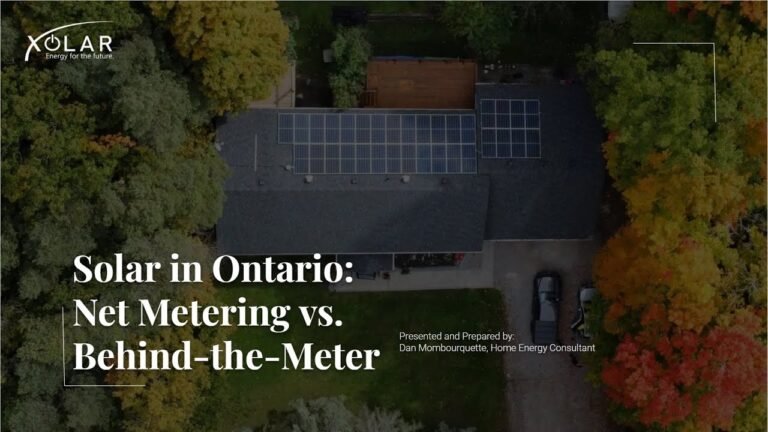
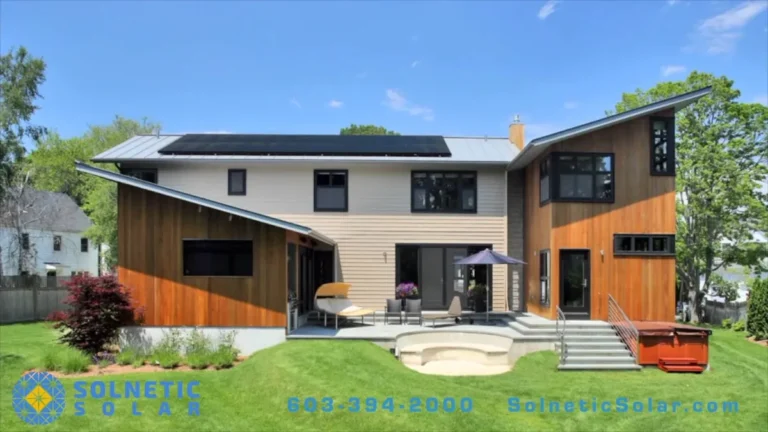
Home systems are arrays, not single panels — typically 15 to 25 panels wired together, professionally installed, and either grid-tied (feeding excess power back to the utility) or paired with battery storage for backup. Prioritize efficiency and long warranties here, since the panels are a fixed, long-term roof investment and labor costs dominate the total price anyway. Get multiple quotes; installation labor varies far more between providers than panel quality does.
Roof orientation and shading matter enormously at this scale, since you’re committing a large, fixed installation for two-plus decades. A south-facing roof (in the northern hemisphere) with minimal tree or chimney shade will outperform a similarly-sized east or west-facing roof significantly over a year. A reputable installer should walk you through a shading analysis specific to your actual roof before you sign anything, not just hand you a generic quote based on square footage alone.
RVs
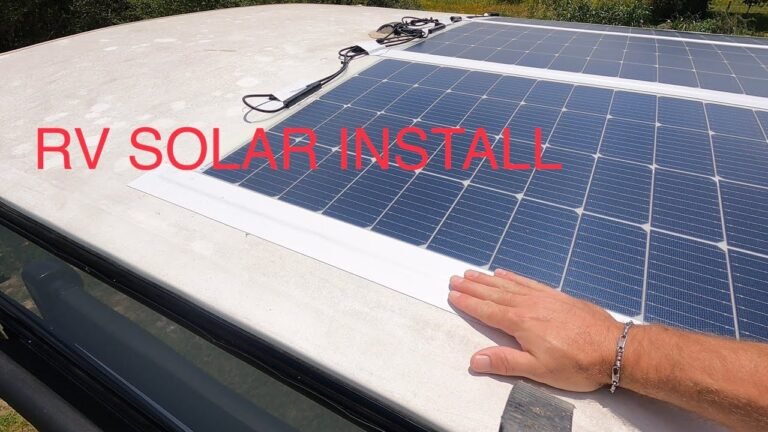
Roof space and weight are your real constraints, not budget. Flexible or semi-flexible panels conform to curved or irregular RV roofs and add minimal weight, though rigid panels are more durable and slightly more efficient if you have flat space to mount them. Most RV setups run 200–600W total, paired with a battery bank and a charge controller sized to match.
Don’t overlook a portable, ground-deployable panel as a supplement to a roof-mounted system — it lets you park in shade for comfort while still angling a separate panel toward direct sun, which a fixed roof mount can’t do. Many experienced RV owners run a modest permanent roof array for baseline charging and keep a portable panel in the cargo bay for exactly this situation.
Camping
Portability is everything. Foldable panel kits (often 100–200W) that pack down small and set up in minutes beat a more efficient panel that’s a hassle to carry and deploy. Look for built-in handles, a kickstand for angling toward the sun, and weather resistance, since these get thrown in a trunk and set up on uneven ground repeatedly.
Pair the panel with a small portable power station rather than a separate battery and charge controller if you’re prioritizing simplicity — most all-in-one units are designed to accept a folding panel directly and handle the charging logic internally, which matters a lot when you’d rather be enjoying the trip than troubleshooting wiring at a campsite.
Cabins
Off-grid cabins need to think in terms of total daily load, not just panel count — lighting, water pumping, maybe refrigeration, and seasonal variation in sun hours all factor in. Battery storage capacity matters as much as panel wattage here, since cabins are often unattended for stretches and need enough stored power to coast through cloudy days.
Plan specifically for the “worst realistic week,” not the best one — a string of overcast days in a row is far more common than people expect, and a cabin sized only for sunny-day averages will leave you without power exactly when you’re relying on it most. A generator backup, even a small one, is a reasonable safety net rather than a sign the solar sizing failed.
Tiny Houses
Similar math to a cabin, but roof area is genuinely tiny — efficiency matters more here than almost anywhere else, since you’re trying to extract maximum watts from a small, often oddly-shaped roof. Many tiny house owners supplement roof panels with a small ground-mounted array nearby if local rules and space allow it.
Weight is a closer concern than most tiny house owners initially expect, especially for trailer-based builds with a defined axle rating. Calculate the panel array’s total weight, including mounting hardware, before committing to a layout — it’s a much smaller margin for error than a stationary cabin roof gives you.
Boats
Marine environments are brutal on equipment — salt air, constant vibration, and direct water exposure mean you need panels explicitly rated for marine use, not a repurposed RV panel. Flexible panels that can be mounted on curved deck surfaces, or semi-rigid panels bolted to a rail or bimini top, are both common depending on your boat’s layout.
Connector and wiring corrosion resistance deserves as much attention as the panel itself — a high-quality marine panel paired with non-marine-grade connectors is still a weak link that salt air will find eventually. Look for sealed, corrosion-resistant connectors specifically marketed for marine use, not just a generic weatherproof rating.
Sheds
Usually the lowest-stakes setup on this list — a small panel (50–150W) running a light and maybe a charging port is enough for most sheds. Don’t overbuy here; this is one case where matching a modest panel to a genuinely modest need is the right call, not a compromise.
A simple all-in-one kit — panel, small battery, and basic charge controller bundled together — is usually the most sensible choice for a shed, since the added complexity of designing a custom system rarely pays off for such a small load. Save the custom system design effort for setups where the load actually justifies it.
The pattern across all seven
Notice none of these are solved by “buy the highest-watt panel available.” Each one is solved by matching the panel type and size to a specific physical and usage constraint — space, weight, environment, or budget — first, and treating wattage as the last variable you adjust, not the first.
Common Mistakes When Buying Solar Panels
Most of these aren’t exotic errors — they’re the predictable result of skipping a step covered earlier in this guide. Seeing them listed together makes the pattern obvious: almost every one comes from sizing by guess instead of calculation, or comparing one spec while ignoring the others that matter just as much.
Sizing from a guess instead of real numbers
The single most common and most expensive mistake. Buyers estimate their power needs instead of actually adding up watt-hours, then either overspend on a system that’s twice as big as needed, or — more often — undersize and end up frustrated when the system can’t keep up.
Ignoring peak sun hours for their actual location
A panel that performs beautifully in a sunny southern climate can underperform significantly in a cloudier region. Always size around your real, local peak sun hours, not a generic average pulled from a manufacturer’s best-case marketing material.
Comparing wattage without comparing efficiency or size
As covered above, a higher wattage number doesn’t automatically mean a better panel — it might just mean a bigger one. Compare like for like, or you’ll end up paying a premium for “more watts” that’s really just more surface area.
Forgetting the rest of the system
A panel alone does nothing. Charge controllers, inverters, wiring, and batteries (if you’re storing power) all need to be sized to match the panel — and all add real cost. Buyers who budget only for the panel itself are routinely surprised by the total system price.
Skipping the warranty fine print
“25-year warranty” sounds reassuring until you read what it actually guarantees. Performance warranties typically promise a percentage of original output, not zero degradation — and product warranties covering physical failure are often much shorter than the headline performance number suggests.
Mounting panels at the wrong angle
A panel installed flat, or angled away from the sun’s typical path at your latitude, can lose a meaningful chunk of its potential output before it’s ever turned on. This is a free fix — angle and orientation cost nothing extra and matter more than most buyers realize.
Buying based on price per watt alone
Cheapest price-per-watt looks attractive on a spreadsheet, but ignores efficiency, warranty length, and durability — all of which affect the real cost over the panel’s 20+ year lifespan. We’ll unpack this tradeoff properly in the cheap-vs-premium section below.
Not accounting for shading at different times of day
A spot that looks perfectly sunny at noon when you’re checking it out might sit in a tree’s shadow every morning, or lose afternoon sun to a neighboring structure. Shading shifts throughout the day and across seasons as the sun’s angle changes — observe your intended mounting spot at multiple times of day, ideally across more than one season, before finalizing a location.
Treating the cheapest shipping option as a non-issue
Panels are heavy, somewhat fragile, and expensive to replace if damaged in transit. Choosing the absolute cheapest shipping option from an online seller — especially for larger panels — sometimes means less careful handling or packaging along the way. Read recent reviews specifically for shipping-damage complaints before buying any panel online, regardless of how good the product itself looks on paper.
Sizing for today’s needs with no room to grow
It’s common to design a system around exactly the appliances you own right now, only to add a second fridge, an electric bike charger, or a new tool a year later — at which point the existing system has no spare capacity and no easy way to expand without redesigning the wiring and mounting layout. Where it’s affordable, leaving physical space and wiring headroom for one or two additional panels later is cheap insurance against a near-certain future need.
The Solar Panel Buying Checklist
Everything covered so far comes down to a short, practical sequence. Run through this before you actually click “buy” — it takes about ten minutes and catches almost every mistake covered above before it costs you anything.
- Calculate your real daily energy useAdd up watt-hours for everything you plan to run — don’t estimate.
- Check your local peak sun hoursUse your actual region and season, not a generic average.
- Confirm the physical space availableMeasure roof, deck, or wall space before assuming a panel will fit.
- Decide: monocrystalline, polycrystalline, or thin-filmBased on your space and weight constraints, not just price.
- Compare efficiency, not just wattageEspecially if your space is limited.
- Read both warranties separatelyProduct warranty and performance warranty are different promises.
- Budget for the full systemCharge controller, inverter, wiring, and batteries — not just the panel.
- Check the return policyEspecially for online purchases you can’t physically inspect first.
- Plan the mounting angleA free way to recover lost output most buyers skip.
- Verify certifications for your use caseMarine-rated for boats, fire-rated for roof mounts, etc.
If you can check off every item above honestly, you’ve already avoided the overwhelming majority of buyer’s remorse stories that show up in solar panel reviews. Most negative reviews trace back to one of these steps being skipped, not to the product itself being defective.
Are Expensive Solar Panels Worth It?
Sometimes. The honest answer depends entirely on what’s driving the higher price — because “expensive” covers several genuinely different things.
Paying more for higher efficiency is worth it when space is constrained — an RV roof, a small cabin, a tiny house — because efficiency is the only way to extract more power from a fixed area. Paying more for a longer or stronger warranty is worth it for anything you’re installing once and expecting to last 20+ years, like a home roof system, where a failure years down the line is expensive and disruptive to fix. Paying more for a recognized, established brand is partly worth it for the warranty being honored years later — a manufacturer that’s still in business in year 15 of a 25-year warranty matters more than the warranty paper itself.
Where expensive often isn’t worth it: marginal wattage gains on a system where you have plenty of physical space anyway. If you can simply add one more panel of a cheaper type to hit the same total output, that’s usually the better financial move than paying a steep premium for fewer, more efficient panels — unless the space constraint is real.
There’s also a useful distinction between paying more for proven performance versus paying more for the newest technology. A panel using a well-established cell design with a long manufacturing track record carries less risk than a brand-new technology with an impressive spec sheet but little real-world history — the newest option might genuinely be better, but you’re also the one finding out whether its long-term degradation and reliability claims hold up. For a 20-year purchase, that’s a real consideration, not just caution for its own sake.
A useful test
Ask “what specifically am I paying extra for?” If you can name it — efficiency, warranty, certification, brand reliability — and that thing actually matters for your situation, the premium is probably justified. If you can’t name it, you’re likely just paying for a logo.
Best Time to Buy Solar Panels
Solar panel pricing tends to follow a few predictable patterns, even though specific prices shift constantly with the broader market.
Off-season for your use case is often the best time to buy. If you’re outfitting an RV or camping setup, look in late fall or winter when demand from summer travelers has dropped — retailers often discount inventory to move it before a new model year. Conversely, home solar installers can sometimes offer better pricing or longer install timelines in their slower season, which varies by region.
End-of-model-year clearance is another reliable window — when manufacturers release updated panel lines, older (still perfectly functional) stock often gets discounted to clear space, even though the efficiency difference between consecutive model years is usually marginal.
Avoid buying during acute urgency if you can help it — right before a camping trip, right after storm damage to a roof, right when a battery dies on a boat. Urgency removes your ability to comparison shop and makes you far more likely to overpay or buy a mismatched system. If at all possible, plan your purchase weeks ahead of when you actually need the panel running.
Buying ahead of a known need beats reacting to one
The pattern across almost every category above is the same: planning ahead gives you leverage, and reacting to an immediate need takes it away. Someone shopping for an RV system months before a planned trip can wait for a sale, compare several options, and ask detailed questions. Someone whose system failed the night before departure is buying whatever’s in stock at whatever price is offered. The few hours spent planning a purchase timeline in advance routinely pays for itself many times over.
One thing that doesn’t follow a “best time”
Government incentives and rebate programs for home solar change on legislative timelines, not seasonal ones, and vary significantly by region. If incentives are a major part of your home-solar budget, check current local programs directly rather than assuming a seasonal pattern applies — this is one area where a quick search for your specific region pays off.
Where to Buy Solar Panels Online
Where you buy matters almost as much as what you buy, mostly because of what happens if something goes wrong. A few categories to know, and what each is good for.
Manufacturer direct
Buying straight from the panel manufacturer’s own site usually gets you the clearest warranty path — no middleman to dispute a claim through — and often the most accurate, detailed spec sheets. The tradeoff is less price competition, since you’re not comparing across sellers.
Large general marketplaces
Convenient, often competitively priced, and useful for comparing customer reviews across multiple sellers of the same panel. The risk is counterfeit or mislabeled listings on less-regulated marketplaces, and warranty support that gets murkier when a third-party seller, not the manufacturer, is technically who you bought from.
Specialty solar and off-grid retailers
Often the best source for genuinely informed pre-purchase advice — staff who understand sizing, system design, and use-case-specific recommendations (RV vs marine vs home) better than a general marketplace listing ever will. Prices are sometimes slightly higher, but the guidance can save you from an expensive sizing mistake.
Local installers (for home systems specifically)
For full home installations, buying through a local, licensed installer rather than sourcing panels yourself is almost always the right call — installation, permitting, and warranty coordination are a significant part of the value, not just the panels themselves.
Red flags worth watching for, regardless of channel
A few signals are worth treating seriously no matter where you’re buying: spec sheets that list efficiency or wattage numbers without specifying test conditions, sellers who can’t clearly explain the difference between the product and performance warranty when asked directly, prices dramatically below every comparable listing with no clear explanation, and a near-total absence of reviews for a product that’s supposedly been on the market for years. None of these alone is necessarily disqualifying, but more than one together is a reasonable reason to keep looking.
Before you buy from anyone
Check three things regardless of where you’re buying: a clear, itemized return policy, a manufacturer warranty that’s independently verifiable (not just claimed by the seller), and recent reviews specifically mentioning shipping condition — panels are heavy and fragile enough that damage-in-transit is a real, common complaint worth screening for.
Putting it all together
Strip away the detail and the entire buying process collapses into four decisions, made in order: figure out how much energy you actually use; figure out how much physical space and weight you’re working with; pick the panel type and wattage that satisfies both; then, only at the end, compare specific products on efficiency, warranty, and price.
The seven use-case breakdowns above are really just that same four-step process applied to different real-world constraints — a home has space but needs long-term reliability, an RV has almost no space but a flexible budget, a shed has neither demanding constraint and doesn’t need either factor stretched. Once the four-step logic clicks, you can size and choose a panel for almost any situation not explicitly covered here using the exact same reasoning.
If you only take one thing from this entire guide, make it this: the calculation in section four takes five minutes and prevents the overwhelming majority of expensive mistakes covered in section eight. Everything else is refinement on top of getting that one number right.
Quick answers
Do I need a battery with my solar panel?
Only if you need power when the sun isn’t out — at night, on cloudy days, or for backup during an outage. Some setups (certain water pumps, daytime-only tools) can run directly off a panel with no battery at all. For anything you expect to run consistently, a battery is almost always part of a properly designed system.
How long do solar panels actually last?
Most modern panels are rated for 25–30 years of meaningful output, with a gradual, predictable decline in performance rather than a sudden failure. Many panels installed decades ago are still producing usable power today, just at somewhat reduced output compared to when they were new.
Can I mix panels of different wattages in one system?
Technically often possible, but it usually creates inefficiencies — the system tends to perform at the level of the weakest panel in a series connection. If you’re expanding an existing system, check with a knowledgeable seller or installer about the right wiring configuration before assuming you can just add a different panel.
Is more wattage always better?
No — more wattage than you need just means unused capacity and wasted money. Size to your actual calculated need (see the formula above) plus a reasonable buffer for cloudy days and future use, not to the largest panel available.
Do solar panels work on cloudy days?
Yes, but at significantly reduced output — often 10–25% of clear-sky performance, depending on cloud density. This is exactly why the “peak sun hours” concept in the sizing calculation matters more than total daylight hours; it already accounts for this variability over an averaged day.
What’s the single biggest factor in getting this right?
Honestly calculating your real daily energy use before buying anything. Almost every other mistake in this guide is downstream of skipping that one step and guessing instead.
Do solar panels need regular maintenance?
Very little. Occasional cleaning to remove dust, pollen, or debris helps maintain output, and a yearly visual check of wiring and mounting hardware is good practice, but panels themselves have no moving parts to wear out. Most maintenance issues actually come from the battery and charge controller, not the panel.
Can a solar panel get “too much” sun?
Not in the sense of damage under normal conditions — panels are built to handle full, direct sunlight as their intended operating environment. The only related concern is heat, covered earlier: more sun usually means more heat, which can modestly reduce efficiency even as total exposure increases. It’s a tradeoff, not a danger.
Buy once, size it right the first time
Solar panels are a 20-plus-year purchase. Run the sizing calculation, check the checklist, and you’ll skip almost every expensive mistake covered in this guide before you ever click “buy.” Whatever you’re powering — a whole house or a single shed light — the same core process applies: calculate real usage first, match panel type to your physical constraints second, and only then start comparing brands and prices.