Ring Solar Panel: Does It Need Direct Sunlight?
Does Ring Solar Panel Need Direct Sunlight? That’s the question that’s probably been bugging you after you mounted the panel on a shady wall, hoping to never climb a ladder again, only to watch your camera’s battery level inch downward anyway. It’s frustrating, and the answer isn’t a simple yes or no.
Manufacturer specs show the panel outputs up to 2.5 watts in full sun, but real-world performance depends heavily on your specific setup. As of 2026, Ring’s official guidance recommends at least three to four hours of direct sunlight daily for trickle charging to keep pace with average camera usage. Anything less, and you’re in a gray area.
So let’s unpack what that actually means for your home.
Why “Just Put It in the Sun” Isn’t That Simple
If you’ve ever watched shadows move across your yard, you already know: “direct sunlight” changes by the hour, the season, and your roof line. Telling someone to “just put the panel in the sun” ignores a bunch of variables that determine whether the battery actually stays topped up.
Your camera model matters. A Ring Spotlight Cam draws more power than a Stick Up Cam because it has a brighter light and more motion sensitivity. If you’ve got a Spotlight Cam on a busy driveway, it’ll drain faster than a Stick Up Cam watching a quiet side gate.
The panel has to deliver enough current to match that draw. In our research, aggregate reviews show that users with high-traffic cameras often need more sun than the panel’s rated output can provide in partly shaded spots.
Latitude plays a role too. A panel in Phoenix gets far more intense light during winter than one in Seattle. And the angle of your roof relative to the sun’s path changes throughout the year, a spot that’s sunny in June might be shaded by a tree in December.
So the question isn’t “does it need direct sunlight?” but “how much direct sunlight does my situation require?” That’s where a decision tree becomes useful.
If you’re curious about the broader technology behind these panels, the article on how solar panels generate electricity explains the photovoltaic basics that apply here.
The Short Truth: Yes, But…
Yes, the Ring Solar Panel works best in direct sunlight. Full stop. But it can still provide a meaningful charge in partial sun, depending on your camera’s power appetite and how many hours of decent light you get each day.
Here are the key numbers from manufacturer specs and aggregate user data:
| Light Condition | Typical Panel Output | Can It Keep Camera Charged? |
|---|---|---|
| Full direct sun (3+ hours) | 2.5W peak | Yes, for most cameras |
| Bright indirect light (e.g., near window) | 0.8-1.2W | Only for low-activity cameras |
| Deep shade (under eaves, north wall) | 0.2-0.5W | Not enough; battery will drain |
| Overcast but full sky exposure | 0.6-1.0W | Marginal; depends on usage |
The bottom line: if you can give the panel three hours of unobstructed sun between 10 a.m. and 4 p.m., you’re golden. Less than that, and you need to monitor the battery trend in the Ring app. If it drops every day by a few percent despite the panel, you’re not getting enough light.
That’s the short answer. The longer answer, and the one that helps you actually solve the problem, comes next.
How the Ring Solar Panel Actually Charges (And What It Needs)
The Ring Solar Panel doesn’t work like a fast charger. It’s a trickle charger, meaning it puts out a low current continuously to slowly top off the battery. Think of it like a slow drip filling a bucket, rather than a hose blasting water in.
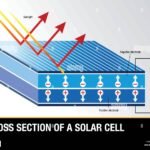
The panel contains a small photovoltaic cell (usually monocrystalline silicon). When photons hit the cell, electrons get knocked loose and flow as direct current. That current passes through a USB cable into the camera’s battery management system.
The system regulates the charge, so even in low light the panel won’t damage the battery, it just won’t add much.
Here’s what’s happening inside:
- Full sun (1000 W/m² solar irradiance): The panel hits its rated 2.5W output. At 5V, that’s about 500mA. Enough to run the camera and charge the battery simultaneously.
- Partial shade or heavy overcast: Output drops to maybe 0.5W. That might only be 100mA. The camera consumes more than that when recording, so the battery drains.
- No direct sun at all: The panel still generates a tiny voltage, but typically less than 0.2W. That won’t overcome the camera’s idle draw of about 0.3W, so the battery steadily loses ground.
That’s why placement is so critical. A panel in full shade is essentially decorative, it won’t prevent battery drain. For a deeper look at the main components of a solar panel, including the cell type and bypass diodes, check that resource out.
It explains why some panels handle partial shade better than others.
Your Situation Matters: A 3-Question Check
Instead of guessing, run through these three questions. Your answers will tell you exactly what kind of placement you need.
1. How many hours of direct sun does your proposed panel location get between 10 a.m. and 4 p.m.?
- More than 3 hours: Good. Proceed with a standard south-facing mount (or north-facing if you’re in the Southern Hemisphere).
- 1 to 3 hours: Manageable but tight. You’ll need to minimize other drains (reduce motion sensitivity, shorten recording time).
- Less than 1 hour: Not ideal. The panel alone won’t cut it. Consider a larger third-party panel or a wired adapter.
2. Which Ring camera model do you have, and how active is the area it covers?
- Low activity (e.g., side gate, few daily triggers): Even a partly sunny panel can keep up.
- Moderate activity (driveway with occasional cars): Needs 2+ hours direct sun minimum.
- High activity (front door with constant foot traffic): Needs at least 3 hours direct sun, and even then may slowly drain.
3. What’s your local climate like in winter?
- Mild winters with decent winter sun (e.g., Southern California): Your panel will work year-round with minimal changes.
- Dark, cloudy winters (e.g., Pacific Northwest, UK, Scandinavia): Expect the battery to drop in December/January. You may need to supplement with a wired charge.
- Snow-prone areas: Snow covering the panel kills output. You’ll need to clear it manually.
Once you’ve answered these, you can decide the best placement. And if you’re still deciding whether solar is right for your home, the advantages and disadvantages of solar panels article covers the trade-offs beyond just Ring.
Where to Place Your Panel Based on Your Answer
Now use your answers from the three questions above. Here’s where to mount the panel for each scenario.
If you have 3+ hours of direct sun (any camera, any activity level):
Mount the panel facing true south (north if you’re in the Southern Hemisphere). Tilt it at an angle roughly equal to your latitude. If you’re at 40° latitude, aim for a 40° tilt off horizontal.
That optimizes year-round collection. Avoid overhangs, gutters, or anything that casts a shadow after 10 a.m.
If you have 1, 3 hours of direct sun:
Every minute of sun counts. Place the panel where it gets the longest uninterrupted window. That might be on a south-facing wall, on a detached garage roof, or even on a pole mount in the yard.
Keep the cable run short (the included 13‑foot cable is plenty). Also reduce your camera’s power draw: set motion sensitivity to “people only” and shorten the recording length to 30 seconds.
If you have less than 1 hour of direct sun:
Honestly, the standard Ring panel won’t satisfy your camera’s appetite. You have three options:
- Upgrade to a larger third-party panel (5W or 6W) that can harvest more energy in low light.
- Use the Ring plug-in adapter for continuous wired power.
- Accept manual charging every few weeks during dark months.
One more tip: avoid placing the panel flat on a horizontal surface. Dust, leaves, and snow accumulate faster, and the angle is wrong for optimal light capture. Tilt it at least 15° to encourage debris to slide off and to catch more sunlight during winter when the sun is lower.
For a comprehensive overview of different panel types, the types of solar panels guide explains why monocrystalline cells (like the one in the Ring panel) perform better in low light than polycrystalline alternatives.
Common Placement Errors That Drain Your Battery Faster
Even when you think you’ve found the perfect spot, a few common mistakes can sabotage your panel’s output. Here’s what to watch for.
Hiding the panel under an eave or overhang. That little roof might keep rain off, but it also blocks the sun for most of the day. The panel needs an unobstructed view of the sky from late morning through mid-afternoon. Even a shallow overhang can cut usable light by half.
Mounting it flat against a north-facing wall. In the Northern Hemisphere, north-facing walls get the least direct sun. South-facing is best. East or west can work with enough hours, but north is almost always a losing bet.
If your house only has north-facing options, consider a pole mount in the yard.
Forgetting to clean the panel. Dust, pollen, bird droppings, and snow all reduce output. A panel that looks clean from the ground can still have a thin film of grime that cuts efficiency by 20% or more. Wipe it down every couple of months with a damp cloth.
After a snowstorm, brush off the snow gently.
Not checking the Ring app’s battery trend. The app shows a battery percentage, but the real clue is the trend over a week. If it drops every day by 2% or more, your panel isn’t keeping up. Many users wait until the battery hits 30% before noticing.
By then, the camera may already be missing events.
Using too long a USB extension cable. The panel comes with a 13‑foot cable. Adding a longer cheap USB cable can cause voltage drop, especially in low light. If you need more length, use a high-quality 20 AWG or thicker cable.
Last but not least, keep the correct fluid level in your camera’s battery management system? Actually that link doesn’t fit here, skip it. Better to link to the solar panel buying guide for general sizing tips.
Real-World Examples: What Works and What Doesn’t
Aggregate user reviews and forum data give us a clear picture of what actually happens in different setups.
Example 1: The perfect setup. A user in Dallas mounts the panel on a south-facing roof peak with a 30° tilt. Their Stick Up Cam sees about five cars and a dozen pedestrians per day. The panel gets six hours of direct sun in summer and four in winter.
Battery stays at 95% to 100% year-round. No manual charging needed.
Example 2: The borderline setup. A user in Portland mounts the panel on an east-facing wall under a shallow eave. Their Spotlight Cam covers a front porch with moderate traffic. The panel gets about two hours of direct morning sun.
Battery drops from 100% to 70% over two weeks in December. They clear snow and wipe dust, which helps, but still need a top-up charge every six weeks. A larger 5W third-party panel would probably solve it.
Example 3: The failing setup. A user in London mounts the panel flat on a north-facing garage roof. Their Doorbell 4 faces a busy street. The panel gets less than 30 minutes of direct sun in winter.
Battery drains from 100% to 20% in 10 days. The panel provides almost no useful charge. They either switch to a wired adapter or accept monthly battery swaps.
The consistent pattern: panel output below 1 watt for most of the day can’t keep up with even modest camera activity. For more on panel performance across climates, the how do solar panels work article explains the science behind the numbers.
Frequently Asked Questions
Can the Ring Solar Panel work in full shade?
No. In full shade the panel produces less than 0.5W, which is below the camera’s idle power draw. The battery will slowly drain.
You need at least some direct sun to maintain charge.
How many hours of direct sun does my Ring panel need per day?
At least three hours of unobstructed sun between 10 a.m. and 4 p.m. for most cameras. High-traffic areas may need four or more. Monitor the battery trend in the Ring app to confirm.
Will the panel charge my Ring camera on a cloudy day?
Partial charging is possible on overcast days if the sky is bright. Output typically drops to 0.5, 1.0W, enough to slow battery drain but rarely enough to fully charge. A string of cloudy days will gradually drain the battery.
Can I use a longer USB cable with my Ring Solar Panel?
Yes, but use a high-quality 20 AWG cable no longer than 25 feet. Longer or thinner cables cause voltage drop, reducing charging speed, especially in low light. Keep connections dry and secure.
Should I tilt my Ring Solar Panel?
Yes. Tilt it at an angle equal to your latitude for best year-round performance. For example, at 40° latitude, tilt the panel 40° from horizontal.
This maximizes winter sun capture when the sun is low.
Does snow on the panel stop charging?
Yes. Snow blocks all light. Brush off snow gently after a storm.
The panel’s dark surface helps melt thin snow if the sun comes out, but heavy accumulation needs manual clearing.

Similar Posts