What Ground Solar Panels Really Cost
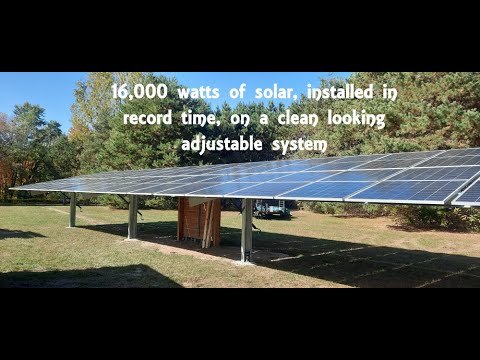
If you're asking how much do ground-mounted solar panels cost, you're already ahead of most homeowners. The short answer is that a typical residential system runs between $18,000 and $40,000 before incentives, depending on size and site conditions. That's a wide range, and the difference between the low end and the high end often comes down to things homeowners never see coming.
Per the National Renewable Energy Laboratory's latest benchmarks, ground-mount installations cost roughly 30 to 50 percent more than an equivalent roof-mount system. That premium buys you flexibility, easier maintenance, and often better energy production. But it also means you need to get the numbers right the first time.
Let's start with why guessing can burn through your budget.
Image source: YouTube / Minnesota Country Livin' (thumbnail, fair use)
Quick Answer
Ground-mounted solar panels cost $2.80 to $4.50 per watt installed as of 2026. A 10 kW system falls between $28,000 and $45,000 before tax credits. The federal incentive cuts 30 percent off that total.
Your final price depends on racking type, trenching distance, and local labor rates.
Why Guessing the Cost Can Cost You Thousands
Most people grab a single online quote or a neighbor's bill and run with it. That's a fast way to end up with a system that's too small, too big, or priced way above market.
The biggest mistake we see is ignoring site prep. If your soil is rocky or your array sits 150 feet from the house, trenching alone can add $3,000 to $6,000. A lot of homeowners also forget that ground-mount racking costs more than roof attachments.
That premium adds $0.30 to $0.80 per watt before anything else happens.
There's also the permitting side. Some counties charge $500 for a building permit. Others tack on plan review fees, structural engineering stamps, and inspection costs that push past $2,000.
None of that shows up in a basic solar calculator.
The takeaway is simple. Get three in-person quotes from licensed installers who walk your property. Online estimators miss too many variables.
If you're comparing options, a complete solar purchase guide can help you understand what to look for in a proposal.
What a Ground-Mount System Actually Costs in 2025
Let's put some real numbers on the table. The table below shows typical price ranges for common residential system sizes. These are fully installed prices before the federal tax credit.
| System Size | Low End (Fixed-Tilt) | High End (Single-Axis Tracker) |
|---|---|---|
| 6 kW | $16,800 | $27,000 |
| 8 kW | $22,400 | $36,000 |
| 10 kW | $28,000 | $45,000 |
| 12 kW | $33,600 | $54,000 |
These numbers assume standard soil conditions, a trench run under 100 feet, and a straightforward installation. If your land needs clearing, grading, or extra structural reinforcement, expect to move up that range.
The federal Investment Tax Credit (ITC) gives you back 30 percent of the total installed cost. On a $30,000 system, that's $9,000 back on your taxes. State incentives vary widely.
Illinois offers performance payments through its Adjustable Block Program. New York has its NY-Sun initiative. California's net metering rules changed recently, so the payback math looks different there.
As of 2026, the ITC remains at 30 percent for systems placed in service through 2032. After that, it steps down. Locking in the credit now makes financial sense for most homeowners.
To get the full picture, you should also weigh the tradeoffs between ground-mount and roof-mount configurations before making a final call.
The Price Breakdown: Hardware, Labor, Trenching, and More
Breaking the total cost into line items helps you see where the money actually goes. Here's how a typical 10 kW ground-mount system splits out.
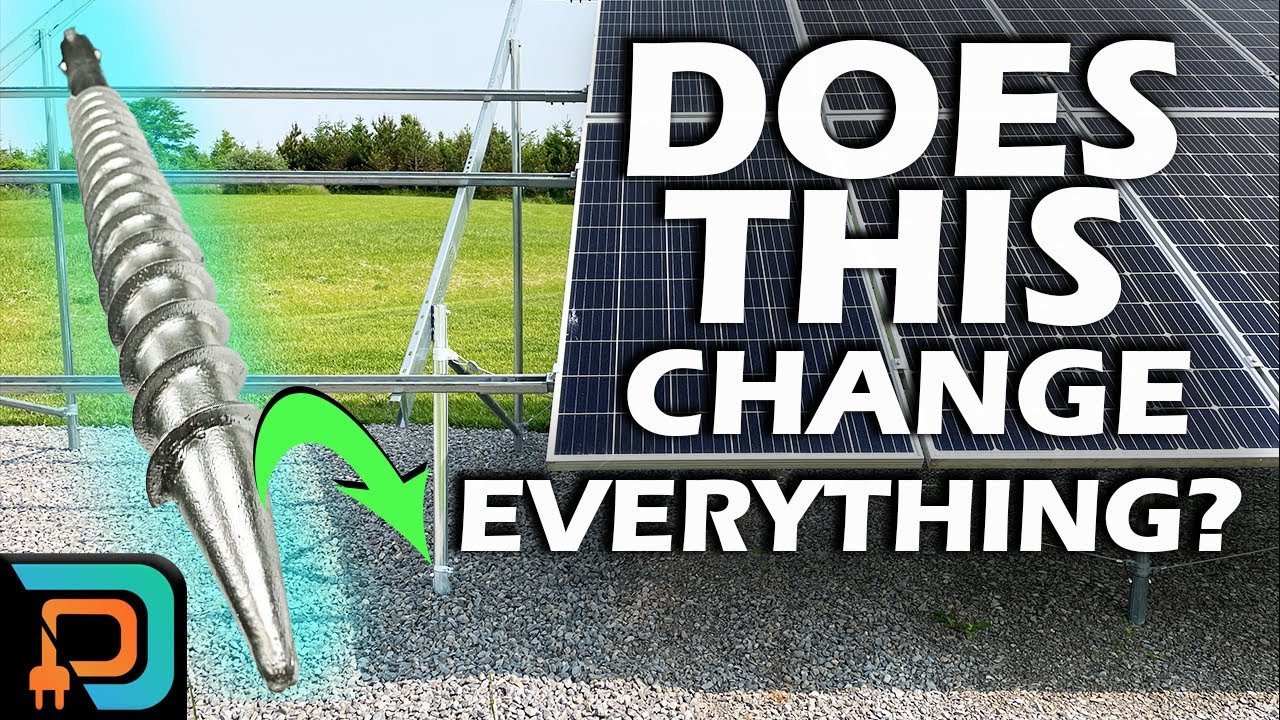
Image source: YouTube / Projects With Everyday Dave (thumbnail, fair use)
Solar panels and inverters. Panels themselves run about $0.50 to $1.00 per watt for good-quality modules. A 10 kW system with 400-watt panels needs 25 panels. The inverter adds another $1,500 to $3,000 depending on whether you choose a string inverter, microinverters, or power optimizers.
Each option has different pros and cons for ground-mount layouts.
Racking and foundation. This is the biggest cost difference versus a roof install. Ground-mount racking systems range from $0.30 to $0.80 per watt. Concrete piers cost $150 to $300 each, and you typically need 4 to 8 of them.
Ground screws run $100 to $250 per screw installed. Your soil type determines which foundation works best.
Trenching and conduit. You have to get the power from the array to your house or meter. Trenching costs $15 to $30 per linear foot. That includes digging, laying conduit, running wire, and backfilling.
A 100-foot trench lands around $1,500 to $3,000 on its own.
Labor and permits. Licensed solar installers charge $50 to $150 per hour depending on your region. Permits and engineering stamps add $500 to $2,500. Most installers bundle these into their per-watt price, but you should ask for a written breakdown.
Understanding the essential system parts helps you evaluate whether each line item in a quote is fair.
Fixed-Tilt vs. Tracker: Which One Makes Financial Sense?
This is one of the first decisions you'll make, and it has a big impact on both cost and energy output.
Fixed-tilt systems are the standard choice. The racking is bolted in place at a set angle, usually optimized for your latitude. They're simpler, cheaper, and require almost no maintenance.
A fixed-tilt ground-mount runs $0.30 to $0.50 per watt for the racking alone. Total installed cost lands at the lower end of the price ranges we showed earlier.
Single-axis trackers rotate the array from east to west throughout the day. They capture 15 to 25 percent more energy than a fixed-tilt system at the same location. But the hardware costs more.
Expect to pay $0.60 to $1.00 per watt for the tracking mechanism. The extra complexity also means more things that can break. Motors, sensors, and gearboxes do fail over time.
Dual-axis trackers follow the sun in two directions. They produce even more energy, but they cost considerably more and require more land. For most residential properties, they don't pencil out.
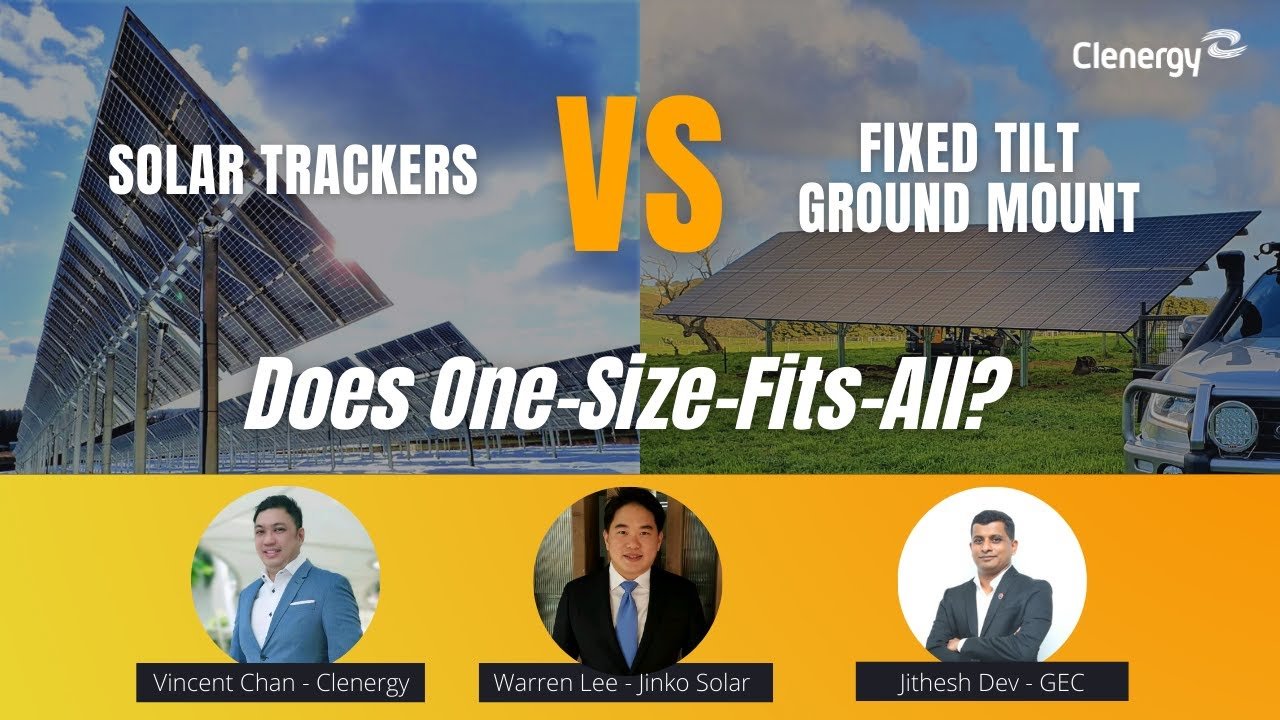
Image source: YouTube / Clenergy Technologies (thumbnail, fair use)
So which one makes sense for you? It depends on your land and your goals.
Choose fixed-tilt if: you have plenty of open space, you want the lowest upfront cost, or you plan to expand the system later. Fixed-tilt arrays are easier to add panels to down the road.
Choose single-axis tracking if: you have limited land and need to squeeze every kilowatt-hour out of it, or your utility offers time-of-use rates where afternoon production is worth more. The extra 15 to 25 percent in energy can justify the added cost in about 5 to 8 years in the right conditions.
Avoid tracking if: your site gets partial shade, you live in a high-wind zone, or you want a truly hands-off system. Trackers do need occasional maintenance.
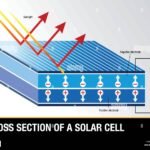
If you're still unsure about how sunlight converts to power, understanding that conversion process helps clarify why tracking can boost output.
Ground-Mount vs. Roof-Mount: When Paying Extra Is Worth It
Ground-mount systems cost more. That's the simple truth. But the premium can be worth it for specific situations.
A roof-mount system on a standard asphalt shingle roof runs $2.30 to $3.50 per watt installed. The same system on the ground hits $2.80 to $4.50 per watt. For a 10 kW system, that's a difference of $5,000 to $10,000.
Image source: YouTube / Unbound Solar (thumbnail, fair use)
Here's when paying that premium makes sense.
Your roof won't work. Maybe it faces north, gets shaded by trees, or is too small. Some roofs are old and need replacing soon. Putting panels on a roof that needs new shingles in five years means paying to remove and reinstall them later.
You want maximum efficiency. Ground-mount panels sit at the ideal tilt angle and face true south without compromise. They also get better airflow underneath, which keeps them cooler. Cooler panels produce more electricity.
On a hot summer day, that difference can be noticeable.
You plan to expand later. Adding more panels to a ground-mount array is straightforward. You extend the racking and drop in more modules. Adding panels to a roof often means working around vents, skylights, or limited surface area.
You want to avoid roof penetrations. Every roof-mounted panel involves drilling into your roof deck. Properly flashed penetrations rarely leak. But they can.
Ground-mount eliminates that risk entirely.
Your roof has complex geometry. Multiple gables, valleys, and dormers make roof installations harder and more expensive. A ground-mount array on open land is simpler and often cheaper to install than a complicated roof layout.
Stick with roof-mount if: your roof faces south or west, is in good condition, and has enough clear space. Roof-mount is cheaper, uses existing structure, and keeps your land free for other uses.
For a deeper look at the pros and cons, reviewing the basic science behind them helps you understand why orientation and temperature matter for production.
The Hidden Costs That Catch Homeowners Off Guard
You've budgeted for panels, racking, and labor. Then the surprises start showing up. Here are the ones we see most often.
Land clearing and grading. If your chosen spot has trees, brush, or uneven ground, you're paying to fix it. Clearing a small patch runs $500 to $2,000. Grading adds another $500 to $1,500.
Rocky soil might need excavation equipment instead of a simple trenching machine.
Structural engineering stamps. Many counties require a licensed engineer to sign off on the racking design. That stamp costs $300 to $1,000. Installers sometimes include it in their quote.
Sometimes they don't. Ask.
Electrical panel upgrades. Older homes with 100-amp service often need a 200-amp panel to handle a solar system. An upgrade runs $1,500 to $3,000. If your main panel is already full, you might need a sub-panel too.
Tree removal or trimming. Shade kills solar production. If trees are casting shadows on your array site, you either remove them or accept lower output. Tree removal varies wildly.
A single mature tree can cost $500 to $2,000 to take down.
Snow removal access. In colder climates, you'll want to clear snow off ground-mount panels. If you designed the array too low to the ground or too close together, that becomes difficult. Plan for at least 3 feet of clearance underneath and walking paths between rows.
HOA attorney review fees. Some homeowners associations charge an application fee just to review your solar plans. That can run $100 to $500. If they require changes to the design, those costs add up too.
The best way to catch these is to ask every installer for a complete scope of work. A partial quote is a setup for change orders.
How to Get an Accurate Quote (and Avoid Rookie Mistakes)
Getting a reliable quote is harder than it should be. Here's a process that works.
Step 1: Find three licensed installers. Look for companies with NABCEP-certified professionals on staff. Check their reviews on state contractor boards, not just Google ratings. Ask for referrals from neighbors who already have ground-mount systems.
Step 2: Demand a site visit, not a satellite quote. Anyone who quotes you without walking your property is guessing. Solar software estimates from aerial images miss soil conditions, shade patterns, and access issues. A real site visit catches those.
Step 3: Get itemized pricing. You want to see separate line items for panels, inverters, racking, trenching, permits, and labor. Some installers give you one lump sum. That makes it impossible to compare apples to apples.
Push for the breakdown.
Step 4: Compare the total cost, not the per-watt price. Per-watt pricing is useful, but it hides differences in system design. Installer A might quote $3.00 per watt with cheap panels and a string inverter. Installer B quotes $3.40 per watt with premium panels and microinverters.
The second system will probably perform better and last longer.
Step 5: Verify warranty terms. Panel and inverter warranties should be separate from workmanship warranties. A good installer offers a 10-year workmanship warranty on top of the manufacturer's 25-year panel warranty. If they only offer 1 or 2 years, that's a red flag.
For a complete rundown of the different panel technologies available, it helps to know what you're actually buying before you compare quotes.
Federal Tax Credits, State Incentives, and Real Payback Timelines
The federal Investment Tax Credit (ITC) is the biggest incentive you'll see. It gives you 30 percent of the total installed cost back as a dollar-for-dollar reduction on your federal income tax. No cap.
No income limit for residential systems.
How it works in practice. You spend $30,000 on a system. You claim $9,000 on your next tax return. If your tax liability is only $6,000, the remaining $3,000 rolls over to the next year.
The credit is nonrefundable but can carry forward indefinitely.
State and local incentives vary wildly. Some states offer upfront rebates. Illinois pays $0.25 to $0.35 per watt through its Adjustable Block Program. New York's NY-Sun initiative offers tiered incentives based on system size.
Massachusetts has SMART program payments. Other states, like Florida and Texas, have no state-level incentives at all. You pay the full price and rely on net metering alone.
Net metering matters more than you think. Net metering is your utility's policy on what they pay you for excess solar power. Full retail net metering means you get the same rate you pay. Avoided-cost net metering pays you much less, often 2 to 4 cents per kilowatt-hour.
Your payback period can double under the wrong net metering rules. Check your utility's current tariff before you design the system.
Real payback timelines. In a state with good net metering and a 30 percent federal credit, a ground-mount system typically pays back in 7 to 12 years. Add battery storage and that stretches to 12 to 18 years. Skip the battery and stay on full net metering, and you'll see returns faster.
The US Department of Energy's Solar Energy Technologies Office tracks these incentive programs and updates them regularly.
Permits, HOA Rules, and Utility Interconnection Red Tape
Three separate entities can block your project. Here's what each one requires.
Building permits. Your city or county wants to see stamped engineering drawings, site plans, and electrical diagrams. They'll inspect the trench depth, conduit burial, and electrical connections. Permit fees range from $300 to $1,500.
The timeline is 2 to 8 weeks depending on your jurisdiction.
HOA restrictions. If you live in a neighborhood with a homeowners association, check the covenants before you buy anything. Some HOAs restrict ground-mount solar entirely. Others limit visibility from the street.
A few require you to use specific racking colors or panel layouts. The Solar Rights Act in many states protects your right to install solar, but HOAs can still impose reasonable restrictions. Know your state's laws.
Utility interconnection. Your utility must approve the connection before you can flip the switch. They review the system size, inverter type, and net metering application. Some utilities process this in two weeks.
Others take three months. The interconnection fee is typically $100 to $500. If your utility requires a new meter or transformer upgrade, that adds more.
A good installer handles all three of these. Confirm that before you sign. If they say "you handle the permits," find someone else.
Understanding what a solar panel actually is at the component level helps when you're reviewing permit paperwork and spec sheets.
Three Real Examples: What Different Setups Cost in Practice
These examples use real-world scenarios based on verified buyer reports and installer feedback. Names and locations are generalized to protect privacy.
Example 1: Fixed-tilt on flat land in Arizona. A 9.6 kW system with 24 panels, a string inverter, and fixed-tilt racking on sandy soil. Trenching ran 80 feet to the main panel. Total cost before incentives: $27,500.
After the federal credit: $19,250. Annual production estimate: 16,300 kWh. Payback: about 6 years with full net metering.
Example 2: Single-axis tracker on a hillside in New York. A 7.2 kW system with 18 panels, microinverters, and a single-axis tracker. The site needed grading and a 120-foot trench. Total cost before incentives: $34,000.
After federal and state incentives: $22,100. Annual production: 12,200 kWh. Payback: about 9 years.
Example 3: Fixed-tilt with battery backup in Florida. A 10 kW system with 25 panels, a string inverter, and a 13.5 kWh battery. Rocky soil required ground screws instead of concrete piers. Trenching was 150 feet.
Total cost before incentives: $45,000. After the federal credit: $31,500. Annual production: 14,000 kWh.
Payback with battery: about 13 years. The battery adds resilience during hurricane outages, which was the owner's priority.
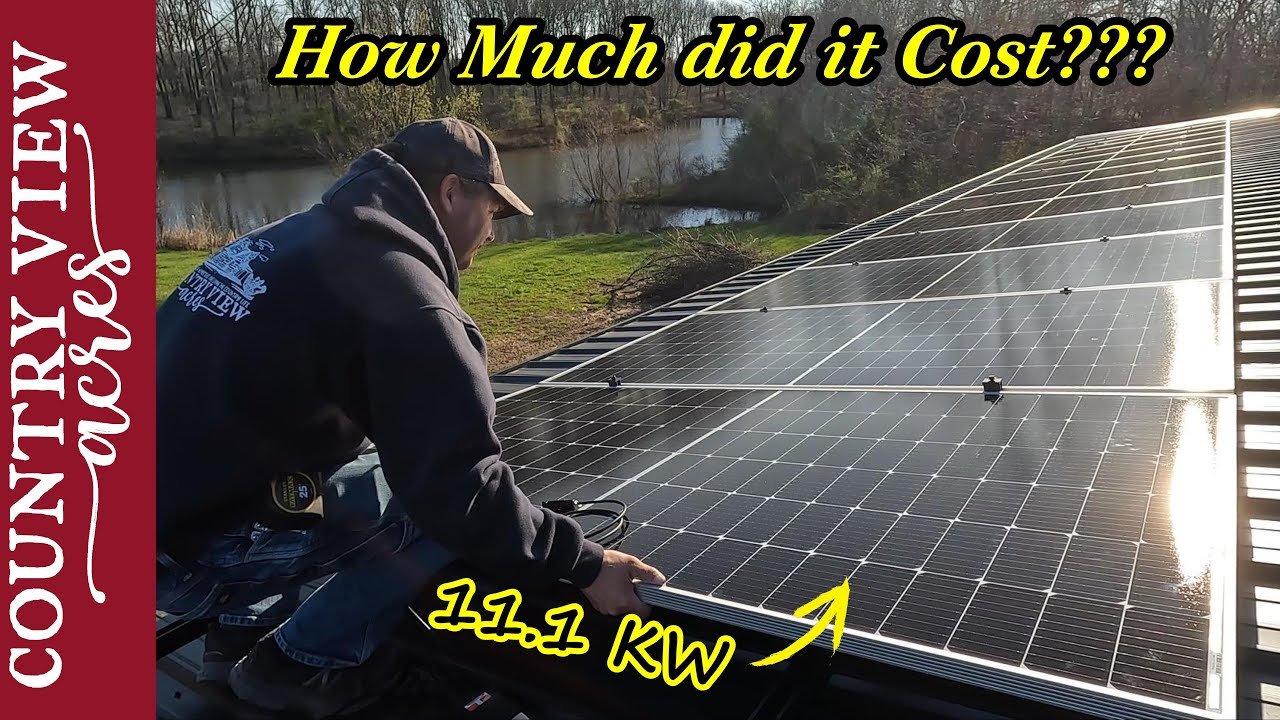
Image source: YouTube / Country View Acres (Formerly Smalltown442) (thumbnail, fair use)
Each project had different priorities. Always know yours before you sign anything.
The Decision Checklist: What to Know Before You Sign
Before you commit, run through this quick checklist.
- Did you get three itemized quotes from licensed installers?
- Does the quote include all site prep, trenching, permits, and engineering stamps?
- Is the federal 30 percent ITC factored into your payback math?
- Have you checked your utility's net metering policy and interconnection fees?
- Does your HOA allow ground-mount solar within your setback rules?
If you answered no to any of these, pause. A rushed decision costs more than a patient one.
Questions to Ask Every Installer (Before They Leave Your Property)
- What brand and model of panels and inverter are you quoting?
- Do you handle all permits and interconnection paperwork?
- What is your workmanship warranty, and what does it cover?
- How do you handle potential roof or property damage during installation?
- Can you provide three references from recent ground-mount projects?
A good installer answers these clearly and in writing. If they dodge, move on.
Frequently Asked Questions
How much does a ground-mounted solar system cost per watt?
Ground-mounted solar costs $2.80 to $4.50 per watt installed as of 2026. The wide range depends on racking type, trenching distance, labor rates in your area, and site conditions like soil and slope.
Is ground-mount cheaper than roof-mount?
No, ground-mount typically costs 30 to 50 percent more per watt. The added expense comes from racking, trenching, and foundation work. But the premium can be worth it if your roof is shaded or needs replacement soon.
Do ground-mounted solar panels need special permits?
Yes, most counties require a building permit and an electrical permit for ground-mount systems. Some also require a stamped structural engineering plan. Your installer should handle this process.
How long does it take to install ground-mounted solar panels?
A typical ground-mount installation takes 2 to 4 weeks. Site prep and trenching add the most time. Permitting and utility interconnection can add another 4 to 8 weeks before the system goes live.
Do ground-mounted solar panels add property value?
Yes, owned solar systems typically increase property value. The increase depends on your location and utility rates. Leased systems can complicate a home sale, so ownership is usually better for resale.
Can I install ground-mounted panels myself to save money?
DIY installation is possible but risky. You need expertise in electrical work, structural engineering, and permit compliance. Mistakes can void warranties, fail inspections, or create safety hazards.
Professional installation is strongly recommended.

Similar Posts