How Much Do Solar Panels Save Per Month?
Renewable Energy Systems Specialist & Lead Solar Hardware Tester
If you’ve ever typed “how much do solar panels save” into a search engine, you’ve probably seen a headline that says something like “$10,000 to $30,000 over 20 years.” That number isn’t wrong exactly. But it’s also not very useful. Your savings depend on your specific situation.
Your electricity rate, your roof, and your utility’s policies all play a huge role.
As of 2026, a typical 7 kW solar system costs between $17,000 and $25,000 before the federal tax credit. After the 30% credit, you are looking at $12,000 to $17,500. The actual savings you see each year can range from $600 to over $2,000.
Let’s walk through the factors that determine your personal number so you can figure out what makes sense for your home.

The Problem: Why You Can’t Trust a Single Number for Solar Savings
The reason you can’t just grab a single number from a website is simple: solar savings are local. Two homeowners with identical houses and identical systems can have wildly different savings depending on where they live and who their utility is.
Here is what makes the number vary so much:
- Electricity rates, The price you pay per kilowatt-hour (kWh) is the single biggest factor. If you pay $0.08 per kWh, you need a lot of panels to save $1,000. If you pay $0.25 per kWh, the same system saves you three times as much.
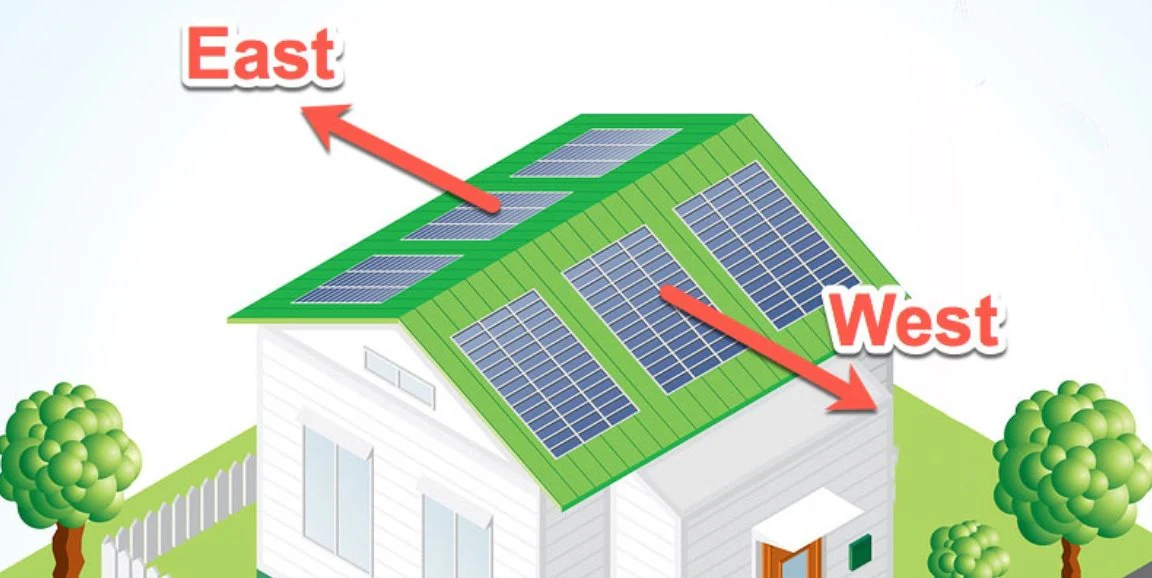
- Sun exposure, Your roof’s direction, pitch, and shading determine how much power your panels actually produce. A south-facing roof in Arizona produces about 30% more electricity per year than the same system on a north-facing roof in Ohio.
- Net metering rules, Some utilities credit you the full retail rate for extra power you send to the grid. Others pay you a tiny wholesale rate. That difference alone can cut your savings in half.
Our research shows that the gap between the best-case and worst-case scenario for the same solar system can be $40,000 or more over 25 years. That is why a generic answer is worse than useless. It gives you a false sense of certainty.
The Quick Answer: What Most Homeowners Actually Save
Most homeowners save $600 to $2,000 per year. The average payback period is 5 to 15 years. Total savings over 25 years range from $15,000 to $60,000.
Your personal number depends on three levers. Let’s look at each one.
The 3 Levers That Control Your Savings
If you want to predict your own savings, you only need to understand three variables. Everything else is detail.
Your Electricity Rate – The Biggest Lever
Your electricity rate is the price you pay for every kilowatt-hour you pull from the grid. The higher your rate, the more each solar panel saves you.
Here is a quick table showing how the same 7 kW system performs at different rates:
| Average Electricity Rate | Annual Savings (7 kW system) | Payback Period |
|---|---|---|
| Under $0.10/kWh (low) | $600 – $900 | 12 – 15 years |
| $0.10 – $0.14/kWh (average) | $900 – $1,400 | 8 – 12 years |
| Over $0.14/kWh (high) | $1,400 – $2,200+ | 5 – 8 years |
You can find your rate on your latest electric bill. Look for the line that says “Energy Charge” or “Rate.” It is usually listed in cents per kWh.
Your Roof’s Sun Exposure (Direction, Shade, Pitch)
This is the second biggest factor. Your panels only save money when they produce power. The amount they produce depends on how much sunlight hits them.
- Direction, South-facing roofs get the most sun. East and west-facing roofs produce about 15 to 20% less. North-facing roofs produce the least. A north-facing system can still save you money, but the payback period is longer.
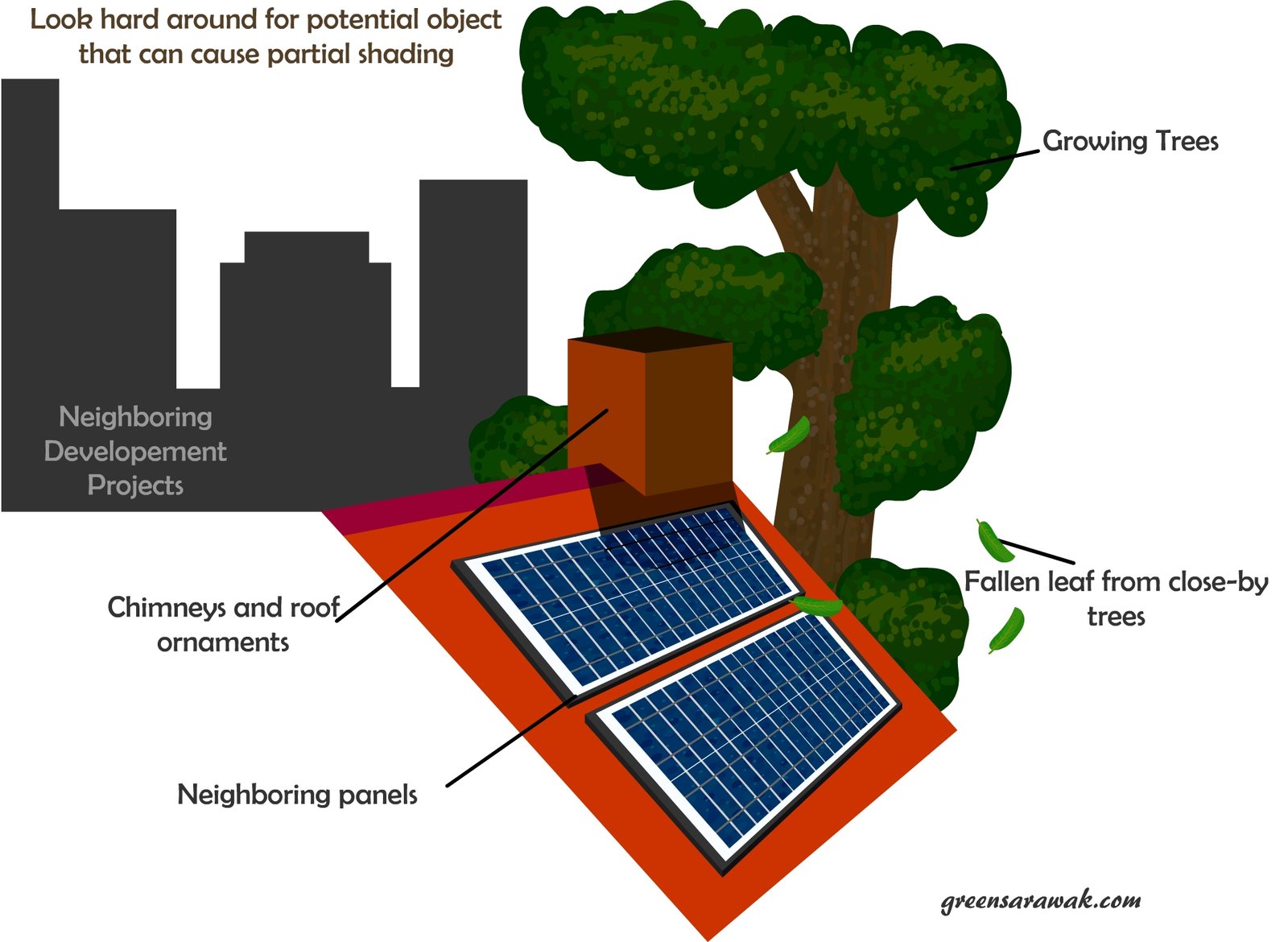
- Shade, Even partial shade from a tree or chimney can cut production by 25 to 50%. Some inverter technologies handle shade better than others, but shade is always a problem. You want a clear sky between 10 a.m. and 4 p.m.
- Pitch, A roof angle of 30 to 45 degrees is ideal. Flat roofs work too, but you need to tilt the panels. Steeper roofs are less common but still workable.
A quick rule of thumb: the same 7 kW system in a sunny state like Arizona produces about 10,500 kWh per year. In a cloudy state like Ohio, it produces about 7,500 kWh. That is a 30% difference in savings.
Your Utility’s Net Metering Rules
Net metering is how your utility credits you for the extra power your panels send to the grid. The rules vary wildly by state and even by utility.
- Full retail net metering, The utility credits you the same rate you pay for every extra kWh. This is the best policy. It lets you use the grid as a free battery. Your savings are maximized.
- Reduced net metering, The utility pays you a lower rate for extra power, often the wholesale rate (around $0.03 to $0.05 per kWh). This cuts your savings significantly.
- Buyback only, Some utilities do not offer net metering at all. They simply pay you a fixed low rate for any power you send back. In this case, you want to size your system to cover only your daytime usage.
Check your utility’s website for “net metering” or “solar interconnection.” If you are in a state like California with NEM 3.0, your savings will be lower than in a state like New Jersey with full retail net metering.
Step-by-Step: How to Calculate Your Personal Solar Savings
Now let’s put it all together. Here is a simple process you can follow right now.

Step 1: Find your annual electricity usage and rate.
Grab your latest electric bill. Look for your total kWh usage for the year. Also find your rate per kWh.
For example, if you used 12,000 kWh and paid $1,800, your rate is $0.15 per kWh.
Step 2: Estimate the system size you need.
A good rule of thumb is to size your system to cover 100% of your annual usage. In a sunny state, you need about 1 kW of panels for every 1,400 kWh you use. In a cloudy state, you need about 1 kW for every 1,100 kWh.
So if you use 12,000 kWh in a sunny state, you need roughly 12,000 / 1,400 = 8.5 kW.
Step 3: Estimate the cost after the federal tax credit.
The average cost per watt for a solar system is $2.50 to $4.00. For a 7 kW system, that is $17,500 to $28,000. The 30% federal tax credit reduces that to $12,250 to $19,600.
Step 4: Estimate your annual savings.
Your annual savings are roughly equal to the amount of electricity your system produces times your rate. If your system produces 10,000 kWh per year and your rate is $0.15, your annual savings are $1,500.
Step 5: Calculate your payback period.
Divide the after-credit cost by your annual savings. For example, $15,000 / $1,500 = 10 years. After 10 years, your system is generating free power.
You can also use a free online tool like the NREL PVWatts calculator to get a more precise estimate. It factors in your specific location and roof details.
Real Scenarios: Two Homeowners, Two Very Different Payback Periods
Let’s make this concrete with two real-world examples. These are based on typical conditions in different parts of the country.
Scenario A: The High Saver
- Location: Massachusetts (high electricity rates, around $0.28/kWh)
- Roof: South-facing, no shade
- System size: 7 kW
- System cost after credit: $15,400
- Annual production: 8,500 kWh
- Annual savings: $2,380
- Payback period: 6.5 years
- Total savings over 25 years: ~$47,000
Scenario B: The Moderate Saver
- Location: Texas (moderate rates, around $0.12/kWh)
- Roof: East-facing, some afternoon shade
- System size: 7 kW
- System cost after credit: $12,600
- Annual production: 7,500 kWh
- Annual savings: $900
- Payback period: 14 years
- Total savings over 25 years: ~$15,000
Both scenarios save money. But Scenario A saves more than three times as much over the life of the system. The difference comes down to rate, sun exposure, and net metering.
If you live in a high rate area with a good roof, solar is a no-brainer. If you live in a low rate area with a less ideal roof, it still works. It just takes longer to pay off.
The 5 Mistakes That Cost You the Most in Solar Savings
Even a well-designed solar system can underperform if you make these common errors. Our research shows these five mistakes are the most expensive.
Mistake 1: Choosing the wrong system size.
Going too small leaves you still paying a big bill. Going too large means you give away extra power at a low buyback rate. An installer who wants a bigger commission might oversize your system.
Get a quote based on your actual annual usage, not a guess.
Mistake 2: Ignoring panel orientation and shade.
Your roof’s direction matters more than you think. An east-facing roof produces 15 to 20% less than a south-facing one. Trees that cast afternoon shade can cut production by 30% or more.
Always get a shade analysis during the site survey.
Mistake 3: Not checking your utility’s net metering policy.
Some homeowners assume net metering is the same everywhere. It is not. If your utility pays a wholesale rate for extra power, your savings drop significantly.
Call your utility or check their website before signing a contract.
Mistake 4: Forgetting the long-term costs.
Solar panels are low maintenance, but they are not free. Inverters need replacing around year 10 to 15. Panels lose about 0.5% efficiency each year.
Roof work in the future requires removing and reinstalling the panels. Factor these costs into your payback calculation.
Mistake 5: Choosing the cheapest installer.
Low upfront cost often means lower quality equipment or poor installation. A bad install can reduce production by 20% or more. Read reviews, check for NABCEP certification, and get at least three quotes.
Long-Term Costs You Shouldn’t Ignore (Inverters, Cleaning, Roof Work)
Solar panels are durable, but they are not a set-it-and-forget-it investment. Knowing what costs come up later gives you a more accurate picture of your true savings.

Inverter replacement.
A typical string inverter lasts around 10 to 15 years. Replacing one costs $1,000 to $2,000 including labor. Microinverters last longer, about 20 to 25 years, but they are more expensive to replace if one fails.
Budget for this cost in your long-term plan.
Panel cleaning.
Dust, pollen, and bird droppings can reduce production by 5 to 15%. In most climates, rain does the job. If you live in a dry area or near a dirt road, plan to clean the panels once or twice a year.
Professional cleaning costs $150 to $300 per visit.
Roof replacement.
If your roof is older than 15 years, you will likely need to replace it during the life of your solar system. Removing and reinstalling panels costs $2,000 to $5,000. Factor this into your payback if your roof is close to the end of its life.
Degradation.
All solar panels lose efficiency over time. Most manufacturers guarantee 80% output after 25 years. That means a 7 kW system will produce about 5.6 kW at the end of its life.
Your savings slowly decrease each year.
When Solar Simply Doesn’t Save Enough (and What to Do Instead)
Solar is not the right move for every home. Here are the situations where the numbers just don’t work.
Your electricity rates are very low.
If you pay under $0.08 per kWh, the payback period stretches beyond 15 years. At that point, you might be better off investing that money elsewhere or focusing on energy efficiency upgrades first.
Your roof is heavily shaded.
If your roof gets direct sun for less than four hours a day, your production will be too low. Even with microinverters, you will struggle to see meaningful savings. Consider a community solar subscription instead.
You plan to move within 5 years.
The payback period for most systems is 8 to 12 years. If you might sell your home in 5 years, you may not recoup the full cost. Solar panels do add resale value, but it is rarely 100% of the cost.
Your utility has terrible net metering.
Some utilities pay only the wholesale rate for extra power. In that case, you need to size your system to cover only daytime usage. Even then, the savings are modest.
An energy audit and efficiency upgrades might give you a better return.
What to do instead.
If solar does not make sense for your home, look into these alternatives:
- Community solar, You subscribe to a local solar farm and get a credit on your bill. No roof work required.
- Energy efficiency upgrades, Better insulation, LED lighting, and a smart thermostat can reduce your bill by 20 to 30%.
- Time-of-use rate changes, Shift your energy use to off-peak hours and save without any equipment.
Frequently Asked Questions
How long does it take for solar panels to pay for themselves?
The average payback period is 8 to 12 years. Your actual timeline depends on your electricity rate, net metering policy, and roof conditions. In high-rate states, payback can be as short as 5 years.
Do solar panels increase home value?
Yes. Studies show that owned solar panels add about 3 to 4% to a home’s resale value. Leased systems do not add value because the buyer takes over the lease.
The increase depends on your local market.
What happens if my panels produce more electricity than I use?
With net metering, the extra power goes to the grid and you earn credits. Those credits offset your usage at night or on cloudy days. If your utility does not offer net metering, you may get a lower buyback rate.
Can I run my house on solar panels alone?
Yes, but only if you have a battery storage system. Without a battery, your panels only work when the sun is shining. With a battery, you can store extra power for overnight use.
Off-grid systems require more panels and a larger battery bank.
What happens to my savings if the power goes out?
Standard grid-tied solar systems shut off during a blackout for safety reasons. You lose power until the grid comes back. A solar battery system can keep your lights on during an outage.
Without a battery, you have no savings during a blackout.
How often do solar panels need maintenance?
Solar panels require very little maintenance. Rain does most of the cleaning. You should inspect them once a year for debris or damage.
Professional cleaning every 2 to 3 years is usually enough. The inverter may need replacement after 10 to 15 years.
Your Decision Guide: What to Do Next
You now have a clear framework for figuring out your own solar savings. Here is your action plan.
Step 1: Gather your data.
Find your annual electricity usage and rate from your last 12 months of bills. Note your roof’s direction and check for shade. Visit your utility’s website to find their net metering policy.
Step 2: Use a free calculator.
Try the NREL PVWatts Calculator. It uses your location, roof details, and system size to give you a production estimate. It is the most reliable free tool available.
Step 3: Get three quotes from local installers.
Ask for a site survey and a detailed proposal. Compare the cost per watt, the equipment warranty, and the installer’s reputation. Do not sign anything until you have at least three options.
Step 4: Run the payback math yourself.
Divide the after-credit cost by your estimated annual savings. If the payback is under 12 years, solar is a solid investment. If it is over 15 years, consider alternatives like community solar or efficiency upgrades.
Step 5: Make your decision.
If the numbers work, solar is one of the best long-term investments you can make for your home. If they do not, you have other options. Either way, you now know the real answer to “how much do solar panels save” for your specific situation.

Similar Posts