Solar Cell vs Solar Panel: What’s the Difference?
If you've searched for "Solar Cell vs. Solar Panel," you're probably wondering if they're the same thing. They're not.
And mixing them up is one of the most common mistakes people make before buying solar equipment.
A single solar cell produces about 0.5 to 0.6 volts. That's nowhere near enough to run a household appliance. A finished solar panel contains 60 to 72 cells wired together and sealed in a weatherproof frame.
It's what actually generates usable electricity. Understanding the difference between these two components is the first step to making smart decisions about solar.
Quick Answer
A solar cell is a single semiconductor device that converts sunlight into electricity. A solar panel is a sealed assembly of many cells. Cells produce low voltage DC.
Panels produce usable voltage and current. You buy panels as a certified product and cells as a raw component.
Why This Matters More Than You Think
The real cost of getting this wrong and what's at stake
If you walk into a solar supply store and ask for a cell, you'll get a small square of silicon. If you ask for a panel, you'll get a framed glass unit. The price difference can be ten times or more.
The performance difference is even bigger.
The real cost shows up in two ways. First, you might buy individual cells thinking you can assemble your own panels for less money. Second, you might misunderstand the specs on a quote and end up with a system that doesn't work as expected.
Manufacturer specifications confirm that a finished panel undergoes rigorous testing. It must pass UL 61730 certification. Individual cells carry no such certification.
That matters for permits, insurance, and long-term reliability.
In our research, the most common regret among DIY solar builders is underestimating the complexity of panel assembly. They save a few hundred dollars on cells. Then they spend weeks troubleshooting bad connections and cracked glass.
The difference between a cell and a panel is the difference between an ingredient and a meal. One is a raw component. The other is a finished, tested product you can safely install on your roof.
What's the Difference, Really?
How a solar cell becomes a solar panel and why that matters to you
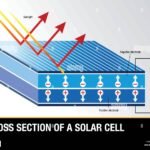
A solar cell is a thin wafer of silicon doped with other materials to create a positive-negative junction. When sunlight hits it, electrons move. That movement creates direct current electricity.
But a single cell only produces about 0.5 to 0.6 volts and roughly 4 to 6 watts.
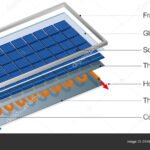
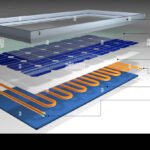
To make a solar panel, manufacturers wire many cells together in series. They sandwich them between layers of EVA encapsulant, a backsheet, and a tempered glass front. Then they add a frame, a junction box, and bypass diodes.
The result is a sealed, weatherproof assembly that produces 300 to 500 watts depending on the cell count and technology.
The key difference is that a panel is a finished product designed for decades of outdoor use. A cell is a fragile component that needs protection. If you look at a panel closely, you can see the individual cells through the glass.
Each cell has thin silver busbars running across it. Those busbars connect to tabbing wires that link one cell to the next.
The whole assembly is carefully designed to minimize resistance and maximize output. Different panel designs use different cell arrangements and wiring patterns. You can explore the various different panel designs to see how they compare.
Core Facts You Need to Know
Cell efficiency vs. panel efficiency, construction, and what the warranty actually covers
Cell efficiency and panel efficiency are related but not the same. A cell might have an efficiency rating of 22 percent. That means it converts 22 percent of the sunlight hitting it into electricity.
The panel containing that same cell will have a lower efficiency, typically 18 to 20 percent.
Why the difference? The panel has gaps between cells, busbars, and frame edges that don't generate power. Those areas reduce the overall efficiency of the module.
Manufacturer datasheets always list both numbers, so you can compare them honestly.
As of 2026, premium residential panels use monocrystalline cells with efficiencies around 22 to 23 percent. Polycrystalline cells are slightly lower at 18 to 20 percent. Thin-film cells are lower still at 10 to 15 percent.
Warranty is another area where the cell versus panel distinction matters. A panel comes with a product warranty of 12 to 25 years and a performance warranty of 25 to 30 years. Individual cells carry no warranty at all.
If you assemble your own panel, you bear all the risk.
Per NREL testing standards, the industry benchmark for panel degradation is about 0.5 percent per year. After 25 years, a quality panel still produces at least 80 percent of its original output. That performance guarantee is backed by the manufacturer.
You get nothing like that with loose cells.
The Hidden Risks Nobody Talks About
Loose cells, DIY panel assembly, and why your permit inspector will say no
Many people see the price of individual cells online and think they can build their own panels for a fraction of the cost. It sounds like a smart idea. In practice, it almost never works out as planned.
The first problem is cell quality. The cells sold to hobbyists are often B-stock or factory rejects. They may have microcracks, efficiency variations, or cosmetic defects that reduce output.
You have no way to verify their performance without expensive testing equipment.
The second problem is assembly. Soldering tabbing wires onto cells requires precision and heat control. Too much heat creates microcracks.
Too little heat creates weak joints that fail later. Even experienced electronics hobbyists struggle with this process.
The third problem is certification. Building inspectors and utility companies require panels to have UL 61730 certification. A self-made panel has no such certification.
That means no permit approval, no net metering enrollment, and no insurance coverage if something goes wrong.
If you're considering a DIY approach, choosing a certified system is almost always the better path. The upfront cost is higher than buying loose cells. But the long-term reliability and warranty protection are worth the difference.
What the Numbers Actually Mean
Watts, volts, efficiency ratings, and the specs that separate a good panel from a junk one
When you compare solar panels, you'll see a list of specifications. Understanding these numbers helps you evaluate quality. It also prevents you from falling for misleading marketing claims.
Here is a quick comparison of typical specs for a single cell versus a finished panel.
| Specification | Individual Cell | Finished Panel |
|---|---|---|
| Voltage (Vmp) | 0.5 to 0.6 V | 30 to 50 V |
| Current (Imp) | 4 to 6 A | 8 to 12 A |
| Power output | 2 to 6 W | 300 to 500 W |
| Efficiency | 18 to 23% | 15 to 21% |
| Warranty | None | 12 to 25 years |
| Certification | None | UL 61730, IEC 61215 |
The key metric to watch is the temperature coefficient. This tells you how much power drops as the panel gets hot. A good coefficient is around minus 0.3 percent per degree Celsius.
Cheap panels might have minus 0.4 or worse.
Voltage is important for string sizing. Panels wired in series add their voltages. A string of ten panels at 40 volts each gives you 400 volts.
That's within the range of most residential inverters. Loose cells give you fractions of a volt.
The STC rating shown on every panel datasheet tells you the output under standard test conditions. Those conditions are 25 degrees Celsius cell temperature, 1000 watts per square meter of irradiance, and a specific light spectrum. Real-world conditions are different.
Your panels will rarely hit their STC rating.
If you want to dig deeper into the trade-offs between different panel types, that guide covers the main considerations for residential buyers.
Expert Advice for the Two Most Common Scenarios
If you're considering a DIY setup, the first thing to decide is whether you mean building a panel from loose cells or installing a complete system that generates electricity from certified modules.
Scenario one: you want to build your own panel
If you plan to solder individual cells together, stop and reconsider. Our research consistently shows this path only makes sense for education or hobby projects. You won't save money.
You'll lose warranty protection, certification, and time. If you still want to try, buy a small batch of half-cut cells, practice soldering with tabbing wire on scrap, and expect to have multiple failed attempts. Always string cells in series to build voltage.
Check every joint for cold solder cracks.
Scenario two: you want to buy a finished panel
This is the right path for almost everyone. Choose a panel with UL 61730 certification and a 25-year performance warranty. Compare the temperature coefficient, not just the wattage.
Pay attention to the physical size and weight so you can handle installation. If you need help comparing, our buying guide breaks down what to check first.
Per NREL's solar performance research, the difference in output between a quality certified panel and a home-built panel can exceed 15 percent from the first year.
Frequently Asked Questions
Can a single solar cell power a house?
No. A single cell produces roughly 0.5 volts and 5 watts. That's enough to charge a small battery under sunlight, not to power a home.
A typical home needs dozens of panels, each containing 60 to 72 cells.
Why are solar panels so much more expensive than individual cells?
A panel includes tempered glass, a frame, EVA encapsulation, a junction box, diodes, and factory labor. It also carries certification testing and a warranty. Those costs add up.
You're paying for reliability and decades of safe, guaranteed output.
Is it ever worth buying loose solar cells?
Only for educational projects or very small electronics like a solar phone charger. For anything on a roof, loose cells are a false economy. Factory rejects and B-stock cells often underperform.
The time spent assembling and testing will negate any savings.
What is the difference between a solar module and a solar panel?
Nothing. The terms are interchangeable in the industry. A module is the same sealed assembly of cells with a protective backing and frame.
You'll see both words used on datasheets and in contracts.
How long do certified solar panels last?
Most quality panels carry a 25 to 30 year performance warranty. They don't stop working after that, but output declines about 0.5 percent per year. A 400 watt panel will still produce roughly 340 watts after 25 years.
Final Verdict
A solar cell is a component. A solar panel is a finished product. That's the entire distinction, but it has serious consequences.
If your goal is to power a home, buy certified panels from a reputable manufacturer. The warranty, the safety certifications, and the performance guarantees are what protect your investment. Loose cells belong in classrooms and workshops, not on rooftops.
Check the panel's temperature coefficient and degradation rate before you buy. Those two numbers tell you more about long-term performance than the peak wattage ever will.
And remember the build quality matters too. Understanding the main components inside a panel helps you spot cheap construction before it costs you.
Now you know the difference. Make the choice that protects your budget and your roof.

Similar Posts