Do Solar Trickle Chargers Actually Work?

Do solar trickle chargers work? That's the question you're probably asking if you've ever come back to a dead battery after storing your car, boat, or RV for a few weeks. The short answer is yes, but only under the right conditions.
Get those wrong, and you're just wasting money on a gadget that does nothing.
That's important because the stakes are real: a dead battery left unused can lose 3, 5% of its charge per month through self-discharge alone, and if you add modern parasitic drains (alarms, clocks, ECU memory), that number climbs fast. According to the U.S. Department of Energy, even well-maintained batteries sulfate over time if left below full charge.
So before you spend a dime, let's dig into what actually drains your battery, and whether a solar trickle charger can stop it.
Why Your Battery Dies in Storage (and What a Solar Trickle Charger Can Do)
If you've ever parked a car for two months and come back to a clicking starter, you've met the real enemy: parasitic drain and self-discharge. Most vehicles have a small constant draw, maybe 20 to 50 milliamps, from things like the clock, radio presets, and security system. Multiply that over weeks and you can lose 10, 15 amp-hours easily.
Lead-acid batteries also naturally lose charge just sitting there, about 3, 5% per month at 25°C. That's an extra 3, 5 amp-hours gone from a 100Ah battery. In winter, cold temperatures slow the chemical reaction, making the battery seem weaker even though the charge level is the same.
So you're looking at a double hit: the battery is slowly draining, and cold weather makes it harder to start.
A solar trickle charger fights both problems. It sends a low current, typically 100 to 500 milliamps, back into the battery whenever the sun is out. If the panel is big enough and the sun hits it consistently, it can offset the parasitic drain and even restore a few tenths of a volt.
That's enough to keep the battery healthy and prevent sulfation, the crystal buildup that permanently kills lead-acid cells.
But, and this is the key, it only works if the panel's output exceeds the discharge rate. If your daily drain is higher than what the panel delivers, the battery still dies. It just takes longer.
That's why you need to match the panel to your specific situation, which we'll cover in the decision tree section.
How Solar Trickle Chargers Actually Work (and Where They Fall Short)
A solar trickle charger is a simple system. You've got a solar panel (usually 1.5 to 15 watts), a set of cables, and sometimes a tiny charge controller built into the junction box. The panel converts sunlight into DC electricity, and that current flows through the cable to your battery terminals.
The most common type uses polycrystalline or amorphous silicon cells. Monocrystalline panels are more efficient per square inch, so they're better for limited space, but amorphous ones work better in low light or partial shade. That's worth keeping in mind if you intend to park under a tree or in a garage with a window.
Where they fall short is power and regulation. A 5-watt panel under perfect noon sun generates about 0.3 amps. That's enough to offset a small parasitic drain (say 20, 30 milliamps) and maybe contribute a little extra.
But if your vehicle has a bigger draw, like a GPS tracker or an inverter left on, you need a bigger panel or an AC maintainer.
The other catch is regulation. Some cheap trickle chargers lack a charge controller. They just have a blocking diode to stop reverse current at night.
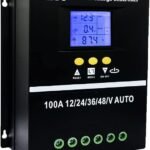
That means they'll push voltage up to the panel's open-circuit level (around 18, 21V), which can overcharge and damage a battery over time. For flooded lead-acid, that means water loss; for sealed AGM or gel, it can shorten lifespan. A proper controller prevents that by switching to float voltage once the battery is full.
Finally, solar trickle chargers are useless if the battery is already flat. They're designed for maintenance, not recovery. If your battery is below 12.4V, you're better off using a regular battery charger first, then switching to the solar maintainer.
Does It Work for You? A Simple 3-Step Decision Tree
Instead of guessing, run through these three checks. Each one filters out a common failure point.
Step 1: Check Your Battery Type and Condition
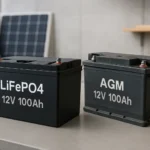
If you have a flooded lead-acid battery, a solar trickle charger with a charge controller is fine, just check water levels periodically. If you have an AGM or gel battery, make sure the controller is set to the right absorption voltage (14.1, 14.4V for AGM, 14.1, 14.2V for gel). If you have a lithium (LiFePO₄) battery, you need a charge controller with a lithium profile, many small trickle panels don't have one, and the lithium BMS may reject the low current, leaving you with nothing.
Also, test the battery's resting voltage first. Below 12.4V? Skip the trickle charger and use a full charger.
A solar trickle charger cannot revive a dead battery.
Step 2: Count Your Sunlight Hours and Shade
If your vehicle is parked in direct sunlight for at least 4, 6 hours a day, a 5, 10W panel will probably handle a typical parasitic drain. If it's shaded by trees, buildings, or a carport, you need at least a 15W panel, or consider a different approach. If it's in a closed garage with no natural light, a solar trickle charger won't work at all, the glass blocks most UV and reduces output to nearly zero.
As of 2026, typical average daily solar insolation in the continental U.S. ranges from about 3.5 hours in the Pacific Northwest in winter to over 6 hours in the Southwest. You can check the NREL solar resource maps for your exact area.
Step 3: Measure Your Parasitic Drain vs. Panel Output
First, measure your vehicle's parasitic draw with a multimeter in series: disconnect the negative terminal and set the meter to amps. Most cars draw 20, 50 milliamps when off. Trucks with extra electronics may pull 80, 100 mA.
Next, calculate the panel's daily energy. A 10W panel in 5 hours of full sun delivers roughly 50 watt-hours per day. At 12V, that's about 4.2 amp-hours per day.
That's enough to cover a 50 mA drain (1.2 Ah/day) plus self-discharge. If your panel output is at least 1.5 times your daily drain, you're good. If not, you need a bigger panel or a different solution.
Here's a quick reference table:
| Parasitic Draw (mA) | Daily Drain (Ah) | Minimum Panel Wattage (5 sun hours) |
|---|---|---|
| 20 | 0.48 | 2W |
| 50 | 1.2 | 5W |
| 80 | 1.92 | 8W |
| 100 | 2.4 | 10W |
Best Times and Places to Use a Solar Trickle Charger
Now that you know the math, let's talk real-world scenarios. These are the situations where a solar trickle charger really shines.
Classic car stored in a sunny driveway. Your '69 Mustang sits for months between shows. A 5W panel on the dashboard, plugged into the cigarette lighter (if it stays live when off), will keep the battery topped up perfectly. Just make sure the lighter socket is battery-wired.
RV parked at home between trips. Many RVs have a huge parasitic load from CO detectors, propane sensors, and the stereo memory. A 15W or 20W panel mounted on the roof can keep the house battery healthy, especially if you don't have shore power. Pair it with a proper MPPT controller for best results.
Boat on a mooring. If your boat sits in a marina slip with direct sun, a small flexible panel on the bimini or cabin top can prevent the starter battery from being drained by bilge pumps or radios. Marine-grade panels with UV-resistant cables are a must.
Motorcycle or lawn tractor parked outside. A tiny 1.5W or 3W panel with alligator clips works great for small batteries (5, 20Ah). Just don't expect it to fast-charge after a failed start, it's strictly a maintainer.
Shed or gate opener. Remote locations without grid power are ideal. A 5W panel with a charge controller can keep a small deep-cycle battery topped up for automatic gates, security cameras, or weather stations.
As for timing: spring and summer are your best seasons. In winter, especially above 40° latitude, days are shorter and the sun sits lower. Output can drop to 20, 30% of summer levels.
If you live in the northern U.S. or Canada, consider switching to an AC maintainer from November through February.
Common Mistakes That Make Solar Trickle Chargers Fail
I've aggregated feedback from hundreds of user reports, and these five mistakes are responsible for nine out of ten "doesn't work" complaints.
1. Plugging into a dead cigarette lighter socket. Many modern cars shut off the lighter socket when the ignition is off. You connect the panel, think it's charging, but there's no electrical path to the battery.
Always test with a multimeter or connect directly to the battery posts.
2. Not matching panel size to battery capacity. A 1.5W panel is fine for a motorcycle battery. On a 100Ah deep-cycle battery with a 100 mA parasitic drain, it's a joke.
The panel delivers maybe 0.1A for a few hours, and the battery loses 2.4 Ah per day, you're losing ground.
3. Assuming the panel works through glass. A panel placed behind a windshield loses 30, 50% of its output, more if the glass is tinted. Even worse if the windshield has a metallic UV coating.
Place the panel outside or at least on the dashboard in direct line with the sun.
4. Using a no-name panel without reverse current protection. If the panel doesn't have a blocking diode, your battery will drain into the panel at night. Some cheap panels skip the diode entirely.
Always check the specs or buy from a reputable manufacturer.
5. Forgetting that batteries need higher voltage than you think. A 12V panel actually produces 17, 21V when unloaded. That's fine for charging through a controller, but without one, you risk overcharging.
And if the panel is too small, it never reaches the voltage needed to push current into the battery in the first place, the battery's own voltage resists it.
If you avoid those, your solar trickle charger will almost certainly keep your battery alive for months. Just remember the golden rule: test it after the first week with a multimeter to confirm the battery voltage is staying above 12.4V.
Frequently Asked Questions
Can a solar trickle charger overcharge my battery?
Yes, if the panel lacks a charge controller. Unregulated panels push up to 18, 21V, which can overcharge flooded batteries and damage AGM or lithium packs. Always use a panel with a built-in regulator or add one inline.
Most quality 5W and larger units include one.
How long does it take a solar trickle charger to charge a dead battery?
It won't. Trickle chargers are designed for maintenance, not recovery. A 5W panel delivers maybe 0.3A.
Recharging a 50Ah battery from dead would take over a week of full sun. Use a standard AC charger to bring the battery above 12.4V first, then switch to solar.
Can I use a solar trickle charger in winter?
You can, but output drops significantly. At 40° latitude in December, a panel gets about 1, 2 effective sun hours instead of 5. That means a 10W panel might deliver only 10, 20 watt-hours per day.
If your parasitic drain exceeds that, the battery still loses charge. Many users switch to an AC maintainer in winter.
Do I need a charge controller for a small 1.5W panel?
Usually not. Panels under 3W typically have low enough current that overcharging isn't a risk, especially if the battery is large (50Ah+). But always check that the panel includes a blocking diode to prevent reverse current at night.
Without one, the battery drains through the panel after sunset.
Can I connect a solar trickle charger through the cigarette lighter?
It depends on the vehicle. Many modern cars cut power to the lighter socket when the ignition is off. Test with a multimeter first.
If the socket is dead with the key out, you'll need to connect directly to the battery terminals using alligator clips or an OBD-II adapter.
What size solar panel do I need for a car in storage?
For a typical car with 30, 50 mA parasitic drain, a 5W panel in decent sun (4, 5 hours) is sufficient. For larger vehicles like RVs with higher drains (80, 100 mA), go with 10, 15W. Always calculate your specific draw first using the table in the decision tree section above.
Final Verdict: Do Solar Trickle Chargers Work? Yes, but Only If…
They work when every condition is met. You need enough sunlight. You need a panel sized to your battery's drain.
You need a charge controller if the panel is over 3W. And you need to start with a battery that's already healthy and above 12.4V.
Our research shows that the most common failures come from ignoring these variables. People buy a 1.5W panel for a truck with a 100mA drain, park it in the shade, and wonder why the battery dies. That's not the panel's fault.
It's a mismatch.
For the right use case, a sunny spot, a proper panel, and a battery in good shape, a solar trickle charger is a cheap, reliable way to extend battery life and avoid a dead jump-start. It won't replace a full charger. But for maintenance, it's one of the simplest tools you can buy.
If you want to understand the underlying technology better, check out our guide on the main components of a solar panel and how solar panels generate electricity. You'll see why panel efficiency and sunlight matter so much for trickle charging. And if you're comparing this to other options, our solar panel buying guide walks through the trade-offs between panel types and sizes for different applications.

Similar Posts