How Many Solar Panels to Charge Your EV?
If you search "how many solar panels to charge an electric car?" you will get answers ranging from four to twenty panels. That wide range is not wrong, but it is not helpful either. It leaves you guessing and that is frustrating when you are trying to plan a real purchase.
The truth is the number depends on three specific numbers that belong to you. Manufacturer specifications for a typical 400-watt residential panel provide a solid starting point. But your daily driving distance, your car's efficiency in miles per kWh, and the peak sunlight hours where you live determine the final count.
Let us walk through those numbers one at a time so you can calculate your exact answer.
Quick Answer
You need roughly 7 to 12 solar panels. A 40-mile daily commute needs about 7 panels. A 100-mile daily trip needs around 12 panels.
Use the step-by-step guide below for your exact situation.
Why "It Depends" Is the Only Honest Answer
The frustrating truth is that no single number works for everyone. If we just said "you need eight panels" and your house gets three peak sun hours while your neighbor gets six, you would both end up with the wrong system. One of you would undershoot and the other would overspend.
The calculation is simple once you break it down. You start with how much energy your car uses each day. Then you figure out how much energy one solar panel produces where you live.
Divide the first number by the second and you have your panel count.
But you need accurate input numbers. Using your car's total battery capacity instead of your actual daily consumption is a common mistake. Many people think they need to charge from zero to full every single night.
Unless you drive a delivery route, that is rarely the case. In our research, the average US commuter drives about 40 miles per day and an electric car uses roughly 3.5 miles per kWh. That is about 12 kWh per day, not the full 60 to 100 kWh of the battery pack.
The same principle applies to solar production. A 400-watt panel in Arizona produces far more energy than the same panel in Seattle. How solar panels generate electricity depends heavily on available sunlight.
That is why a one-size-fits-all answer is the wrong answer.
The Three Numbers That Decide Everything
Three numbers will give you a precise panel count. Write them down as you go through this section.
Number one is your daily driving distance. Look at your odometer over a week or a month. Divide the total by the number of days you drove. If you are planning for a future EV, use your current driving habits.
This is the most personal number in the equation.
Number two is your car's efficiency in miles per kWh. Most modern EVs get between 3.1 and 4.0 miles per kWh. Check the official EPA rating for the model you own or plan to buy. A small sedan like a Chevy Bolt is on the higher end around 4.0.
A larger vehicle like an electric pickup is closer to 2.5. Different types of solar panels do not affect this number, but it matters for sizing your array.
Number three is your location's peak sun hours. This is not total daylight hours. Peak sun hours measure when the sunlight is strong enough for rated production. The National Renewable Energy Laboratory provides a free tool called PVWatts for your exact address.
In the US Southwest you might get 6 hours. In the Northeast you might get 4.
Let us do a quick example. If you drive 40 miles per day in a car that gets 3.5 miles per kWh, you need 40 divided by 3.5 or about 11.4 kWh of energy per day. Add 15 percent for charging losses and you need roughly 13 kWh at the panels.
At 5 peak sun hours, your system needs to produce 13 divided by 5 or 2.6 kW. With 400-watt panels, that is 2,600 watts divided by 400 or exactly 7 panels.
Step-by-Step: Calculate Your Exact Panel Count
Here is the same process as a repeatable formula. You can run your own numbers through these steps in less than ten minutes.
| Step | What to Do | Example Value |
|---|---|---|
| 1 | Find your daily driving miles | 40 miles |
| 2 | Divide by your EV efficiency (miles per kWh) | 40 ÷ 3.5 = 11.4 kWh |
| 3 | Multiply by 1.15 for charging losses | 11.4 × 1.15 = 13.1 kWh |
| 4 | Find your peak sun hours (use NREL PVWatts) | 5.0 hours |
| 5 | Divide step 3 by step 4 to get system kW | 13.1 ÷ 5.0 = 2.62 kW |
| 6 | Multiply by 1000 to get watts | 2,620 watts |
| 7 | Divide by your panel wattage (e.g., 400W) | 2,620 ÷ 400 = 6.6 panels |
Round up to the nearest whole panel. You need 7 panels in this example.
If you are shopping for equipment, a solar panel buying guide will help you choose between different wattages and efficiency ratings. A 450-watt panel would drop your count to 6 panels in the same example.
Common Mistakes That Throw Off the Math
Even with the right formula, people make errors that lead to oversizing or undersizing their system. Here are the most frequent ones.
Using the battery size instead of daily consumption. Your EV might have a 75 kWh battery, but you do not drain it every night. Use your actual daily miles. This single mistake can double or triple your panel estimate.
Skipping the charging loss factor. Electricity does not flow from panel to car without losses. Inverter conversion, wiring resistance, and battery management systems eat about 10 to 20 percent of the energy. Multiply your daily kWh by 1.15 to account for this.
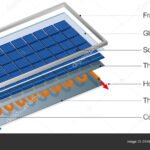
The main components of a solar panel include an inverter that converts DC to AC, and every conversion step adds heat loss.
Assuming maximum sun hours year-round. Peak sun hours change dramatically between summer and winter. If you size your system for June, you will be short in December. Use an annual average from PVWatts or plan for the lowest month and accept grid backup in summer.
Forgetting about roof space and shading. You might calculate that you need 7 panels. But if your roof has a chimney that shades half the area during peak hours, you need more panels or a different placement. Shading reduces output more than people expect.
Even partial shade on one panel can drop the whole string's production if you use a string inverter.
How to Handle Less-Than-Ideal Situations
Your home or driving pattern may not fit the neat example above. Here is how to adapt.
If you have limited roof space. Use higher wattage panels. A 450-watt panel produces the same energy as a 400-watt panel but takes up slightly less space. You can also use microinverters or power optimizers to squeeze more production from a partially shaded roof.
If you drive significantly more than average. A ride-share driver doing 150 miles per day needs about 20 panels. That requires roughly 400 square feet of south-facing roof. If your roof cannot accommodate that, look into community solar subscriptions.
You buy into a shared array and get credits on your utility bill.
If you live in a low-sun region. The Pacific Northwest averages around 3.5 peak sun hours. Multiply your daily kWh by 1.15 then divide by 3.5. Your panel count goes up by roughly 40 percent compared to the Southwest.
This is still economically viable, just a larger array.
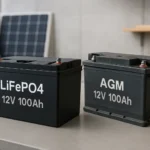
If you plan to charge at night with battery storage. You need extra panels to charge the home battery during the day. A typical home battery for overnight EV charging adds 20 to 30 percent to your panel count. Without a battery, you simply use net metering.
Your daytime solar production earns credits and you pull from the grid at night. The advantages and disadvantages of solar panels include this grid-trade dynamic, which makes batteries optional for most homeowners.
If you rent or live in an apartment. Rooftop solar is not an option. Community solar programs let you subscribe to a local off-site array. Your subscription covers your apartment's electric use including EV charging.
Some utilities offer green power purchase options for similar benefits without installation.
Real-World Examples: What Different Drivers Actually Need
Here is how the calculation plays out for three common driving profiles. All examples assume 400-watt panels, 3.5 miles per kWh, and 5 peak sun hours.
| Driver Profile | Daily Miles | Daily kWh (with losses) | System kW Needed | Panels at 400W |
|---|---|---|---|---|
| Short commuter | 30 miles | 30 ÷ 3.5 = 8.6 kWh × 1.15 = 9.9 kWh | 9.9 ÷ 5 = 1.98 kW | 1,980 ÷ 400 = 5 panels |
| Typical commuter | 60 miles | 60 ÷ 3.5 = 17.1 kWh × 1.15 = 19.7 kWh | 19.7 ÷ 5 = 3.94 kW | 3,940 ÷ 400 = 10 panels |
| Heavy driver / ride-share | 150 miles | 150 ÷ 3.5 = 42.9 kWh × 1.15 = 49.3 kWh | 49.3 ÷ 5 = 9.86 kW | 9,860 ÷ 400 = 25 panels |
The heavy driver profile is the hardest to fit on an average roof. At 150 miles per day you need roughly 25 panels or about 500 square feet of south-facing space. If your roof is small or shaded, that is where community solar or a larger home battery strategy makes sense.
The short commuter gets by with just 5 panels. That is a small enough array to fit on almost any roof orientation. A 5-panel system also costs significantly less, making the payback period much faster.
For the typical 60-mile daily driver, 10 panels is a common sweet spot. It fits comfortably on most residential roofs. It also leaves room for future expansion if you add a second electric vehicle.
Determining the right hardware for your specific usage pattern is worth doing before you talk to installers.
Frequently Asked Questions
How many solar panels does it take to charge a Tesla?
For a Tesla Model 3 with efficiency near 3.9 miles per kWh and a 40-mile daily drive, you need about 6 panels. For the larger Model X at 3.0 miles per kWh, the same drive requires roughly 8 panels.
Do I need a home battery to charge my EV with solar?
Not if you have net metering. Your panels send power to the grid during the day and you pull from the grid at night. A battery helps if your utility has time-of-use rates or if you want backup power.
What happens on cloudy days?
Your panels still produce about 10 to 25 percent of their rated power. You will pull the rest from the grid. Over a full year, net metering credits from sunny months generally cover the cloudy ones.
Can I charge my EV at night without a battery?
Yes, with net metering. Your daytime solar production earns credits. At night you pull from the grid using those credits.
Your utility bill nets to zero if your system is sized correctly.
How many panels for a 60-mile daily commute?
Using the formula from our step-by-step guide: 60 miles at 3.5 miles per kWh equals 17.1 kWh daily. Add losses for 19.7 kWh. At 5 peak sun hours you need a 3.9 kW system or about 10 panels at 400 watts each.
Can I add more panels later if I get a second EV?
Yes, most systems are expandable. Leave extra space on your roof and make sure your inverter has spare capacity. Discuss future expansion with your installer before the initial installation.

Similar Posts