Can You Actually Profit from Solar Panels?
You need a straightforward answer, not a sales pitch. The question "can i make money with solar panels" gets thrown around a lot, and the real answer depends on where you live, what your roof looks like, and how your utility company handles things. For many homeowners, the answer is yes, but for plenty of others, it's a flat no or, worse, a money pit.
A typical 6-kilowatt residential system costs between $2.50 and $3.50 per watt before incentives as of 2026. That puts the upfront price tag at $15,000 to $21,000. Whether that turns into profit or a loss comes down to a handful of very specific factors we're going to walk through step by step.
Can You Actually Make Money? The Short Answer First
Yes, you can. Most homeowners who buy their system with cash or a loan see their investment paid back in 8 to 12 years. Panels last 25 to 30 years.
That leaves around 15 to 20 years of nearly free electricity.
The average homeowner saves $600 to $1,200 per year on electricity bills. Some earn extra income through Solar Renewable Energy Certificates (SRECs). Others see their home value increase by 3% to 4%.
But the short answer comes with a huge asterisk: it only works if your local net metering policy, electricity rates, and roof conditions are favorable.
Why This Article Won't Be Fluff, and Why Getting It Wrong Costs Real Money
A bad solar decision can cost you thousands. We've seen homeowners sign 20-year leases that barely save them anything, or install systems on shaded roofs that never produce enough. We've seen people who moved three years after installing, never recouping their upfront cost.
So this article skips the generic hype. We're looking at real numbers, real risks, and the specific conditions that determine whether solar panels make money for you. If you're considering a system, consider reading our solar panel buying guide first for a broader overview of what to look for.
What matters is not whether solar can make money in theory. What matters is whether it will make money for you, on your roof, with your utility company, right now.

How Solar Panels Pay You Back (The Full Breakdown)
There are four main ways a solar panel system puts money back in your pocket. Some are immediate, some take years, and some depend entirely on your local market.
| How You Get Paid | Typical Benefit | Who Benefits Most |
|---|---|---|
| Lower electric bills | $600–$1,200/year | High-rate states |
| Net metering credits | Varies by utility | Full retail net metering states |
| SRECs | $100–$300/MWh | NJ, PA, MA, DC |
| Home value increase | 3–4% of home value | Long-term owners |
Lowering Your Electric Bill Every Month
This is the biggest and most reliable way solar makes you money. Every kilowatt-hour your panels produce is one you don't buy from the grid. In states with high electricity rates (over 20 cents per kWh), the savings add up fast.
A 6 kW system in a sunny area produces roughly 8,000 to 9,000 kWh per year. At 22 cents per kWh, that's $1,760 to $1,980 in avoided costs annually. Compare that to the system's upfront cost, and the math starts to look good.
Selling Excess Power Through Net Metering
Net metering is the policy that lets you sell your extra power back to the utility. The difference between earning money and barely breaking even often comes down to one question: does your utility credit you at the retail rate or the wholesale rate?
If your utility pays the retail rate (the same price you pay to buy electricity), you're in a strong position. Every extra kWh you produce earns you full value. If they pay the wholesale "avoided cost" rate (typically 2 to 4 cents per kWh), you're not going to make much selling back.

Earning Solar Renewable Energy Certificates (SRECs)
In certain states, you can earn separate income by selling SRECs. Each megawatt-hour your system produces earns one certificate, which utilities buy to meet renewable energy mandates.
SREC prices vary wildly. In New Jersey, they've historically traded from $100 to over $250 per certificate. In states with weak markets, they're nearly worthless.
If you live in an SREC state, this can shorten your payback period by several years.
Increasing Your Home's Resale Value
Multiple studies show homes with owned solar panels sell for a premium. The typical bump is around 3% to 4%, though it varies by market. A buyer knows they won't have to pay an electric bill, so they're willing to pay more for the house.
Leased systems are a different story. They can complicate a sale because the new owner must qualify for the lease or buy out the contract. If you want the resale value benefit, owning the system outright matters.
The Three Biggest Risk Factors That Kill Your Profit
These three factors make or break the financial case for solar. If any one of them is working against you, the numbers can flip from profitable to break-even or worse.
Your Local Net Metering Policy
This is the single most important variable. States like California, Massachusetts, New York, and Vermont have historically offered full retail net metering. States like Iowa, South Carolina, and parts of Texas pay far less for exported power.
If your utility pays the avoided-cost rate, your system will only offset the electricity you use directly while the sun is shining. Without a battery, that's a fraction of your total consumption. Your payback period can stretch to 15 years or more.
Check your state's net metering rules before you get a single quote. The National Renewable Energy Laboratory (NREL) maintains some of the most reliable data on solar policy and production.
Your Roof's Age, Angle, and Shading
Solar panels sit on your roof for 25+ years. If your roof needs replacement in five years, you'll pay thousands to remove and reinstall the panels. That eats into your profit.
South-facing roofs at a 30- to 40-degree tilt produce the most. East or west facing still works, but you lose 10 to 20 percent of potential output. Shade from trees, chimneys, or neighboring buildings can cripple production, especially with older string inverters.
Modern microinverters help mitigate shading issues, but they can't make shade disappear. If your roof is heavily shaded, run the numbers very carefully before committing.
Your Timeline — When Do You Need the Money Back?
Solar is a long game. Typical payback periods range from 8 to 12 years. If you plan to move within seven years, you might not recoup your investment unless buyers pay a significant premium.
Even with the home value bump, selling early means you're leaving some of the savings on the table. The longer you stay, the higher your effective return. Someone who stays for 25 years can earn an effective annual return of 8% to 12% on their upfront investment, comparable to stock market averages with lower volatility.
The Real Numbers: Payback Period, ROI, and Cash Flow
Let's put actual figures on the table. These are national averages, and your specific numbers will vary. But they give you a realistic benchmark to compare against.
Average Costs Per Watt in 2025
| Component | Cost Range per Watt |
|---|---|
| Panels (300–400W) | $0.60 – $1.00 |
| Inverter | $0.20 – $0.40 |
| Racking & wiring | $0.30 – $0.50 |
| Labor & overhead | $0.80 – $1.20 |
| Permits & design | $0.10 – $0.20 |
| Total system cost | $2.50 – $3.50 |
A 6 kW system at $3.00 per watt costs $18,000 before incentives. After the 30% federal tax credit, you're down to $12,600. That's your real out-of-pocket cost if you pay cash.
What a 6 kW System Actually Earns in Different States
These are approximate annual savings based on a 6 kW system producing 8,500 kWh per year, using average state electricity rates as of 2026.
| State | Avg Rate per kWh | Annual Savings | Payback Period |
|---|---|---|---|
| Hawaii | $0.33 | $2,805 | 5–6 years |
| California | $0.28 | $2,380 | 6–7 years |
| Massachusetts | $0.25 | $2,125 | 7–8 years |
| Texas | $0.14 | $1,190 | 10–11 years |
| Florida | $0.13 | $1,105 | 11–12 years |
| Idaho | $0.10 | $850 | 13–15 years |
These are rough estimates. They assume full retail net metering and no SREC income. Add SRECs in a good market, and you can shave two to four years off the payback period.
Adding Batteries — When It Helps and When It Hurts
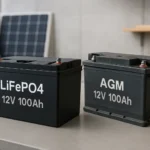
Batteries like the Tesla Powerwall or Enphase Encharge add $8,000 to $14,000 to your system cost. They let you store excess power for evening use and provide backup during outages. But they almost never improve the financial return of a grid-tied system.
If your utility has time-of-use rates with a big spread between peak and off-peak prices, a battery can pay for itself by letting you avoid expensive peak power. If your utility offers full retail net metering, a battery just adds cost without additional savings.
For most homeowners, batteries are a backup luxury, not a profit center. Skip the battery if your goal is strictly to make money. Add one only if you value outage protection more than maximum ROI.
Make sure you understand the main components before deciding.
Cash, Loan, Lease, or PPA — Which Way Actually Makes You the Most Money?
How you pay for solar panels matters almost as much as whether you install them at all. Each option changes your upfront cost, your monthly cash flow, and your total profit over the system's lifetime.
Cash Purchase: Highest Long-Term Return
Paying cash gives you the best financial outcome. You own the system from day one. You get the full 30% federal tax credit.
Your only ongoing cost is maintenance.
A $12,600 system (after the tax credit) earning $1,200 per year in savings pays for itself in about 10.5 years. After that, you keep every dollar for another 15 to 20 years. That's a real return of 8% to 12% annually, tax free.
If you have the cash and plan to stay in your home long term, this is the clear winner.
Solar Loan: Lower Upfront, Still Profitable
A solar loan lets you spread the cost over 10 to 20 years. Your monthly payment should be lower than your average electric bill for the math to work.
The risk is interest. Loan rates for solar typically range from 4% to 8%. That eats into your savings.
A 6% loan on a $12,600 system adds roughly $4,000 in interest over 10 years. Your payback stretches, but you still come out ahead compared to paying the utility forever.
The key is getting a loan with no prepayment penalty. If you sell the house or come into extra cash, you want the option to pay it off early.
Lease or PPA: Convenience That Limits Your Profit
Leasing or signing a Power Purchase Agreement (PPA) requires zero upfront money. The installer owns the panels. You pay a fixed monthly rate for the power they produce.
The problem is that you never capture the full value of the system. The installer takes the tax credit and the SREC income. Your savings are typically 10% to 30% off your current bill, not the 80% to 100% you'd get from owning.
You also have to transfer the lease if you sell the house. That can scare off buyers who don't want to take over a 15-year contract.
| Option | Upfront Cost | 20-Year Savings | Best For |
|---|---|---|---|
| Cash | $12,000–$18,000 | $18,000–$25,000 | Long-term owners, strong savings |
| Loan | $0–$5,000 | $10,000–$15,000 | Own with manageable monthly payments |
| Lease | $0 | $3,000–$7,000 | No upfront cash, low risk tolerance |
| PPA | $0 | $2,000–$5,000 | Renters or short-term homeowners |
Who Actually Profits the Most? (And Who Should Pass)
The financial outcome of solar panels splits cleanly into two groups. Understanding which group you fall into saves you time and money.
Best Case: High Utility Rates + Full Retail Net Metering + Sunny Roof
You're the ideal candidate if your electricity rate is above 20 cents per kWh, your utility credits you at the retail rate, and your roof faces south with no shade. Add a state-level tax credit or SREC market, and the numbers get even better.
A homeowner in Massachusetts with a $0.25 rate, full net metering, and a south-facing roof can expect a payback period of 6 to 8 years. After that, they're generating pure profit for nearly two decades.
If you live in California, Hawaii, New York, Connecticut, or New Jersey, you're likely in this group. Understanding how solar panels work in different grid setups helps confirm your fit.
Worst Case: Low Rates, Shade, Short Time Horizon, or Shaky Credit
You're better off skipping solar if your electricity rate is under 12 cents per kWh, your roof has heavy shade from trees or buildings, or you plan to move within seven years.
If your utility pays the avoided-cost rate for exported power (2 to 4 cents per kWh), the numbers collapse. You'd need a battery to capture your own power, which adds thousands of dollars and rarely pays back.
Leasing can make sense in this scenario if your credit is good, but your savings will be modest. In many cases, spending the same money on energy efficiency upgrades like insulation or a heat pump gives you a better return.
Mistakes That Turn a Good Investment Into a Bad One
A few common errors turn a solid solar investment into a money loser. Avoiding them is straightforward once you know what to look for.
Not Checking Your Roof's Condition First
Installing panels on a roof that needs replacement in five years is a costly mistake. Removal and reinstallation costs $1,500 to $3,000. If you're financing, you pay interest on that extra expense.
Fix your roof before you install. A roofer can tell you how many years you have left. If it's less than 10, replace it first.
Signing a PPA or Lease Without Reading the Fine Print
Some leases include annual escalators that raise your payment by 2% to 3% per year. That eats into your savings. Others require you to buy the system at fair market value if you want to sell the house.
Read the contract. Look for the escalator clause and the buyout terms. If anything seems unfair, walk away.
There are plenty of installers offering transparent agreements.
Ignoring Future Utility Rate Changes
Utility rates have historically risen 2% to 4% per year. Solar becomes more valuable as rates go up. But some utilities are also changing their net metering rules.
California's NEM 3.0 transition dropped the value of exported power significantly. Homeowners who installed before the switch locked in better terms. Check whether your utility has a grandfathering period and how long it lasts.
Choosing the Cheapest Installer Over the Most Reliable
The lowest bid often skimps on warranties, uses no-name panels, or rushes the installation. A reputable installer with good reviews and strong warranties costs more upfront but saves you headaches down the road.
Check their license, insurance, and Better Business Bureau rating. Read their contract for workmanship warranties. A system that fails after five years because of poor wiring isn't a bargain at any price.
Knowing the different panel types helps you evaluate what the installer is actually offering.
Federal and State Incentives You Can Actually Count On
Incentives change frequently, but some are reliable enough to factor into your decision today.
The 30% Federal Tax Credit (and How to Claim It)
The federal Investment Tax Credit (ITC) gives you 30% of your total system cost back on your federal taxes. There is no cap. It applies to systems installed through 2032, then steps down to 26% in 2033 and 22% in 2034.
You claim it using IRS Form 5695. It's a non-refundable credit, meaning it reduces your tax bill but won't generate a refund larger than what you owe. If your tax liability is lower than the credit amount, the unused portion rolls over to the next year.
You don't have to earn a specific income level. You just need enough tax liability to use the credit. The IRS website provides detailed instructions for Form 5695.
State Rebates and Tax Credits (By Region)
Several states offer additional incentives on top of the federal credit. These vary widely and change often, so check your state energy office for current figures.
New York offers a state tax credit of up to $5,000. Illinois has a rebate program that can cover 30% of costs. Massachusetts has a $1,000 per year state tax credit for 10 years.
California's Self-Generation Incentive Program (SGIP) offers rebates for battery storage.
SREC Markets: Where They Still Pay
New Jersey, Pennsylvania, Massachusetts, Washington DC, and Maryland have active SREC markets. Each certificate typically trades between $50 and $250 per MWh. A 6 kW system producing 8 MWh per year could earn $400 to $2,000 annually from SRECs alone.
The catch is that SREC prices fluctuate based on supply and demand. Some states have capped their programs, which suppresses prices. Check current market rates before counting on this income.
When to Walk Away — Signs Solar Won't Make You Money
Not every home is a good fit. Here are the clearest signs that solar panels will cost you more than they save.
Your Utility Credits Exported Power at Wholesale Rates
If your utility only pays the avoided-cost rate (around 2 to 4 cents per kWh), you'll need to use nearly all your power in real time to benefit. Without a battery, that's hard to do. With a battery, the added cost kills the math.
Walk away unless your daytime usage is unusually high or you have a very low system cost.
Your Roof Needs Replacement in 5 to 7 Years
Panel installations typically last 25+ years. Pulling them off and reinstalling them after a roof replacement adds significant cost. If your roof is aging, spend the money on a new roof first.
Then consider solar.
You Might Move Within 5 Years
The payback period on a cash purchase is 8 to 12 years. If you leave before then, you may not recoup your investment. The home value bump helps, but it rarely covers the full remaining balance of a loan.
If you're planning a move, a lease or PPA might make sense. But even then, the contract can complicate the sale.
Your Credit Score Is Below 650
Financing options narrow significantly with lower credit scores. Loan rates climb into double digits, and some lease companies require strong credit. If you can't get favorable financing, wait until your credit improves before shopping.
Final Checklist: How to Know If Solar Will Be a Money-Maker for You
Run through these five questions before you get a single quote. If you answer yes to all of them, solar will almost certainly make you money.
- Does your utility offer full retail net metering or time-of-use rates you can shift into?
- Is your roof south-facing with minimal shade and at least 10 years of life left?
- Do you pay more than 15 cents per kWh for electricity?
- Do you plan to stay in your home for at least 8 years?
- Can you finance the system at a rate below 6% or pay cash?
If you answered no to two or more, proceed with caution. The numbers still might work, but you need to verify them carefully with a local installer who understands your specific rate structure and roof conditions.
Look at the broader category overview for more context on how different systems perform in different conditions.
Frequently Asked Questions
How much can I actually make selling solar power back to the grid?
It depends on your net metering policy. With full retail net metering, you earn the same rate you pay for electricity. At 22 cents per kWh, a 6 kW system producing 8,500 kWh annually saves you about $1,870 per year.
With avoided-cost net metering, you earn only 2 to 4 cents per kWh, and the savings drop significantly.
What is the average payback period for solar panels?
Nationally, the average payback period falls between 8 and 12 years for a cash purchase. It depends on your electricity rates, local incentives, and how much sun your roof gets. High-rate states like Hawaii and California see payback in 5 to 7 years.
Low-rate states can stretch to 14 years or more.
Do solar panels increase home value?
Yes, owned solar panels typically add 3% to 4% to a home's resale value. Leased panels do not add value and can complicate a sale. The premium varies by market and local awareness of solar benefits.
Is solar worth it without net metering?
It can be, but you need to use most of your power during daylight hours or add a battery. Without net metering, exported power earns very little. A battery lets you store excess power for evening use, but it adds $8,000 to $14,000 to the system cost.
How long do solar panels last before needing replacement?
Most panels come with a 25-year performance warranty guaranteeing 80% to 85% of original output at the end of that period. Many panels continue producing usable power for 30 to 40 years. Inverters typically need replacement after 10 to 15 years.
Can I make money with solar panels in cloudy states?
Yes, but the numbers are tighter. Cloudy states like Washington and Oregon still get enough sunlight for solar to work. The key is that their electricity rates are often low.
Lower production combined with low rates makes payback periods longer.
Understanding how solar panels generate electricity in different light conditions helps set realistic expectations.

Similar Posts