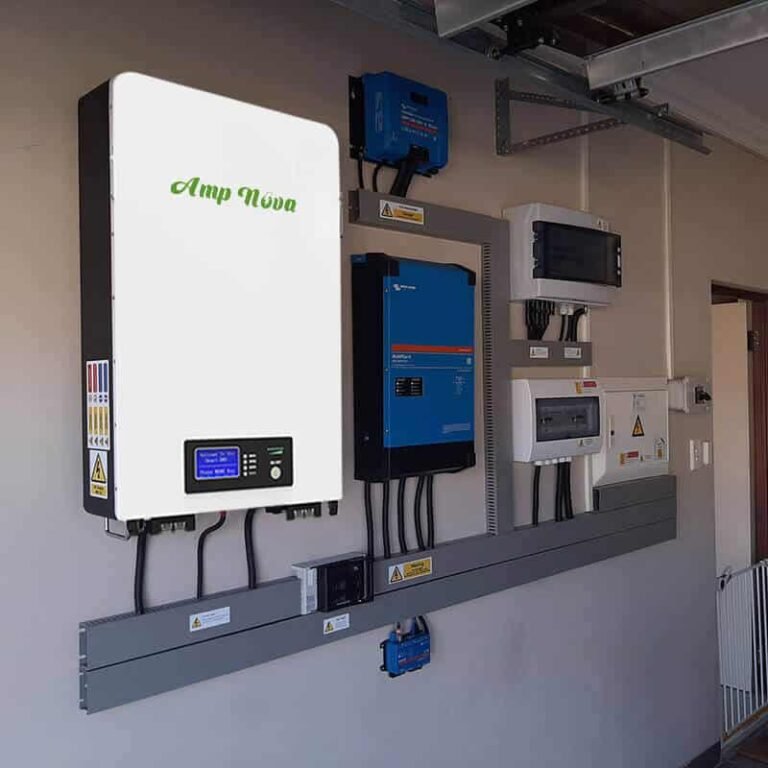
Exactly How Many Solar Batteries to Power a House
You've probably heard the number "three to five batteries" thrown around, but the real answer depends entirely on your home and what you're trying to do. The question "how many solar batteries are needed to power a house" doesn't have a single magic number because every household's energy appetite is different. What works for a two-bedroom condo in San Diego won't cut it for a four-bedroom house in Houston with central air running half the year.
The U.S. Energy Information Administration reports the average American home uses about 30 kilowatt-hours (kWh) per day. But that's just an average.
Your actual number could be half that or double it depending on your appliances, habits, and climate. Let's walk through exactly how to figure out your number step by step.
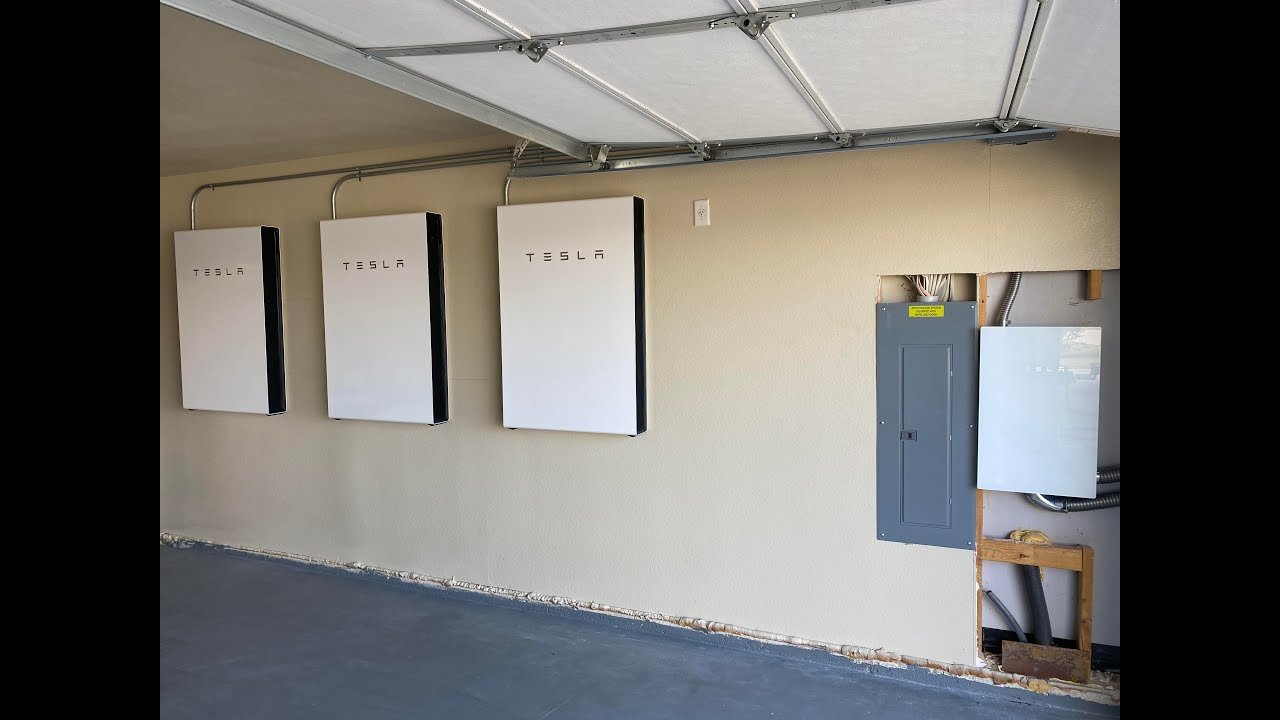
Image source: YouTube / scottysize (YouTube thumbnail (fair-use with source credit))
Quick Answer
Most homes need two to three lithium-ion solar batteries for partial backup. A typical battery stores 10 to 15 usable kWh. For whole-home backup, plan on four to six batteries.
Off-grid homes usually need eight or more. Your exact count depends on your daily energy use, which appliances you want to keep running, and how many cloudy days you want to cover.
Why There's No One-Size-Fits-All Number
Here's the thing about solar batteries. They're not like buying a refrigerator where you just pick the size that fits your kitchen. The number you need changes based on several variables that are unique to your situation.
Your daily energy consumption is the biggest factor. A small apartment might use 15 kWh per day. A large house with electric heating, a pool pump, and an EV charger could easily hit 60 kWh or more.
That's a four-to-one difference right there.
Your backup goals change everything too. Do you want to keep the lights on and the fridge running during a four-hour outage? That's one battery territory.
Do you want to run your AC, well pump, and entertainment system for three days straight with no sun? That's a completely different conversation.
Your local climate and grid reliability matter. If you live in California where the sun shines 300 days a year but the grid has planned outages during fire season, you need fewer batteries than someone in Washington state who wants backup during a week of winter storms.
The different panel technologies also play a role in how much energy you can generate and store. Understanding how the various systems work together helps you make smarter decisions about sizing.
Step 1: Figure Out What You're Really Trying to Power
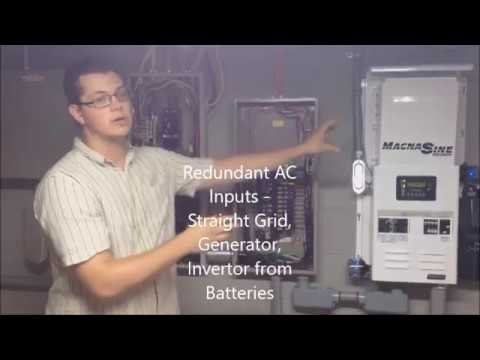
Before you do any math, you need to decide what "power a house" actually means to you. This is where most people get tripped up.
Whole-Home Backup vs. Partial Backup vs. Off-Grid
Whole-home backup means every circuit in your breaker panel stays live during an outage. Your AC, oven, dryer, well pump, everything. This requires the most batteries because your peak power draw at any moment could be 10 to 15 kW, and your total daily consumption stays the same as normal.
Partial backup means you pick specific circuits that get power from the battery. Usually that's your refrigerator, lights, internet router, a few outlets for phone charging, and maybe a gas furnace blower. Everything else stays dark during an outage.
This is what most homeowners actually need, and it cuts your battery requirement by half or more.
Off-grid means you have zero connection to the utility grid. Your batteries are your only power source when the sun isn't shining. This requires the most capacity because you need enough stored energy to cover multiple consecutive cloudy days.
Off-grid systems typically need two to three times more battery capacity than a grid-tied whole-home backup.
The Critical Loads List Exercise
Grab a notepad and walk through your house. Write down every appliance you absolutely need during a power outage. Be honest with yourself.
You don't need the home theater system or the heated towel rack.
Here's what most people include:
- Refrigerator and freezer
- Well pump (if you have one)
- Gas furnace blower or heat pump
- Lights in main living areas
- Internet modem and router
- Phone and laptop charging
- One TV or tablet for news
- Medical devices (CPAP, oxygen concentrator)
- Garage door opener
Usually this list totals 10 to 15 kWh per day. That's one or two batteries for most homes.
Step 2: Find Your Daily Energy Number
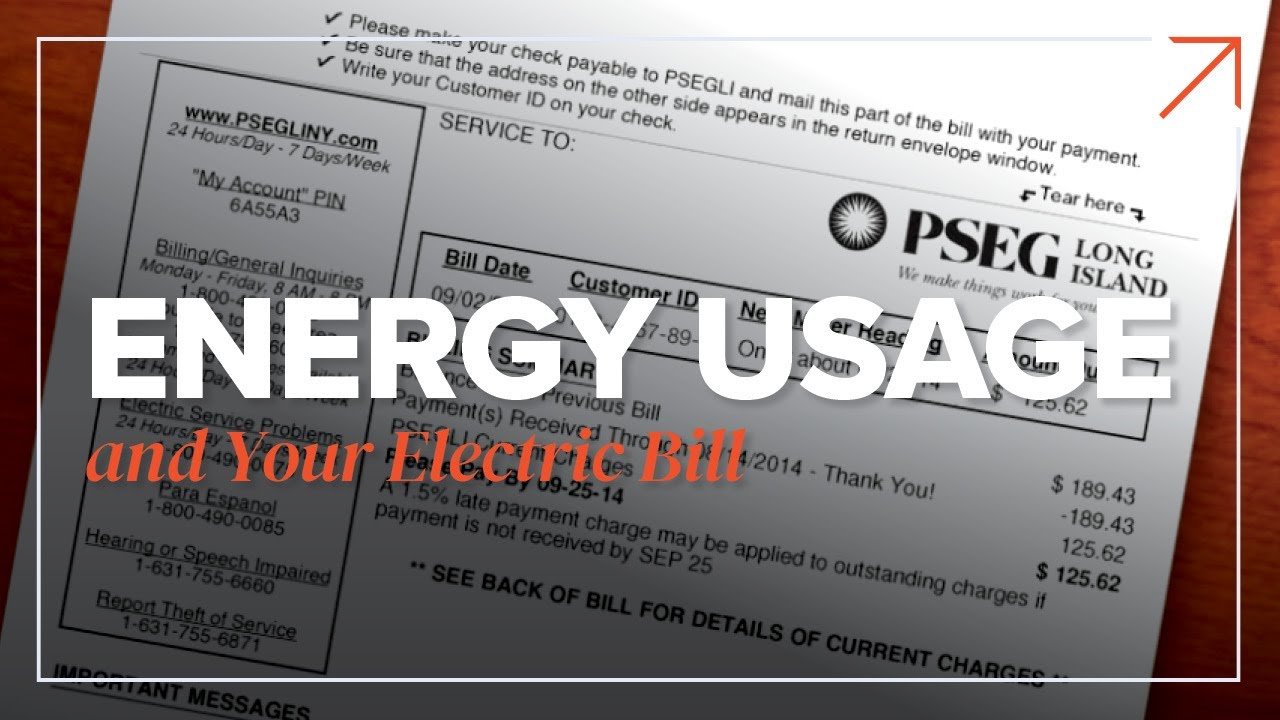
Now you need a real number, not a guess. Your electric bill is the easiest place to start.
How to Read Your Electric Bill for This
Pull your last 12 months of utility bills. Look for "kWh used" on each one. Add them up and divide by 365.
That's your average daily consumption.
Winter months might be higher if you have electric heat. Summer months spike if you run AC. Take the highest month and divide by 30 to get your peak daily usage.
That's the number you should use for sizing, not the average.
The 3-Day Average Method for Accuracy
If you want to get more precise, buy a home energy monitor that clips onto your main breaker panel. These devices track your real-time power usage and give you a daily kWh total. Monitor for three typical days and take the average.
The different panel types on the market all feed into the same meter, so the monitor sees your total house consumption regardless of what technology your solar array uses. That makes it easy to match your battery needs to your actual lifestyle.
What Happens If You Guess Instead of Calculate
I'll tell you what happens. Two things, and neither is good.
You undersize and your batteries drain by midnight. You wake up in the dark with a half-charged phone and a warm fridge. That's the most common mistake.
You oversize and spend thousands on battery capacity you'll never use. Lithium batteries degrade over time even if you don't cycle them. Every kilowatt-hour you pay for but don't need is money that could have stayed in your pocket.
Step 3: Understand What a Single Battery Actually Gives You
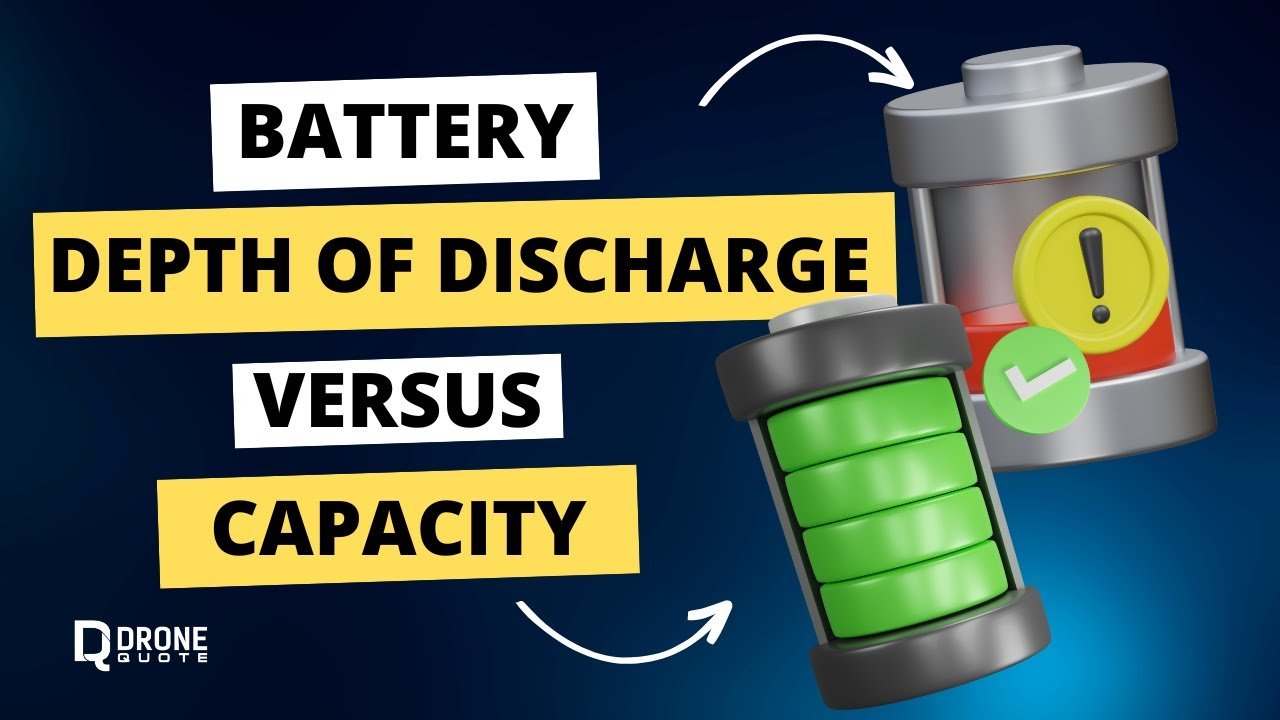
This is where the math gets real. A solar battery has two important numbers, and confusing them is the fastest way to get the wrong answer.
Usable Capacity vs. Total Capacity (Why Depth of Discharge Matters)
Every battery has a total capacity stamped on the spec sheet. A Tesla Powerwall 3 is listed at 13.5 kWh. That's the total energy it can hold when fully charged.
But you can't use all of it without damaging the battery. Depth of discharge, or DoD, tells you how much you can safely drain.
Lithium-ion batteries like the Powerwall allow 90 to 100 percent DoD. You can use practically every electron. Lead-acid batteries, which are cheaper but older technology, only allow 50 percent DoD.
Drain them deeper than that and you shorten their lifespan dramatically.
So a 13.5 kWh lead-acid battery really only gives you 6.75 usable kWh. That same capacity in lithium gives you the full 13.5 usable. This is why most modern home solar systems use lithium batteries despite the higher upfront cost.
Power vs. Energy: The Kilowatt vs. Kilowatt-Hour Trap
Here's another trap. A battery's power rating in kilowatts (kW) tells you how much electricity it can deliver at once. Its energy rating in kilowatt-hours (kWh) tells you how long it can sustain that delivery.
Think of it like a bucket with a hole in the bottom. The bucket size is your kWh. The hole size is your kW.
A big bucket with a tiny hole takes forever to empty. A small bucket with a giant hole empties in minutes.
Most home batteries deliver 5 to 7 kW of continuous power. That's enough to run a refrigerator, lights, and a gas furnace blower simultaneously. But if you try to start a 5-ton AC unit that draws 8 kW on startup, even a fully charged battery might trip its internal breaker.
Real Numbers: What One Powerwall, One Enphase, One Generac Can Do
Let's look at actual products as of 2026.
A single Tesla Powerwall 3 stores 13.5 usable kWh and delivers 5.7 kW continuous power. That runs a standard refrigerator for about 24 hours. Or keeps your lights, internet, and a few outlets running for about 12 to 14 hours.
An Enphase IQ Battery 5P stores 5.1 usable kWh and delivers 3.84 kW continuous. You'd need three of them to match one Powerwall. But their advantage is modularity, you start with one and add more as your budget allows.
A Generac PWRcell system starts at 9 kWh usable and scales up to 36 kWh with additional battery modules. It delivers 8 kW continuous, which makes it better for homes with larger appliances that need more startup power.
Step 4: Match Battery Capacity to Your Loads
Now you have your daily usage number and you understand what a single battery delivers. Time to do the simple math.
The Simple Formula (Daily kWh ÷ Battery Usable kWh)
Take your daily kWh consumption for critical loads. Divide by the usable kWh of one battery. That's your starting number.
Example. Your critical loads add up to 12 kWh per day. You're looking at a Powerwall 3 with 13.5 usable kWh.
That's 12 divided by 13.5, which equals 0.89. One battery covers it with a little to spare.
If your critical loads are 25 kWh per day with the same battery, it's 25 divided by 13.5, which equals 1.85. You need two batteries.
Why You Need More Batteries for Winter or Cloudy Streaks
Solar panels don't produce much power on cloudy days. In winter, the days are shorter and the sun is lower in the sky. Your batteries need to carry you through multiple low-production days.
This is where "days of autonomy" comes in. That's your battery bank's ability to power your home without any solar input.
Most grid-tied homes with backup plan for one day of autonomy. The grid is there to recharge your batteries when the sun comes back. Off-grid homes typically plan for three to five days of autonomy.
If you want two days of autonomy, multiply your daily kWh by 2 before dividing by the battery's usable capacity. Three days means multiply by 3. You can see how fast the number grows.
Days of Autonomy: How Much Buffer Is Enough?
For partial backup with grid connection, one day is usually fine. The grid acts as your backup for the backup.
For whole-home backup with grid connection, one to two days is smart. A severe storm could knock out power for 12 to 48 hours. Having two days of storage means you don't stress about conserving power.
For off-grid, minimum three days. Five is better if you have space in your budget. And if you live somewhere with seasonal cloud cover like the Pacific Northwest, consider seven days.
The different wiring configurations for solar installations affect how easily you can expand your battery bank later. Understanding the available options helps you plan for future capacity without ripping out your existing equipment.
Step 5: Check If Your Solar Panels Can Recharge What You Drain
Here's a detail that trips up a lot of homeowners. You can buy all the batteries in the world, but if your solar panels can't recharge them, you're just hauling around dead weight.
The Solar-to-Battery Ratio Nobody Talks About
Your solar array needs to produce enough extra energy during daylight hours to refill your batteries after powering your home. That surplus is what actually charges the battery bank.
Here's the rule of thumb. For every 10 kWh of battery capacity, you want roughly 2 to 3 kW of solar panel capacity dedicated to recharging it. That assumes about five peak sun hours per day, which is typical for most of the continental US.
If you have a 30 kWh battery bank and a 6 kW solar array that produces 30 kWh on a good day, your home uses 20 kWh during the day. That leaves 10 kWh for charging. You're barely keeping up.
One cloudy day and you're drawing from reserves.
This is where understanding how the array's components interact becomes critical. The whole system has to be balanced or you end up with expensive batteries that sit partially charged most of the time.
What Happens When Your Array Is Too Small for Your Battery Bank
Your batteries never reach full charge. They cycle in the middle of their state of charge range, which for lithium batteries isn't terrible but means you're always carrying less capacity than you paid for.
More importantly, you lose the ability to handle multiple cloudy days. Your batteries drain down and the solar panels can't catch back up. You end up running a generator anyway, which defeats the purpose of spending thousands on battery storage.
The fix is either more panels or fewer batteries. Most people choose more panels.
Common Mistakes That Lead to Wrong Battery Counts
Even with all the math done right, people still get the wrong number. Here are the most common errors.
Forgetting That One Battery Can't Run Big Appliances Alone
A single Powerwall delivers 5.7 kW continuous. A modern central AC unit can draw 4 to 5 kW on its own. Add a refrigerator, lights, and a microwave and you're over the limit.
The fix is either more batteries for higher combined power output or a soft start device on your AC unit. Soft starts reduce the initial surge draw by about 50 percent. That can make the difference between one battery working and needing two.
Confusing Kilowatts with Kilowatt-Hours
This is the most common mistake in solar storage. Kilowatts measure power, how much electricity flows at any moment. Kilowatt-hours measure energy, how much electricity flows over time.
Your battery can deliver 5 kW but only store 13 kWh. That means you can run a 5 kW load for about 2.6 hours before the battery is empty. Or you can run a 1 kW load for 13 hours.
Always check both numbers before buying. Some manufacturers advertise high power ratings while the actual stored energy is surprisingly small.
Ignoring Cold Weather Capacity Loss
Batteries lose capacity in cold temperatures. Lithium-ion batteries can lose 20 to 30 percent of their usable capacity below freezing. Lead-acid batteries lose even more.
If you live somewhere with real winters, you need to oversize your battery bank by about 30 percent to account for cold weather derating. Or you need a battery with built-in heating, which draws power to keep itself warm.
Some manufacturers now include battery heaters as standard equipment. The Generac PWRcell and certain Enphase configurations have this. Check the spec sheet before buying if you're in a cold climate.
Stacking Different Battery Brands or Chemistries
You cannot mix a Powerwall with an Enphase IQ Battery. They use different voltages, different communication protocols, and different battery management systems. They won't work together.
Stick with one brand and one chemistry for your entire battery bank. Mixing old and new batteries of the same brand is also problematic. The older battery has degraded capacity and pulls the whole system down to its level.
Real-World Examples: See the Math in Action
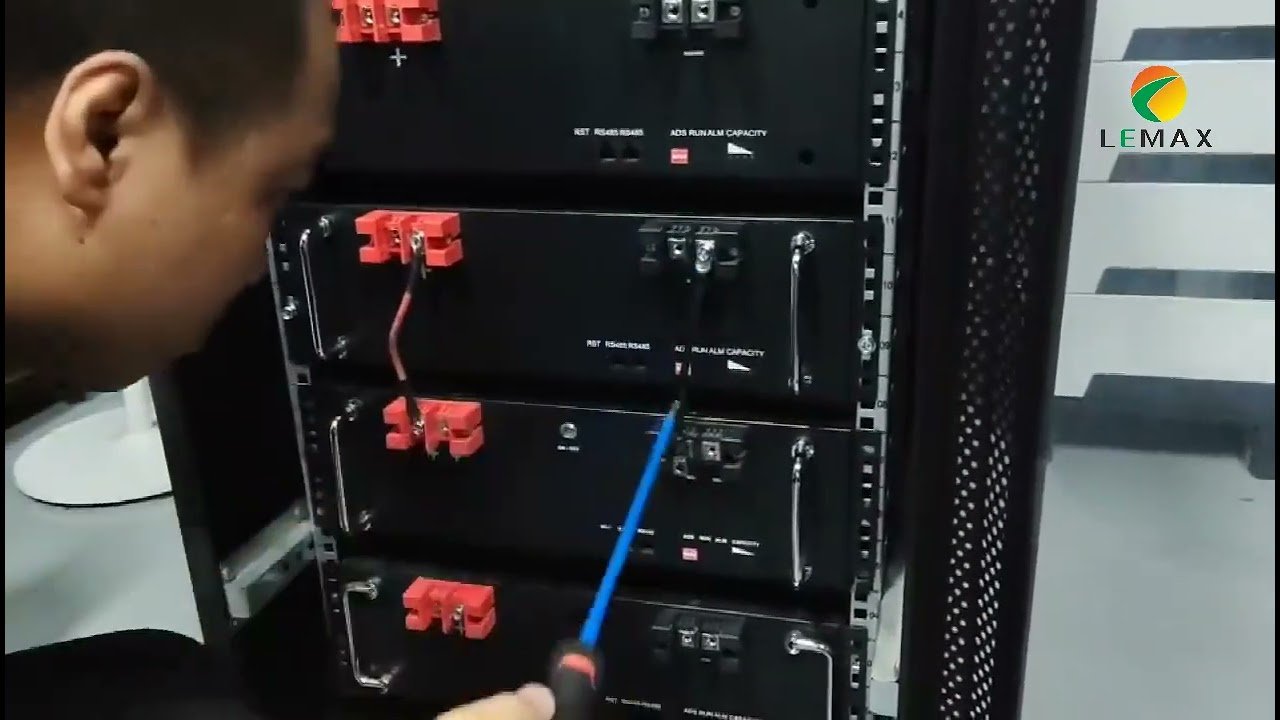
Let's run through three common scenarios with real numbers.
Scenario A: Light Backup (Fridge, Lights, Phones)
Your critical loads add up to 8 kWh per day. You want one day of autonomy. You pick the Enphase IQ Battery 5P with 5.1 usable kWh.
Eight divided by 5.1 equals 1.6. You need two batteries. Total usable capacity is 10.2 kWh.
That gives you a little over one day of backup with room for an extra load like a microwave or coffee maker.
Your solar array needs to be at least 2 to 3 kW. Most existing solar homes already have that.
Scenario B: Full Home Backup (AC, Well Pump, Everything)
Your total home usage is 30 kWh per day. You want two days of autonomy. You pick the Tesla Powerwall 3 with 13.5 usable kWh.
Thirty times 2 equals 60 kWh needed. Sixty divided by 13.5 equals 4.4 batteries. You round up to five Powerwalls.
Total usable capacity is 67.5 kWh.
Your solar array needs to be about 10 to 15 kW to recharge that bank. That's a larger system than most homes have. You might need to add panels.
Scenario C: Off-Grid Living
Your home uses 20 kWh per day. You want four days of autonomy for winter cloud cover. You pick the Generac PWRcell with 9 kWh per module.
Twenty times 4 equals 80 kWh needed. Eighty divided by 9 equals 8.9 modules. You round up to nine modules for 81 kWh total.
Your solar array needs to be at least 12 kW. And you need a generator backup because even nine batteries can run out during a week of heavy overcast.
Battery Chemistry and How It Changes the Count
The chemistry you choose directly affects how many batteries you need. It's not just a price difference.
Lithium-Ion (Higher Usable Capacity, Fewer Batteries)
Lithium iron phosphate (LiFePO4) is the current standard for home solar storage. It allows 90 to 100 percent depth of discharge. You get almost every watt-hour you pay for.
Cycle life is 4,000 to 10,000 cycles. At one cycle per day, that's 11 to 27 years. Most manufacturers warranty them for 10 years.
The downsides are higher upfront cost and temperature sensitivity. They also need a battery management system that adds complexity.
Lead-Acid (Lower Usable Capacity, More Batteries)
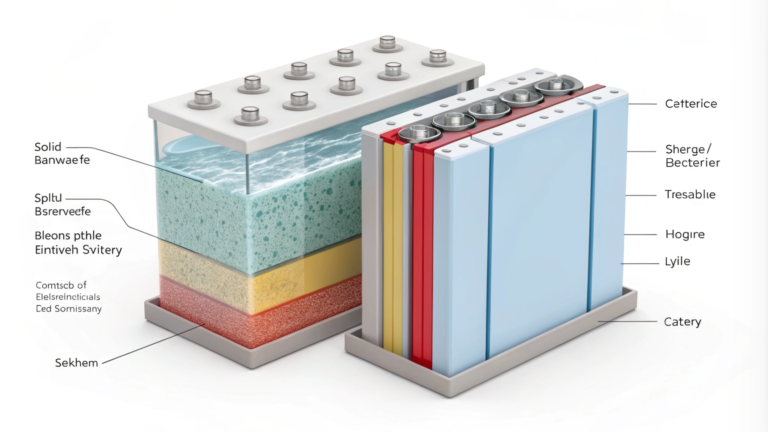
Flooded lead-acid and AGM batteries are cheaper upfront but require double the capacity to deliver the same usable energy. A 200 amp-hour lead-acid battery at 48 volts stores 9.6 kWh total but only delivers 4.8 usable kWh.
Cycle life is 500 to 1,500 cycles. At one cycle per day, that's 1.5 to 4 years. You'll replace them several times over the life of a lithium system.
They also require maintenance. Flooded batteries need water refills and equalization charges. AGM batteries are sealed but still need proper ventilation because they off-gas hydrogen during charging.
For most homeowners, lithium works out cheaper over the full system lifetime despite the higher initial price. The math is simple. Two lithium batteries at $8,000 each last 15 years.
Five lead-acid batteries at $2,000 each last 3 years and you replace them four times. That's $10,000 for lithium versus $40,000 for lead-acid.
Cost Reality Check
Let's talk numbers. This is where the rubber meets the road.
Typical Price per Battery Installed
A lithium home battery costs $800 to $1,500 per usable kWh installed. That's the full price including the battery, inverter, transfer switch, labor, and permits.
So a 13.5 kWh Powerwall costs about $11,000 to $13,000 installed depending on your location and installer. An Enphase 5P at 5.1 kWh runs about $5,000 to $6,000 per unit installed.
Federal Tax Credit (30% ITC) and State Incentives
The federal Investment Tax Credit gives you 30 percent back on your battery installation cost. That's a dollar-for-dollar reduction on your federal tax bill. The credit runs through 2032 at 30 percent, then steps down.
Some states add their own incentives. California has the Self-Generation Incentive Program. New York offers the NY-Sun program.
Massachusetts has the ConnectedSolutions program. These can knock another 20 to 30 percent off your cost.
Check the Database of State Incentives for Renewables and Efficiency for your specific location. The incentives change frequently and vary wildly by state.
When It Makes More Sense to Buy vs. Finance
If you have the cash and plan to stay in your home for 10 years or more, buy outright. The payback period for a typical battery system is 5 to 10 years depending on your electricity rates and usage patterns.
If you don't have $15,000 sitting in savings, look at solar loans or subscription models. Some installers offer $0 down financing with monthly payments that are lower than your average electricity bill.
Just read the fine print. Some loans have prepayment penalties or interest rates that eat up the savings. Calculate the total cost over the loan term, not just the monthly payment.
Your Decision Guide: A Simple Flowchart in Words
Here's the decision path summarized.
Start here. What's your daily kWh for critical loads? Write that number down.
If you only want backup for short outages. Multiply your daily kWh by 1. Divide by the usable kWh of your chosen battery. Round up.
That's your number.
If you want whole-home backup. Use your total home kWh. Multiply by 1.5 for a safety buffer. Divide.
Round up.
If you want off-grid. Use your total home kWh. Multiply by 3 to 5 for autonomy. Divide.
Round up.
If you live in a cold climate. Multiply your result by 1.3. Round up.
If your solar array is small. Check if you have enough surplus to recharge your battery bank. If not, add panels or reduce battery count.
If you're on a budget. Start with one or two batteries for critical loads only. Add more later. Most systems are expandable.
Frequently Asked Questions
Can I start with one battery and add more later?
Yes, most modern systems are designed to be expandable. The Tesla Powerwall and Enphase IQ Battery both support adding units later. Just make sure you buy the same model and chemistry.
Adding batteries three years later means the new ones will slightly outperform the old ones, but the system manages that automatically.
Do I need a battery if I'm on net metering?
It depends on your utility's net metering policy. If you get full 1:1 credit for every kWh you send to the grid, a battery offers less financial benefit. But if your utility has time-of-use rates, limited net metering, or frequent outages, a battery starts making sense.
Can a single battery power an AC unit?
It depends on the AC unit and the battery. A small window unit drawing 1.2 kW runs fine on one Powerwall. A 4-ton central AC drawing 5 kW on startup might trip a single battery.
Check the battery's continuous and surge power ratings against your AC's specifications.
How long will my batteries last before needing replacement?
Lithium iron phosphate batteries typically last 10 to 15 years or 4,000 to 10,000 cycles. Most manufacturers offer a 10-year warranty that guarantees at least 70 percent capacity retention. Lead-acid batteries last 3 to 5 years.
Cold climates and deep discharges shorten both lifespans.
Common Mistakes That Lead to Wrong Battery Counts
Even with all the math done right, people still get the wrong number. Here are the most common errors.
Forgetting That One Battery Can't Run Big Appliances Alone
A single Powerwall delivers 5.7 kW continuous. A modern central AC unit can draw 4 to 5 kW on its own. Add a refrigerator, lights, and a microwave and you're over the limit.
The fix is either more batteries for higher combined power output or a soft start device on your AC unit. Soft starts reduce the initial surge draw by about 50 percent. That can make the difference between one battery working and needing two.
Confusing Kilowatts with Kilowatt-Hours
This is the most common mistake in solar storage. Kilowatts measure power, how much electricity flows at any moment. Kilowatt-hours measure energy, how much electricity flows over time.
Your battery can deliver 5 kW but only store 13 kWh. That means you can run a 5 kW load for about 2.6 hours before the battery is empty. Or you can run a 1 kW load for 13 hours.
Always check both numbers before buying. Some manufacturers advertise high power ratings while the actual stored energy is surprisingly small.
Ignoring Cold Weather Capacity Loss
Batteries lose capacity in cold temperatures. Lithium-ion batteries can lose 20 to 30 percent of their usable capacity below freezing. Lead-acid batteries lose even more.
If you live somewhere with real winters, you need to oversize your battery bank by about 30 percent to account for cold weather derating. Or you need a battery with built-in heating, which draws power to keep itself warm.
Some manufacturers now include battery heaters as standard equipment. The Generac PWRcell and certain Enphase configurations have this. Check the spec sheet before buying if you're in a cold climate.
Stacking Different Battery Brands or Chemistries
You cannot mix a Powerwall with an Enphase IQ Battery. They use different voltages, different communication protocols, and different battery management systems. They won't work together.
Stick with one brand and one chemistry for your entire battery bank. Mixing old and new batteries of the same brand is also problematic. The older battery has degraded capacity and pulls the whole system down to its level.