How Many Batteries Do I Need for Solar Power?
You know that moment when the power goes out and you're suddenly wishing you'd sorted out solar batteries? Or maybe you're planning an off-grid setup and have no idea where to start. The question "how many batteries do i need for solar power" sounds simple, but the answer depends on a handful of factors that most people overlook.
Here's the short version: the number of batteries you need depends on your daily energy usage in kilowatt-hours, how many days of backup you want, and the battery chemistry you choose. Per National Renewable Energy Laboratory data, a typical US home uses around 30 kWh per day, but efficient off-grid homes often run on 5, 10 kWh. That's a huge range, and picking the wrong number can cost you thousands.
Let's walk through the math so you get it right the first time.

Image source: Wikimedia Commons / Trougnouf (CC BY)
Quick Answer
A typical off-grid home needs 4 to 8 lithium batteries or 8 to 16 lead-acid batteries. That assumes a 10 kWh daily load with two days of backup. Grid-tie backup systems need half that.
Your specific number depends on daily usage, days of autonomy, and battery depth of discharge.
Why Getting the Battery Count Wrong Costs You Real Money
Batteries are the most expensive part of any solar system. Oversize by even one or two batteries and you've wasted anywhere from 500 to 2000 dollars on capacity you'll never use. Undersize and you're left running a generator on cloudy days anyway, which defeats the whole point of going solar.
The bigger problem is that most people guess. They see a neighbor with four batteries and assume that's the magic number. Or they pick a battery from an online ad and figure "more amp-hours equals better." Neither approach accounts for your actual loads, your local weather, or the voltage of your inverter.
As of 2026, lithium battery prices have dropped enough that oversizing is less painful than it used to be, but it's still a mistake you don't want to make.
There's also the hidden cost of replacing prematurely. Lead-acid batteries only deliver about 500 cycles if you drain them past 50 percent. Lithium batteries handle 3,000 to 6,000 cycles.
Buy the wrong chemistry for your usage pattern and you're replacing the bank years earlier than necessary. The math matters from day one.
What most solar installers won't tell you about sizing
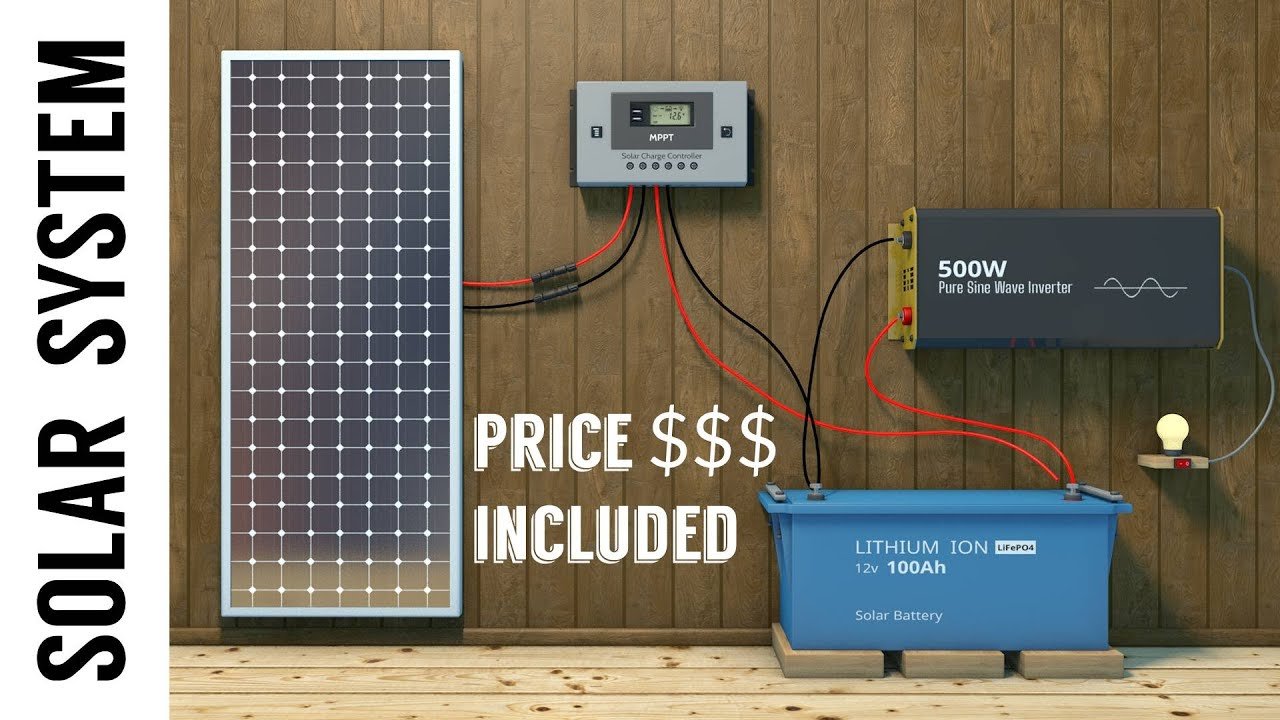
Solar installers often size battery banks to match the inverter they sell, not your actual needs. A 48-volt inverter paired with a standard 10 kWh battery bank might be fine for the average home, but if you run a well pump, a refrigerator, and a workshop, your surge loads change the calculation.
Most installers also skip the idle draw conversation. Your inverter consumes power just by being turned on, typically 20 to 60 watts per hour depending on the model. That's 0.5 to 1.5 kWh per day of phantom load you need to account for.
An honest installer factors that in. A lazy one ignores it and leaves you with a battery bank that comes up short by day three.
The real cost of guessing instead of calculating
Let's put numbers on it. A single 100 amp-hour 12 volt lithium battery costs roughly 700 to 1,000 dollars. If you guess and buy two extras you never needed, that's 1,400 to 2,000 dollars sitting idle.
Conversely, if you undershoot by two batteries, you'll spend 500 to 800 dollars on a generator and fuel just to compensate.
Getting the number right isn't complicated. It takes about 30 minutes with a calculator. That 30 minutes saves you hundreds of dollars and a lot of frustration.
The One Number That Determines Everything: Your Daily Load
Every battery sizing calculation starts with one number: your daily energy consumption in kilowatt-hours. This is the total amount of electricity your home uses in a typical day. Everything else multiplies off this figure, so getting it accurate is the most important step.
If you're already grid-connected, the easiest way is to look at your utility bill. It shows your monthly kWh usage. Divide by 30 to get a daily average.
A home that uses 900 kWh per month averages 30 kWh per day. A small apartment using 300 kWh per month averages 10 kWh per day.
For off-grid planning, you need to list every appliance and device you plan to run. Write down the wattage and estimate the hours per day each one runs. Multiply watts by hours to get watt-hours, then divide by 1,000 to convert to kilowatt-hours.
This is your daily load.
How to measure what you actually use (not what you guess)
A plug-in energy monitor gives you real numbers instead of estimates. These devices cost about 20 to 30 dollars and clip onto individual appliance cords. Run them for a few days on your refrigerator, your entertainment system, and your computer setup.
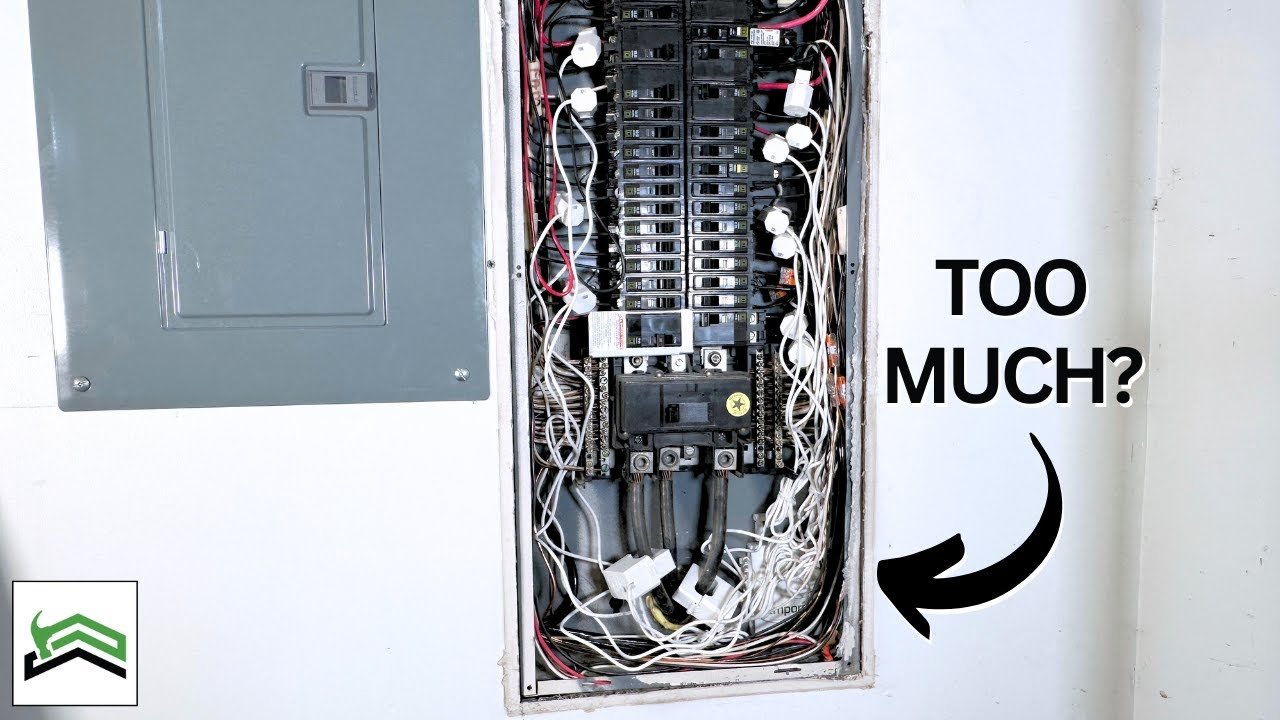
For your whole home, consider a smart energy monitor installed in your breaker panel. Models from Emporia and Sense track total consumption in real time and break it down by circuit. The data is far more reliable than guessing "I think the fridge runs about 8 hours a day."
Converting appliance watts into battery-draining watt-hours
Here's the math everyone gets wrong. A 1500 watt space heater running for 6 hours consumes 9,000 watt-hours or 9 kWh. A 10 watt LED light running for 6 hours consumes 60 watt-hours.
The big loads dominate.
Common household loads at a glance:
- Refrigerator: 150 watts average, 24 hours = 3.6 kWh per day
- Well pump: 1,000 watts, 1 hour total run time = 1 kWh per day
- Ceiling fan: 50 watts, 8 hours = 0.4 kWh per day
- Laptop: 60 watts, 4 hours = 0.24 kWh per day
- Microwave: 1,200 watts, 15 minutes = 0.3 kWh per day
Add up every item you plan to power. That's your starting number.
The hidden loads that add 30% to your total
Three categories of hidden loads consistently push battery banks past their limits. First is inverter overhead. Most inverters consume 20 to 60 watts just being on, even with nothing plugged in.
That's roughly 0.5 to 1.5 kWh per day of waste.
Second is vampire draw. Phone chargers, cable boxes, and smart home devices draw small amounts continuously. Individually they're trivial.
Collectively they add up to 0.5 to 1 kWh per day.
Third is surge startup. Pumps and fridges draw 2 to 3 times their running wattage for a few seconds when they start. Your inverter needs to handle that peak, and your battery bank needs the capacity to supply it.
A well pump that runs at 1,000 watts might surge to 3,000 watts at startup. Plan for it.
Image source: YouTube / Everyday Home Repairs (YouTube thumbnail (fair-use with source credit))
Understanding Battery Capacity Beyond the Spec Sheet
Battery manufacturers advertise capacity in amp-hours. That number is useless without voltage. A 100 amp-hour battery at 12 volts stores 1,200 watt-hours or 1.2 kWh.
At 48 volts, the same 100 amp-hours stores 4.8 kWh. Always convert to watt-hours before comparing.
The formula is simple: watt-hours equals amp-hours times voltage. If a battery is rated 100 Ah at 12 volts, it holds 1,200 Wh. Two of them in series gives you 24 volts with 1,200 Wh.
Two in parallel gives 12 volts with 2,400 Wh. Know your voltage before you buy.
Rated capacity vs. usable capacity — the 50% trap
Here's where lead-acid and lithium diverge dramatically. Lead-acid batteries should never be discharged below 50 percent of their rated capacity. Doing so regularly cuts their lifespan from 500 cycles to maybe 200.
So a 100 Ah lead-acid battery gives you only 50 Ah of usable capacity.
Lithium batteries, specifically LiFePO4, allow 80 to 100 percent discharge cycles without significant degradation. A 100 Ah lithium battery gives you 80 to 100 Ah of usable capacity. That means one lithium battery does the work of two lead-acid batteries in practical terms.
Manufacturer specifications indicate lead-acid cycle life ranges from 500 to 1,000 cycles at 50 percent depth of discharge. Lithium phosphate batteries routinely exceed 3,000 cycles at 80 percent discharge. The usable capacity difference changes the entire cost calculation.
Why amp-hours are meaningless without voltage
A 100 Ah battery at 12 volts stores 1.2 kWh. At 24 volts it stores 2.4 kWh. At 48 volts it stores 4.8 kWh.
The same amp-hour rating, triple the energy. That's why you always need to know your system voltage.
In our research, the most common mistake beginners make is comparing batteries by amp-hours alone. They pick a 200 Ah battery thinking it's twice as powerful as a 100 Ah unit, but if the 100 Ah is 24 volts and the 200 Ah is 12 volts, the 100 Ah battery actually stores more energy. Convert everything to watt-hours.
Depth of discharge: the spec that determines your battery's lifespan
Depth of discharge refers to how much of a battery's capacity you use before recharging. Discharge to 50 percent means you used half the stored energy. Discharge to 80 percent means you used most of it.
Lead-acid batteries degrade quickly past 50 percent DoD. Lithium batteries handle deep cycles with minimal wear. If you need to use 80 percent of your battery capacity regularly, lead-acid is the wrong choice regardless of the upfront price difference.
Temperatures also affect available capacity. Cold batteries deliver less usable energy. A lead-acid battery at freezing might only deliver 70 percent of its rated capacity.
Lithium batteries drop to about 85 percent, but most have built-in heaters that activate below freezing during charging.

Image source: Wikimedia Commons / Iron Edison (CC BY-SA)
Voltage Matching: Why Your Battery Bank Voltage Matters
Your battery bank voltage must match your inverter's input voltage. Mismatch them and nothing works, or worse, you damage equipment. Most off-grid inverters accept 12, 24, or 48 volt DC input.
Your choice affects wire size, efficiency, and how many batteries you need.
Higher voltage means lower current for the same power. Lower current means you can use thinner, cheaper copper wire. A 48 volt system running 3,000 watts draws about 62 amps.
A 12 volt system running the same 3,000 watts draws 250 amps. That requires massive cable and increases voltage drop.
12V vs 24V vs 48V — when each one makes sense
Small systems under 1,500 watts, like those in vans or tiny cabins, work fine at 12 volts. The wiring is simple and compatible with automotive components. Most 12 volt inverters are affordable and widely available.
Medium systems between 1,500 and 3,000 watts benefit from 24 volts. Wire sizes stay manageable and efficiency improves. Many RV and small home setups use 24 volts as a sweet spot between simplicity and performance.
Large systems above 3,000 watts should use 48 volts. This is the standard for whole-home off-grid setups. The lower current reduces copper costs and keeps voltage drop under control over longer runs.
Most high-capacity inverters and charge controllers are designed for 48 volt input.
The inverter voltage sweet spot for your system size
Match inverter voltage to your anticipated maximum load. A 3,000 watt inverter at 48 volts draws 62 amps. At 12 volts it draws 250 amps.
That extra current requires wire the diameter of your thumb and generates significant heat.
Per NFPA 70 standards, voltage drop should stay under 3 percent for efficiency. Higher voltage systems need smaller wire to meet that requirement. The cost savings on copper alone often justify stepping up to 48 volts.
How voltage affects wire size, efficiency, and cost
Wire gauge scales inversely with voltage. A 12 volt system moving 2,000 watts needs 4 AWG or larger wire for runs over 10 feet. A 48 volt system moving the same power needs 10 AWG.
The price difference between those two wire sizes is substantial for any run over 20 feet.
Local codes may require larger wire than the minimum. Check with your municipality before purchasing. A few extra dollars on wire saves thousands in potential fire risk.
Lithium vs. Lead-Acid: Two Completely Different Math Problems
The battery chemistry you choose changes every part of the sizing equation. Lead-acid batteries cost less upfront but deliver only half the usable capacity. Lithium batteries cost more initially but last longer and provide nearly full usable capacity.
Here's a direct comparison:
| Feature | Lead-Acid | Lithium LiFePO4 |
|---|---|---|
| Usable capacity | 50% of rated | 80-100% of rated |
| Cycle life | 500-1,000 | 3,000-6,000 |
| Round-trip efficiency | ~85% | ~95% |
| Weight (per kWh) | 50-70 lbs | 20-30 lbs |
| Cold weather performance | Poor below freezing | Good, with heater options |
| Upfront cost per kWh | Lower | Higher |
| Lifetime cost per kWh | Higher | Lower |
Why lithium's 80-100% usable capacity changes everything
If you need 10 kWh of usable storage, lead-acid requires a 20 kWh bank. That's twice the batteries, twice the weight, and twice the space. Lithium requires a 10 to 12 kWh bank.
The upfront cost gap narrows dramatically when you compare usable capacity instead of rated capacity.
For off-grid homes where every square foot matters, the space savings alone push people toward lithium. A 10 kWh lithium bank fits in a 24 inch by 12 inch footprint. The equivalent lead-acid bank needs two to three times that area.
The cycle life math that flips the cost equation
A lead-acid battery lasting 500 cycles at 50 percent DoD gives you 500 days of usable service if cycled daily. That's about 1.4 years. A lithium battery lasting 4,000 cycles at 80 percent DoD gives you 4,000 days or nearly 11 years.
Spread the upfront cost over the lifespan and lithium often comes out cheaper per cycle. Aggregate reviews from off-grid communities consistently show lithium batteries outperforming lead-acid in total cost of ownership after about three years.
Cold weather performance differences you can't ignore
Lead-acid batteries lose capacity in cold temperatures and can freeze if discharged below 40 percent state of charge. Charging a frozen lead-acid battery causes permanent damage. Storing them in conditioned space is mandatory.
Lithium batteries also lose capacity in cold weather but include built-in battery management systems that prevent charging below freezing. Some models offer heating pads that warm the cells before charging. These heaters draw power but are necessary for year-round performance in northern climates.

Image source: YouTube / Motorcyclist Magazine (YouTube thumbnail (fair-use with source credit))
Days of Autonomy: The Difference Between Backup and Off-Grid
Days of autonomy means the number of consecutive days your battery bank can power your home without any solar input. This is the single factor that determines how many batteries you actually need.
Grid-tied homeowners with backup only need 1 to 2 days of autonomy. Off-grid homes need 3 to 7 days depending on local weather patterns. The difference between 2 days and 5 days doubles your battery count.
Grid-tie backup: why 1-2 days is usually enough
If you remain connected to the grid, your batteries only need to cover short outages. Storms rarely knock power out for more than 24 hours in most areas. A single day of autonomy covers the vast majority of outages.
A 10 kWh daily load with 1 day of autonomy means a 10 kWh usable battery bank. That requires roughly 4 lithium batteries at 48 volts or 8 lead-acid batteries at 48 volts. It's the smallest practical system for whole-home backup.
Off-grid living: planning for the worst weather week
Off-grid systems must handle prolonged cloudy periods. Winter storms can reduce solar production to 10 to 30 percent of summer levels for up to a week. Your battery bank needs to bridge that gap.
Check historical weather data for your location. The National Renewable Energy Laboratory provides solar insolation maps that show average peak sun hours by month. Plan your autonomy days around the worst month, not the best.
How to calculate your personal autonomy number
Multiply your daily kWh load by the number of autonomy days you need. An off-grid home using 10 kWh per day with 4 days of autonomy needs 40 kWh of usable battery capacity. Multiply that by the depth of discharge factor.
For lithium: 40 kWh divided by 0.8 usable equals 50 kWh of rated battery capacity. For lead-acid: 40 kWh divided by 0.5 usable equals 80 kWh of rated capacity. That's the raw number before voltage conversion.
The Step-by-Step Battery Sizing Formula
Here's the exact process to calculate battery count. It works for any system size and any chemistry.
Write your numbers down as you go. Change one variable and recalculate until the result feels right for your budget and space.
Step 1: Total daily watt-hours after inverter losses
Your inverter loses about 5 to 15 percent of energy during conversion from DC to AC. Multiply your daily load by 1.15 to account for the average loss. If your daily load is 10 kWh, plan for 11.5 kWh.
Add your inverter idle draw to this number. An inverter with a 40 watt idle draw running 24 hours consumes 0.96 kWh per day. Your total daily need becomes roughly 12.5 kWh after both losses and idle draw.
Step 2: Multiply by your days of autonomy
Multiply your adjusted daily load by the number of autonomy days you selected. For a 12.5 kWh daily load and 3 autonomy days, the total is 37.5 kWh. This is the usable energy your battery bank must deliver.
Step 3: Divide by your battery depth of discharge
Lithium batteries at 80 percent DoD: 37.5 kWh divided by 0.8 equals 46.9 kWh of rated capacity needed. Lead-acid at 50 percent DoD: 37.5 kWh divided by 0.5 equals 75 kWh of rated capacity needed.
This is the rated capacity you need to purchase. It's always larger than your usable requirement.
Step 4: Convert to battery count at your chosen voltage
Divide your total rated capacity by the capacity of each battery. A 48 volt 100 Ah battery stores 4.8 kWh. For our lithium example: 46.9 kWh divided by 4.8 equals 9.8.
Round up to 10 batteries.
For lead-acid: 75 kWh divided by 4.8 equals 15.6. Round up to 16 batteries. That's the difference chemistry makes.
Real-World Sizing Examples That Match Your Situation
Here are three specific examples with actual battery counts for 48 volt lithium systems. Adjust the numbers for lead-acid by doubling the count.
Small RV or weekend cabin: 2-4 kWh system
Daily usage: 2 kWh. Inverter idle: 0.5 kWh. Total: 2.5 kWh per day.
Two days of autonomy gives 5 kWh usable. Lithium at 80 percent DoD needs 6.25 kWh rated capacity. Two 48 volt 100 Ah batteries (9.6 kWh total) comfortably cover this.
Four 12 volt 100 Ah lithium batteries wired in series and parallel would also work. This is the simplest system to install and configure.
Medium off-grid home: 10-20 kWh system
Daily usage: 10 kWh. Inverter idle: 1 kWh. Total: 11 kWh per day.
Four autonomy days gives 44 kWh usable. Lithium at 80 percent DoD needs 55 kWh rated. That's 11 to 12 batteries at 48 volts and 100 Ah each.
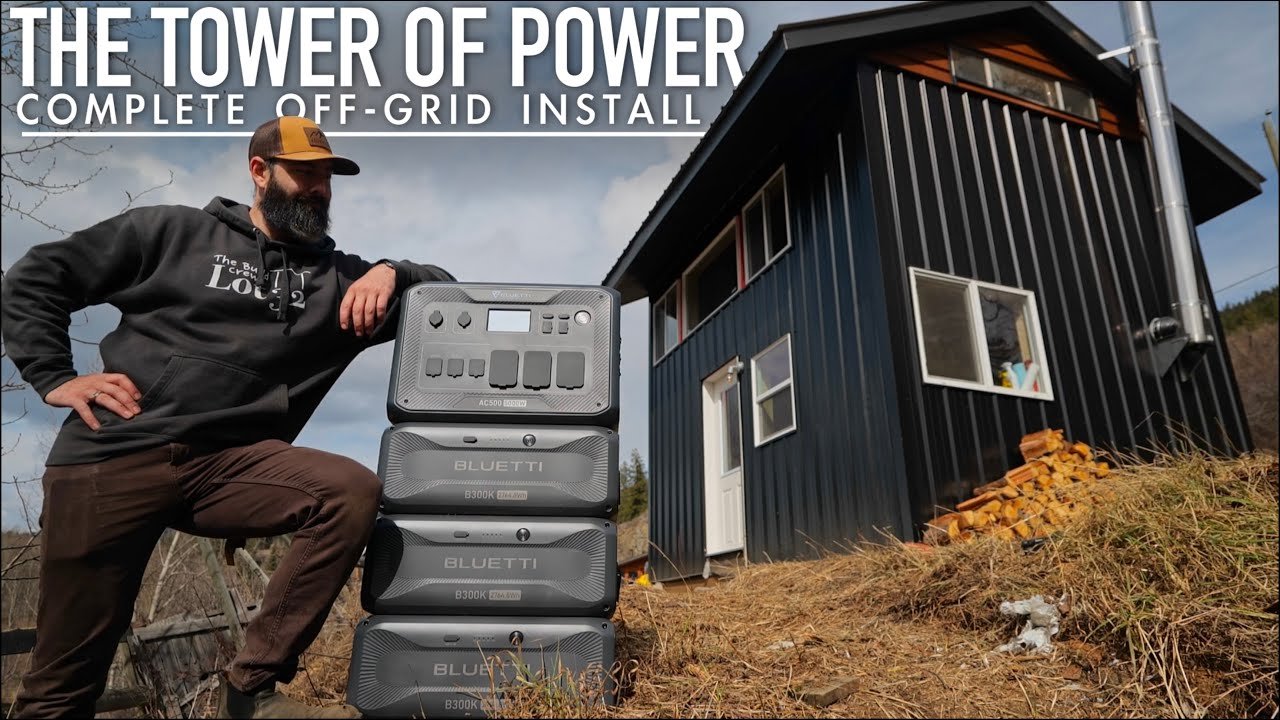
Image source: YouTube / Destination Adventure (YouTube thumbnail (fair-use with source credit))
Whole-home backup: 20-40 kWh system
Daily usage: 30 kWh. Inverter idle: 1.5 kWh. Total: 31.5 kWh per day.
Two autonomy days for grid backup gives 63 kWh usable. Lithium at 80 percent DoD needs 78.75 kWh rated. That's roughly 16 to 17 batteries at 48 volts.
For off-grid whole-home, plan for 5 days of autonomy. That jumps to 40 batteries. At that scale, the cost difference between lithium and lead-acid becomes significant, and the space required demands dedicated battery shelving.
The Four Most Common Sizing Mistakes
Mistake 1: Using peak power instead of daily energy
Your system size is determined by daily energy use, not peak power. A microwave might need 1,200 watts while running, but it only runs 15 minutes a day. That's 300 watt-hours, not the headline number.
Buying batteries to cover your peak draw means you oversize for the average case and waste capacity. Size for the daily total, not the appliance label.
Mistake 2: Forgetting the inverter's idle draw
Every inverter drains a baseline amount just by being turned on. A 3,000 watt inverter might idle at 40 watts. That's 0.96 kWh per day.
Over a week of autonomy, that's nearly 7 kWh eaten by nothing.
Use an inverter with a power save mode that reduces idle draw when no load is present. Some units drop to under 10 watts in standby.
Mistake 3: Mixing battery ages and chemistries
Old batteries and new batteries mix poorly. Internal resistance varies, causing the older batteries to charge and discharge faster than the new ones. The result is uneven wear and premature failure.
Replace batteries as a bank. If one fails, replace them all. The cost hurts but the alternative is a string of failures.
Mistake 4: Ignoring seasonal sun variation
Summer gives you twice the solar production of winter in most northern climates. A battery bank sized for summer months will run dry every winter. Always size your battery bank and solar array for the least sunny month.
The difference between a 3-day autonomy in summer and a 5-day autonomy in winter is meaningful. Plan for winter or accept that you'll need a generator during cloudy stretches.
What Temperature Does to Your Battery Math
Cold weather capacity loss in lead-acid vs. lithium
Lead-acid batteries lose roughly 1 percent of capacity for every degree Fahrenheit below 80 degrees. At 32 degrees, a lead-acid battery delivers about 50 percent less than its rated capacity. That changes the sizing math entirely if you live in a cold climate.
Lithium batteries perform better but still lose about 20 percent capacity at 32 degrees Fahrenheit. The key difference is that lithium battery management systems prevent charging below freezing, which protects the cells from permanent damage but means you can't recharge until they warm up.
The heated battery option and when it's worth the cost
Some lithium battery models include built-in heating elements that warm the cells before charging. These heaters draw 100 to 200 watts when active but only run when the battery is below freezing and needs charging.
For off-grid homes in climates with regular freezing temperatures, heated batteries are worth the premium. They ensure your system keeps working through the winter without requiring a heated battery enclosure.
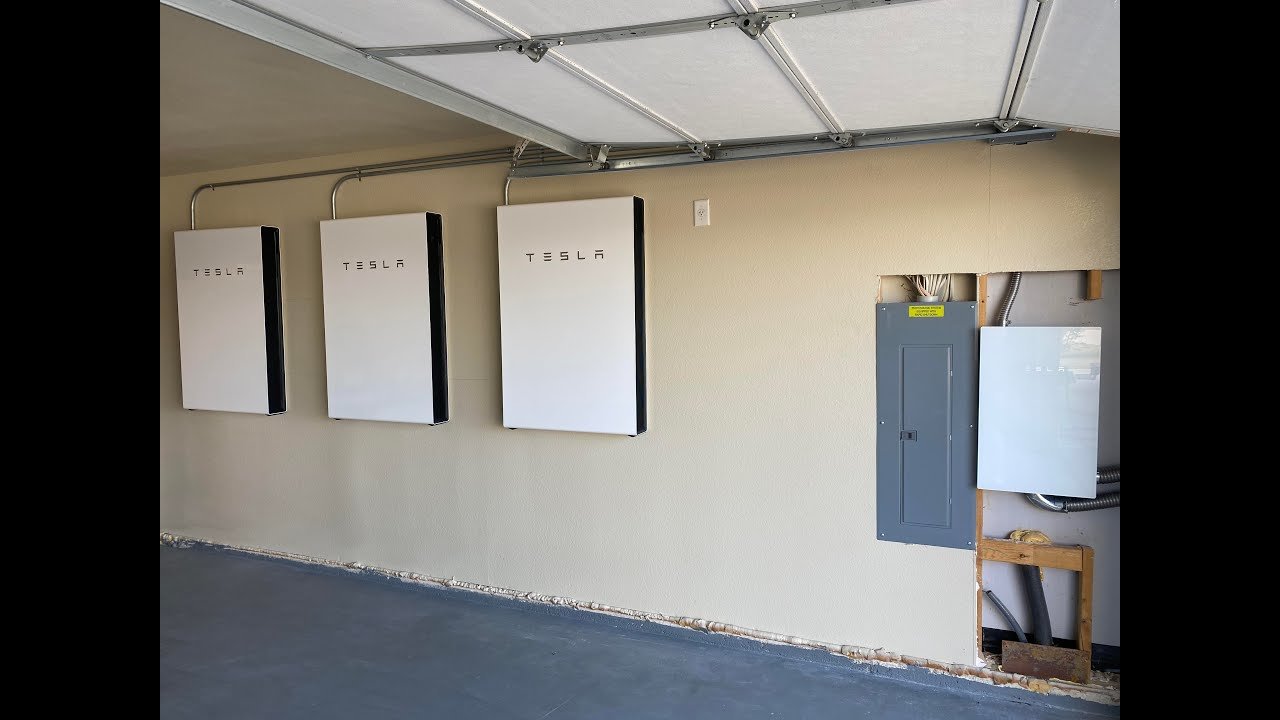
Garage vs. conditioned space installation tradeoffs
Batteries installed in a garage face wider temperature swings than those in a basement or utility room. Insulating the enclosure helps, but extreme cold still reduces capacity.
If you install batteries in unconditioned space, add a 20 to 30 percent safety margin to your capacity calculation to compensate for cold weather losses. Warmer installations can use the rated numbers directly.
When to Call a Professional (And When You Can DIY)
System size boundaries for safe DIY installation
Systems under 3,000 watts and 48 volts are generally safe for experienced DIYers. Above that, the current levels and arc flash risks increase. Any system running over 50 volts requires careful wire sizing and overcurrent protection to avoid fire hazards.
If your calculated battery count exceeds 8 units, consider hiring a licensed electrician for the final connection. Mistakes at this scale can damage your home's electrical system or create a fire risk.
The electrical and permitting gotchas that trip up homeowners
Most municipalities require permits for solar battery installations. The permit process often includes a site inspection and approval of your wiring plan. Failing to pull a permit can void your homeowner's insurance and cause issues when selling the house.
Local building codes may require specific battery enclosure ventilation, seismic strapping, and lockout tagout disconnects. Research your local requirements before starting the installation.
How to vet a solar installer without getting oversold
Get three quotes from different installers. Compare the battery counts and system sizes they recommend. If one quote recommends significantly more batteries than the others, ask why.
A good installer explains the reasoning with load calculations, not sales pressure.
Check that your installer holds applicable licenses and certifications. Ask for references from previous battery installations in your area and follow up with a phone call.
Your Quick-Reference Battery Sizing Worksheet
Printable load calculation template
- Daily load (kWh): _________
- Inverter idle draw: + _________
- Total daily need: = _________
- Multiply by autonomy days: x _________
- Total usable capacity: = _________
- Divide by DoD factor (0.8 lithium, 0.5 lead-acid): / _________
- Rated capacity needed: = _________
- Divide by single battery capacity: / _________
- Number of batteries: = _________
Battery count cheat sheet for common system sizes
| Daily Load | Autonomy | Lithium (48V 100Ah) | Lead-Acid (48V 100Ah) |
|---|---|---|---|
| 5 kWh | 2 days | 3 | 5 |
| 10 kWh | 3 days | 8 | 16 |
| 20 kWh | 3 days | 16 | 32 |
| 30 kWh | 2 days | 16 | 32 |
The three-question sanity check before you buy
Does my total battery capacity exceed my daily load times my autonomy days? If not, your batteries will run dry during a cloudy stretch.
Have I accounted for inverter idle draw and cold weather losses? Add at least 10 percent to your final battery count for safety margin.
Do I have adequate ventilation and clearance around my battery installation location? Lead-acid batteries require ventilation for hydrogen gas. Lithium batteries need airflow for cooling during high discharge rates.
Frequently Asked Questions
Can I add more batteries to my solar system later?
Yes, but only if you plan ahead. Choose a battery model and voltage that supports expansion. Leave room in your battery enclosure and budget extra capacity in your charge controller and inverter from the start.
How long do solar batteries last before needing replacement?
Lithium phosphate batteries last 10 to 15 years in typical use. Lead-acid batteries last 3 to 5 years. The difference comes down to cycle life: 3,000 to 6,000 cycles for lithium versus 500 to 1,000 for lead-acid.
Do I need one large battery or several smaller ones?
Multiple smaller batteries give you redundancy. If one fails, the rest keep working. One large battery is simpler but creates a single point of failure.
Most off-grid systems use multiple units wired in series and parallel.
What happens if my battery bank is too big for my solar panels?
An oversized battery bank charges more slowly because the panels can't supply enough current. On sunny days the batteries eventually charge fully, but cloudy days leave them partially charged. The real downside is wasted money on capacity you never use.
Can I mix different battery brands in the same bank?
Not recommended. Different brands have different internal resistance and charging profiles. Even matching voltage and chemistry, subtle differences cause uneven wear.
Stick with identical batteries from the same manufacturer and same production batch.
Understanding Battery Capacity Beyond the Spec Sheet
Battery manufacturers advertise capacity in amp-hours. That number is useless without voltage. A 100 amp-hour battery at 12 volts stores 1,200 watt-hours or 1.2 kWh.
At 48 volts, the same 100 amp-hours stores 4.8 kWh. Always convert to watt-hours before comparing.
The formula is simple: watt-hours equals amp-hours times voltage. If a battery is rated 100 Ah at 12 volts, it holds 1,200 Wh. Two of them in series gives you 24 volts with 1,200 Wh.
Two in parallel gives 12 volts with 2,400 Wh. Know your voltage before you buy.
Rated capacity vs. usable capacity — the 50% trap
Here's where lead-acid and lithium diverge dramatically. Lead-acid batteries should never be discharged below 50 percent of their rated capacity. Doing so regularly cuts their lifespan from 500 cycles to maybe 200.
So a 100 Ah lead-acid battery gives you only 50 Ah of usable capacity.
Lithium batteries, specifically LiFePO4, allow 80 to 100 percent discharge cycles without significant degradation. A 100 Ah lithium battery gives you 80 to 100 Ah of usable capacity. That means one lithium battery does the work of two lead-acid batteries in practical terms.
Manufacturer specifications indicate lead-acid cycle life ranges from 500 to 1,000 cycles at 50 percent depth of discharge. Lithium phosphate batteries routinely exceed 3,000 cycles at 80 percent discharge. The usable capacity difference changes the entire cost calculation.
Why amp-hours are meaningless without voltage
A 100 Ah battery at 12 volts stores 1.2 kWh. At 24 volts it stores 2.4 kWh. At 48 volts it stores 4.8 kWh.
The same amp-hour rating, triple the energy. That's why you always need to know your system voltage.
In our research, the most common mistake beginners make is comparing batteries by amp-hours alone. They pick a 200 Ah battery thinking it's twice as powerful as a 100 Ah unit, but if the 100 Ah is 24 volts and the 200 Ah is 12 volts, the 100 Ah battery actually stores more energy. Convert everything to watt-hours.
Depth of discharge: the spec that determines your battery's lifespan
Depth of discharge refers to how much of a battery's capacity you use before recharging. Discharge to 50 percent means you used half the stored energy. Discharge to 80 percent means you used most of it.
Lead-acid batteries degrade quickly past 50 percent DoD. Lithium batteries handle deep cycles with minimal wear. If you need to use 80 percent of your battery capacity regularly, lead-acid is the wrong choice regardless of the upfront price difference.
Temperatures also affect available capacity. Cold batteries deliver less usable energy. A lead-acid battery at freezing might only deliver 70 percent of its rated capacity.
Lithium batteries drop to about 85 percent, but most have built-in heaters that activate below freezing during charging.
Image source: Wikimedia Commons / Iron Edison (CC BY-SA)
Voltage Matching: Why Your Battery Bank Voltage Matters
Your battery bank voltage must match your inverter's input voltage. Mismatch them and nothing works, or worse, you damage equipment. Most off-grid inverters accept 12, 24, or 48 volt DC input.
Your choice affects wire size, efficiency, and how many batteries you need.
Higher voltage means lower current for the same power. Lower current means you can use thinner, cheaper copper wire. A 48 volt system running 3,000 watts draws about 62 amps.
A 12 volt system running the same 3,000 watts draws 250 amps. That requires massive cable and increases voltage drop.
12V vs 24V vs 48V — when each one makes sense
Small systems under 1,500 watts, like those in vans or tiny cabins, work fine at 12 volts. The wiring is simple and compatible with automotive components. Most 12 volt inverters are affordable and widely available.
Medium systems between 1,500 and 3,000 watts benefit from 24 volts. Wire sizes stay manageable and efficiency improves. Many RV and small home setups use 24 volts as a sweet spot between simplicity and performance.
Large systems above 3,000 watts should use 48 volts. This is the standard for whole-home off-grid setups. The lower current reduces copper costs and keeps voltage drop under control over longer runs.
Most high-capacity inverters and charge controllers are designed for 48 volt input.
The inverter voltage sweet spot for your system size
Match inverter voltage to your anticipated maximum load. A 3,000 watt inverter at 48 volts draws 62 amps. At 12 volts it draws 250 amps.
That extra current requires wire the diameter of your thumb and generates significant heat.
Per NFPA 70 standards, voltage drop should stay under 3 percent for efficiency. Higher voltage systems need smaller wire to meet that requirement. The cost savings on copper alone often justify stepping up to 48 volts.
How voltage affects wire size, efficiency, and cost
Wire gauge scales inversely with voltage. A 12 volt system moving 2,000 watts needs 4 AWG or larger wire for runs over 10 feet. A 48 volt system moving the same power needs 10 AWG.
The price difference between those two wire sizes is substantial for any run over 20 feet.
Local codes may require larger wire than the minimum. Check with your municipality before purchasing. A few extra dollars on wire saves thousands in potential fire risk.
Lithium vs. Lead-Acid: Two Completely Different Math Problems
The battery chemistry you choose changes every part of the sizing equation. Lead-acid batteries cost less upfront but deliver only half the usable capacity. Lithium batteries cost more initially but last longer and provide nearly full usable capacity.
Here's a direct comparison:
| Feature | Lead-Acid | Lithium LiFePO4 |
|---|---|---|
| Usable capacity | 50% of rated | 80-100% of rated |
| Cycle life | 500-1,000 | 3,000-6,000 |
| Round-trip efficiency | ~85% | ~95% |
| Weight (per kWh) | 50-70 lbs | 20-30 lbs |
| Cold weather performance | Poor below freezing | Good, with heater options |
| Upfront cost per kWh | Lower | Higher |
| Lifetime cost per kWh | Higher | Lower |
Why lithium's 80-100% usable capacity changes everything
If you need 10 kWh of usable storage, lead-acid requires a 20 kWh bank. That's twice the batteries, twice the weight, and twice the space. Lithium requires a 10 to 12 kWh bank.
The upfront cost gap narrows dramatically when you compare usable capacity instead of rated capacity.
For off-grid homes where every square foot matters, the space savings alone push people toward lithium. A 10 kWh lithium bank fits in a 24 inch by 12 inch footprint. The equivalent lead-acid bank needs two to three times that area.
The cycle life math that flips the cost equation
A lead-acid battery lasting 500 cycles at 50 percent DoD gives you 500 days of usable service if cycled daily. That's about 1.4 years. A lithium battery lasting 4,000 cycles at 80 percent DoD gives you 4,000 days or nearly 11 years.
Spread the upfront cost over the lifespan and lithium often comes out cheaper per cycle. Aggregate reviews from off-grid communities consistently show lithium batteries outperforming lead-acid in total cost of ownership after about three years.
Cold weather performance differences you can't ignore
Lead-acid batteries lose capacity in cold temperatures and can freeze if discharged below 40 percent state of charge. Charging a frozen lead-acid battery causes permanent damage. Storing them in conditioned space is mandatory.
Lithium batteries also lose capacity in cold weather but include built-in battery management systems that prevent charging below freezing. Some models offer heating pads that warm the cells before charging. These heaters draw power but are necessary for year-round performance in northern climates.
Image source: YouTube / Motorcyclist Magazine (YouTube thumbnail (fair-use with source credit))
Days of Autonomy: The Difference Between Backup and Off-Grid
Days of autonomy means the number of consecutive days your battery bank can power your home without any solar input. This is the single factor that determines how many batteries you actually need.
Grid-tied homeowners with backup only need 1 to 2 days of autonomy. Off-grid homes need 3 to 7 days depending on local weather patterns. The difference between 2 days and 5 days doubles your battery count.
Grid-tie backup: why 1-2 days is usually enough
If you remain connected to the grid, your batteries only need to cover short outages. Storms rarely knock power out for more than 24 hours in most areas. A single day of autonomy covers the vast majority of outages.
A 10 kWh daily load with 1 day of autonomy means a 10 kWh usable battery bank. That requires roughly 4 lithium batteries at 48 volts or 8 lead-acid batteries at 48 volts. It's the smallest practical system for whole-home backup.
Off-grid living: planning for the worst weather week
Off-grid systems must handle prolonged cloudy periods. Winter storms can reduce solar production to 10 to 30 percent of summer levels for up to a week. Your battery bank needs to bridge that gap.
Check historical weather data for your location. The National Renewable Energy Laboratory provides solar insolation maps that show average peak sun hours by month. Plan your autonomy days around the worst month, not the best.
How to calculate your personal autonomy number
Multiply your daily kWh load by the number of autonomy days you need. An off-grid home using 10 kWh per day with 4 days of autonomy needs 40 kWh of usable battery capacity. Multiply that by the depth of discharge factor.
For lithium: 40 kWh divided by 0.8 usable equals 50 kWh of rated battery capacity. For lead-acid: 40 kWh divided by 0.5 usable equals 80 kWh of rated capacity. That's the raw number before voltage conversion.
The Step-by-Step Battery Sizing Formula
Here's the exact process to calculate battery count. It works for any system size and any chemistry.
Write your numbers down as you go. Change one variable and recalculate until the result feels right for your budget and space.
Step 1: Total daily watt-hours after inverter losses
Your inverter loses about 5 to 15 percent of energy during conversion from DC to AC. Multiply your daily load by 1.15 to account for the average loss. If your daily load is 10 kWh, plan for 11.5 kWh.
Add your inverter idle draw to this number. An inverter with a 40 watt idle draw running 24 hours consumes 0.96 kWh per day. Your total daily need becomes roughly 12.5 kWh after both losses and idle draw.
Step 2: Multiply by your days of autonomy
Multiply your adjusted daily load by the number of autonomy days you selected. For a 12.5 kWh daily load and 3 autonomy days, the total is 37.5 kWh. This is the usable energy your battery bank must deliver.
Step 3: Divide by your battery depth of discharge
Lithium batteries at 80 percent DoD: 37.5 kWh divided by 0.8 equals 46.9 kWh of rated capacity needed. Lead-acid at 50 percent DoD: 37.5 kWh divided by 0.5 equals 75 kWh of rated capacity needed.
This is the rated capacity you need to purchase. It's always larger than your usable requirement.
Step 4: Convert to battery count at your chosen voltage
Divide your total rated capacity by the capacity of each battery. A 48 volt 100 Ah battery stores 4.8 kWh. For our lithium example: 46.9 kWh divided by 4.8 equals 9.8.
Round up to 10 batteries.
For lead-acid: 75 kWh divided by 4.8 equals 15.6. Round up to 16 batteries. That's the difference chemistry makes.
Real-World Sizing Examples That Match Your Situation
Here are three specific examples with actual battery counts for 48 volt lithium systems. Adjust the numbers for lead-acid by doubling the count.
Small RV or weekend cabin: 2-4 kWh system
Daily usage: 2 kWh. Inverter idle: 0.5 kWh. Total: 2.5 kWh per day.
Two days of autonomy gives 5 kWh usable. Lithium at 80 percent DoD needs 6.25 kWh rated capacity. Two 48 volt 100 Ah batteries (9.6 kWh total) comfortably cover this.
Four 12 volt 100 Ah lithium batteries wired in series and parallel would also work. This is the simplest system to install and configure.
Medium off-grid home: 10-20 kWh system
Daily usage: 10 kWh. Inverter idle: 1 kWh. Total: 11 kWh per day.
Four autonomy days gives 44 kWh usable. Lithium at 80 percent DoD needs 55 kWh rated. That's 11 to 12 batteries at 48 volts and 100 Ah each.
Image source: YouTube / Destination Adventure (YouTube thumbnail (fair-use with source credit))
Whole-home backup: 20-40 kWh system
Daily usage: 30 kWh. Inverter idle: 1.5 kWh. Total: 31.5 kWh per day.
Two autonomy days for grid backup gives 63 kWh usable. Lithium at 80 percent DoD needs 78.75 kWh rated. That's roughly 16 to 17 batteries at 48 volts.
For off-grid whole-home, plan for 5 days of autonomy. That jumps to 40 batteries. At that scale, the cost difference between lithium and lead-acid becomes significant, and the space required demands dedicated battery shelving.
The Four Most Common Sizing Mistakes
Mistake 1: Using peak power instead of daily energy
Your system size is determined by daily energy use, not peak power. A microwave might need 1,200 watts while running, but it only runs 15 minutes a day. That's 300 watt-hours, not the headline number.
Buying batteries to cover your peak draw means you oversize for the average case and waste capacity. Size for the daily total, not the appliance label.
Mistake 2: Forgetting the inverter's idle draw
Every inverter drains a baseline amount just by being turned on. A 3,000 watt inverter might idle at 40 watts. That's 0.96 kWh per day.
Over a week of autonomy, that's nearly 7 kWh eaten by nothing.
Use an inverter with a power save mode that reduces idle draw when no load is present. Some units drop to under 10 watts in standby.
Mistake 3: Mixing battery ages and chemistries
Old batteries and new batteries mix poorly. Internal resistance varies, causing the older batteries to charge and discharge faster than the new ones. The result is uneven wear and premature failure.
Replace batteries as a bank. If one fails, replace them all. The cost hurts but the alternative is a string of failures.
Mistake 4: Ignoring seasonal sun variation
Summer gives you twice the solar production of winter in most northern climates. A battery bank sized for summer months will run dry every winter. Always size your battery bank and solar array for the least sunny month.
The difference between a 3-day autonomy in summer and a 5-day autonomy in winter is meaningful. Plan for winter or accept that you'll need a generator during cloudy stretches.
What Temperature Does to Your Battery Math
Cold weather capacity loss in lead-acid vs. lithium
Lead-acid batteries lose roughly 1 percent of capacity for every degree Fahrenheit below 80 degrees. At 32 degrees, a lead-acid battery delivers about 50 percent less than its rated capacity. That changes the sizing math entirely if you live in a cold climate.
Lithium batteries perform better but still lose about 20 percent capacity at 32 degrees Fahrenheit. The key difference is that lithium battery management systems prevent charging below freezing, which protects the cells from permanent damage but means you can't recharge until they warm up.
The heated battery option and when it's worth the cost
Some lithium battery models include built-in heating elements that warm the cells before charging. These heaters draw 100 to 200 watts when active but only run when the battery is below freezing and needs charging.
For off-grid homes in climates with regular freezing temperatures, heated batteries are worth the premium. They ensure your system keeps working through the winter without requiring a heated battery enclosure.
Garage vs. conditioned space installation tradeoffs
Batteries installed in a garage face wider temperature swings than those in a basement or utility room. Insulating the enclosure helps, but extreme cold still reduces capacity.
If you install batteries in unconditioned space, add a 20 to 30 percent safety margin to your capacity calculation to compensate for cold weather losses. Warmer installations can use the rated numbers directly.
When to Call a Professional (And When You Can DIY)
System size boundaries for safe DIY installation
Systems under 3,000 watts and 48 volts are generally safe for experienced DIYers. Above that, the current levels and arc flash risks increase. Any system running over 50 volts requires careful wire sizing and overcurrent protection to avoid fire hazards.
If your calculated battery count exceeds 8 units, consider hiring a licensed electrician for the final connection. Mistakes at this scale can damage your home's electrical system or create a fire risk.
The electrical and permitting gotchas that trip up homeowners
Most municipalities require permits for solar battery installations. The permit process often includes a site inspection and approval of your wiring plan. Failing to pull a permit can void your homeowner's insurance and cause issues when selling the house.
Local building codes may require specific battery enclosure ventilation, seismic strapping, and lockout tagout disconnects. Research your local requirements before starting the installation.
How to vet a solar installer without getting oversold
Get three quotes from different installers. Compare the battery counts and system sizes they recommend. If one quote recommends significantly more batteries than the others, ask why.
A good installer explains the reasoning with load calculations, not sales pressure.
Check that your installer holds applicable licenses and certifications. Ask for references from previous battery installations in your area and follow up with a phone call.
Your Quick-Reference Battery Sizing Worksheet
Printable load calculation template
- Daily load (kWh): _________
- Inverter idle draw: + _________
- Total daily need: = _________
- Multiply by autonomy days: x _________
- Total usable capacity: = _________
- Divide by DoD factor (0.8 lithium, 0.5 lead-acid): / _________
- Rated capacity needed: = _________
- Divide by single battery capacity: / _________
- Number of batteries: = _________
Battery count cheat sheet for common system sizes
| Daily Load | Autonomy | Lithium (48V 100Ah) | Lead-Acid (48V 100Ah) |
|---|---|---|---|
| 5 kWh | 2 days | 3 | 5 |
| 10 kWh | 3 days | 8 | 16 |
| 20 kWh | 3 days | 16 | 32 |
| 30 kWh | 2 days | 16 | 32 |
The three-question sanity check before you buy
Does my total battery capacity exceed my daily load times my autonomy days? If not, your batteries will run dry during a cloudy stretch.
Have I accounted for inverter idle draw and cold weather losses? Add at least 10 percent to your final battery count for safety margin.
Do I have adequate ventilation and clearance around my battery installation location? Lead-acid batteries require ventilation for hydrogen gas. Lithium batteries need airflow for cooling during high discharge rates.
Frequently Asked Questions
Can I add more batteries to my solar system later?
Yes, but only if you plan ahead. Choose a battery model and voltage that supports expansion. Leave room in your battery enclosure and budget extra capacity in your charge controller and inverter from the start.
How long do solar batteries last before needing replacement?
Lithium phosphate batteries last 10 to 15 years in typical use. Lead-acid batteries last 3 to 5 years. The difference comes down to cycle life: 3,000 to 6,000 cycles for lithium versus 500 to 1,000 for lead-acid.
Do I need one large battery or several smaller ones?
Multiple smaller batteries give you redundancy. If one fails, the rest keep working. One large battery is simpler but creates a single point of failure.
Most off-grid systems use multiple units wired in series and parallel.
What happens if my battery bank is too big for my solar panels?
An oversized battery bank charges more slowly because the panels can't supply enough current. On sunny days the batteries eventually charge fully, but cloudy days leave them partially charged. The real downside is wasted money on capacity you never use.
Can I mix different battery brands in the same bank?
Not recommended. Different brands have different internal resistance and charging profiles. Even matching voltage and chemistry, subtle differences cause uneven wear.
Stick with identical batteries from the same manufacturer and same production batch.

Similar Posts