How Many Solar Panels to Charge an Electric Car?
Renewable Energy Systems Specialist & Lead Solar Hardware Tester
It sounds like you're looking for a straightforward answer to the question "how many solar panels to charge an electric car." But here's the thing: the number isn't the same for everyone. It depends on your daily driving habits, where you live, and what kind of panels you're working with. That's why so many people end up with a system that's either too small to cover their commute or way bigger than they actually need.
The good news is that the math is simpler than you might think. The average electric vehicle gets about 3 to 4 miles per kilowatt-hour (kWh) according to EPA testing. Once you know your daily driving distance and your local sunlight, you can figure out your panel count in about five minutes.
Let's walk through the exact process so you can get a number that actually works for your situation.
Quick Answer / Key Insight: The Real Range (6 to 18 Panels)
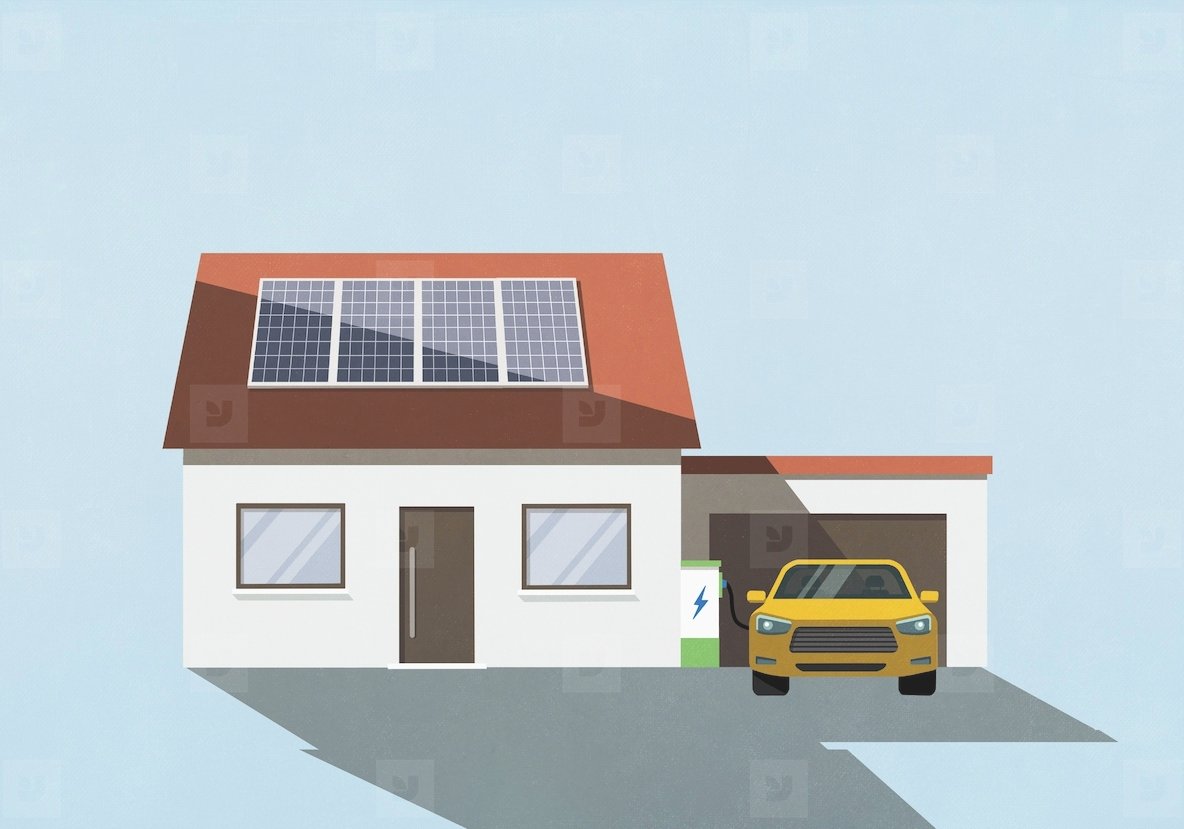
Most homeowners need 6 to 18 solar panels to fully charge an electric car. A typical 40-mile daily commute requires 8 to 12 panels. This assumes 400-watt panels and at least 4 peak sun hours.
Your exact number depends on your EV's efficiency and your local climate. Use the steps below to find your personal answer.
Problem / Pain Point: The "One Size Fits All" Myth That Wastes Your Money
If you search online for "how many solar panels to charge an electric car," you'll get a dozen different answers. Some say 6, others say 16. That's because most calculators skip the variables that matter most.
The biggest mistake people make is assuming one panel produces the same amount of energy everywhere. A panel in Phoenix Arizona generates nearly twice the daily power as the same panel in Seattle Washington. Your EV's efficiency also varies wildly.
A Ford F-150 Lightning uses about 0.48 kWh per mile, while a Tesla Model 3 uses about 0.25 kWh per mile. That's almost double the energy demand for the same distance.
Another common error is forgetting about system losses. Inverters, wiring, heat, and shading can eat up 15 to 20 percent of your solar production. If you don't account for that, you'll end up short on power during the darker months.
Fortunately, we can avoid all of these pitfalls by working through the math step by step.
Core Explanation: The Three Variables That Control Your Number
Three factors determine how many solar panels you need for EV charging. Get these right, and the rest is simple arithmetic.
Your Daily Driving Distance
This is the easiest number to find. Check your odometer over a typical week, add up the miles, and divide by 7. The average American commute is about 40 miles per day round trip.
But if you work from home, drive a lot for errands, or take frequent road trips, your number might be higher or lower.
Your EV's Efficiency (Miles per kWh)
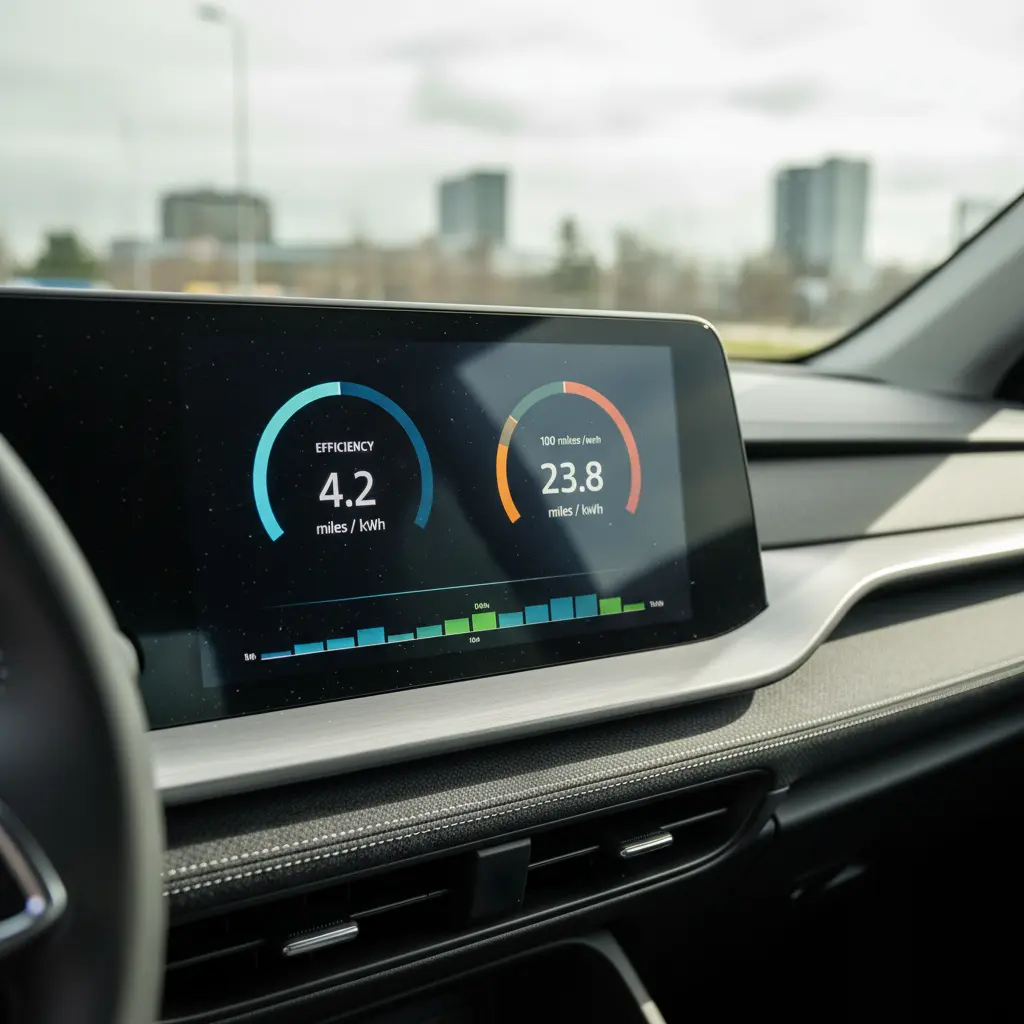
Every electric car has an efficiency rating, usually listed in miles per kilowatt-hour. You can find it on the EPA's fueleconomy.gov website or in your car's owner manual. A more efficient EV means fewer panels needed.
As of 2026, most new EVs fall between 3.0 and 4.5 miles per kWh.
Your Local Peak Sun Hours
This is the number of hours per day when sunlight is strong enough to produce full power from your panels. The National Renewable Energy Laboratory (NREL) provides maps and data for every region. Most of the US gets between 3.5 and 6 peak sun hours per day.
You can check the NREL PVWatts calculator for your exact location.
Step-by-Step Process: How to Calculate Your Exact Panel Count
Let's put those three variables together. Follow these four steps, and you'll have a solid estimate.
Step 1: Find Your Daily Energy Need
Divide your daily driving distance by your EV's efficiency. For example, if you drive 40 miles per day and your car gets 4 miles per kWh, you need 10 kWh per day.
- Daily miles ÷ miles per kWh = daily kWh needed
- 40 miles ÷ 4 miles/kWh = 10 kWh
Step 2: Check Your Local Peak Sun Hours
Look up your area's average peak sun hours. Let's say you live in an area with 5 peak sun hours. That means each panel watt can produce about 5 watt-hours per day.
- Peak sun hours vary by season. Use annual averages for a balanced estimate.
Step 3: Account for System Losses
Multiply your panel wattage by your peak sun hours, then multiply by 0.80 to account for the 20 percent system loss. A 400-watt panel in 5 sun hours produces about 1,600 watt-hours per day after losses.
- 400 watts × 5 hours × 0.80 = 1,600 watt-hours per day (1.6 kWh)
Step 4: Divide and Conquer
Take your daily energy need and divide it by each panel's daily production. Using our example, 10 kWh ÷ 1.6 kWh per panel = 6.25 panels. Round up to 7 panels.
- Daily kWh ÷ panel production per day = number of panels
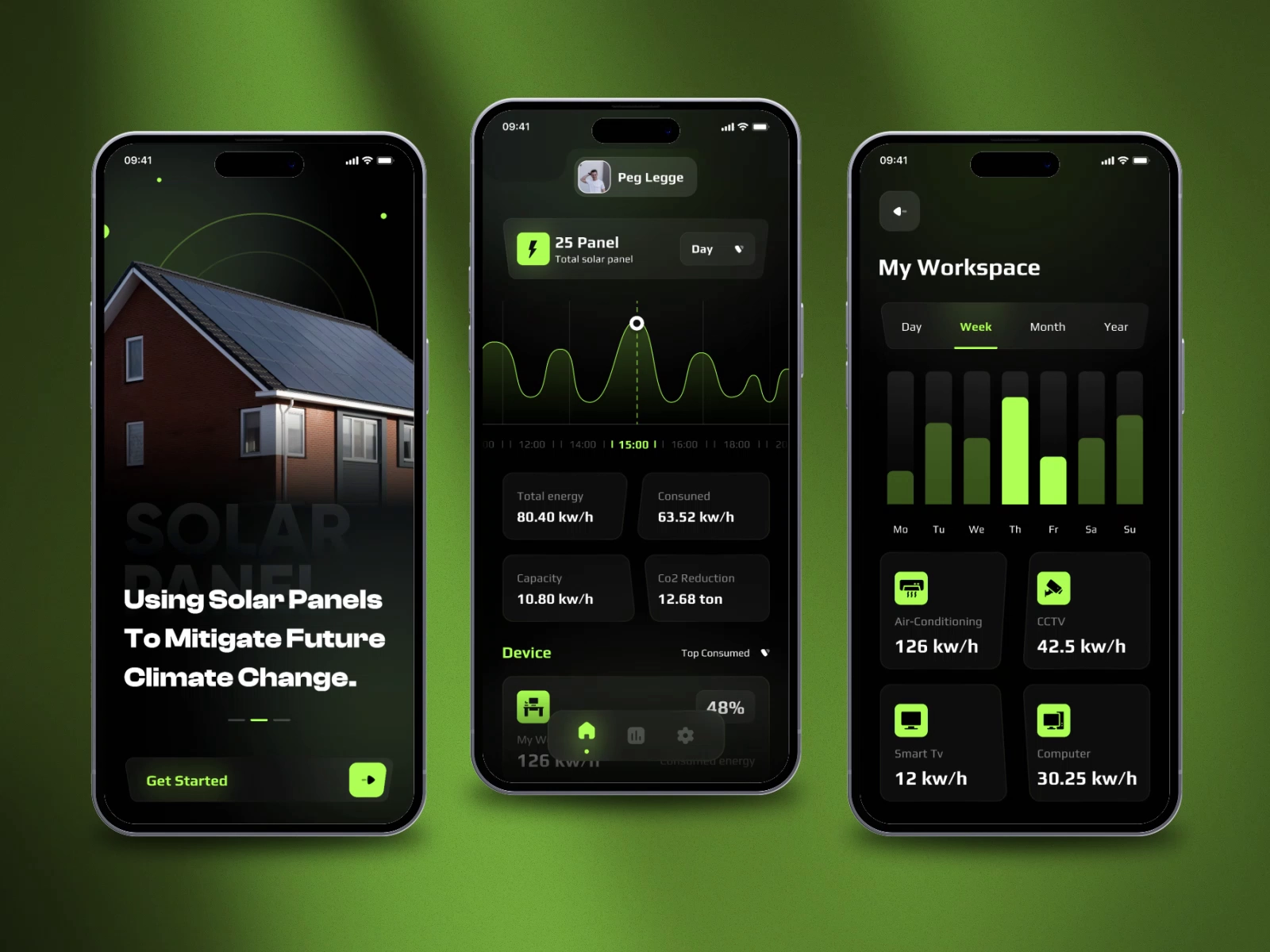
If you're unsure about your panel size, you can look at the different panel wattages available in the market. Most residential systems now use 400-watt panels, but 350-watt and 450-watt options are common too.
Decision Tree: What Driving Profile Are You?
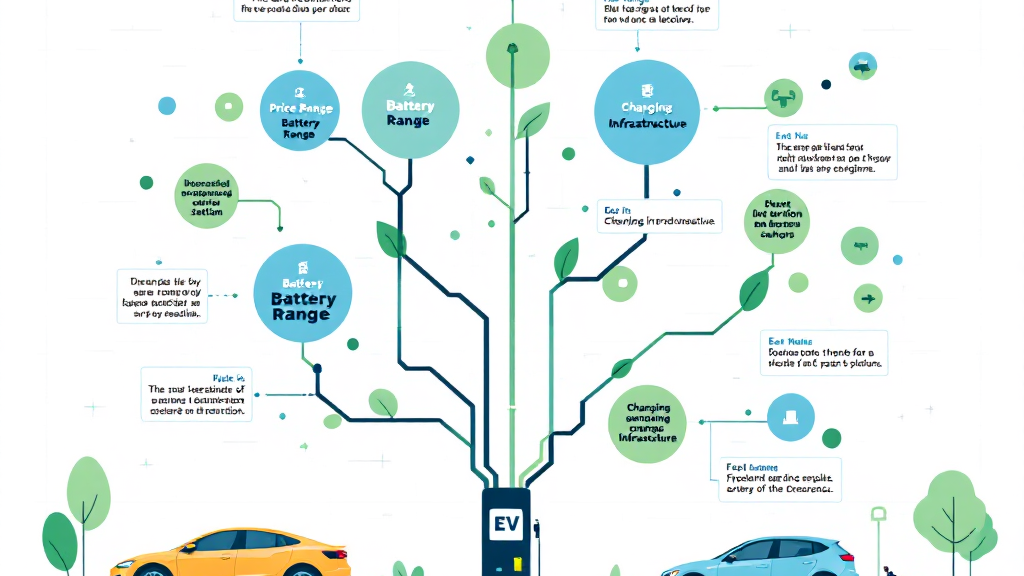
Image source: Bing (Web (fair-use with source credit))
Not everyone drives the same amount. Use this decision tree to find your category.
Light Driver: Less Than 30 Miles Per Day
If you work from home, live close to town, or drive infrequently, you're in the light category. Your daily energy need is roughly 7.5 to 10 kWh. With 5 peak sun hours, you'll need about 5 to 7 panels.
- Best for: small roofs, urban dwellers, retirees
- Tip: You can still benefit from net metering if your utility offers it
Average Commuter: 30 to 50 Miles Per Day
This covers the typical American driver. Your daily energy need is about 10 to 13 kWh. With 5 peak sun hours, you'll need 7 to 10 panels.
This is the most common scenario.
- Best for: suburban homeowners, standard commuters
- Tip: Consider a Level 2 charger for faster overnight charging
Heavy Driver: 50 to 80 Miles Per Day
If you have a long commute, drive for work, or take frequent road trips, you're in the heavy category. Your daily energy need is 13 to 20 kWh. With 5 peak sun hours, you'll need 10 to 14 panels.
- Best for: larger roofs, rural drivers, multi-car households
- Tip: A battery storage system can help you capture excess daytime energy
Off-Grid or No Net Metering
If you don't have access to net metering, you need to oversize your system. Plan for 30 to 50 percent more panels to cover cloudy days and winter months. You'll also want a battery system to store energy for nighttime charging.
If you're still uncertain about which path to take, a complete setup guide can help you weigh the options. The key is to match your driving habits to your solar production, not the other way around.
Mistakes to Avoid: Common Errors That Throw Off Your Estimate
Even with the right numbers, small mistakes can derail your solar panel estimate. Here are the most common ones we see.
Ignoring Seasonal Variation
Peak sun hours change dramatically between summer and winter. If you size your system based on July's numbers, you'll be short on power in December. Use the annual average from NREL data instead.
That gives you a balanced year-round estimate.
Forgetting About Shading
A single tree can cut your solar production by 25 percent or more. Panels in partial shade produce far less than their rated wattage. If your roof has shading from trees, chimneys, or nearby buildings, add 20 to 30 percent more panels to compensate.
Using the Wrong Panel Wattage
Not all solar panels produce the same power. Older or smaller panels might only be 250 watts. Newer residential panels are typically 400 to 450 watts.
If you're buying new panels, use 400 watts as your baseline. If you're using a specific type, check the manufacturer's datasheet for the exact rating.
Skipping the System Loss Calculation
Inverters, wiring, and heat losses add up to about 20 percent of your total production. Many people forget this and end up with a system that underperforms. Always multiply your panel output by 0.80 or 0.85 to get a realistic daily number.
Assuming Net Metering Will Cover Everything
Net metering policies vary by state and utility. Some pay you retail rates for excess power. Others pay wholesale rates or nothing at all.
If your utility has unfavorable net metering, you'll need a larger system or a battery to store energy for nighttime charging.
Costs & Savings: Upfront Investment vs. Long-Term Fuel Offset
Solar panels cost money upfront, but they save you money on fuel every single day. Let's break down the numbers.
What You'll Pay for the Solar System
A typical residential solar system costs between $10,000 and $25,000 after the federal tax credit. The 30 percent federal Investment Tax Credit (ITC) applies to systems installed through 2032. That means a $20,000 system effectively costs $14,000 after the credit.
| System Size | Estimated Cost Before Tax Credit | Cost After 30% Federal Credit |
|---|---|---|
| 6 panels (2.4 kW) | $6,000 – $8,000 | $4,200 – $5,600 |
| 10 panels (4.0 kW) | $10,000 – $13,000 | $7,000 – $9,100 |
| 14 panels (5.6 kW) | $14,000 – $18,000 | $9,800 – $12,600 |
What You'll Save on Fuel
The average EV driver spends about $500 to $1,500 per year on electricity to charge at home. With solar panels, that cost drops to near zero. Over 25 years, the total savings can range from $12,500 to $37,500 depending on your driving habits and local electricity rates.
Payback Period
Most solar systems pay for themselves in 5 to 10 years. After that, your EV fuel is essentially free. If you drive a lot, the payback period is shorter.
If you drive less, it takes longer but still saves money over the life of the system.
If you're weighing the pros and cons, this is where the numbers really shine. The combination of solar panels and an EV creates a powerful long-term savings machine.
Expert Tips: Pro Moves for Maximizing Solar EV Charging
Once you know how many panels you need, these tips help you get the most out of your system.
Charge During Peak Sun Hours
If you're home during the day, plug in your car when the sun is highest. That's usually between 10 a.m. and 3 p.m. Direct solar charging is more efficient than charging from the grid or a battery later.
Size Your Inverter Correctly
Your inverter converts DC power from the panels to AC power for your home and EV charger. If your inverter is too small, it limits how much power you can use at once. A good rule of thumb is to match your inverter size to about 80 percent of your panel array's total wattage.
Consider a Time-of-Use Rate Plan
Some utilities charge less for electricity during off-peak hours. If you have net metering, you can sell solar power to the grid during peak hours and buy it back cheaply at night. Check your utility's rate plans to see if this makes sense for you.
Monitor Your System Regularly
Most solar systems come with monitoring apps that show real-time production. Check your production weekly to catch problems early. A drop in output could mean a dirty panel, a failed inverter, or a wiring issue.
Keep Your Panels Clean
Dust, pollen, and bird droppings reduce panel efficiency. In most areas, rain cleans panels well enough. But in dry or dusty climates, a gentle rinse with a hose twice a year can boost production by 5 to 10 percent.
Real Scenarios: Three Example Households, Three Different Answers
Let's put the math to work with real examples. These three households show how the same question leads to different answers.
Household 1: The Suburban Commuter
Sarah lives in a suburb of Atlanta, Georgia. She drives a Tesla Model 3, which gets about 4.2 miles per kWh. Her daily commute is 45 miles round trip.
Atlanta gets about 5 peak sun hours per year.
- Daily energy need: 45 miles ÷ 4.2 miles/kWh = 10.7 kWh
- Panel production per day: 400 watts × 5 hours × 0.80 = 1.6 kWh
- Panel count: 10.7 ÷ 1.6 = 6.7 panels (round up to 7)
Sarah needs 7 panels to cover her daily commute. She has a south-facing roof with plenty of space, so this is an easy install.
Household 2: The Heavy Driver
Mike lives in Denver, Colorado. He drives a Ford F-150 Lightning, which gets about 2.3 miles per kWh. His daily driving is 70 miles for work and errands.
Denver gets about 5.5 peak sun hours.
- Daily energy need: 70 miles ÷ 2.3 miles/kWh = 30.4 kWh
- Panel production per day: 400 watts × 5.5 hours × 0.80 = 1.76 kWh
- Panel count: 30.4 ÷ 1.76 = 17.3 panels (round up to 18)

Mike's 18 panels need a larger roof or a ground mount. He also needs a bigger inverter to handle the load. His system is bigger, but he saves more on fuel since he drives so much.
Household 3: The Light User
Emily lives in Portland, Oregon. She drives a Chevy Bolt, which gets about 3.8 miles per kWh. She works from home and drives about 20 miles per day.
Portland gets only 3.5 peak sun hours on average.
- Daily energy need: 20 miles ÷ 3.8 miles/kWh = 5.3 kWh
- Panel production per day: 400 watts × 3.5 hours × 0.80 = 1.12 kWh
- Panel count: 5.3 ÷ 1.12 = 4.7 panels (round up to 5)
Emily only needs 5 panels. Her low sun hours are offset by her low driving distance. She could even get away with a smaller 350-watt panel system.
Frequently Asked Questions
How many solar panels do I need to charge a Tesla Model 3?
For a typical 40-mile daily commute, you need about 7 panels. The Model 3 is one of the most efficient EVs on the road, getting around 4.2 miles per kWh. With 5 peak sun hours and 400-watt panels, 7 panels covers your daily driving.
Can I charge my EV with just one solar panel?
Technically yes, but it's not practical. A single 400-watt panel produces about 1.5 to 2 kWh per day in good sun. That's enough for roughly 6 to 8 miles of driving.
It would take days to fully charge a typical EV battery.
Do I need a battery to charge my EV with solar panels?
No, you don't need a battery if you have net metering. Your solar panels send power to the grid during the day, and you pull from the grid at night. A battery helps if you want to charge your car after dark without using grid power.
What size solar system do I need for an EV and my home?
A typical home uses about 30 kWh per day without an EV. Adding an EV adds about 10 to 15 kWh per day. Combined, you might need a 10 to 15 kW system, which is about 25 to 38 panels depending on your location.
How long does it take to install solar panels for EV charging?
A professional installation takes 1 to 3 days for the panels and wiring. The permitting and inspection process can add 2 to 6 weeks. Total timeline from signing a contract to turning on the system is usually 4 to 8 weeks.
Your Decision Guide: What to Do Next
Now you have the tools to calculate your exact solar panel count. Here's a quick checklist to move forward.
Step 1: Gather Your Numbers
Write down your daily driving distance, your EV's efficiency, and your local peak sun hours. The NREL PVWatts calculator is a reliable source for sun hour data.
Step 2: Do the Math
Use the four-step process from this article. Calculate your daily energy need, your panel production, and your final panel count. Round up to account for real-world conditions.
Step 3: Check Your Roof
Measure your available roof space. Each 400-watt panel takes about 18 to 20 square feet. Make sure you have enough south-facing or west-facing space without shading.
Step 4: Get a Quote
Contact two or three local solar installers. Share your energy numbers and panel count estimate. Ask for a quote that includes the specific panels, inverter, and installation.
Step 5: Consider Your Payback
Compare the upfront cost to your annual fuel savings. Most systems pay for themselves in 5 to 10 years. Factor in the federal tax credit and any state incentives.
The right number of solar panels for your EV is the number that matches your driving habits, your climate, and your roof. Now you know how to find it.

Similar Posts