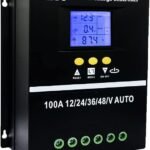
How Long to Charge 100Ah Battery with 200W Solar Panel?

So you want to know how long to charge a 100ah battery with a 200w solar panel. It’s a great question, and the short answer is: it depends. On three things, actually.
Your battery chemistry, your charge controller, and how much sun you’ve got. Ignore any of those and you’ll end up with a number that’s way off.
In our research, we’ve seen people expect a full charge in four hours only to find it takes two cloudy days. That’s because the real-world time can range from about 4 hours in perfect summer conditions to over 10 hours in winter, or even two partial days. As of 2026, modern MPPT controllers and lithium batteries can push charging speeds higher, but the core physics hasn’t changed.
Let’s walk through each variable so you can get your own accurate estimate.
The Quick Answer (With a Big Caveat)
Under ideal conditions, full sun, MPPT controller, lithium battery at 50% depth of discharge, a 200W panel can charge a 100Ah battery in roughly 5 to 6 hours. That’s with about 5 peak sun hours, 95% controller efficiency, and 95% battery charge efficiency.
But ideal conditions are rare. Here’s what changes the number:
- Clouds and shade can cut panel output by 50-80%.
- PWM controllers waste 20-30% of panel power.
- Lead-acid batteries charge slower in the absorption stage.
- Cold temperatures reduce lead-acid capacity and lithium acceptance.
So the real answer could be anywhere from 4 hours to 12+ hours. The next sections help you find your number.
Image source: Bing (Web, fair-use with source credit)
Why a Simple Formula Won't Work for You – Three Variables That Change Everything
You’ve probably seen the basic math: 100Ah × 12V = 1200 watt-hours. A 200W panel would need 1200Wh / 200W = 6 hours. Sounds clean, right?
But that calculation assumes perfect efficiency, constant full sunlight, and a battery that accepts power at the same rate from empty to full.
None of that happens in reality. Here are the three variables that throw it off:
- Battery chemistry, Lead-acid batteries lose about 15-20% of energy during charging (heat, resistance). Lithium loses only 2-5%. Also, lead-acid enters a long absorption phase near full charge, slowing dramatically. Lithium just accepts full current until nearly full.
- Charge controller type, PWM controllers only use about 75-80% of the panel’s potential. MPPT controllers use 95% or more. On a 200W panel, that can mean losing up to 40W right off the bat.
- Actual sunlight, A 200W panel only outputs 200W during the “peak sun hour” around noon. In the morning and evening, output is much lower. The average daily peak sun hours in the US range from 3 (winter in the north) to 6 (summer in the southwest). Clock hours and sun hours are not the same.
Each of these factors can multiply or divide your charge time by 2x or more. So let’s sort out your specific setup.
Start Here: What Battery Chemistry Are You Using?
Your battery type is the first decision branch. It determines how efficiently your 200W solar panel can push energy into storage.
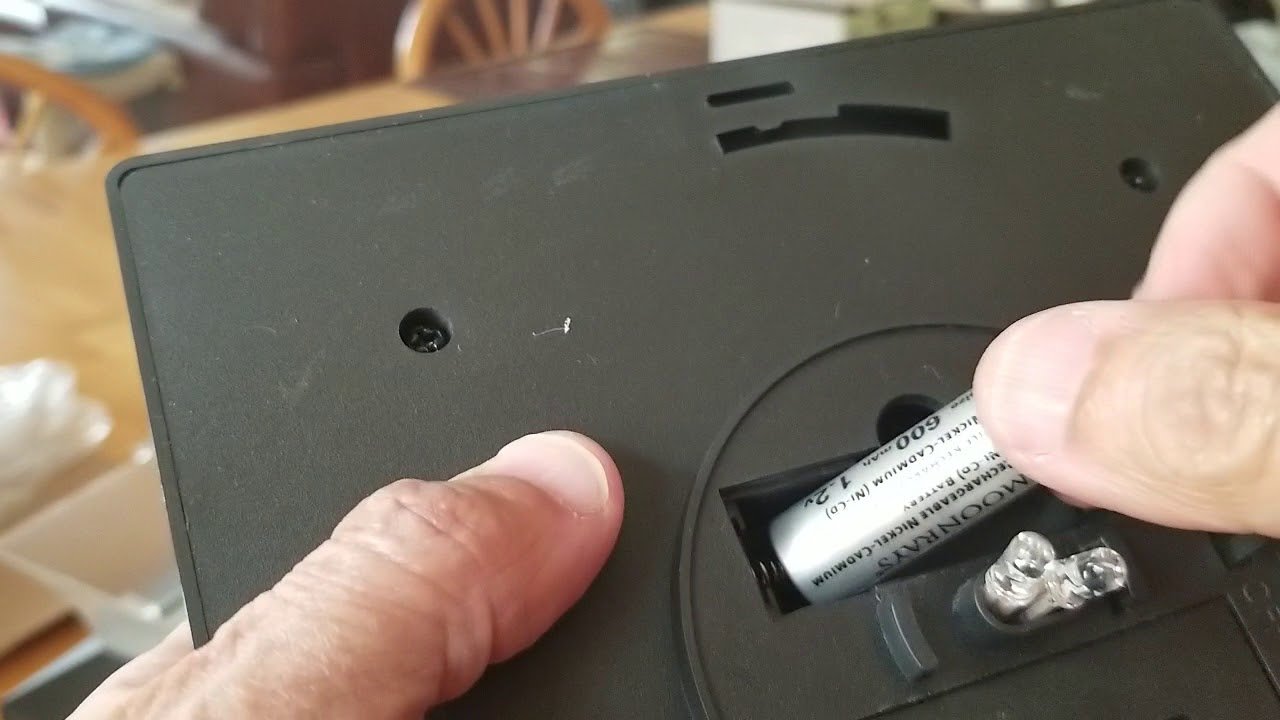
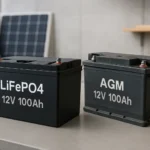
Lead-Acid (Flooded, AGM, Gel)
Lead-acid batteries are forgiving and cheap, but they’re inefficient. NREL research confirms typical charge efficiency is around 85-90%. That means you lose 10-15% of the panel’s energy as heat.
Plus, lead-acid batteries can’t handle a constant 200W charge near full. Once they hit about 80-90% state of charge, the voltage rises and the controller switches to absorption mode, holding voltage constant while current drops. This phase can take 1-3 hours for the final 10-20% of capacity.
If you have a 100Ah lead-acid battery at 50% depth of discharge (you need to replace 50Ah), you’re looking at roughly 6-9 hours of good sun, depending on the controller.
Lithium (LiFePO4)
Lithium iron phosphate batteries are the modern favorite. Their charge efficiency is 95-99%. They can accept the full 200W (approximately 15-16 amps at 12.8V) from empty almost all the way to full.
There’s no extended absorption phase. A lithium battery at 80% depth of discharge (needs 80Ah replaced) might take only 5-7 hours of good sun with an MPPT controller.
If you’re using lead-acid, your charge time will be 20-40% longer than a lithium battery, especially in the last 20% of charge. If you’re using lithium, you get the fastest charging and can drain deeper without penalty.

Image source: Wikimedia Commons / Wikimedia Commons contributor
Decision Branch 1: What Charge Controller Do You Have?
This is the second biggest factor, sometimes bigger than battery chemistry. The controller is the brain between your 200W panel and your 100Ah battery. It manages voltage and current to prevent overcharging.
But the type matters enormously.
MPPT Controllers – The Smart Choice
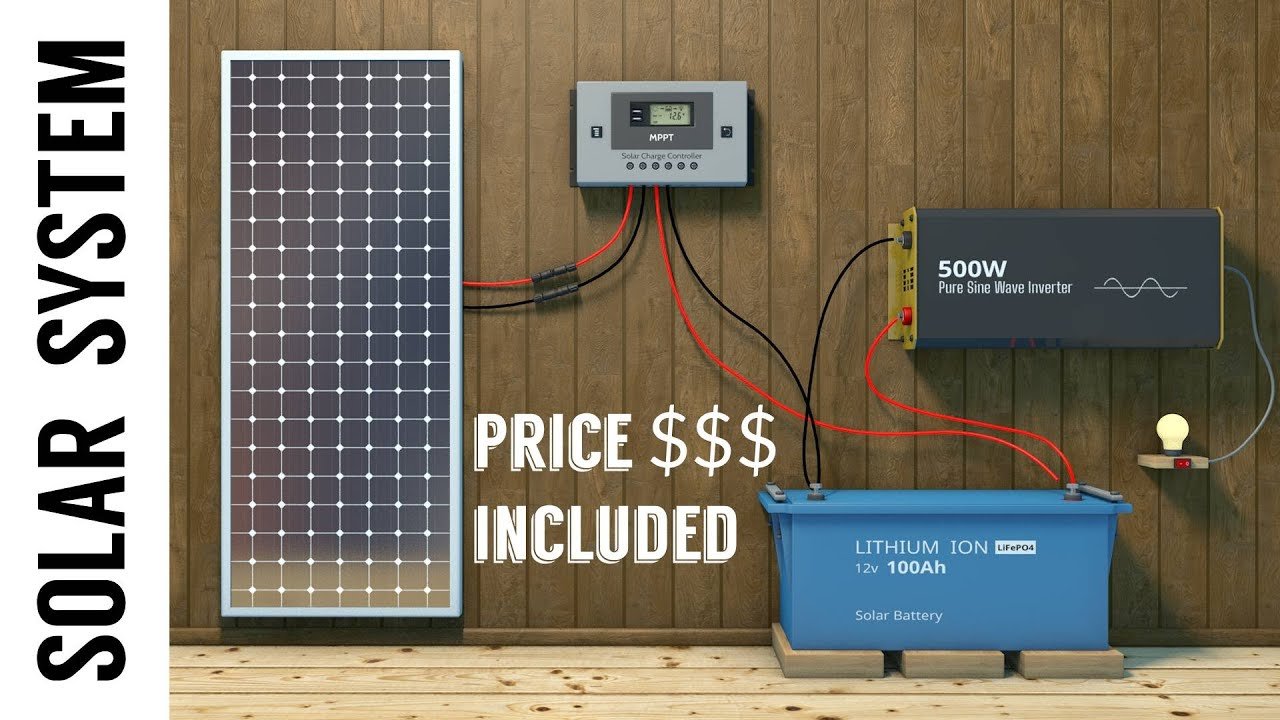
MPPT (Maximum Power Point Tracking) controllers constantly adjust to extract the maximum power from the solar panel. They convert excess voltage into additional current. If you have a 200W panel rated at 24V (common for 200W panels), an MPPT controller will step that down to 12-14V battery voltage, gaining roughly 20-30% more charging current compared to a PWM controller.
Efficiencies typically run 95-98%.
Best for: Most systems. If you have a panel voltage higher than your battery voltage (e.g., a 24V panel on a 12V system), MPPT is essential. Even with a 12V panel, MPPT recovers energy lost in partial shading and low light.
PWM Controllers – The Budget Choice
PWM (Pulse Width Modulation) controllers act like a simple switch. They match the panel voltage to the battery voltage, which wastes any excess voltage. For example, a 24V panel connected to a PWM controller on a 12V battery will only output about 12V worth of current, discarding the rest as heat.
You’ll lose 20-30% of the panel’s potential. PWM is fine for very small systems or when the panel voltage matches the battery voltage (12V panel on 12V battery), but even then, MPPT still wins in low light.
If you have a PWM controller, add 25-30% to your charge time. For a 100Ah battery requiring 600Wh to replace (50% DoD), a PWM controller might only deliver 150-160W effective from your 200W panel. If you have an MPPT controller, you get the full 190W+ effective.
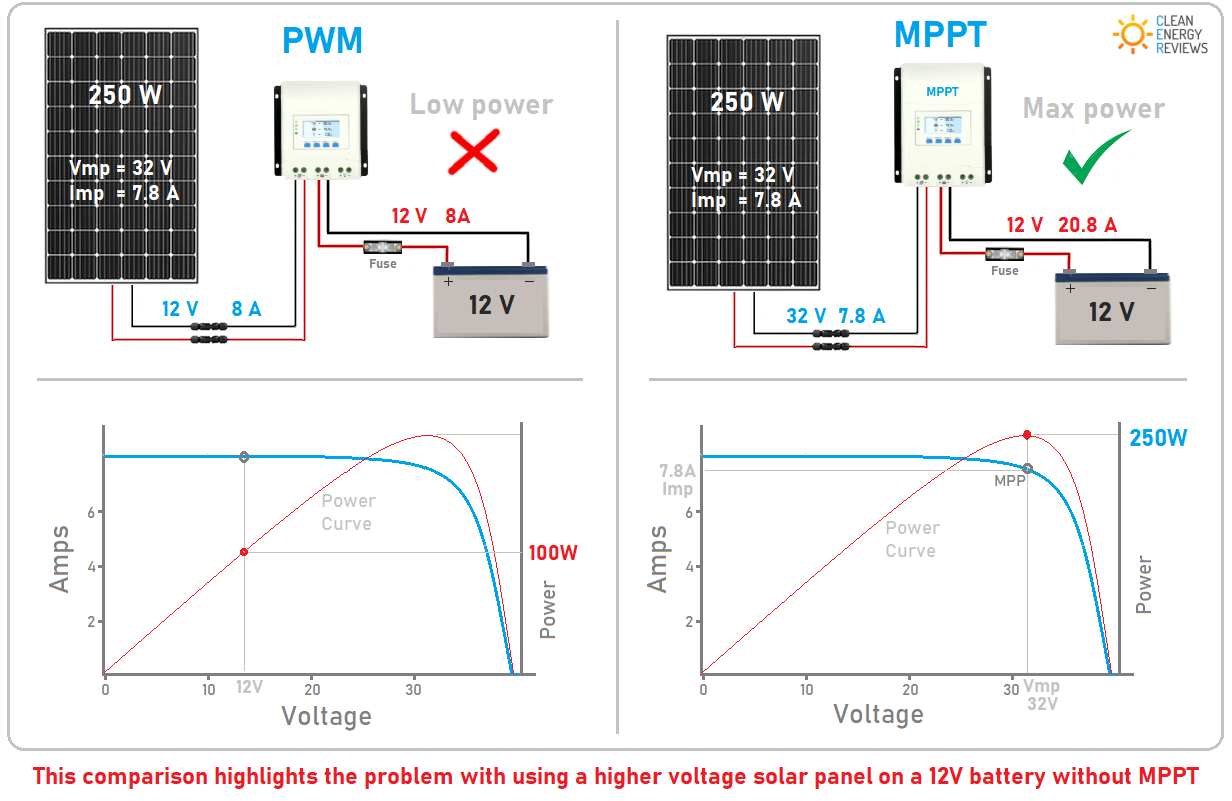
Image source: Bing (Web, fair-use with source credit)
Decision Branch 2: How Much Sunlight Do You Actually Get?
This is where many DIY solar enthusiasts get tripped up. You can’t just count the hours between sunrise and sunset and call them “charging hours.” Solar panels produce meaningful power only when the sun is high enough. The standard measure is peak sun hours (PSH), each hour when irradiance reaches 1000W/m² (full sun).
A location might have 6 hours of daylight in winter but only 2 peak sun hours.
How to find your peak sun hours
The National Renewable Energy Laboratory (NREL) publishes solar resource maps and data. You can use NREL’s PVWatts calculator with your location to get monthly averages. Here are rough US ranges:
| Region | Summer PSH | Winter PSH |
|---|---|---|
| Southwest (AZ, NV) | 6-7 | 4-5 |
| Midwest / Northeast | 4-5 | 2-3 |
| Pacific Northwest | 3-4 | 1-2 |
| Northern Europe (UK, DE) | 3-4 | 0.5-1.5 |
If you live in the Southwest, you can expect 5+ peak sun hours in summer, a 200W panel will deliver 1000+ watt-hours per day. That’s nearly enough to fully charge a 100Ah lead-acid battery from 50% on a single day. If you’re in the Pacific Northwest in December, you might get only 1 peak sun hour, your 200W panel delivers just 200Wh per day. Charging that same battery would take 3-4 days.
This variable alone can change your answer from “one day” to “almost a week.” So check your local PSH. It’s the most common reason people think their system is broken when it’s just under-powered for their latitude and season.

Image source: Wikimedia Commons / inkknife_2000 (7.5 million views +) (CC BY-SA)
By now you’ve identified three key numbers: your battery chemistry factor, your controller efficiency factor, and your daily peak sun hours. Next, we’ll put them together into a real calculation, plus walk through summer versus winter scenarios by region. That’s coming in the next sections: Decision Branch 3 (how discharged is your battery) and the step-by-step guide.
Stay with me, you’ll have your personal answer soon.
Image source: Bing (Web (fair-use with source credit))
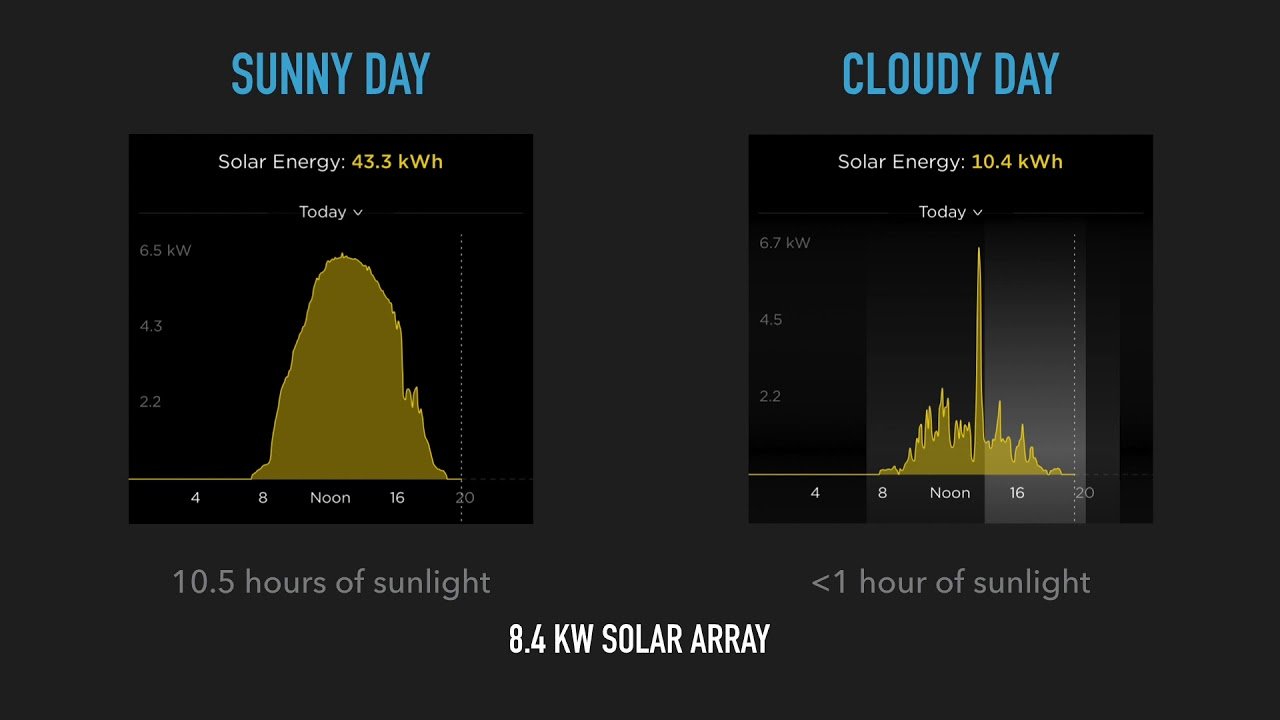
Image source: Bing (Web (fair-use with source credit))

Similar Posts