Do Solar Panels Actually Need Cleaning?
So you’ve got solar panels on your roof, and you’re wondering: do solar panels need to be cleaned? It’s a fair question. You probably spent a decent chunk of change on the system, and you want it performing at its best.
The short answer is: it depends. In our research, the National Renewable Energy Laboratory has measured soiling losses that range from next to nothing in rainy climates to over 25 percent in dry, dusty areas. So let’s walk through the conditions that actually matter for your setup.
Quick Answer: The Short Version
Most residential solar panels don’t need routine cleaning. Rain does a surprisingly good job of rinsing off light dust and pollen on tilted panels. You likely only need to clean if you notice a sustained drop in energy production (say, 15 percent or more) or if you see visible buildup that isn’t washing away naturally.
A good rule of thumb: check your monitoring app every few months. If output falls noticeably below expected for your weather, then it’s time to act. Otherwise, let nature handle it.
Manufacturer warranty guidelines usually don’t require regular cleaning either, just that you keep the system in good condition.
The 4 Factors That Decide Your Cleaning Schedule
Not all solar installations are the same. Four key variables determine whether you’ll need to break out a soft brush or just wait for the next storm.
1. Panel tilt angle. Flat or low-pitched panels (under 15 degrees) don’t shed rain as effectively. Dirt and bird droppings sit longer and can bake on.
Panels tilted at 30 degrees or more self-clean far better. If your roof is shallow, you’re more likely to need an occasional manual wash.
2. Local rainfall. If you live in a region that gets at least an inch of rain per month, you’re probably in good shape. Drier climates, places like the American Southwest, parts of Australia, or Mediterranean zones, see much faster soiling buildup.
Aggregate data suggests that in areas with less than 10 inches of annual precipitation, cleaning once or twice a year is a smart move.
3. Environmental debris. What’s around your house matters. Large trees dropping sap, leaves, and pollen will coat your panels faster than a barren desert.
Agricultural areas kick up dust and fertiliser residues. Bird activity near a roofline can create stubborn droppings that rain can’t fully remove. If you see visible grime after a dry spell, add it to your to-do list.
4. Your actual energy production data. This is the most objective signal. Every modern solar system includes a monitoring platform (Enphase, SolarEdge, or your inverter’s app).
Compare your current daily or weekly output to what it was during a clean period with similar weather. A drop of 10, 15 percent with no other explanation (like clouds or shading from a new tree) is a solid indicator that cleaning would help.
If you’re still deciding which setup is right for your home, it helps to understand the different options. Our guide on the different solar panel configurations can walk you through the main types.
How to Diagnose if Your Panels Actually Need Cleaning
Skip the guesswork. Here’s a three-step process that takes less than 10 minutes.
Step 1: Check your production numbers. Open your monitoring app. Look for the “expected” or “estimated” production for today or this week, most apps show a baseline based on your system’s specs and local weather. If actual output is 15 percent or more below that baseline for several days in a row (and you haven’t had heavy cloud cover), dirt might be the culprit.
Step 2: Do a quick visual inspection. Stand back and look at your roof. Can you clearly see bird droppings, thick patches of dust, or leaves stuck to the glass? If the panels look uniformly dirty, that’s a good reason to clean.
But if they appear clear from the ground, they may not need it yet.
Step 3: Use a spot check. If you have ground-mounted panels or safe roof access, gently run your finger across one panel’s surface. Does a layer of fine powder or grime come off? If so, and if step 1 shows a drop, you’ve confirmed soiling.
Nobody wants to climb onto a roof unnecessarily. Stick to this diagnostic routine and you’ll know for sure.
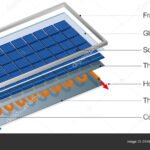
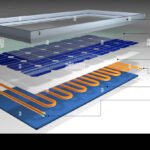
Before you decide on cleaning, it’s worth knowing the main components that make your system tick. That way you’ll understand what you’re handling and where to avoid water exposure.
Your Decision Tree: When to Clean, When to Wait, When to Hire
Now let’s turn those factors into a simple if/then guide. Answer each question with your situation.
| Condition | Recommendation |
|---|---|
| Panels tilted 30+ degrees AND you get regular rain (1+ inch/month) | Do nothing. Monitor once a season. |
| Panels tilted 30+ degrees AND you live in a dry climate | Check production quarterly. Clean if drop exceeds 15%. |
| Panels tilted under 15 degrees (flat roof) | Plan to clean 1–2 times per year regardless of rain. |
| Visible bird droppings or thick dust | Clean as soon as you notice. Letting it bake on makes removal harder. |
| Production drop of 15%+ with no cloud cover | Clean yourself (if safe) or hire a pro. |
When to wait: If rain is forecast in the next 10 days, you can hold off and let it do the work. If your output is only 5, 8 percent below normal, it may not be worth the effort and water.
When to call a pro: If your roof is steep (pitch greater than 6/12), if you’re not comfortable on ladders, or if you have a two-story house, hire a professional. They bring soft-wash equipment, deionised water, and liability insurance. Costs typically run $150, $350 for a standard home system.
That’s money well spent to avoid a fall or a damaged panel.
When to DIY: If you have a low-slope or ground-mounted array, a soft brush on an extension pole, a garden hose (low pressure), and some distilled water will do the job. Never use a pressure washer. It can damage the seal around the panel glass and void your warranty.
Always wash early in the morning or in the evening when the panels are cool, thermal shock from cold water on hot glass can cause micro-cracks.
Regular maintenance also ties into the overall lifespan of your system. Our overview of solar panel advantages and disadvantages covers how soiling and cleaning fit into long-term performance.
5 Mistakes That Will Cost You (Warranty, Safety, Performance)
Even well-intentioned owners make errors that hurt their system or wallet. Avoid these.
1. Using tap water in hard-water areas. Tap water leaves mineral deposits that actually block sunlight more than the dirt you were trying to remove. If you live where water hardness is high, use distilled water or a deionised water system.
Many pros carry a DI tank for exactly this reason.
2. Power washing. We mentioned it before, but it bears repeating. Pressure washers force water into the panel’s junction box and bypass the rubber seals.
That invites corrosion, internal condensation, and eventual failure. The standard warranty from most manufacturers specifically excludes damage from high-pressure cleaning.
3. Cleaning in direct sunlight. When the panels are hot, water evaporates almost instantly. That leaves streaks, deposits, and requires more water to rinse.
Worse, cold water hitting a hot panel can cause the glass to crack from thermal stress. Clean only when the surface is cool to the touch.
4. Walking on the panels. It’s tempting to step onto the glass to reach a stubborn spot. But panel glass is not designed for foot traffic.
You can create micro-cracks that drastically reduce output over time. If you must access the roof, use a walkway kit or hire someone with the right safety gear.
5. Overcleaning. Some owners scrub their panels every month “just in case.” That’s unnecessary and wastes water and your time. After the first cleaning, most homes only need one or two cleanings per year at most.
Panels are self-cleaning to a degree, and excessive handling introduces more opportunities for accidental damage.
If you’re concerned about the upfront investment, our solar panel buying guide breaks down what you should look for when choosing a system, including what warranty provisions to check regarding cleaning obligations.

Similar Posts