How Much Do Commercial Solar Panels Cost?
Renewable Energy Systems Specialist & Lead Solar Hardware Tester
If you've been shopping around for commercial solar and finding price tags all over the map, you're not alone. The question "how much do solar panels cost for a business" gets a different answer depending on who you ask, and that's because the real number depends on a handful of key factors unique to your operation. A single national average won't tell you much.
Here's a concrete starting point: according to data from the National Renewable Energy Laboratory, commercial solar installations in 2025 averaged between $2.00 and $3.50 per watt before incentives. That means a 100 kW system runs roughly $200,000 to $350,000 upfront. But that's just the sticker price.
The actual cost after federal tax credits, depreciation, and state incentives can slash that number by 50 percent or more. Let's walk through what actually drives the price.
The No-Nonsense Quick Answer: What a Typical Business Pays
Most businesses pay between $2.00 and $3.50 per watt before incentives. A 100 kW system runs $200,000 to $350,000 upfront. After the 30 percent federal tax credit and depreciation, that drops to roughly $100,000 to $200,000.
Your actual cost depends on location, energy use, and financing choice.
Why Commercial Solar Costs Are Hard to Pin Down
Here's the thing: solar pricing looks simple on the surface, but it's anything but. Unlike buying a piece of equipment off the shelf, a commercial solar installation is a custom工程 project. The price shifts based on your roof type, your electric bill, your local utility's rules, and even the time of year you sign the contract.

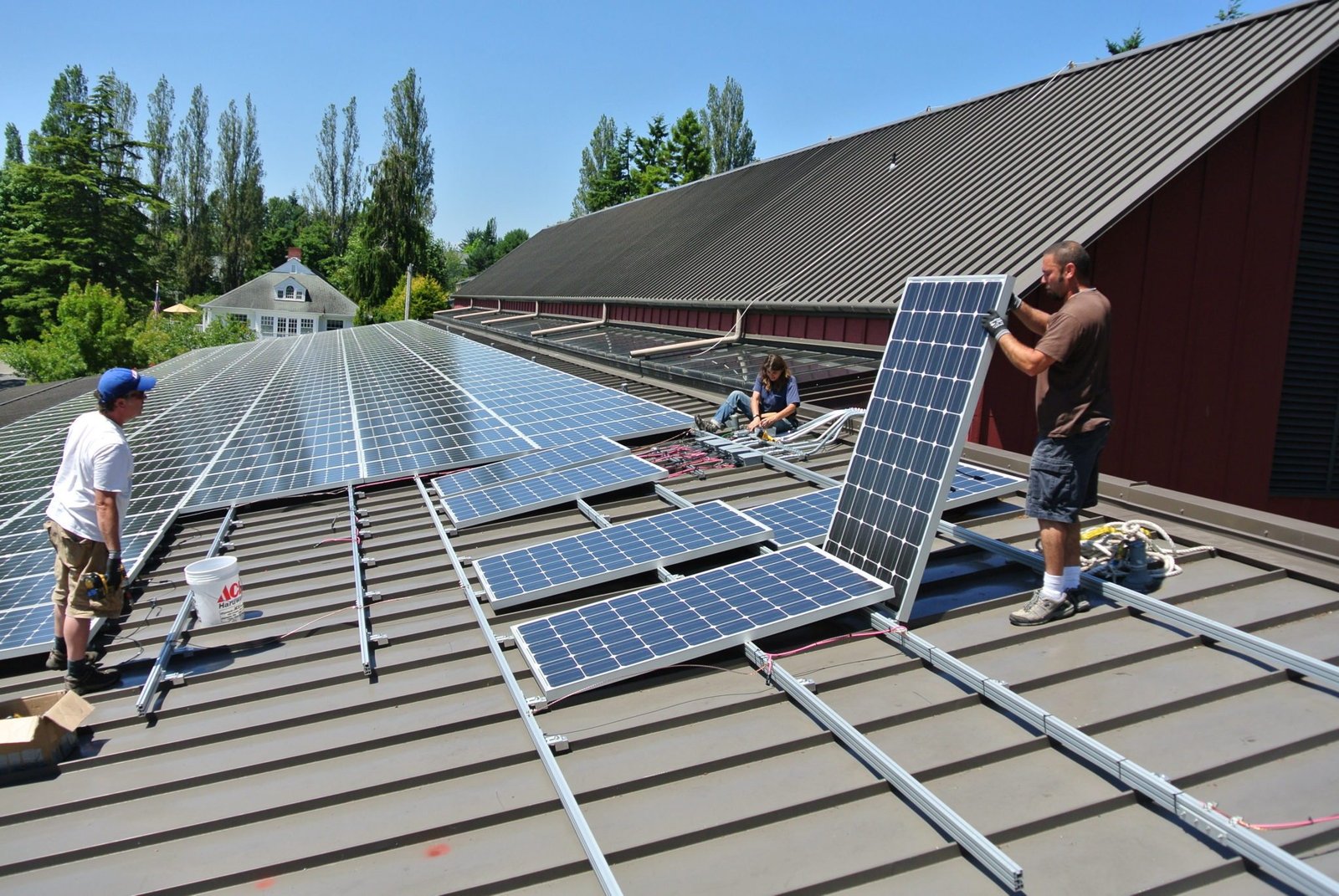
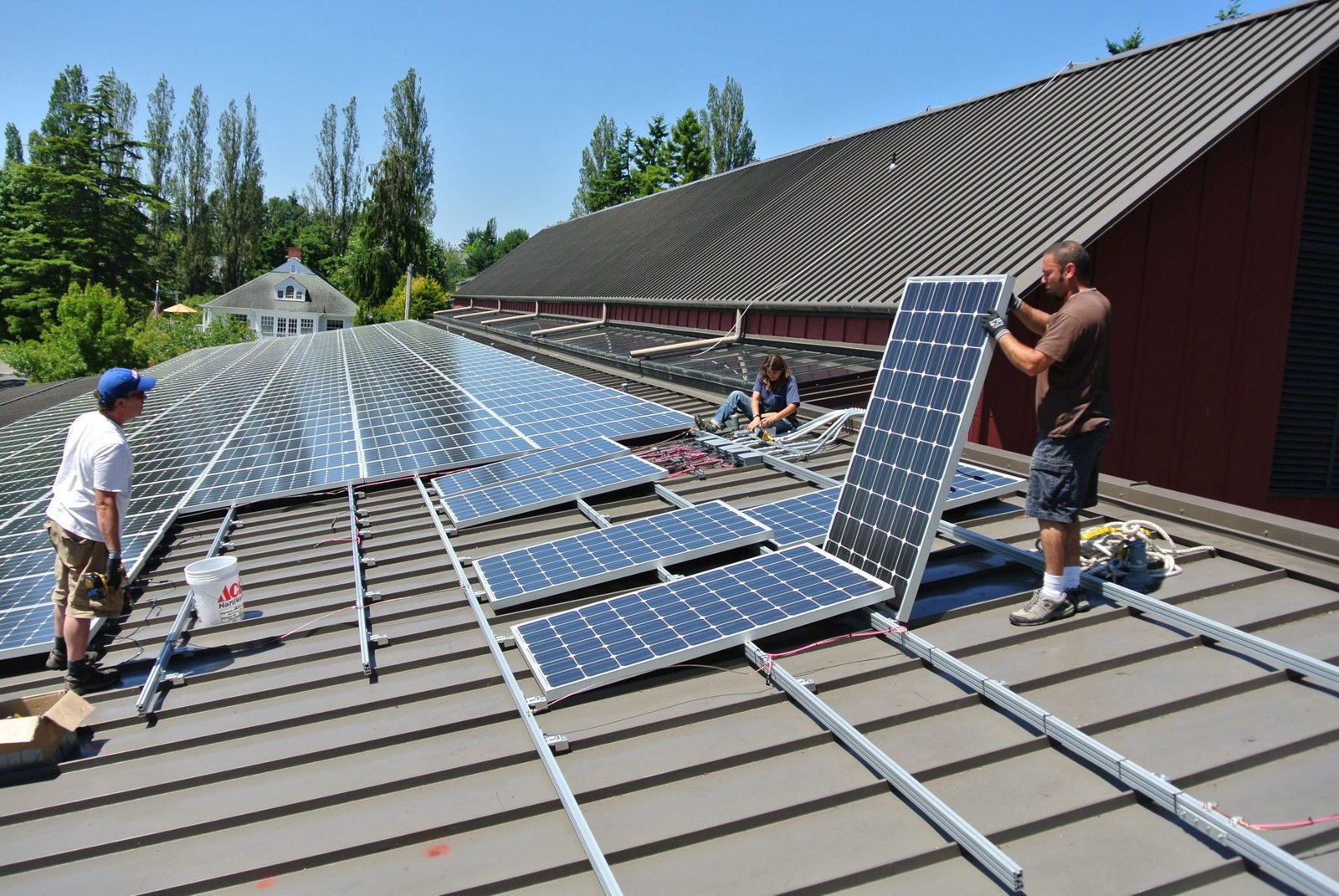
Image source: Wikimedia Commons / MassDOT
Three factors create most of the variation. First, every installer prices their labor and overhead differently. Second, the equipment itself comes in a wide range of quality and efficiency.
Third, local permitting fees and utility interconnection costs vary dramatically from city to city.
The bottom line: you cannot rely on a friend's quote from another state. Your neighbor's $2.10 per watt deal might be impossible in your market. Understanding the components that make up the price is the only way to evaluate whether a quote is fair.
If you want to dig deeper into the technology itself, our article on how sunlight becomes power explains the basic science behind the panels.
The Big Three Cost Drivers: System Size, Location, and Financing
Of all the variables, three factors account for roughly 80 percent of the price difference between one business's quote and another's. Let's take them one at a time.
System Size
Solar follows a classic economy-of-scale curve. A 10 kW system for a small retail shop might cost $3.50 per watt. A 500 kW system for a warehouse drops closer to $2.00 per watt.
That's because the fixed costs, engineering, permitting, travel, get spread across more panels.
Typical commercial system sizes break down like this:
| Business Type | Typical System Size | Cost per Watt Range |
|---|---|---|
| Small retail / office | 10–50 kW | $2.80–$3.50 |
| Mid-size warehouse | 50–200 kW | $2.30–$3.00 |
| Large manufacturing | 200 kW–1 MW+ | $2.00–$2.70 |
Location and Sunlight
Your geographic location affects both the solar resource and the local cost of labor and permits. A business in California pays more per watt for labor than one in Texas, but they also get more sun and stronger net metering policies.
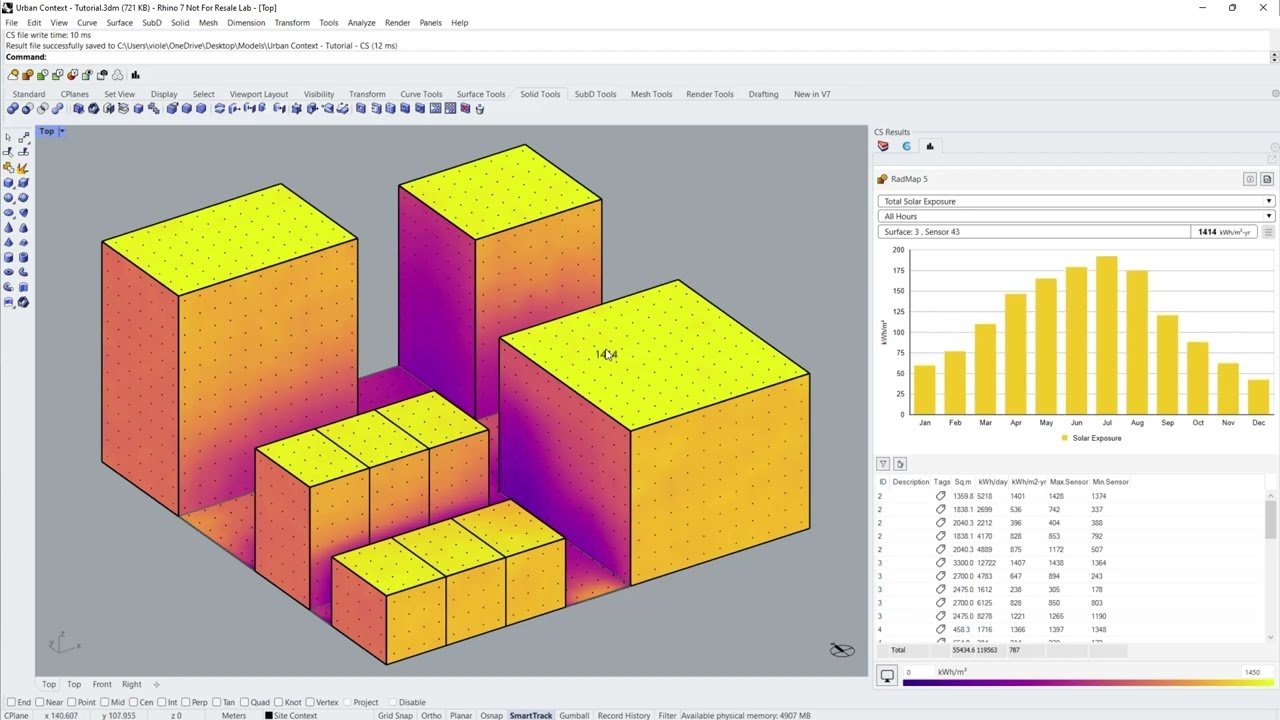
Image source: YouTube / ClimateStudio (YouTube thumbnail (fair-use with source credit))
The NREL solar irradiance maps show that the same 100 kW system in Arizona will produce about 30 percent more electricity than one in Michigan. That difference directly affects your payback period. For a deeper look at how this all fits together, our guide to the different panel technologies explains which modules perform best in different climates.
Financing Structure
This is the biggest variable most businesses overlook. A cash purchase gives you the lowest total cost but requires the most upfront capital. A loan spreads the cost over time but adds interest.
A Power Purchase Agreement (PPA) requires zero down but locks in a fixed rate for 20 to 25 years.
We'll break down the financing options in detail next.
Cash vs. PPA vs. Loan: How You Pay Changes the Math
The way you pay for your solar system changes the numbers dramatically. Here's how the three main options stack up side by side.
Image source: YouTube / MeterBoxesDirect (YouTube thumbnail (fair-use with source credit))
| Financing Option | Upfront Cost | Monthly Payment | Total 25-Year Cost | Best For |
|---|---|---|---|---|
| Cash Purchase | $100,000–$350,000 | $0 | Lowest | Businesses with strong cash reserves |
| Commercial Solar Loan | $0–$20,000 | $800–$2,500 | Moderate | Businesses that want ownership without full upfront cost |
| Power Purchase Agreement (PPA) | $0 | $400–$1,800 | Highest (includes escalator) | Businesses that want zero maintenance and immediate savings |
Cash Purchase
If you have the capital, cash is almost always the winner. You capture the full 30 percent federal tax credit plus accelerated depreciation. The system starts paying you back from month one.
A typical cash purchase pays for itself in five to eight years.
The risk here is straightforward: you tie up capital that could have been used elsewhere in your business. For companies with healthy cash flow and a long-term outlook, that trade-off is usually worth it.
Commercial Solar Loan
A loan lets you own the system without emptying your bank account. You still claim the tax credit and depreciation, which can make the effective interest rate very low. Most commercial solar loans run 10 to 20 years at rates between 4 and 8 percent as of 2026.
The catch is that your monthly payment might exceed your electric bill savings in year one. That gap closes over time as utility rates rise. You need to model the numbers carefully before signing.
Power Purchase Agreement (PPA)
A PPA is the easiest option to understand but the hardest to compare. An installer puts the system on your roof for free. You buy the electricity at a fixed rate that is typically 10 to 20 percent below your utility's current rate.
The installer gets the tax credits and depreciation.
The downside: that fixed rate usually includes an annual escalator of 2 to 3 percent. Over 25 years, you pay more per kilowatt-hour than you would if you owned the system. But you also have zero maintenance costs and zero capital risk.
It's a classic trade-off.
Federal ITC, MACRS, and State Incentives: The Real Price After Tax
This is where the math gets exciting. The federal government offers two powerful incentives for commercial solar. Combined, they can reduce your net cost by 50 percent or more.
The Federal Investment Tax Credit (ITC)
As of 2026, the ITC gives you a dollar-for-dollar tax credit equal to 30 percent of your system cost. If your system costs $200,000, you get a $60,000 credit on your federal taxes. You need to have enough tax liability to use it, but it can be carried forward.
The IRS provides detailed guidance on what qualifies. You can read the official ITC rules and eligibility requirements on IRS.gov to make sure your installation qualifies.
MACRS Depreciation
This is the bigger benefit for many businesses. The Modified Accelerated Cost Recovery System lets you depreciate 85 percent of your system cost over five years. With the current bonus depreciation schedule (80 percent in 2023, phasing down through 2026), you can write off most of the value in year one.
Here's how the combined incentives stack up for a $250,000 system:
| Incentive | Value | When |
|---|---|---|
| Federal ITC (30%) | $75,000 | Year 1 tax credit |
| MACRS + Bonus Depreciation | ~$70,000–$95,000 | Years 1–5 |
| State Incentives (varies) | $0–$50,000 | Varies by state |
| Net cost after incentives | $80,000–$155,000 | Total out-of-pocket |
State and Local Incentives
This is where you need to do your homework. Some states offer cash rebates, performance-based incentives, or property tax exemptions. Others offer nothing.
The Database of State Incentives for Renewables and Efficiency (DSIRE) is the best free resource for checking what's available in your area.
A few examples of strong state programs as of 2026:
- New York offers the NY-Sun program with per-watt rebates for commercial systems
- Illinois provides Solar Renewable Energy Credits (SRECs) that pay per megawatt-hour produced
- Massachusetts has the SMART program with predictable incentive payments over 10 to 20 years
If your state offers a property tax exemption for solar, that alone can save thousands over the life of the system. It's worth checking before you sign any contract.
For a more complete picture of the trade-offs, our article on weighing the pros and cons covers the full list of benefits and drawbacks that come with going solar.
Image source: YouTube / PEB Steel Buildings, Global YouTube Channel (YouTube thumbnail (fair-use with source credit))
Image source: YouTube / Gary Does Solar ☀️ (YouTube thumbnail (fair-use with source credit))

Similar Posts