100W Solar Panel Output: Watts, kWh & What It Powers
You’re probably here because you searched “How Much Power Does a 100w Solar Panel Produce?” and got a number that felt too clean to be real. The honest answer is that it depends on where you live, how you mount it, and what equipment you pair it with.
Manufacturer specifications rate panels under Standard Test Conditions (STC), which means perfect laboratory light at 25°C. In the real world, a 100W panel typically delivers 70 to 85 percent of that number after accounting for heat, dust, and wiring losses. Let’s walk through exactly what you can expect.
Quick Answer
Under perfect lab conditions, a 100W panel produces 100 watts. Real-world output is lower. Expect 300 to 500 watt-hours per day in most US climates.
That’s enough for lights, phone charging, and a small fan. For heavier loads like a fridge, you’ll need more than one panel.
Core Explanation / How It Works
Rated wattage is measured in a flash test at 25°C. Your panel gets hotter. It gets dusty.
Wires have resistance. All of that eats into the output.
What Peak Sun Hours Actually Mean
Solar panels don’t produce power all day the same way. They only make meaningful power when the sun is high and direct. That window is called peak sun hours (PSH).
In the US, PSH ranges from about 3 hours in Seattle winters to over 6 hours in Arizona summers. You can estimate your local PSH using an online solar insolation map.
Understanding how they convert sunlight into electricity helps you design a better system. The basic science behind them is straightforward, but the real-world math changes everything.
Real-World Derating Factors
Add up these losses to get a realistic multiplier.
| Loss Factor | Typical Reduction |
|---|---|
| Heat (above 25°C) | 5 to 10 percent |
| Dust and dirt | 2 to 5 percent |
| Wiring and voltage drop | 2 to 3 percent |
| Inverter and charge controller | 5 to 30 percent (PWM is worse) |
| Shading, even partial | 10 to 50 percent or more |
| Combined realistic total | 15 to 30 percent loss |
A reasonable derating factor is 0.7 to 0.85. Multiply your theoretical max by that number. For example, 100 watts times 5 peak sun hours times 0.75 gives you 375 watt-hours per day.
The different components required to complete a setup each introduce their own losses.
Step-by-Step Process: How to Calculate Your Real-World Output
Here’s the practical method to find your number. Follow these steps and you’ll know exactly what to expect.
Step 1: Look Up Your Peak Sun Hours
Check a solar insolation map or use an online calculator like NREL’s PVWatts tool. For example, if you’re in Phoenix you might get 5.5 PSH. In Minneapolis it could be 4.0.
Step 2: Calculate Theoretical Daily Output
Multiply panel wattage by PSH. 100 watts times 5.5 PSH equals 550 watt-hours per day.
Step 3: Apply a Derating Factor
Use 0.75 as a good starting point. 550 watt-hours times 0.75 equals 413 watt-hours per day.
Step 4: Adjust for Your Charge Controller
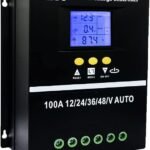
If you’re using a PWM controller with a 12V battery, drop the number by another 20 to 30 percent. If you use an MPPT controller, keep it as is. That difference alone can mean losing or keeping nearly 100 watt-hours each day.
Step 5: Check Against Your Loads
List what you want to power and their daily consumption. A 10W LED light running 5 hours uses 50 watt-hours. A laptop charges at 60W for 3 hours using 180 watt-hours.
Add them up. If your total is under 400 watt-hours, you’re good. Knowing the fundamentals of what you’re working with is the first step.
Example Table
| Location | PSH | Theoretical (Wh) | Derated (Wh) | PWM (Wh) |
|---|---|---|---|---|
| Phoenix, AZ (summer) | 6.0 | 600 | 450 | 315 |
| Minneapolis, MN (annual avg) | 4.0 | 400 | 300 | 210 |
| Seattle, WA (winter) | 2.5 | 250 | 188 | 131 |
If your loads exceed the derated number, you need a bigger panel or more panels. Simple as that.
Common Mistakes to Avoid (that Throw Off Your Estimate)
These are the biggest gotchas we see in user setups. Avoid them and your numbers will actually match reality.
Overestimating Sun Hours
Don’t assume 6 hours of full sun just because it’s sunny out. Peak sun hours are when the sun is above 45 degrees in the sky. Check actual data for your location, not your intuition.
Ignoring Temperature
Panels lose efficiency as they heat up. On a hot rooftop, a panel can easily hit 40°C. That’s 15 degrees above standard, which translates to a 5 to 10 percent loss.
Manufacturer specs show a temperature coefficient around minus 0.3 percent per degree Celsius.
Using the Wrong Charge Controller
For a 100W panel charging a 12V battery, a PWM controller wastes about 30 percent of the power compared to an MPPT. If you’re on a budget, go MPPT anyway. The extra cost pays for itself in a season.
Forgetting Inverter Idle Draw
If you run AC appliances through an inverter, the inverter itself consumes power even when nothing is on. A typical 300W inverter draws 5 to 10 watts just idling. Over 24 hours, that’s 120 to 240 watt-hours gone.
Partial Shading
One shaded cell can cut panel output by more than half. Bypass diodes help, but it’s still a big hit. Keep panels clear of obstructions.
Weighing the pros and cons of solar for your situation is important before committing.
Comparison / Alternatives: How 100W Stacks Up Against Other Options
A 100W panel is a sweet spot for small portable systems. But it’s not right for everyone. Different panel technologies available, like monocrystalline versus polycrystalline, affect efficiency and cost.
50W vs 100W
A 50W panel is lighter and cheaper but produces half the power. It’s useful for trickle charging a battery or powering a few lights. For most real use, 100W is the minimum to run a small fridge or charge a laptop while keeping a battery full.
100W vs 200W
A 200W panel doesn’t take up twice the space, but it does produce roughly twice the power. If you have the roof space or a bigger budget, going larger saves you from adding a second panel later. 200W handles larger loads like a DC compressor fridge.
100W vs Small Wind Turbine
For a cabin with consistent wind, a 100W turbine can produce power around the clock. But wind is less predictable than sun. Solar wins on reliability and low maintenance.
What Can a 100W Panel Really Run?
| Appliance | Power | Run Time | Daily Consumption | 100W Panel Output |
|---|---|---|---|---|
| Phone charge | 5W | 4 hours | 20 Wh | Easy |
| 12V LED light | 10W | 6 hours | 60 Wh | Easy |
| Laptop charge | 60W | 3 hours | 180 Wh | Possible in summer |
| Mini fridge (12V) | 50W avg | 24 hours | 1200 Wh | Not enough alone |
| TV (32” LCD) | 40W | 4 hours | 160 Wh | Possible in summer |
If you’re only running lights and charging devices, 100W is great. For a fridge or TV regularly, you need a second panel or a larger one.
Frequently Asked Questions
Can a 100W solar panel run a refrigerator?
No, not on its own. A typical 12V compressor fridge draws about 50 watts on average but runs 24 hours a day. That means 1,200 watt-hours daily.
A 100W panel in good sun produces around 400 watt-hours. You would need at least three 100W panels and a battery bank to keep a fridge running.
How many amps does a 100W solar panel produce?
In full sun at 12 volts, it produces about 5.5 amps. That number assumes perfect conditions. Real-world output is closer to 4 to 5 amps after factoring in heat and wiring losses.
Using an MPPT charge controller helps maintain higher current into the battery.
How much power does a 100W panel produce on a cloudy day?
Expect 10 to 25 percent of rated output. Heavy overcast might give you 10 to 30 watt-hours for the whole day. Thin clouds can still deliver 50 to 100 watt-hours.
That is enough to trickle charge a battery but not run meaningful loads.
What size battery do I need for a 100W solar panel?
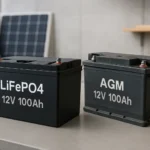
A 50Ah to 100Ah 12V battery is a common match. That gives you enough storage for a day's production plus some reserve for cloudy days. Going larger than 100Ah means your panel may take multiple days to fully charge the battery.
How long does it take to charge a 12V battery with a 100W panel?
A fully depleted 100Ah battery needs roughly 500 watt-hours to recharge from 50 percent depth of discharge. With 400 watt-hours of daily production, it takes about a day and a half of full sun. Realistically, expect two to three days accounting for clouds and system losses.
Final Recommendation / Decision Guide
Here is a simple decision tree to tell you if a 100W panel fits your situation.
If you want to power lights, phones, and a laptop: A 100W panel with an MPPT controller works well. You will have enough power for evening use and the battery will recharge the next day.
If you want to run a fridge or a TV regularly: Move up to 200W or more. A single 100W panel will leave you short. You can always add a second panel later if you plan for it.
If you are building a permanent off-grid system: Read our detailed system planning advice before buying anything. The fundamental principles of sizing loads and batteries apply at any scale.
If you are on a tight budget: Start with one 100W panel and a good charge controller. You can expand the system over time as your needs grow.
If you live in a cloudy climate: Expect lower output and plan accordingly. You may need two 100W panels to get the same daily energy someone in Arizona gets from one.
A 100W panel is an excellent entry point into solar. It is portable, affordable, and easy to install. Just keep your expectations realistic.
Use tools like the NREL PVWatts calculator to check your location's peak sun hours. Match your loads to your production, and you will have a system that works reliably for years.

Similar Posts