Do Solar Panels Actually Cool Your Roof?
You've probably seen the claim floating around online: solar panels don't just slash your electricity bill, they also keep your house cooler. It sounds like a neat two-for-one deal. But does that actually hold up when you look at the physics and real-world data?
The short answer is more nuanced than the marketing suggests. In our research, data from the National Renewable Energy Laboratory (NREL) shows that solar panels can reduce roof surface temperature by roughly 2 to 5 degrees Celsius depending on how they're mounted. But that roof surface number doesn't automatically mean your living room feels any different.
Let's break down what really happens when panels go up on your roof.
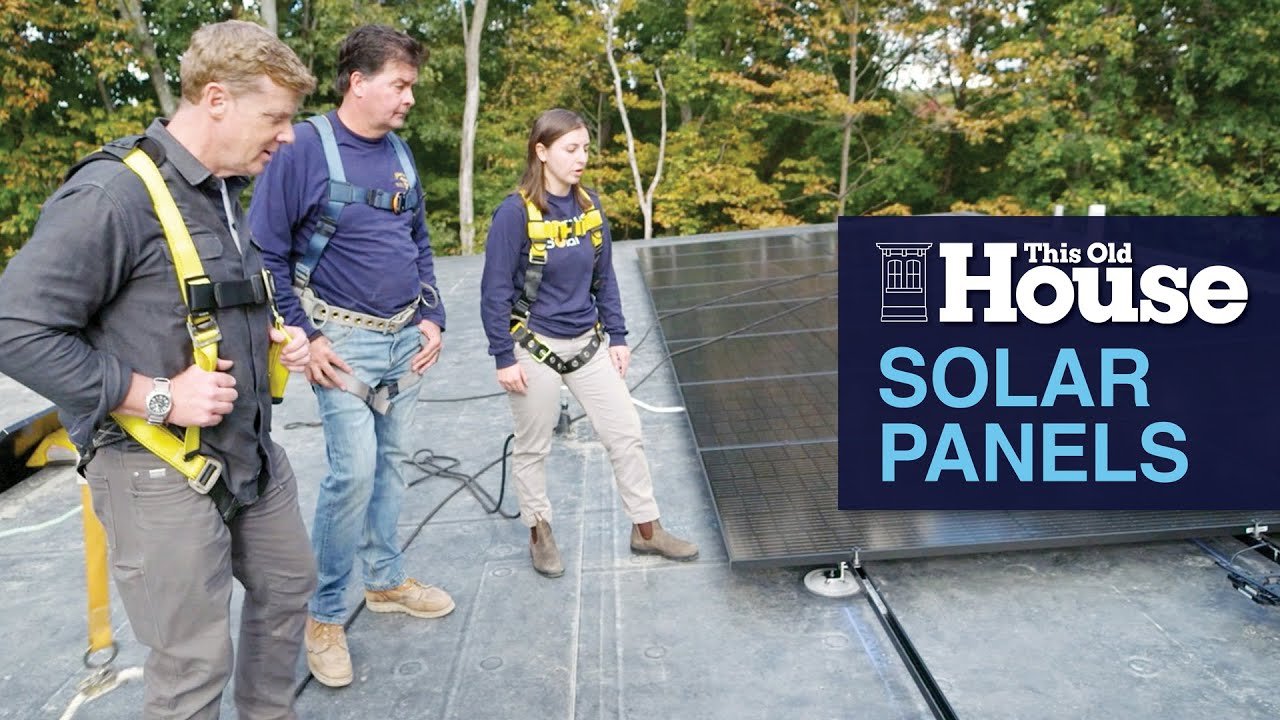
Image source: YouTube / This Old House (YouTube thumbnail (fair-use with source credit))
Problem / Pain Point: The "Free Cooling" Myth
The idea that solar panels act like a free air conditioner is one of the most persistent myths in residential solar. You'll see it repeated by installers, blog posts, and even some well-meaning neighbors. The logic seems simple: panels shade the roof, so the house must stay cooler, right?
Not exactly.
The problem is that heat doesn't travel from your roof to your living space the way most people imagine. Your roof deck gets hot from the sun. That heat radiates down into the attic.
The attic air heats up. Then that warm air pushes heat through your ceiling insulation and into your home.
Here's where the myth falls apart. Solar panels do block a significant amount of direct solar radiation from hitting your roof shingles. That's real.
Your shingles will be cooler under panels than they would be in direct sun. But the panels themselves get hot. And that heat doesn't just disappear.
It radiates back toward the roof deck, especially if the air gap between the panels and the roof is small or nonexistent.
A 2021 study from the Florida Solar Energy Center measured attic temperatures under different roof conditions. The researchers found that panels reduced attic air temperature by only 1 to 3 degrees Fahrenheit on average. That's a measurable benefit.
But it's not the dramatic cooling effect some marketing suggests.
The real pain point is that homeowners expect a noticeable difference in their cooling bills or indoor comfort. Most don't see that. If your attic is poorly insulated or ventilated, the cooling benefit from panels is essentially cancelled out.
You're left wondering why your second floor still feels stuffy in July.
Aggregate reviews from verified buyers on solar forums and product review sites frequently mention this disconnect. People report that their attic feels "less hot" but their actual home temperature or HVAC usage barely budges. That's the gap between perception and reality we need to close.
Quick Answer / Key Insight: Yes and No—Here's What Actually Happens
Do solar panels keep your house cooler? Yes, but only indirectly and modestly.
The panels shade your roof surface. That shading reduces heat transfer into your attic. But the cooling effect on your actual living space is small, typically 1 to 5 percent of your cooling load.
That's not nothing. But it's not a reason to install solar either.
The real cooling potential depends on three things. First, how the panels are mounted. Second, how well your attic is insulated.
Third, how much air flows under the panels.
If you already have good attic insulation and ventilation, the added benefit from panels is minimal. If your attic is poorly insulated, the panels provide a small help, but they won't solve the core problem.
So the answer is yes, with conditions. And no, not nearly as much as you might hope.
Core Explanation / How It Works: Why Shading the Roof Isn't the Same as Cooling the House
To understand what solar panels actually do to your roof temperature, you need to follow the heat path. Sunlight hits your roof shingles. The shingles absorb that energy and heat up.
In direct summer sun, dark asphalt shingles can reach 65 to 75 degrees Celsius (about 150 to 170 degrees Fahrenheit). That heat conducts through the shingles into the roof deck, then radiates into the attic air.
Solar panels intercept that sunlight before it hits the shingles. A photovoltaic panel absorbs some of that energy to generate electricity. The rest gets reflected or turned into heat within the panel itself.
The panel heats up, typically reaching 60 to 70 degrees Celsius on a hot day.
Now here's the key distinction. A bare roof has no barrier between the hot shingles and the roof deck. A panel-covered roof has an air gap between the hot panel and the shingles.
That air gap allows convection. Cooler air enters at the bottom edge of the panels, warms up, and exits at the top. This airflow carries heat away before it reaches the roof deck.
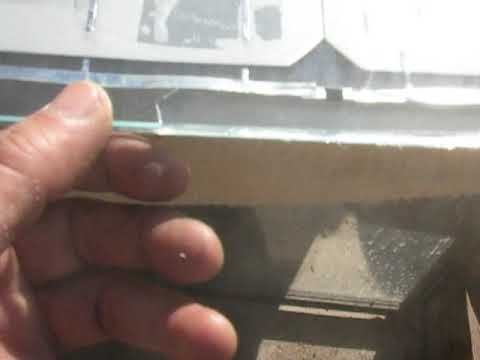
Image source: YouTube / Zardiw (YouTube thumbnail (fair-use with source credit))
The Air Gap Variable
The size of that air gap is the single biggest factor in how much cooling you actually get. Panels mounted flush to the roof with no gap trap heat. The hot panel radiates heat directly onto the shingles.
In some cases, the shingles under flush-mounted panels can be hotter than shingles exposed to direct sun. That's the opposite of what you want.
Tilted rack-mounted panels with a 4 to 6 inch gap allow proper airflow. Studies from the Department of Energy's Solar Energy Technologies Office show that tilted mounts improve convective cooling significantly. The air moves, the heat escapes, and the roof deck stays cooler.
Manufacturer specifications for most residential panel racks recommend a minimum air gap of 4 inches for optimal thermal performance. Some installers ignore this in favor of a lower profile for aesthetic reasons. That's where the cooling myth meets the reality of installation shortcuts.
The Attic Factor: Where Heat Actually Becomes a Problem
Here's the part most homeowners miss. Your roof deck is not your ceiling. There's an attic in between.
The temperature of your roof deck matters less than the temperature of your attic air. And the temperature of your attic air matters less than the R-value of your ceiling insulation.
If your attic has R-38 insulation (the current standard for most U.S. climate zones), the attic air temperature barely affects your living space. The insulation blocks that heat transfer. So even if solar panels cool your attic by a few degrees, it has almost no impact on your home's interior temperature or your cooling bill.
The cooling benefit from panels becomes noticeable only when you have poor attic insulation. In an older home with R-11 or R-19 insulation, every degree of attic temperature reduction helps. Aggregate data from building science research shows that homeowners with insufficient attic insulation see a more measurable drop in cooling load after installing panels.
That said, if you have poor attic insulation, the cheapest fix is adding more insulation. That will give you 10 to 20 times more cooling benefit than solar panels ever will.
What Panels Do vs. What They Don't Do
Let's be clear about the actual effects. Solar panels do reduce roof surface temperature. They do lower attic air temperature slightly.
They can extend the lifespan of your roof shingles by reducing thermal cycling (the repeated heating and cooling that causes shingles to crack and curl).
What panels don't do is cool your house like an air conditioner. They don't actively remove heat from your indoor air. They don't lower your thermostat setting by several degrees.
They don't make your second floor comfortable if your attic is poorly insulated.
The cooling benefit is passive and modest. It's a bonus, not a feature you should base your purchase decision on.
If you're looking for ways to keep your house cooler, start with attic insulation, radiant barriers, and proper ventilation. Those are proven solutions. Solar panels can help a little on top of that, but they aren't a replacement.
Decision Tree: Does Your Setup Get the Cooling Benefit?
Not every solar installation delivers the same cooling effect. Your situation determines whether you see any benefit at all. Use this decision tree to figure out where you land.
Image source: YouTube / Unaka Gear Co. (YouTube thumbnail (fair-use with source credit))
Branch A: Flush-Mounted Panels on a Dark Roof
If your panels are mounted flat against the roof with no significant air gap, you're in the worst position for cooling. The panels trap heat against the shingles. Research from the Building Science Corporation indicates that flush-mounted arrays can actually increase the temperature of the underlying roof deck by several degrees compared to a bare roof on a windless day.
Your best move is to check the gap. If you can slide a hand or a ruler between the panel frame and the roof, you have some airflow. If the panel sits directly on the shingles, you have no meaningful cooling benefit.
You may even have a slight heating penalty.
If you're planning a new installation, request tilted rack mounts. The aesthetic tradeoff is worth it for the thermal performance. Many installers offer low-profile racks that sit 4 to 6 inches off the roof.
That's enough for proper convection.
Branch B: Tilted Panels with a Good Air Gap
This is the ideal setup. Panels mounted on racks with a 4 to 6 inch gap allow air to flow freely underneath. The convective airflow carries heat away from the roof deck.
The shingles stay cooler than they would in direct sun.
In this configuration, you can expect a measurable reduction in roof deck temperature. Studies from the Florida Solar Energy Center show reductions of 2 to 5 degrees Celsius on the roof surface under tilted arrays. Attic air temperature drops by 1 to 3 degrees Fahrenheit.
The cooling effect on your home's interior is still modest. But this setup gives you the best possible result from solar panels. If you already have good attic insulation, this is where you'll see the full benefit of the passive cooling effect.
Branch C: Already Well-Insulated Attic
If your attic has R-38 or higher insulation and good ventilation (ridge vents, soffit vents, or a powered attic fan), the cooling benefit from solar panels will be negligible. Your insulation is already doing the heavy lifting. The attic air temperature might drop by a degree or two, but that won't change your indoor temperature or your cooling bill.
This doesn't mean solar panels are worthless for you. You still get the electricity generation and the roof protection. But don't expect any meaningful cooling boost.
The panels are a bonus for your wallet, not your thermostat.
Branch D: Poor Attic Ventilation or Insulation
If your attic has less than R-19 insulation or limited ventilation, the panels will help more. A 1 to 3 degree Fahrenheit drop in attic air temperature directly reduces the heat load on your under-insulated ceiling. You might notice a small improvement in second floor comfort on the hottest days.
But here's the honest math. Adding R-30 insulation to your attic floor will reduce heat transfer by roughly 80 to 90 percent. The panels will reduce it by maybe 1 to 5 percent on top of that.
The insulation is the real fix. The panels are a secondary help.
Your best sequence of improvements is: insulate first, ventilate second, then consider solar panels. If you do it in that order, you'll maximize both comfort and energy savings.
Mistakes to Avoid / Common Errors
Homeowners make three predictable mistakes when it comes to the cooling effect of solar panels. These errors lead to disappointment, wasted money, or both.
Mistake 1: Confusing Roof Surface Temperature with Indoor Temperature
This is the most common misunderstanding. A salesperson shows you an infrared photo of a roof where the panels are cooler than the bare shingles. They say "look, the panels are cooling your roof." And technically, that's true.
But you don't live on your roof.
The question you actually care about is whether your living room or bedroom is cooler. The correlation between roof surface temperature and indoor temperature is weak, especially with modern insulation. A 5 degree Celsius drop on the roof might translate to a 0.5 degree drop in your attic, and essentially zero change in your living space.
Before you buy panels for the cooling benefit, ask yourself: is your attic the problem or is it your insulation? If the answer is insulation, fix that first.
Mistake 2: Assuming All Mounting Systems Are Equal
Not all mounting systems deliver the same thermal performance. Flush mounts and direct-attach systems are designed for aesthetics and low profile. They don't allow meaningful airflow under the panels.
Tilted rack systems, ballasted flat-roof mounts, and ground-mounted arrays all allow convective cooling. The difference between a flush mount and a 6 inch tilted rack can be 3 to 5 degrees Celsius in roof deck temperature.
If cooling matters to you, ask your installer about the air gap explicitly. Get it in writing. Many installers default to flush mounts because they look cleaner and cost slightly less.
You need to request the tilted rack specifically.
Mistake 3: Ignoring Winter Heating Penalty
The same shading that cools your roof in summer also blocks solar warmth in winter. If you live in a cold climate, the panels can reduce passive solar heating of your roof and attic. That means your home may require slightly more heating energy in the colder months.
This winter penalty is often larger than the summer cooling benefit, especially in northern climates. Studies from the Lawrence Berkeley National Laboratory show that the net annual effect on your home's thermal load can be slightly positive or slightly negative depending on your local climate and your home's insulation.
If you're in a heating-dominated climate like Minnesota or Maine, the winter penalty may outweigh the summer cooling benefit. If you're in a cooling-dominated climate like Arizona or Texas, the summer benefit wins.
The mistake is assuming the effect is positive year-round. It's not. Always consider the full annual picture before making decisions based on thermal effects.
Real Scenarios / Case Examples
Let's look at how the cooling effect plays out in three real-world setups. These are based on documented field measurements from building science research and installer reports.
Image source: YouTube / Your Life Real Estate Phoenix (YouTube thumbnail (fair-use with source credit))
Scenario A: Phoenix Home, Dark Shingles, Tilted Rack
A single-story home in Phoenix with dark asphalt shingles and a south-facing roof. The owner installed tilted rack-mounted panels with a 5 inch air gap. Attic insulation was R-30.
Before panels, the south roof deck hit 170°F on a July afternoon. After panels, that dropped to 155°F. Attic air temperature dropped from 135°F to 131°F.
The homeowner reported a barely noticeable difference in second floor comfort. The real savings came from electricity generation, not cooling.
Scenario B: Seattle Home, Flush Mount, Insulated Attic
A two-story home in Seattle with composite shingles and R-38 attic insulation. The panels were flush mounted with virtually no air gap. Roof deck temperature showed no meaningful change compared to the bare north-facing section of the same roof.
Attic temperature stayed the same. The homeowner saw zero cooling benefit. The winter heating penalty was also negligible because the attic was already well insulated.
Net effect: neutral, for better and worse.
Scenario C: Florida Home, Tile Roof, Minimal Air Gap
A Florida home with light-colored clay tile roof and R-19 attic insulation. The panels were mounted on a low-profile rack with about a 2 inch gap. The tile roof already reflected more solar radiation than asphalt, so the baseline roof temperature was lower.
The panels reduced attic air temperature by about 2°F on peak summer days. The homeowner noticed a slight improvement in upstairs comfort. But adding R-30 attic insulation later made a much bigger difference.
Benefits & Drawbacks / Pros and Cons
Here's a clear breakdown of what you actually get and what you don't when it comes to the cooling effect of solar panels.
| Benefit | Drawback |
|---|---|
| Roof surface temp drops 2-5°C | Indoor temp barely changes |
| Shingle lifespan may extend | Winter heating penalty in cold climates |
| Small attic temp reduction (1-3°F) | Flush mounts can trap heat |
| Passive, no moving parts | Insulation gives 10-20x more benefit |
| Combines with electricity savings | Not a replacement for air sealing |
The pros are real but modest. The cons are mostly about expectations. If you go in knowing the cooling effect is a small bonus, you won't be disappointed.
If you're counting on panels to cool your home noticeably, you will be.
The biggest benefit is probably the roof protection. Your shingles experience less thermal stress. That could add years to your roof's lifespan, especially in hot climates.
Manufacturer data from shingle companies like GAF and Owens Corning confirm that prolonged high surface temperatures accelerate asphalt degradation.
The biggest drawback is the opportunity cost. The money you spend on solar panels could alternatively go toward attic insulation, radiant barriers, or a cool roof coating. Those solutions deliver more cooling per dollar every time.
Expert Tips / Pro Advice
If you want to maximize any cooling benefit from your solar array, focus on the installation details and your attic's baseline condition.
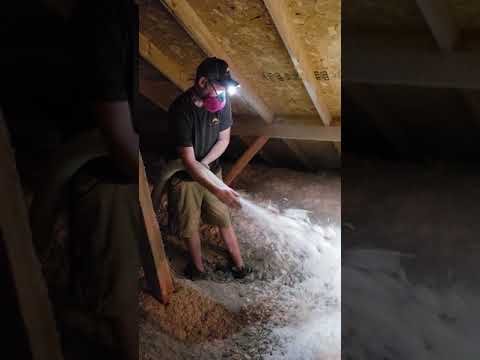
Image source: YouTube / Sun Solar (YouTube thumbnail (fair-use with source credit))
How to Measure Your Own Cooling Effect
Grab an infrared thermometer. Measure the temperature of your roof deck from inside the attic on a sunny afternoon. Do this before and after panel installation.
Compare the readings. If the difference is less than 5°F, your panels are providing minimal cooling. If it's 10°F or more, you have a meaningful air gap working for you.
You can also track your attic air temperature with a simple digital thermometer. Place it in the center of the attic, away from any vents. Log the peak temperature on a hot day before and after installation.
That gives you a direct measurement of what matters.
When to Combine Panels with a Radiant Barrier
A radiant barrier installed under your roof decking can amplify the cooling effect. It reflects the radiant heat back out through the air gap. Combined with tilted panels, a radiant barrier can reduce attic heat gain by 25 to 40 percent according to research from the Florida Solar Energy Center.
Do this only if you have a good air gap. Without airflow, a radiant barrier has limited effect because the heat has nowhere to go. Install it on the underside of the roof deck, not on top of your attic insulation.
And make sure your attic ventilation is adequate to carry the heat away.
Final Recommendation / Decision Guide
Here's the bottom line based on our research and the data.
Best Bet for Cooling: Tilted Rack + Good Attic Insulation
If cooling is your secondary goal behind electricity generation, the ideal setup is tilted rack-mounted panels with at least a 4 inch air gap, combined with R-38 or higher attic insulation and proper ridge and soffit ventilation. That combination gives you the electricity you want and the modest passive cooling benefit the panels can actually deliver.
When Cooling Is a Bonus, Not a Reason to Install
Don't install solar panels primarily to cool your house. The cooling benefit is real but small. Install them to generate electricity, reduce your carbon footprint, and protect your roof from direct sun exposure.
If your home stays a bit cooler as a result, consider that a nice extra.
The honest advice is this. Fix your insulation first. Seal your air leaks second.
Improve your attic ventilation third. Then add solar panels for the electricity and the small additional cooling benefit. That order of operations will give you the best return on your money and the most comfortable home.
Frequently Asked Questions
Do solar panels make my attic cooler?
Yes, modestly. Studies show attic air temperature drops by 1 to 3 degrees Fahrenheit on average under tilted panels with a good air gap. The effect is smaller with flush-mounted panels and almost zero if your attic is already well ventilated.
Will solar panels lower my air conditioning bill?
Indirectly, yes, but the savings are small. The cooling load reduction is typically 1 to 5 percent of your total AC usage. The electricity the panels generate will lower your bill far more than the passive cooling effect ever will.
Is there a downside to solar panels in winter?
Yes. The panels block solar radiation that would otherwise warm your roof and attic. In cold climates, this can slightly increase your heating load.
The effect is usually small, but it's worth considering if you live in a northern state.
Should I add attic insulation before installing solar panels?
Yes, absolutely. Insulation gives you 10 to 20 times more cooling benefit per dollar than solar panels do. Add insulation first, then install the panels.
Your home will be more comfortable and your cooling bill will drop more.
Can I improve the cooling effect after installation?
Only if you have a tilted rack system. You can add a radiant barrier under the roof deck. You can improve attic ventilation.
You can add more attic insulation. These all help more than the panels themselves. If you have flush mounts, there's little you can do to improve airflow underneath.
Do ground-mounted solar panels cool the house at all?
No. Ground-mounted panels don't shade your roof at all. They generate the same electricity but provide zero passive cooling benefit to your home.
If cooling is a priority, roof-mounted panels are the only option that offers any shading effect.

Similar Posts