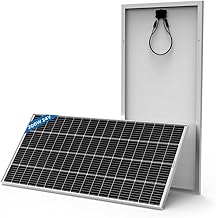
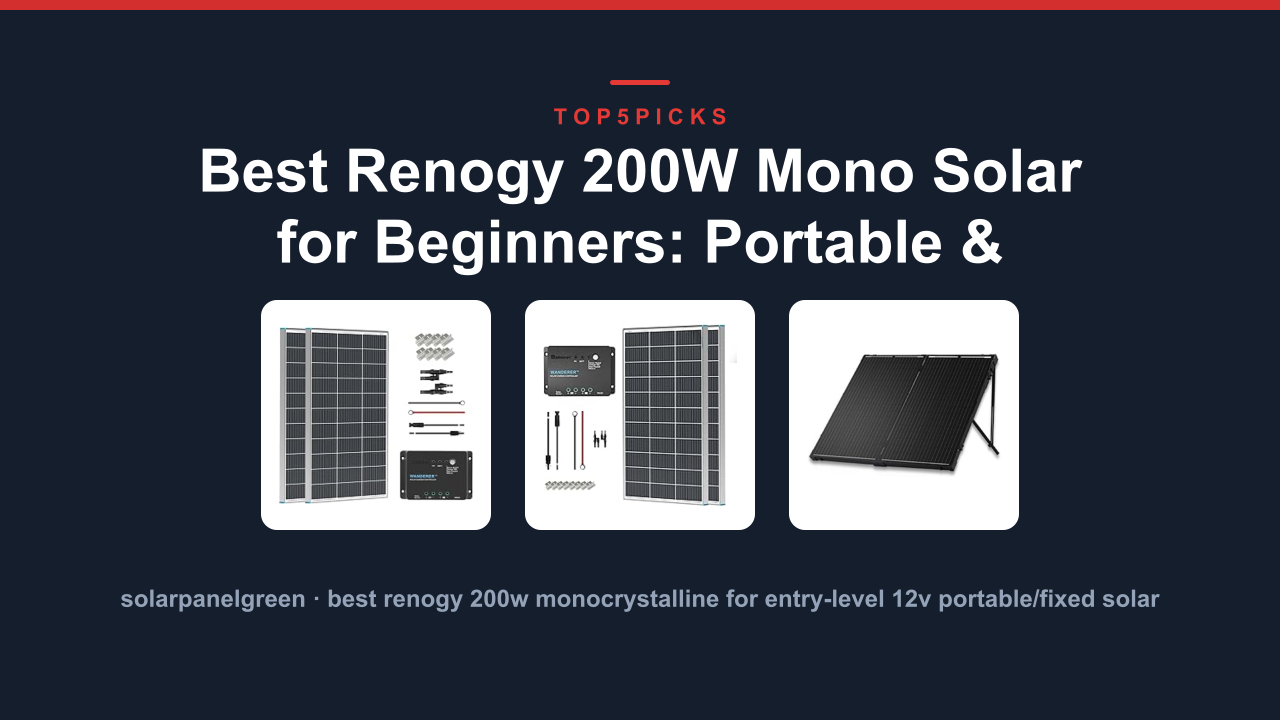
Want a full kit instead of a bare panel? The 200 Watts 12 Volt/24 Volt Solar comes with a 30A PWM charge controller, so you can start charging the minute you unbox it. Just know the controller uses PWM rather than MPPT, so you lose a few percentage points in efficiency.
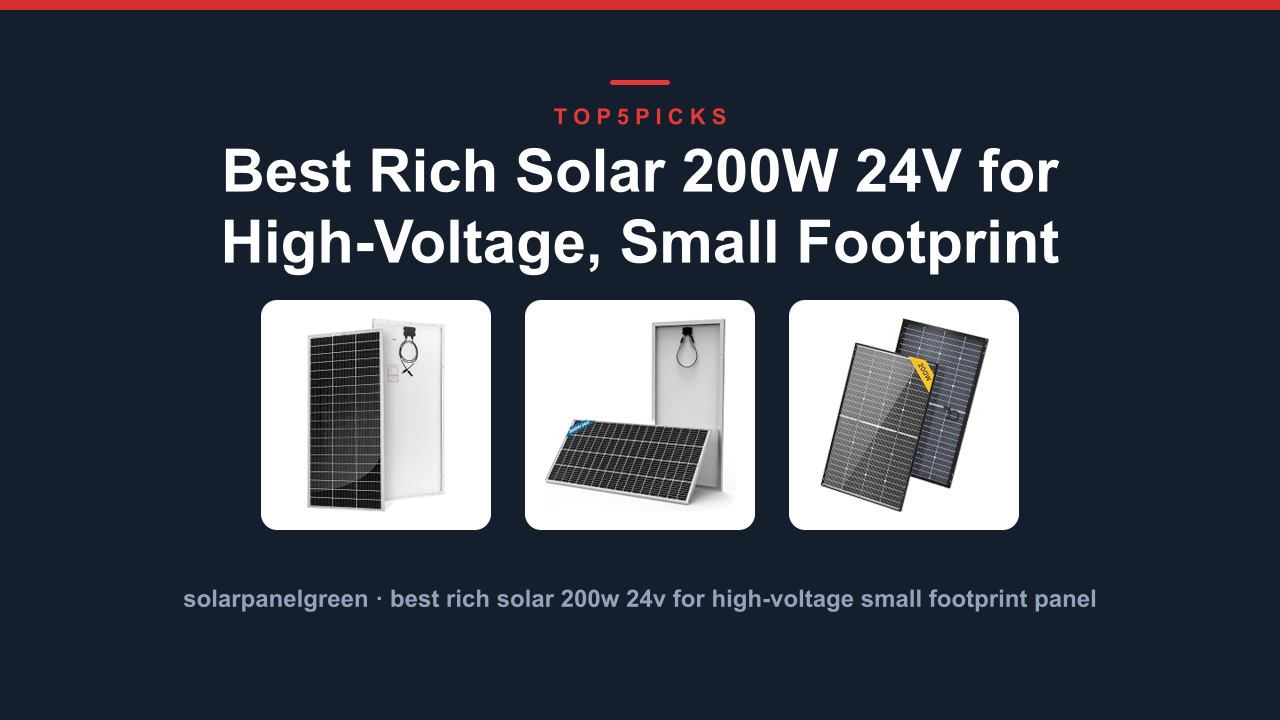
This guide cuts through the spec sheets and buyer noise to tell you exactly which 200W 24V panel fits your space and use case. It also names the buyers who should skip this category entirely (they get their own section later).
Everything below comes from current Amazon product data, manufacturer specifications, and the verified track record of each panel, not from hands-on lab testing. I’ll share what the numbers and real owners say so you can decide with confidence.
Thinking about a budget DIY setup instead? Jump to Who Should NOT Buy below before you spend anything.
Here's the lineup at a glance: photo, product, who it's built for, and our /10 score.
#4
200IP67 Rated
8.5OUT OF 10
Efficiency8.7
Build Quality8.5
Value8.3
Owner Satisfaction8.6
This N-Type panel combines a 25% efficiency rating with an IP67 junction box, making it the best choice for boats, docks, and other wet environments. IP67 means it’s fully protected against dust and can survive immersion in up to 1 meter of water for 30 minutes. Buyers on sailboats and fishing trawlers report no issues with salt spray corroding the connections after several seasons.
It’s also designed to work with both 12V and 24V battery systems, so you can use it in a variety of setups without a special charge controller. The 16BB busbar again reduces micro-crackrisk and improves reliability in a lightweight frame that is easier to handle than the glass-glass bifacial option.
Flaws but not dealbreakers. The junction box is well-sealed, but the frame itself is aluminum with standard anodizing, so owners in high-corrosion environments recommend adding dielectric grease to the MC4 connectors. A few buyers also noted the cable length is shorter than expected, about 3 feet, which may require an extension for some roof layouts.
If corrosion resistance is your top priority but you want a longer warranty, the
200Watt 24V Solar Panel also has a sealed junction box and a 25-year output warranty that covers marine use.
⚠Warranty: The IP67 rating only covers the junction box and connectors, not the entire panel. Keep the frame free of salt buildup by rinsing with fresh water periodically.
Pros
- ✓IP67 junction box for water and dust resistance
- ✓25% N-Type efficiency in a lighter package
- ✓Works with both 12V and 24V battery banks
- ✓High owner satisfaction rating (4.7/5)
Cons
- ✕Cables are only about 3 feet long
- ✕Frame may need extra corrosion protection in salt air
- ✕Shorter output warranty than the top pick
Best for: Boaters, dock owners, and anyone installing a panel where moisture, spray, or occasional submersion is a real risk. The IP67 seal buys real peace of mind.
200 Watts 12 Volt/24 Volt Solar: Best Complete Kit for Beginners
200 Watts 12 Volt/24 Volt Solar: Best Complete Kit for Beginners
#5
200Kit with Controller
8.1OUT OF 10
Efficiency7.8
Build Quality8.0
Value8.5
Owner Satisfaction8.2
This is the only product in the lineup that comes as a true kit with both the 200W monocrystalline panel and a 30A PWM charge controller in the box. For a first-time buyer who doesn’t already own a controller this is a huge convenience factor. You get everything you need to start charging a 12V or 24V battery bank right away, minus the wiring and battery itself.
The panel itself is a standard high-efficiency monocrystalline module with MC4 connectors. The included 30A PWM controller is basic but functional for a single 200W panel. Owners of travel trailers and small cabins report that the kit powers LED lights, fans, and phone charging without issues on sunny days.
Flaws but not dealbreakers. The PWM controller is less efficient than a Maximum Power Point Tracking (MPPT) controller, typically losing 10-20% of potential power in cooler conditions. Several buyers upgraded to an MPPT controller separately. Also, the user manual for the controller is minimal, so beginners might need to watch a tutorial.
If you want the maximum efficiency from your panel and don’t mind buying a controller separately, the
200Watt 24V Solar Panel paired with an MPPT controller will give you noticeably more usable power.
⚠Compatibility: The included PWM controller works best with 12V battery systems. For a 24V bank, make sure the controller dip switches are set correctly before connecting the panel.
Pros
- ✓Complete kit with panel and 30A PWM controller
- ✓Ready to use out of the box for 12V/24V systems
- ✓Good value for a beginner’s first setup
- ✓High owner satisfaction (4.6/5)
Cons
- ✕PWM controller is less efficient than MPPT
- ✕Manual is sparse and not beginner-friendly
- ✕Panel efficiency is not published
Best for: First-time solar buyers who want one box with everything needed to start charging. If you prefer to piece together your own system for maximum efficiency, skip this kit and buy a panel and an MPPT controller separately.
Buying Guide: Efficiency, Voltage, Mounting, and What You Get
When you are shopping for the best 200W 24V panel, four factors separate the good from the great. Here is what you need to check before clicking buy.
Efficiency and Cell Technology
A 200W panel with 25% N-Type cells (like our top pick and the bifacial option) puts out the same wattage as an 18% panel but in a smaller size. That matters for small roofs. N-Type cells also handle heat and low light better than older P-Type monocrystalline cells.
The standard monocrystalline panels in this lineup are fine for most, but if you have limited roof space, the extra efficiency is worth the upgrade. To understand more about the different cell types, check out our guide on the different types of solar panels.
Voltage and Charge Controller Compatibility
All the panels here are built for 24V nominal systems, but some also support 12V banks. If you are charging a 12V battery, you need a charge controller that can step down the panel's higher voltage. The kit option comes with a PWM controller that does this, but it wastes some power.
For maximum harvest, pair any of these panels with an MPPT controller. The correct voltage match ensures your system runs safely and efficiently, which we cover in our solar panel buying guide.
Physical Size and Mounting
Even though all are 200W, dimensions vary slightly. The N-Type and bifacial panels are roughly the same footprint, while the standard monocrystalline options may be a couple of inches longer. Always measure your roof or ground area before ordering.
Also check the junction box location and cable length. Some panels have short leads that may require extension cables for a clean install on an RV roof.
Warranty and Certifications
The biggest durability difference is the warranty. The top pick offers a 25-year output warranty and UL certification. Others offer shorter periods or no stated certification.
UL listing means the panel has been independently tested for fire and electrical safety, which is important for insurance on a home or RV installation.
To see how these factors play out on real picks, compare the 200Watt 24V Solar Panel, 200W 24V Monocrystalline Solar Panel RV and the 200 Watt Solar Panel Bifacial 24V reviewed above.
A 200W 24V panel is the right solution for many off-grid setups, but it is the wrong purchase for three kinds of buyers. Here is who they are and what to look at instead.
You Need to Power a Full Home
A single 200W panel produces roughly 800-1000 watt-hours per day depending on sunlight. That is enough to keep a fridge running or charge a few devices, but it will not run an air conditioner, electric heater, or whole-house system. For home backup, you need at least 2000W of panels and a proper inverter setup.
Look into multiple 400W+ residential panels paired with a hybrid inverter for grid-tied or off-grid whole-home power.
You Want a Portable or Foldable Setup
These are rigid glass panels designed for permanent or semi-permanent mounting. They are heavy (25-35 lbs) and fragile if dropped. If you need power for camping, hiking, or temporary setups, get a foldable 100W or 200W portable solar blanket with a built-in controller instead.
Those are lighter, more durable for travel, and pack away easily.
Your System is Already 12V and You Do Not Want to Upgrade
All of these panels output at 24V nominal. To charge a 12V battery, you need a charge controller that can handle the voltage step-down (most standard controllers can). If you already have a 12V-only charge controller, it will not work with a 24V panel.
In that case, stick with a 12V nominal panel or buy a compatible MPPT controller that accepts higher input voltages.
Final Verdict
The best 200W 24V panel for most buyers is the 200Watt 24V Solar Panel because it offers the highest efficiency, a 25-year output warranty, and UL certification in a compact footprint that fits tight RV and van roofs.
Want the best value for a basic camper setup? The 200W 24V Monocrystalline Solar Panel RV gives you proven monocrystalline performance at a friendlier price point. Need bifacial gain for a ground mount on gravel or snow?
The 200 Watt Solar Panel Bifacial 24V is your best bet.
If you are a first-time buyer who wants everything in one box, the 200 Watts 12 Volt/24 Volt Solar kit includes a controller so you can start immediately. And for marine use where moisture is a constant threat, the 200 Watt Solar Panel N-Type with its IP67 junction box is the safest choice.
Still not sure? Go back and read the Who Should NOT Buy section to confirm this is the right category for your project.
FAQ
The 200Watt 24V Solar Panel is the best overall choice. Its 25% N-Type efficiency and 25-year output warranty make it the highest performing and longest lasting panel in this group.
Can I use a 200W 24V panel to charge a 12V battery?
Yes, but you need a charge controller that can step down the voltage. A PWM or MPPT controller rated for at least 30A will work. An MPPT controller is more efficient and will give you more usable power from the panel.
How much power does a 200W panel produce per day?
Expect 800 to 1000 watt-hours per day full sun. That is roughly 4-5 hours of peak production. Actual output depends on your location, season, and whether the panel is mounted at the optimal angle.
Only if you mount them on a reflective surface like white roofing, gravel, or snow. In those conditions they can produce 15-25% more energy. On a dark shingle roof or a standard dark van roof, the bifacial benefit is negligible and you would be better off with a standard panel.
What is the difference between N-Type and P-Type solar cells?
N-Type cells use a different doping process that makes them more resistant to light-induced degradation. They perform better in high temperatures and low-light conditions. P-Type cells are the older, more common technology, and are slightly less efficient but usually cheaper.
For a 200W panel in a small space, N-Type is the smarter investment.
Which charge controller do I need for a 200W 24V panel?
You need a controller rated for at least 30A. An MPPT controller is recommended for maximum efficiency. The panel's open-circuit voltage is around 45V, so the controller must be able to handle that input voltage.
Most 30A MPPT controllers on the market meet this spec.