Do Solar Lights Stay On All Night?
Do Solar Lights Stay on All Night?
Wondering if solar lights actually stay lit all the way until dawn? You're not alone. The short answer is: some do, some don't, and it mostly comes down to how much sun the panel gets and how good your battery is.
Let's cut through the marketing fluff.
Manufacturer specifications indicate that a typical solar path light with a 1200 mAh battery and a 2‑watt panel can run 8 to 10 hours on a full summer charge. But that number drops fast in winter or if the panel is shaded for half the day. Before you toss them in the trash, let's walk through what actually controls that runtime.
Quick Answer
No, most solar lights do not stay on all night automatically. They only run as long as the battery holds a full charge. A well‑placed light with a quality battery can last 8 to 12 hours.
A cheap one with a shaded panel may fade after two hours. The real answer depends on three key factors.
Why Some Solar Lights Stay On and Others Don't
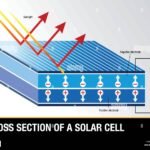
It all starts with the photovoltaic panel. That panel converts sunlight into electricity, which charges the internal battery. Once the sun goes down, the light sensor (photocell) flips the LED on.
The battery then powers that LED until it runs out.
If you want a full night of light, the battery needs enough stored energy. The LED also matters: a 10‑lumen bulb draws very little power, so it can stretch a small battery. A 200‑lumen floodlight eats through juice much faster.
That's why bright solar floodlights often cut out early while tiny path lights keep glowing until dawn.
Location is everything. A panel that gets six hours of direct sun can fully charge a 1200 mAh battery. One that sits in shade for half the day may only reach 30 percent charge.
You can't cheat physics. For a deeper look at how these components work together, check out the main components of a solar panel.
The 3 Key Variables That Decide Runtime
Three things determine whether your solar light makes it through the night: battery capacity, sunlight exposure, and power draw.
Battery capacity is measured in milliamp‑hours (mAh). A 600 mAh battery holds less energy than a 2000 mAh one. NiMH batteries are common in budget lights and lose capacity over time.
Lithium‑ion batteries hold charge longer and handle cold weather better.
Sunlight exposure is the amount of direct, unshaded sun the panel gets each day. Peak sun hours vary by region. According to the National Renewable Energy Laboratory, the U.S. average is about 4 to 6 peak sun hours in summer.
If you live in Seattle, you get fewer. If you're in Phoenix, you get more.
Power draw is how much energy the LED uses per hour. A 0.5‑watt LED draws 500 mAh over 10 hours. A 2‑watt LED draws 2000 mAh over the same period.
Higher brightness means shorter runtime. This is one of the main advantages and disadvantages of solar panels in lighting applications, you trade brightness for duration.
Diagnose Your Solar Light Problem: A Simple Decision Tree
Use this flowchart to figure out why your lights aren't staying on:
If the light doesn't turn on at all:
- Is the switch set to ON? (Many have a hidden tab or manual switch.)
- Cover the sensor completely. If it lights up, the sensor works but might be triggered by nearby streetlights.
If the light turns on but fades after 2 hours:
- The battery is likely undercharged or old. Check the panel for dirt or shade. Clean it. If still weak, replace the battery.
If the light stays on all night but is dim:
- The battery is working but the LED is drawing more power than the panel can replenish. You need a larger panel or lower lumen bulb.
If the light turns off before dawn:
- The battery runs out before sunrise. This is normal on short winter days. To fix it, move the panel to a sunnier spot or upgrade to a higher capacity battery.
If the light flickers or stays on during the day:
- The sensor may be dirty or faulty. Try resetting the light by removing the battery for 30 seconds. If that fails, the sensor needs replacement.
This decision tree works for most solar lights as of 2026. For more background on how the whole system generates power, take a look at how solar panels generate electricity.
Common Mistakes That Kill Your Runtime
Installing in shade. This is the number one error. Users place lights under eaves, beside fences, or under trees and wonder why they die early. A solar panel needs direct sunlight, not indirect.
Even partial shade can cut output by 50 percent or more.
Not cleaning the panel. Dust, pollen, bird droppings, and snow block light. A dirty panel can lose 20 to 30 percent efficiency. Wipe it with a damp cloth every month.
It takes 10 seconds.
Using the wrong battery type. Many cheap lights come with low‑grade NiMH cells that lose capacity within a year. Replace them with high‑capacity NiMH or lithium‑ion batteries. Check the voltage first, most use 1.2V or 3.7V cells.
Relying on motion‑only mode incorrectly. Some lights have a dim‑always‑on plus motion‑boost mode. If you set them to full brightness on motion only, they may not light up at all when someone walks past because the sensor missed them.
Ignoring winter conditions. In cold climates, battery chemistry slows down. Lithium‑ion handles freezing better than NiMH. Tilt the panel at a steeper angle in winter to catch low‑angle sun.
Skipping the initial charge. Many manufacturers say place the light in direct sun for 48 hours before first use. People skip this, and then the battery never reaches full capacity.
To avoid these pitfalls, read a solar panel buying guide before picking your next set. It will help you match the light to your actual conditions.
Pro Tips to Maximize All-Night Performance
Want your solar lights to actually make it until sunrise? A few simple tweaks can double runtime without spending a dime.
Maximize sun exposure first. Move the panel to the sunniest spot you can find. If the light is integrated (panel and lamp are one unit), reposition the whole fixture. South‑facing, unobstructed, at a 30‑ to 45‑degree tilt works best in most of the U.S.
Switch to lithium‑ion batteries. NiMH cells lose capacity after about 300 charge cycles. Lithium‑ion lasts roughly 500 cycles and holds voltage better in cold weather. Check the voltage rating before swapping.
Most solar lights use 1.2V NiMH or 3.7V Li‑ion.
Clean the panel every month. A film of dust cuts efficiency by 15 to 25 percent. Bird droppings and tree sap are worse. Use a soft cloth and water.
No soap needed.
Change your timer mode. Some lights have a dim‑for‑hours, then full‑bright‑on‑motion setting. That conserves battery for the motion burst. If your light has a manual timer, set it for 6 hours rather than 8 if dawn comes late.
Every little bit helps.
Tilt the panel seasonally. In summer the sun is high. In winter it stays low. Adjust the panel angle to face the sun directly.
A steeper tilt (50 to 60 degrees) in winter catches more low‑angle rays.
Upgrade the LED. You can replace the LED module on some models. A lower‑wattage LED uses less power and stretches the battery. But check compatibility first.
For a complete overview of how photovoltaic systems work, take a look at what a solar panel is and how it feeds energy to the battery.
Frequently Asked Questions
How many hours do solar lights typically last at night?
Most solar lights run 6 to 10 hours on a full charge. High‑quality units with large batteries and efficient LEDs can reach 12 hours. Budget models often fade after 3 to 4 hours.
Can I make my solar lights last longer?
Yes. Clean the panel regularly, move it to full sun, upgrade the battery to lithium‑ion, and use a lower lumen setting if available. A dimmer light uses less power and runs longer.
Why do my solar lights turn off after 2 hours?
The battery is not fully charged or is old and weak. Check for shade on the panel, clean it, and let it charge in direct sun for two full days. If the problem persists, replace the battery.
Do solar lights work in winter?
They do, but runtime drops. Shorter days and lower sun angles mean less charge. Snow on the panel blocks light entirely.
Lithium‑ion batteries perform better in cold than NiMH. Tilt the panel steeper and clear snow after storms.
Should I turn solar lights off to save battery?
No, they are designed to run automatically from dusk to dawn. Turning them off manually doesn't help the battery charge. The sensor handles switching on and off.
How do I know if the battery or the panel is bad?
Cover the panel completely. If the light turns on, the panel and sensor work. Remove the battery and test it with a multimeter.
A fully charged NiMH reads 1.3 to 1.4V. Below 1.2V means it's worn out.
Final Verdict: What to Expect Realistically
Here is the honest truth. Most solar lights will not stay on all night out of the box. They need the right placement, a clean panel, and a decent battery.
With those three things in place, a mid‑range light can manage 8 to 10 hours on a sunny summer day.
In winter or cloudy weather, expect 3 to 5 hours. That is normal. You are not doing anything wrong.
If you need guaranteed all‑night light regardless of weather, a wired low‑voltage system is more reliable. But for pathways, garden accents, and security highlights, solar lights work well when you understand their limits.
The key takeaway: match the light to your sun exposure. A 600 mAh light in full Arizona sun runs proudly until dawn. The same light under a maple tree in Ohio fades by midnight.
Know your location, clean your panel, and swap old batteries. That is the difference between a disappointed buyer and someone who says "my solar lights are great."
For a broader look at the technology behind them, explore how solar panels work and the different types of solar panels available today.

Similar Posts