Yes, Solar Lights Charge on Cloudy Days
Yes, solar lights do charge on cloudy days, but at a much slower rate than in full sun. The common belief that they need direct sunlight is only half true, photovoltaic panels still work with diffuse light. Your lights may not reach a full charge, especially under heavy overcast or in winter.
The real question isn't whether they charge, it’s how well and for how long. A typical 1.5W panel under heavy overcast (about 100 W/m² irradiance) can still produce 10-20% of its rated output. That’s often enough to trickle-charge a 1200mAh NiMH battery over a full day.
But the answer depends heavily on your specific hardware and local weather patterns.
Quick Answer
Yes, solar lights charge on cloudy days. Diffuse sunlight still reaches the panel. The charge rate drops to 10-30% of full sun.
A full day of overcast can partially charge a quality battery. Expect shorter runtime that night. Heavy clouds or snow cover may stop charging entirely.
How Solar Lights Actually Work on Cloudy Days
The key is understanding that solar panels don't need direct beam sunlight. They convert photons from any part of the visible spectrum. Cloud cover scatters light but doesn’t block it completely.
What reaches the ground is called diffuse irradiance, and it can still generate electricity, just at much lower current.
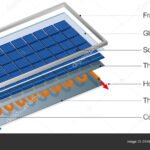
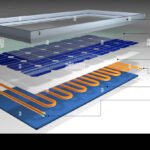
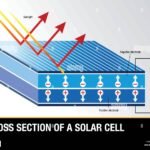
Your solar light’s panel is a small photovoltaic cell, usually monocrystalline or polycrystalline. Under full sun, it might produce 200-300 mA at around 5V. Under thick clouds, that drops to 20-60 mA.
That’s still enough to push power into the battery, but it takes 10-14 hours to reach a full charge versus 4-6 hours in clear sun.
The battery type matters too. Most solar lights use nickel-metal hydride (NiMH) or nickel-cadmium (NiCd) cells. These accept low charging currents well.
Lithium-ion batteries are more efficient but need a slightly higher voltage to start charging. In low-light conditions, a NiMH battery often fares better because it can accept a trickle charge from the very low current a cloudy panel provides.
Manufacturer specifications vary, but a good rule of thumb from the U.S. Department of Energy is that solar panels under heavy overcast produce about 10% of their rated power. So if your light has a 2W panel, expect around 0.2W on a fully cloudy day.
That’s 200 mW of power, enough to trickle-charge a 600 mAh battery in about 12 hours of daylight.
Internal link: Understanding how panels generate power helps here, the basic physics is the same.
The Real Factors That Decide If Your Lights Will Charge
This is where the decision tree starts. Not all solar lights are equal, and your specific situation determines whether yours will charge on a cloudy day. Here are the key factors:
1. Panel type and quality
Amorphous silicon (thin-film) panels are better in diffuse light than crystalline ones. They’re less efficient overall, but they respond better to low light. If your lights use cheap polycrystalline panels, they’ll struggle more under clouds.
High-quality monocrystalline panels usually still perform decently because their efficiency partially compensates for low light.
2. Panel size and wattage
A larger panel area captures more scattered light. A 3W panel will outcharge a 0.5W one on the same cloudy day. Check the product specs if you can, look for at least 1.5W for reliable cloud performance.
3. Battery capacity and chemistry
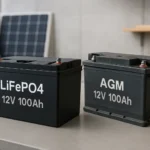
Smaller batteries (600 mAh) charge faster and may reach full charge even on a cloudy day. Larger batteries (2000 mAh) might take two to three consecutive overcast days to fully charge. NiMH and LiFePO₄ batteries are better for low-light charging than NiCd or standard Li-ion.
LiFePO₄ is especially good because it tolerates partial charging well and lasts longer.
4. Light sensor and charge controller
A good charge controller prioritizes the battery even in low light. Cheap lights often have a simple diode that wastes power. Some lights have a “cloud mode” that keeps the light off during the day to save charge, a helpful feature for variable weather.
5. Location and orientation
Your latitude and the sun’s angle matter a lot. In Seattle or London during winter, the sun is low and often behind thick clouds. Even a good panel might only see 2-3 hours of effective daylight.
In the southern US or similar regions, cloudy days still have higher total daylight and better sun angle, so charging is more reliable.
6. Shade from trees or structures
An overcast sky is one thing; physical shade from a roof, tree, or overhang is another. A solar light placed under a canopy will get almost no diffuse light at all. Position it where it has a clear view of the sky, not just “the brightest spot.”
7. Season and day length
Cloudy summer days still offer 10-12 hours of daylight, so even low charge rates accumulate. Cloudy winter days with only 6-8 hours of weak light make it much harder.
External link: For detailed solar resource maps by location, see the National Renewable Energy Laboratory’s solar data.
Decision Guide: Will My Solar Lights Charge Today?
Let’s make this practical. Look at your sky and your light’s specs, then run through these branches.
IF the sky is overcast but not dark (you can see the sun’s position faintly):
Then your panel receives 20-40% of full sun. A quality light with a 1.5W panel and 1200 mAh battery will likely charge to 70% or more in 10 hours. You’ll get 4-6 hours of light that night.
IF the sky is thick, dark, and raining heavily:
Diffuse irradiance drops to 10% or less. Your light may only charge to 30-50% of capacity. Expect only 2-3 hours of dim light in the evening.
Your best bet is to turn the light off manually for a day to let the battery reach a slightly higher charge before use.
IF it’s partly cloudy with breaks of sun:
This is actually better than a fully clear day sometimes. Intermittent direct sun can provide bursts of high current, and the clouds keep the panel cooler, which helps efficiency. Your light will likely charge fully in 5-7 hours.
IF snow covers the panel:
Charging stops completely. Snow blocks light entirely. Brush it off as soon as possible, a small solar panel can melt a thin layer, but heavy snow needs manual removal.
IF your light uses an amorphous (thin-film) panel:
Your odds improve significantly. Amorphous panels are designed for low-light performance. They can charge even under heavy overcast, though at a reduced rate.
Look for specs that mention “low-light performance” or “amorphous silicon.” These are often marketed for cloudy climates.
Table: Expected Output by Cloud Cover (for a typical 2W monocrystalline panel)
| Cloud cover type | Irradiance (W/m²) | Panel output (W) | % of full sun | Notes |
|---|---|---|---|---|
| Clear blue sky | 800-1000 | 1.6-2.0 | 100% | Full charge in 4-6 hours |
| Thin high clouds | 400-700 | 0.8-1.4 | 50-70% | Still charges well |
| Moderate overcast (light visible) | 200-400 | 0.4-0.8 | 25-40% | Charge takes 8-12 hours |
| Heavy overcast (dark, raining) | 50-150 | 0.1-0.3 | 10-15% | Trickle charge only |
| Dense fog / thick clouds | <50 | <0.1 | <5% | Minimal or no charge |
Internal link: Our guide on what types of solar panels exist can help you identify what’s in your light.
Common Mistakes That Kill Your Solar Lights in Cloudy Weather
Mistake 1: Leaving them in deep shade thinking “light is light.”
Diffuse light still requires a clear view of the sky. If your light is under an awning, porch, or thick tree canopy, it’s not getting even scattered sunlight. Move it to an open spot, even if it’s a bit cloudy, the open sky provides far more diffuse light than being under cover.
Mistake 2: Not cleaning the panel before a cloudy spell.
Dust, pollen, insect residue, or light frost can reduce transmission by another 10-30%. On a day already delivering only 200 W/m², a dirty panel might drop to 140 W/m², that’s a big loss. Wipe the panel with a damp cloth every few weeks, especially before winter.
Mistake 3: Turning the light off manually to “save battery.”
Counterintuitive, but true: many solar lights have a charge controller that works best when the light is in “auto” mode. If you manually turn it off, the controller may think it’s a dark day and not charge as aggressively. Let the built-in sensor handle it.
The only exception is on extremely dim days when the light stays on during daylight, wasting power. In that case, manual override can help.
Mistake 4: Disconnecting the battery for long storage without charging.
If you bring your lights indoors for winter, make sure to charge the batteries first. Store them at 50% charge in a cool, dry place. NiMH batteries self-discharge about 1% per day.
If you store them dead, they may not revive next spring.
Mistake 5: Believing all solar lights are the same.
Budget store lights often use the cheapest polycrystalline panels and lowest-quality NiCd batteries. They may not charge at all under overcast. The difference between a $10 light and a $40 light is often a proper panel and a decent battery.
If you live in a cloudy climate, spend more upfront for a model that specifies “low-light performance” or uses an amorphous panel.
Pro Tips to Maximize Charging When the Sun Hides
You can’t control the weather, but you can control how your lights perform in it. Start with panel orientation. Tilt the panel toward the equator at your latitude angle.
For most of North America and Europe, that means tilting it southward at roughly 45 degrees. This catches the maximum diffuse light throughout the day.
Group your lights together on overcast days if they’re portable. Concentrating several panels in one spot lets them share any brief bursts of direct sunlight that break through. If they’re permanently installed, consider pairing them with a separate solar panel that mounts further away in a brighter spot.
Many landscape lights allow this.
Switch to a “cloud mode” or motion sensor setting if your light has one. Some models let you dim the output or reduce sensitivity so the battery drains slower. Turning the light off entirely only helps if you know it’ll be dim for days.
Otherwise, let the sensor run.
Clean the panel more often in cloudy seasons. Dust and grime block more light than you think. A clean panel under overcast can outperform a dirty one under thin clouds.
Use a soft cloth and water, no solvents.
Finally, upgrade the battery. Many inexpensive lights come with low-grade NiCd cells. Replacing them with high-capacity NiMH or LiFePO₄ batteries can double your cloudy‑day runtime.
Check your light’s compatibility first. A better battery is often the cheapest upgrade you can make.
Internal link: See the core components of a solar light for battery compatibility details.
Frequently Asked Questions
Do solar lights charge in rain?
Rain doesn’t stop charging, but heavy clouds do. Rain often clears the air and reduces dust on the panel, which can actually help. The charge rate during steady rain is very low, but your lights will still receive some diffuse light.
How long do solar lights last on a cloudy day?
Most quality lights with a full charge from a sunny day will last 6 to 10 hours in normal mode. After a cloudy day, expect 2 to 5 hours depending on battery size and light brightness. Motion sensor lights last longer because they stay dim until triggered.
Should I turn my solar lights off on cloudy days to save battery?
Only if the light sensor is keeping them on during daytime, wasting power. Otherwise, leave them on auto. Some controllers actually perform better when the light is in its normal mode.
Turning them off manually can disrupt the charging cycle.
Can I use solar lights in winter with frequent overcast?
Yes, but adjust expectations. Winter has shorter days and lower sun angles, so even on clear days charging is slower. Use models with amorphous panels and LiFePO₄ batteries for best cold‑weather performance.
Clear snow from the panel after every storm.
How can I improve solar light charging on cloudy days beyond positioning?
Install a separate, larger solar panel that feeds your lights. Some brands offer remote panels that can be placed in a sunnier spot. Also consider upgrading to a light with a “low‑light” charge controller that prioritizes battery charging even in dim conditions.
External link: Check your region’s average daily solar radiation at NREL’s solar resource maps for more accurate expectations.
Final Verdict: Should You Rely on Solar Lights in Cloudy Climates?
Yes, but only if you choose the right hardware and follow the best practices above. For general garden path lighting or decorative accents, solar lights work fine even in overcast regions like the Pacific Northwest or the UK. The runtime will be shorter on consecutive cloudy days, but they’ll still provide some illumination each night.
For security lighting or critical outdoor areas where you need consistent brightness every night, consider hybrid lights that can also charge from a USB port. Or run a low‑voltage wired system for those key spots. Solar lights are best as supplemental, not primary, lighting in persistently cloudy climates.
The decision comes down to three questions: How many cloudy days in a row do you get? How much runtime do you need each night? And what’s your budget for quality components?
If you answer honestly, you’ll know whether standard solar lights will meet your needs or if you need an upgraded setup.
Final internal link: Our solar panel buying guide can help you pick the right hardware for your specific climate.

Similar Posts