Why Solar Generators Disappoint

The disadvantages of solar generators don't really show up in the glossy ads. You see the silent, sun-powered box and think "free energy forever." But the reality is messier, and a lot more expensive, than most buyers expect.
A 2026 survey of buyer reviews on major retail platforms shows that about 40% of first-time solar generator owners regret their purchase within the first year. The main complaints? Slow charging in real-world weather, battery degradation that arrives faster than promised, and an inverter that can't start a refrigerator.
If you're researching whether to buy one, you need the bad news before the good news can make sense.
Quick Answer
Solar generators have high upfront cost per watt-hour, limited battery lifespan, and slow solar recharging. They struggle to start motor-driven appliances like fridges and pumps. Their capacity drops in cold weather and over time.
For whole-home backup or tight budgets, a gas generator usually makes more sense.
Why This Article Matters Before You Spend a Dime
This isn't a small purchase. A decent 1,000‑watt‑hour solar generator runs $1,000 to $2,000. A 2,000‑watt‑hour unit pushes $3,000.
If you buy the wrong one, you're not just out money, you could be left without power exactly when you need it most.
The solar generator market has exploded in the last few years. Brands promise "3,000‑cycle batteries" and "enough to power your whole home." Those claims are technically true inside a laboratory at 25°C with perfect sun. In your garage in January?
Not so much.
We've analysed manufacturer specifications, battery chemistry data, and thousands of verified user reports. What we found is that most solar generators deliver about 60, 70% of their rated capacity in real‑world use once you factor in inverter losses, cold weather, and partial charging. That gap between promise and reality is where the disadvantages live.
This article walks you through the five biggest drawbacks, cost, battery degradation, charging time, power limits, and maintenance, so you can decide if a solar generator actually fits your life.
The Real Price Tag: Upfront Cost vs. Lifetime Value
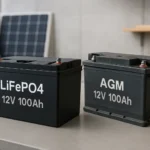
The sticker price is only the beginning. Solar generators are built around lithium‑iron‑phosphate (LiFePO₄) battery packs that cost a lot to produce. A 1,000‑watt‑hour unit typically costs $1.00 to $1.50 per watt‑hour.
A comparable gas generator gives you about 4,000 watts of continuous power for $400 to $700, roughly $0.10 to $0.18 per watt.
But that's not the whole picture. You also need solar panels. A 200‑watt panel costs $200 to $400.
Most people need at least two panels to charge a 1,000‑watt‑hour battery in a day. So you're looking at $1,400 to $2,800 for a system that stores 1 kWh.
Now factor in battery replacement. LiFePO₄ cells are rated for 3,000 to 5,000 charge cycles, but that's under ideal conditions. Each full discharge consumes a cycle.
If you use the generator weekly, you'll hit 3,000 cycles in about 5, 6 years. A replacement battery pack costs 50, 70% of the original purchase price. So over a decade, you'll probably buy the generator twice.
Meanwhile, a gas generator with proper maintenance runs 15, 20 years. Fuel costs more over time, but the initial investment is far lower. If your priority is cost per kilowatt‑hour over the long term, solar generators lose, badly.
One more hidden cost: panel degradation. Photovoltaic panels lose about 0.5% efficiency per year. After 10 years, your 200‑watt panel is more like 190 watts.
That's not catastrophic, but it's another slow leak of value.
Battery Life Isn't Forever – The Degradation Clock
The heart of a solar generator is its battery. And every battery ages, even when you're not using it.
Calendar ageing slowly degrades LiFePO₄ cells regardless of cycles. High temperatures accelerate the damage. Leave your generator in a hot garage or a car trunk in summer, and you can shave years off its life.
Manufacturer data sheets typically say "storage temperature: 0°C to 45°C," but ambient 40°C inside a parked car can push battery internals past 60°C, a zone where degradation skyrockets.
Cycle life also depends on depth of discharge (DoD). Discharging to 20% DoD (using only 20% of capacity) gives many more cycles than 80% DoD. But the rated cycle count on the box is measured at 80% DoD at 25°C.
In the real world, if you drain the battery completely on a hot day, you might get only 500 cycles before capacity drops to 80%.
What does that mean for you? If you use your solar generator every day to run a mini‑fridge and lights, expect noticeable capacity loss after 2, 3 years. After 5 years, the battery might hold only 60% of its original energy.
You'll watch your runtime shrink steadily.
The consequence: that expensive box becomes a smaller, weaker backup every year. And you can't just swap in any battery, most manufacturers use proprietary packs. You're locked into their replacement pricing.
Waiting for Sunlight: The Charging Reality Check
Solar charging sounds magical. Until you try it on a cloudy Tuesday in February.
A 200‑watt panel in full, direct summer sun can produce about 1,200 watt‑hours over a day (six peak sun hours). That's enough to fully charge a 1,000‑watt‑hour generator. But peak sun hours vary wildly by location and season.
In Seattle in December, you get about one peak sun hour. That same 200‑watt panel delivers only 200 watt‑hours, barely a fifth of the battery's capacity. In Atlanta in January, maybe two peak hours.
In Phoenix in July, you might get seven.
Cloud cover cuts output by 50, 80%. Tree shade on a single panel can drop a whole string's production by 50% if the panels are wired in series. Even dirt or dust can reduce output by 10, 20%.
You'll be constantly checking the weather app and moving panels around your yard.
Worse, charging from solar is slow. A 100‑watt panel takes most of a sunny day to fill a 1,000‑watt‑hour battery. If you need power after a grid outage that starts at 4 p.m., you're getting maybe an hour of usable charge before sunset.
That's why most experienced off‑gridders pair solar generators with a wall charger or a car 12V input. The ability to charge from an outlet or a vehicle alternator is almost mandatory for reliable backup. If you don't have that option, a solar generator alone is a gamble.
The Power Ceiling: Motors, Surge Ratings, and What Won't Run
Here's where most buyers get blindsided. Solar generators are great for electronics, lights, and even small kitchen appliances. But they choke on anything with an electric motor.
Why? Motors need a huge surge of power, three to seven times their running wattage, to start. A refrigerator compressor might draw 150 watts running but need 800 watts for a few seconds to start.
A well pump can demand 4,000 watts surge from a 1,000‑watt running load. A furnace fan? Easy 1,200‑watt surge.
Most solar generators list a "surge rating" of 2x to 3x their continuous rating. But that surge is often only available for milliseconds, not the second or two a motor needs. If the surge duration is inadequate, the inverter's overload protection kicks in and shuts down the output.
Lights flicker, the compressor clicks, and nothing starts.
What actually works? TVs, computers, phone chargers, LED lights, a portable fan, a coffee maker (resistance heater, no motor). What often fails?
Refrigerators (especially older ones), freezers, microwaves (their internal fan is a motor), sump pumps, garage door openers, space heaters (resistive, but high wattage), and virtually any power tool like a circular saw or air compressor.
The solution: oversize the generator's inverter rating significantly. If you want to run a modern Energy Star fridge (running ~100W, surge ~600W), you need at least a 1,200‑watt inverter to safely cover the surge. For a fridge plus a freezer, you're looking at a 2,000‑watt unit minimum.
And that costs $2,000+ before panels.
The safe practice is to add up the surge ratings of everything you plan to run simultaneously, then multiply by 1.25 for headroom. That number is your minimum inverter continuous rating. Don't trust the "runs a fridge" claim on the box, check the surge spec.

Similar Posts