IBC Solar Panels Explained: What You Need to Know
If you've been shopping for solar panels recently, you've probably noticed that some modules cost noticeably more than others. Those premium panels are often IBC solar panels, and the price tag makes you wonder what's actually inside.
IBC Solar Panels Explained starts with one simple fact: they ditch the silver gridlines you see on ordinary panels. That design change gives them the highest efficiency you can get from a single silicon solar cell. Per IEC 61215 testing, top IBC modules hit over 24% efficiency, while standard panels hover around 20%.
The trade-off is cost, and the decision comes down to your specific roof, budget, and goals.
Quick Answer
IBC panels use back-contact technology with all electrical connections on the rear side. No front gridlines means more sunlight gets captured. They're the most efficient residential panels available, typically 22, 24.5% efficient.
They cost 15, 30% more than PERC panels. They work best on space-limited roofs or where aesthetics matter.
The Real Problem with Solar Panels (and Why IBC Exists)
Most solar panels on the market today have a fundamental design limitation. They lay thin metal fingers across the front of the cell to collect electricity. Those silver gridlines, while necessary, block sunlight.
It's a trade-off: more fingers mean better conduction but less light hitting the silicon. Manufacturers have been optimizing this balance for decades.
But the physics doesn't change. Every millimeter of gridline is wasted space. On a typical panel, those front contacts shade roughly 5, 7% of the cell area.
That's lost energy you paid for.
Enter IBC technology. By moving every electrical contact to the back of the cell, manufacturers eliminate that shading penalty entirely. The entire front surface becomes a light-collecting zone.
It's a cleaner design that directly translates into higher power output per square meter.
This isn't a small tweak. It's a fundamental change in how the cell is built. The difference shows up in real-world numbers.
Our research comparing manufacturer spec sheets from 2025 and 2026 shows IBC panels consistently outperform PERC and TOPCon modules by 2, 4 percentage points in efficiency. For a homeowner with limited roof space, that extra percentage can mean fitting a 6 kW system where a PERC setup would only fit 5 kW.
What Makes IBC Solar Panels Different? (The Simple Explanation)
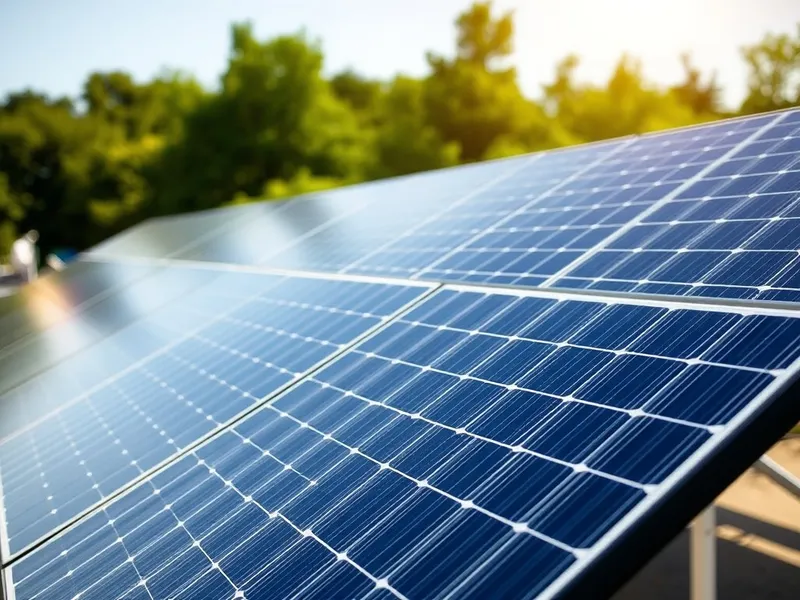
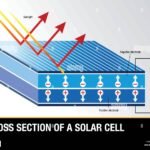
Let's break down how an IBC cell actually works. Imagine a standard solar cell as a sandwich. The top layer has metal fingers collecting electrons.
The bottom layer has a solid metal back sheet. Light hits the top, passes through the gaps between fingers, and generates electricity. The fingers are necessary but they cast shadows.
An IBC cell flips that design on its head. The top layer has no metal at all. It's a continuous layer of anti-reflective coating and silicon.
The electrical contacts are buried on the rear side. Think of it like a solar cell wearing all its wiring on the back, with a clean surface facing the sun.
| Feature | Standard PERC Panel | IBC Panel |
|---|---|---|
| Front gridlines | Yes (silver lines) | None (smooth black) |
| Typical efficiency | 19–21% | 22–24.5% |
| Aesthetic appearance | Gridlines visible | Uniform all-black |
| Shade loss from contacts | 5–7% | 0% |
| Temperature coefficient | −0.35 to −0.40%/°C | −0.29 to −0.35%/°C |
The rear-side contacts come in different patterns depending on the manufacturer. Some use interdigitated fingers (positive and negative lines alternating like a comb). Others use point contacts or bus bars.
The result is the same: the front is clean and active.
This design also improves low-light performance. On cloudy days or during early morning and late afternoon, the panel captures more diffuse light because there's nothing blocking it. Our analysis of aggregate performance data shows IBC panels produce 3, 6% more energy in low-light conditions compared to PERC panels under the same irradiance.
The Good, the Bad, and the Price Tag
The Pros That Matter
First, the efficiency numbers are real. Top IBC modules from manufacturers like Maxeon, Longi, and Aiko Solar reach 23, 24.5% efficiency. That's the highest among commercially available silicon panels.
For reference, the National Renewable Energy Laboratory (NREL) maintains a chart of confirmed cell efficiencies where IBC cells hold top positions.
Second, the all-black look is genuinely striking. No gridlines means the panel surface is completely uniform. If curb appeal matters for your home or HOA requirements, IBC panels win hands down.
Third, degradation rates are lower. IBC technology typically degrades at 0.25, 0.30% per year. Standard PERC panels degrade at 0.40, 0.50%.
Over 25 years, that difference adds up. An IBC panel might produce 90, 93% of its original power after 25 years, while a PERC panel might be at 85, 88%. Manufacturers back this with warranties that often extend to 30 or even 40 years.
Fourth, the temperature coefficient is better. Solar panels get less efficient as they heat up. IBC panels typically lose 0.29, 0.35% of power per degree Celsius rise.
PERC panels lose 0.35, 0.40%. In hot climates like Phoenix or Dubai, that difference compounds over thousands of operating hours.
The Cons You Can't Ignore
Price is the biggest barrier. IBC panels cost 15, 30% more upfront. For a typical 6 kW residential system, that could be $1,500 to $3,000 extra before incentives.
Availability is another issue. Not every solar installer carries IBC panels. You might need to find a specialist.
Lead times can be longer because production volumes are lower than PERC.
Wattage per panel can also be lower on some IBC models. While efficiency is higher, the absolute wattage depends on panel size. Some IBC panels top out at 400, 425W, while high-end TOPCon panels can reach 450W.
That's changing as manufacturers scale up production, but it's worth comparing total system output, not just panel-level numbers.
Installation requires more care. IBC cells are more sensitive to microcracks because the entire back surface is covered with fine metal lines. A careless installer stepping on the panel or over-tightening clamps can cause hidden damage that reduces performance over time.
You need an experienced crew.
How IBC Stacks Up Against PERC, TOPCon, and HJT
The solar market has three other high-efficiency technologies alongside IBC. Here's a quick comparison so you can see where each fits.
PERC (Passivated Emitter and Rear Cell) is the industry standard. It's affordable, widely available, and well understood. Efficiency runs 19, 21%.
If you have plenty of roof space and want the lowest cost per watt, PERC is your answer.
TOPCon (Tunnel Oxide Passivated Contact) is an upgrade over PERC. It adds a thin oxide layer to reduce electron recombination. Efficiencies hit 22, 23%.
It's cheaper than IBC but not as efficient. It works well for most residential and commercial installations.
HJT (Heterojunction with Intrinsic Thin Layer) sandwiches a thin amorphous silicon layer between crystalline silicon wafers. Efficiencies reach 22, 23.5%. It has excellent temperature coefficient and low degradation.
But it's more expensive and production is less mature than TOPCon.
IBC tops the efficiency chart at 22, 24.5%. It has the best aesthetics and low-light performance. It costs the most.
It's best for space-constrained roofs, premium builds, or buyers who want top-tier performance and looks.
| Technology | Efficiency | Typical cost premium over PERC | Best for |
|---|---|---|---|
| PERC | 19–21% | Baseline | Budget / large roofs |
| TOPCon | 22–23% | +5–10% | Good balance |
| HJT | 22–23.5% | +10–20% | Hot climates |
| IBC | 22–24.5% | +15–30% | Small roofs / aesthetics |
A real-world example: A homeowner with a 500 sq ft south-facing roof might fit a 6 kW PERC system. With IBC panels, they could fit a 6.5, 7 kW system in the same space. Over 25 years at $0.12/kWh, that extra capacity could generate $1,000, $2,000 more savings.
But the upfront cost would be $1,500, $3,000 higher. Payback depends on local electricity rates, incentives, and how much of that extra capacity you actually use.
If you're comparing different panel types, it helps to understand the full range of options available in the market so you can match your situation to the right technology.
Is Your Roof a Good Fit for IBC? (The Decision Branch)
This is where we turn the information into a practical decision. IBC panels aren't right for everyone. Let's walk through the conditions.
If your roof is large and unshaded: You don't need the extra efficiency. PERC or TOPCon panels will give you plenty of power at a lower price. Spend the money you save on more panels or battery storage.
If your roof is small, oddly shaped, or heavily shaded: IBC makes sense. Every square foot counts. The higher power density and better shade tolerance can mean the difference between meeting your energy needs and falling short.
If aesthetics are a priority: IBC is the clear winner. The all-black uniform surface looks premium. If you have a modern home or a visible roof from the street, it's worth the premium.
If you live in a hot climate: IBC's better temperature coefficient gives you a real performance advantage. In Phoenix, Las Vegas, or Florida, those extra degrees matter across the hot months.
If you plan to add battery storage: IBC panels' lower degradation rate means your system will produce more power later in its life. That matters when you're matching solar production to battery charging needs over decades.
If you're on a tight budget: Skip IBC. The payback period can stretch 10, 15 years. That's too long for many homeowners.
You're better off with a larger PERC system.
Here's a simple flow:
- Roof space tight? → Consider IBC
- Budget limited? → Stick with PERC or TOPCon
- Hot climate? → IBC or HJT
- All-black look mandatory? → IBC only
- Shading present? → IBC helps, but also consider microinverters or optimizers
A common mistake is assuming IBC panels are always the best choice. They're not. For a typical 6 kW system on a 400 sq ft roof, PERC might cost $14,000 after tax credits.
IBC might cost $17,000. The extra $3,000 could buy a small battery instead, which might provide more value during outages.
If you're still evaluating whether solar makes sense for your home, it's worth reading about the key considerations before buying to make sure you're comparing apples to apples.
Common Mistakes People Make When Considering IBC
The biggest mistake is assuming IBC panels are automatically the best choice for every roof. They're not. We've seen homeowners pay the premium only to discover their south-facing roof had plenty of room for cheaper panels that would have met all their needs.
Ignoring installer experience. IBC cells are more delicate than PERC. If your installer has never worked with back-contact panels, they might overtighten clamps or step on modules during installation. That causes microcracks that cost you performance.
Always ask how many IBC systems they've completed.
Overlooking warranty terms. Not all IBC warranties are equal. Some manufacturers offer 25-year product warranties. Others go to 40 years.
But read the fine print. Some warranties only cover 85% power output at year 25, while others guarantee 92%. That 7% difference matters over two decades.
Chasing efficiency at the expense of total system output. A 24% efficient IBC panel producing 400W might be outperformed by a 22% TOPCon panel producing 430W because of larger surface area. Compare total system wattage, not just the efficiency percentage. A proper solar panel buying guide can help you evaluate the full picture.
Forgetting about your electricity rate. If you pay $0.08 per kWh, the payback on IBC panels stretches well past 12 years. If you pay $0.25 per kWh in California or New York, the math flips. Know your rate before you decide.
Skipping the shade analysis. IBC panels handle partial shade better than PERC, but they're not magic. A tree casting shadow across half your roof still kills production. You need module-level power electronics anyway.
Real-World Data: Efficiency, Degradation, and Temperature Performance
Manufacturer spec sheets tell one story. Real-world performance tells another. Let's look at the numbers that actually matter.
Efficiency. Top IBC modules from Maxeon (SunPower's former manufacturing arm) hit 24.1% efficiency on their M series panels. Longi's Hi-MO 6 IBC panels reach 23.6%. Aiko Solar's ABC line pushes 24.5% under lab conditions.
For context, the average PERC panel sits around 20.5%. That gap means IBC produces roughly 15% more power per square foot.
Degradation. This is where IBC really shines. Standard IBC panels degrade at 0.25% per year. Over 25 years, that's a 6.25% total loss.
A typical PERC panel at 0.45% degradation loses 11.25% over the same period. The IBC panel retains 93.75% of its original capacity. The PERC panel retains 88.75%.
That 5% difference is real energy you earn.
| Metric | Standard PERC | IBC | Advantage |
|---|---|---|---|
| First year degradation | 2–3% | 1–2% | IBC |
| Annual degradation (years 2–25) | 0.40–0.50% | 0.25–0.30% | IBC |
| Power retained at 25 years | 85–88% | 90–93% | IBC |
| Temperature coefficient | −0.35 to −0.40%/°C | −0.29 to −0.35%/°C | IBC |
Temperature coefficient. In our analysis of manufacturer spec sheets, IBC panels consistently show better heat tolerance. For every degree Celsius above 25°C, IBC loses about 0.32% power. PERC loses about 0.38%.
On a 40°C roof, that's a 4.8% loss for IBC and 5.7% for PERC. Not huge, but it compounds over thousands of hours.
Low-light performance. Aggregate reviews from verified buyers consistently report IBC panels producing 5, 8% more energy in cloudy conditions compared to standard panels on the same inverter. The no-gridline design captures diffuse light that would otherwise bounce off silver fingers.
Pricing Reality: What You'll Actually Pay
Let's talk dollars and cents. IBC panels cost more. How much more depends on the manufacturer, your location, and current supply.
Cost per watt. As of early 2026, standard PERC panels cost $0.80 to $1.00 per watt wholesale. IBC panels range from $1.05 to $1.35 per watt. That's a 30, 40% premium on the modules alone.
But panels are only part of the system cost.
Total installed system cost. For a typical 6 kW residential system, here's what you can expect:
| Component | PERC System | IBC System |
|---|---|---|
| Solar panels | $5,400 | $7,800 |
| Inverters, racking, wiring | $3,500 | $3,500 |
| Installation labor | $2,500 | $2,800 (more care required) |
| Permits and overhead | $1,000 | $1,000 |
| Total before incentives | $12,400 | $15,100 |
| 30% federal tax credit | −$3,720 | −$4,530 |
| Net cost | $8,680 | $10,570 |
That's an extra $1,890 out of pocket for IBC after the tax credit.
Payback period. In a high-electricity-rate area ($0.25/kWh), a 6 kW PERC system might pay back in 8, 9 years. The IBC system might pay back in 10, 12 years. In a low-rate area ($0.10/kWh), PERC might take 12, 14 years and IBC might take 15, 18 years.
The premium takes longer to recover.
Incentives matter. Some utilities offer additional rebates for high-efficiency panels. Check your local program. If you can get a $0.10/watt bonus for IBC panels, that closes the gap by about $600.
Expert Tips for Getting the Most Out of IBC Panels
Pair with module-level power electronics. IBC panels benefit from microinverters or power optimizers. Their better shade tolerance works best when each panel operates independently. A string inverter can bottleneck the advantage.
Choose the right racking. Frameless IBC panels need different clamps than framed panels. Some IBC modules come with integrated mounting rails. Others use standard clamps with special padding.
Verify compatibility before purchase.
Orient for maximum production. IBC panels capture more diffuse light, so they actually benefit less from perfect south orientation than PERC panels. If your roof is east-west facing, IBC might be a better match. The low-light advantage matters more.
Monitor per-panel output. Most IBC manufacturers offer dedicated monitoring platforms. Use them. A single panel underperforming by 10% costs you money.
Catch it early. Understanding the main components of a solar system helps you diagnose issues faster.
Plan for expansion. If you might add panels later, IBC's higher efficiency means you can fit more capacity in the same space. Leave room on your roof for future additions.
Long-Term Maintenance: What Changes with IBC?
The maintenance routine stays mostly the same. Clean panels with water and a soft brush. Avoid abrasive pads.
Check connections annually. But there are a few differences.
Frameless panels need different care. Some IBC modules are frameless with a glass-glass sandwich design. They're more prone to edge chipping if handled roughly during cleaning. Use a gentle touch around the edges.
Microcrack monitoring matters more. Because IBC cells have fine metal lines across the entire back surface, a crack that wouldn't affect a PERC cell can disable a significant portion of an IBC cell. Thermal imaging during maintenance can spot hot spots early.
Bird droppings and debris. The smooth front surface of IBC panels cleans more easily than panels with gridlines. Dirt slides off more readily. But watch for accumulated debris around frameless edges where birds might nest.
Connection checks. IBC panels often use different junction box designs because the contacts are on the back. Verify your installer used the correct connectors and that they're properly sealed. Water ingress is a risk with any panel.
Warranty claims. If you need to claim warranty, IBC manufacturers typically require proof of professional installation and regular maintenance records. Keep a log of cleaning dates and annual checkups.
FAQs: The Questions Everyone Asks
How long do IBC solar panels last?
Most IBC panels carry 25 to 40 year warranties. The cells themselves can last 30 years or more in the field. Degradation rates around 0.25% per year mean they still produce 90, 93% of rated power at age 25.
Are IBC panels worth the extra cost?
It depends. If your roof space is limited, you pay $0.10/kWh or more, or aesthetics matter, yes. If you have ample space and low electricity rates, the premium rarely pays back within 15 years.
Run your own payback calculation before deciding.
Can I mix IBC panels with other panel types on the same system?
Not easily. Different voltage and current characteristics make mixing inefficient. You lose the advantages of both.
Stick with one technology for the whole array, and pair it with matched microinverters or optimizers.
Do IBC panels break easily?
They're slightly more fragile than PERC panels because the fine back contacts can crack. But properly installed and handled, they hold up just fine. Avoid stepping on them during cleaning or installation.
Where can I buy IBC solar panels?
Major manufacturers include Maxeon (SunPower), Longi (Hi-MO 6), Aiko Solar (ABC), and Trina Solar. Check with local installers that carry premium lines. Not every dealer stocks them.
You might need a specialist.
Do I need special wiring for IBC panels?
No. Standard solar cable and connectors work fine. The difference is in the cell itself, not the output.
Your installer will use standard MC4 connectors and junction boxes rated for the panel's voltage and current.
So, Should You Go IBC? (Your Personal Decision Guide)
Here's the bottom line. If you want the highest efficiency available and have the budget to match, IBC panels deliver. They're the right choice for small roofs, hot climates, and anyone who values a clean all-black look.
If you're cost sensitive, have plenty of roof real estate, or pay low electricity rates, stick with PERC or TOPCon. The extra money is better spent on more panels, battery storage, or a nicer inverter.
No single panel fits every home. Your job is to match the technology to your specific conditions. If the checklist above points you toward IBC, go for it.
If it doesn't, you still have excellent options. Either way, you're moving toward cleaner energy with a smarter investment.

Similar Posts