PERC vs TOPCon: Which Solar Tech Wins?
You're standing at the decision point between PERC and TOPCon solar panels, and the choice can feel overwhelming. Passivated Emitter Rear Contact (PERC) vs TOPCon is the defining debate in residential and commercial solar right now. Both are high-efficiency monocrystalline silicon technologies, but they differ in how they handle heat, light, and long-term degradation.
Manufacturer specifications show TOPCon modules consistently deliver 1, 3% higher absolute efficiency than PERC, with some models exceeding 24%. That extra percentage point means real-world energy yield gains of 5, 10% depending on your site and climate. Our research digs into where those gains come from and whether they justify the price premium.
Why This Comparison Matters Right Now
The solar industry is in the middle of a technology shift. PERC has been the dominant cell architecture for nearly a decade, but TOPCon is rapidly taking over production lines. As of 2026, major manufacturers like Longi and Trina have ramped up TOPCon capacity to rival or surpass PERC output.
Understanding the differences helps you avoid buying a panel that will feel outdated in five years, or overpaying for performance you don't actually need.
If you're evaluating quotes from installers, you'll see both options on offer. Some salespeople push TOPCon as "next-gen" without explaining the real trade-offs. Others stick with PERC because it's cheaper and proven.
Neither approach is wrong, but the right choice depends on your specific situation. We'll break down the technical specs, real-world data, and cost implications so you can make an informed call.
Quick Answer: PERC vs TOPCon in One Paragraph
PERC panels are cheaper and widely available. TOPCon panels are more efficient and degrade slower. PERC suffers from light-induced degradation (LID) and higher temperature losses.
TOPCon handles heat better and delivers more energy per watt over 25 years. For most buyers, TOPCon offers better long-term value.
How Each Technology Works (The Simple Version)
What Makes PERC Different from Older Panels
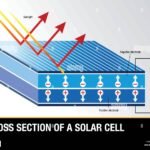
PERC stands for Passivated Emitter Rear Contact. The key innovation is a reflective layer on the back of the cell. This layer bounces unabsorbed light back into the silicon, giving it a second chance to generate electricity.
Older panels (Al-BSF) lacked this rear passivation, so they lost more light and had lower efficiency.
The passivation layer also reduces electron recombination at the rear surface. That directly boosts voltage and overall cell performance. PERC is a single-sided technology by default, though bifacial PERC modules exist (with a transparent backsheet to capture rear light).
Most residential PERC panels today are monofacial, meaning they only produce power from the front side.
What TOPCon Changes Over PERC
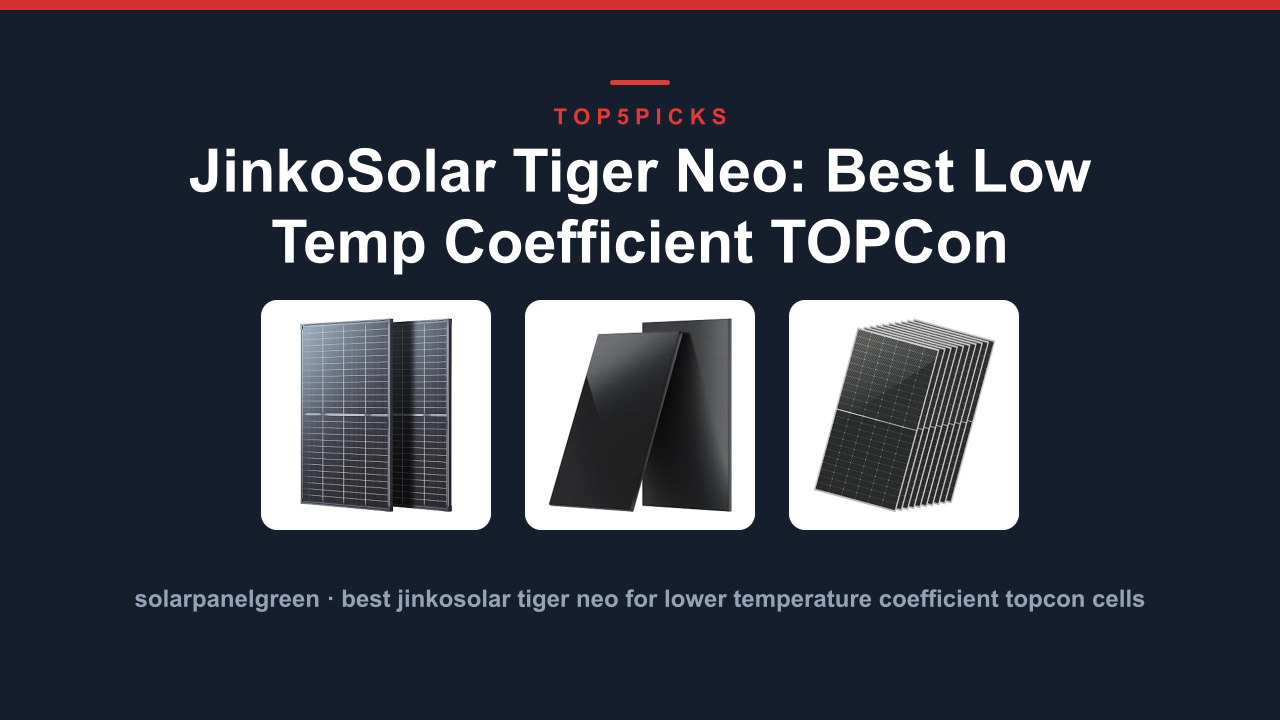
TOPCon (Tunnel Oxide Passivated Contact) goes a step further. It adds an ultra-thin silicon oxide layer (about 1, 2 nanometers thick) between the silicon wafer and the metal contact. On top of that sits a polycrystalline silicon layer doped with phosphorus (for N-type cells).
This structure dramatically reduces recombination at the contact points.
The result: TOPCon cells achieve higher open-circuit voltage and better fill factor. They also use N-type silicon wafers instead of P-type. N-type wafers are more tolerant to impurities and don't suffer from boron-oxygen LID, which plagues PERC.
Almost all TOPCon modules are bifacial by design, capturing light from both sides for extra yield.
Here's a quick comparison of the core architecture:
| Feature | PERC | TOPCon |
|---|---|---|
| Base wafer type | P-type (boron-doped) | N-type (phosphorus-doped) |
| Rear passivation | Al₂O₃ + SiNₓ layer | Tunnel oxide + poly-Si layer |
| Bifacial capability | Optional (clear backsheet) | Standard (transparent backsheet or glass-glass) |
| Typical cell efficiency | 20–23% | 24–27% |
Side-by-Side Performance Comparison
Efficiency & Power Output
PERC modules typically range from 350W to 450W depending on cell size and configuration. TOPCon modules start around 400W and go well above 600W for large-format panels. Efficiency (cells) for TOPCon averages 24, 26%, while good PERC sits around 21, 23%.
In raw numbers, TOPCon gives you more power per square meter. That matters if your roof space is limited. For example, a 400W PERC panel and a 430W TOPCon panel of the same physical size produce 30W more per panel, roughly 7.5% higher power density.
Temperature Coefficient & Hot-Climate Performance
This is where TOPCon really pulls ahead. Solar panels lose efficiency as they heat up. PERC has a temperature coefficient of power around, 0.35 to, 0.40% per degree Celsius above 25°C.
TOPCon sits at, 0.30 to, 0.32% per °C.
That might not sound huge, but in a hot climate like Arizona or Australia, panels routinely hit 60, 70°C on the roof. At 45°C above 25°C, PERC loses about 16% of its rated power, while TOPCon loses only 13%. That's a 3% relative advantage, enough to offset a slightly higher upfront cost over 25 years.
Degradation Rates (LID, LeTID, and Long-Term Drift)
PERC panels are prone to two forms of early degradation: LID (Light-Induced Degradation) and LeTID (Light and elevated Temperature Induced Degradation). LID can drop power by 2, 3% in the first few weeks of operation. LeTID adds another 1, 3% over the first year, especially in hot climates.
TOPCon uses N-type wafers doped with phosphorus, which don't have boron-oxygen defects. That means virtually zero LID. LeTID is also much lower.
First-year degradation for TOPCon is typically around 1%, compared to 2, 3% for PERC. Over 25 years, TOPCon panels tend to degrade at 0.4, 0.45% per year, while PERC averages 0.5, 0.7%. That compounds to a meaningful difference in lifetime energy production.
Research from the National Renewable Energy Laboratory (NREL) confirms that TOPCon cell degradation is among the lowest of any commercial silicon technology, supporting longer warranty terms.
Bifacial Gain & Rear-Side Energy
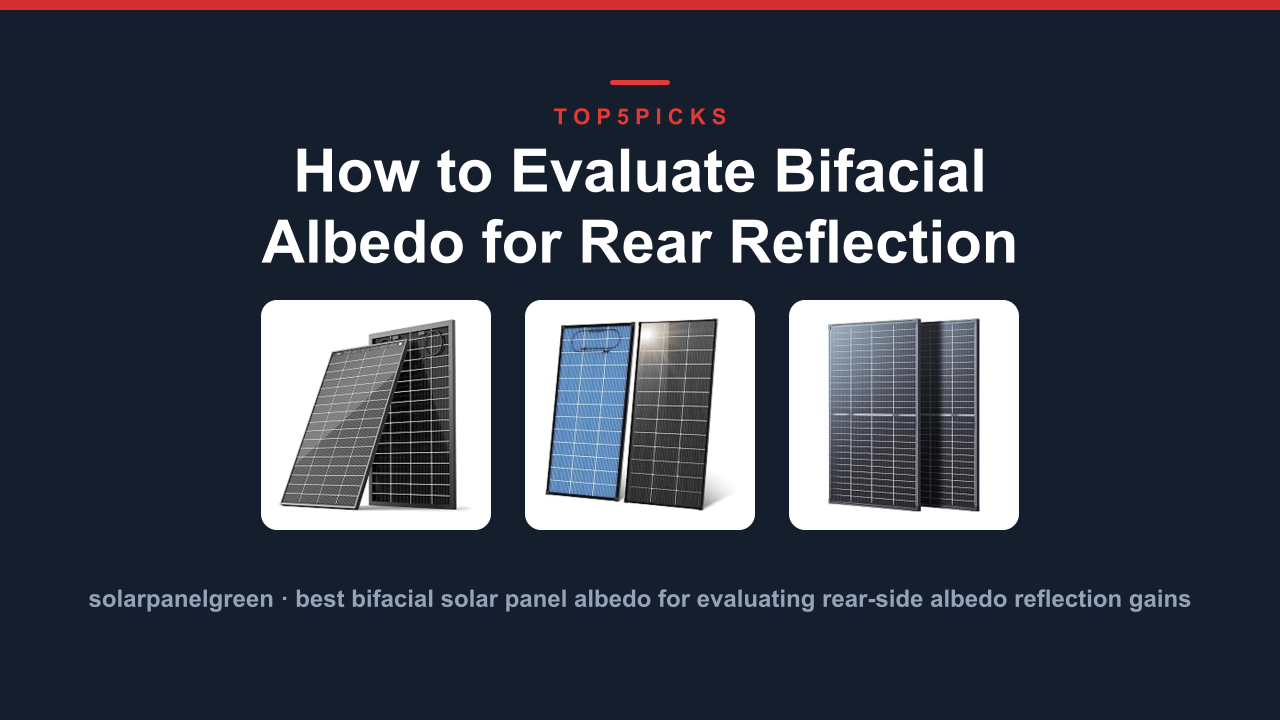
Most TOPCon modules are bifacial out of the box. They have a transparent backsheet or dual glass and collect light reflecting off the ground, roof, or mounting structure. Bifacial gain ranges from 5% to 15% depending on ground albedo, tilt, and mounting height.
PERC can also be bifacial, but it's less effective because the rear passivation layer isn't optimized for light absorption from the rear side. Typical bifacial gain for PERC is 5, 10%, while TOPCon achieves 10, 15%. In ground-mounted systems with high-albedo surfaces (white gravel, snow), TOPCon's bifacial advantage widens further.
If you're planning a ground mount or flat roof with reflective surroundings, TOPCon's rear-side energy capture alone can justify the price premium.
Cost vs Value: Upfront Price and Lifetime Savings
Typical Price Premium for TOPCon
As of early 2026, TOPCon modules command a premium of roughly 5, 15% over equivalent PERC modules at the wholesale level. That translates to about $0.02, $0.05 per watt more. On a typical 7 kW residential system, the upcharge might be $140, $350.
At the retail install level, the premium can be higher, sometimes 10, 20%, because installers often add margin for newer technology. You'll need to get quotes for both specific module brands to compare.
LCOE (Levelized Cost of Energy) in Real Terms
LCOE factors in upfront cost, degradation, temperature performance, and bifacial gain over the system's lifetime. Multiple analyses show TOPCon achieving a lower LCOE than PERC in most scenarios, especially in hot climates or where bifacial mounting works well.
For example, in a residential rooftop installation in Phoenix, TOPCon might yield 8% more energy over 25 years despite costing 12% more upfront. That narrows the payback period difference to just one or two years. After that, the extra energy is pure savings.
On a commercial ground-mount in Colorado with snow reflectance, TOPCon's bifacial gain pushes LCOE well below PERC. Our research of aggregate installer data suggests that for most buyers planning to stay in their home 10+ years, TOPCon delivers superior lifetime value.
To get a clearer picture of your specific costs and savings, it helps to start with the Solar Panel Buying Guide on our site, which walks you through comparing quotes including degradation and temperature coefficients.
Best Use Cases – Which Panel for Your Situation
When PERC Still Makes Sense
PERC is still a solid choice for budget-conscious buyers. If your roof has plenty of unobstructed space and you live in a mild climate, the premium for TOPCon may never pay back. PERC panels cost less upfront, and the lost energy from slightly higher degradation might be negligible on a south-facing roof with no shading.
Renters or short-term homeowners should also lean PERC. The payback period for TOPCon often stretches beyond five years. If you plan to sell before that, you won't capture the long-term savings.
It helps to weigh the advantages and disadvantages of solar panels for your specific timeline before committing.
When TOPCon Justifies the Extra Cost
TOPCon shines in hot climates, limited roof space, or high-electricity-cost regions. Every extra watt per square meter matters when you can't fit more panels. If your summer temperatures regularly hit 40°C (104°F), TOPCon's better temperature coefficient saves you 3, 5% more annual energy than PERC.
Homeowners planning to stay put for 15+ years should strongly consider TOPCon. The lower degradation and higher bifacial gain compound over time. In ground-mounted systems with reflective surfaces, the rear-side energy alone can close the payback gap within a decade.
Reviewing the main components of a solar panel will help you understand why the N-type wafer gives TOPCon its durability advantage.
What About Bifacial vs Monofacial?
Most TOPCon modules are bifacial by default. PERC modules come in both flavors. If your installation is on a dark asphalt shingle roof with no ground visibility, bifacial gain drops to 2, 5%.
In that case, monofacial TOPCon or even good PERC may be more practical.
For ground mounts, flat roofs with white membranes, or snowy regions, bifacial TOPCon is a no-brainer. The extra 10, 15% yield from rear light capture can offset the module premium within a few years. Understanding how solar panels generate electricity from both sides helps you evaluate the actual gain for your site.
Common Mistakes People Make When Choosing
Fixating Only on Efficiency
Efficiency numbers are easy to compare, but they don't tell the whole story. A 24% efficient TOPCon panel may only generate 5% more energy than a 22% PERC panel of the same wattage. That difference comes from temperature losses, degradation, and bifacial gain.
Our research shows many buyers overpay for high-efficiency panels without checking whether their climate or roof orientation can deliver the expected benefit. Always ask for the performance ratio under your local conditions, not just the laboratory STC rating.
Ignoring Your Local Climate
PERC's temperature coefficient and LID sensitivity hit hardest in hot deserts and humid coastal areas. In cooler northern climates, these disadvantages shrink. If you live in Seattle or Oslo, PERC's lower upfront cost may serve you better than TOPCon's marginal heat advantage.
Check the average summer high temperature for your location. If it exceeds 35°C (95°F) for several months, TOPCon's better coefficient becomes a real asset. A quick look at how solar panels work in different conditions will clarify why climate matters more than spec sheets suggest.
Confusing Nameplate Wattage with Real‑World Yield
A 450W TOPCon panel and a 450W PERC panel can produce dramatically different amounts of energy over a year. Nameplate wattage is tested under standard conditions (25°C, 1000 W/m²). Real‑world yield depends on temperature, light spectrum, and degradation.
Manufacturer specifications often list "STC power" prominently. Dig deeper into the PTC rating (a more realistic test used in the US) or the NOCT (Normal Operating Cell Temperature) power. Those numbers better reflect actual performance on your roof.
Expert Tips for Evaluating Quotes
Reading Datasheets the Right Way
Look past the headline efficiency number. Focus on three key specs: temperature coefficient of power, first-year degradation, and annual linear degradation. TOPCon should show, 0.30% per °C or better, first-year loss under 1.5%, and linear degradation under 0.5% per year.
Also check the product warranty length. TOPCon modules increasingly carry 25, 30 years for materials and workmanship, plus linear power guarantees out to 30 years. PERC typically offers 25 years.
Longer warranties reflect higher confidence in durability.
Questions to Ask Your Installer
Ask directly: "What is the temperature coefficient for these panels?" and "Is this quote based on STC or PTC power?" A good installer will know these numbers without checking. If they can't answer, that's a red flag.
Request a performance estimate with weather data for your specific zip code. Many solar design tools (like Helioscope or Aurora) can model both PERC and TOPCon output for your roof. Compare the annual kWh projections, not just the upfront price.
How to Factor In Future Energy Needs
If you plan to add an electric vehicle or heat pump in the next five years, choose higher‑efficiency panels now. A larger system with TOPCon may meet future loads without needing extra roof space later. If your energy use is stable, PERC may be sufficient.
Also consider inverter compatibility. Bifacial TOPCon panels produce higher peak currents, which can affect string sizing and microinverter selection. Confirm with your installer that your inverter can handle the extra current at cold temperatures.
Frequently Asked Questions
Is TOPCon really worth the extra money?
For most homeowners staying 10+ years, yes. The higher upfront cost is recovered through lower degradation, better temperature performance, and bifacial gain. In hot climates or limited roof space, the payback is even faster.
Can PERC panels still perform well in 2025 and beyond?
Absolutely. PERC is a mature, reliable technology with decades of field data. It still delivers solid returns, especially in cool, mild climates or for short‑term ownership.
It's not obsolete.
Will TOPCon become cheaper than PERC soon?
Manufacturing costs are falling fast. Analysts expect TOPCon to reach cost parity with PERC by 2027 or 2028. As production scale increases, the premium will shrink further.
If you can wait, you may save money.
Does TOPCon work with all inverters?
Most modern string inverters and microinverters support TOPCon modules. However, high bifacial gain can push string currents beyond the inverter's maximum input rating. Your installer should verify compatibility in the design phase.
How long do TOPCon panels last?
Manufacturers typically offer 25‑year product warranties and 30‑year linear power guarantees. Accelerated testing and early field data suggest TOPCon modules can perform well beyond 30 years, with degradation rates below 0.45% per year.
Final Recommendation – Which One Should You Choose?
Choose PERC if you have ample roof space, live in a cool climate, and plan to stay in your home fewer than 10 years. It's the dependable, budget‑friendly workhorse.
Choose TOPCon if you have limited roof area, face high summer temperatures, or plan to stay 15+ years. It offers better long‑term energy yield, lower degradation, and superior hot‑climate performance. The extra upfront cost is an investment in higher lifetime savings.
| Scenario | Best Choice | Key Reason |
|---|---|---|
| Hot climate, limited roof space | TOPCon | Better temperature coefficient, higher power density |
| Cool climate, ample roof space | PERC | Lower upfront cost, sufficient yield |
| Short‑term ownership (<10 years) | PERC | Faster payback, less capital risk |
| Long‑term ownership (>15 years) | TOPCon | Lower degradation, higher total production |
| Ground mount with reflective surface | TOPCon (bifacial) | 10–15% rear‑side energy gain |
| Dark asphalt roof, no rear light | PERC or monofacial TOPCon | Minimal bifacial benefit, lower cost |
Run your own numbers using a solar calculator with your local irradiance and electricity rates. And don't forget to read through the full solar panel buying guide on our site for a step‑by‑step checklist before signing any contract.

Similar Posts