Best Solar Setup: Inverter Waveform for Motors, Clocks, CPAP
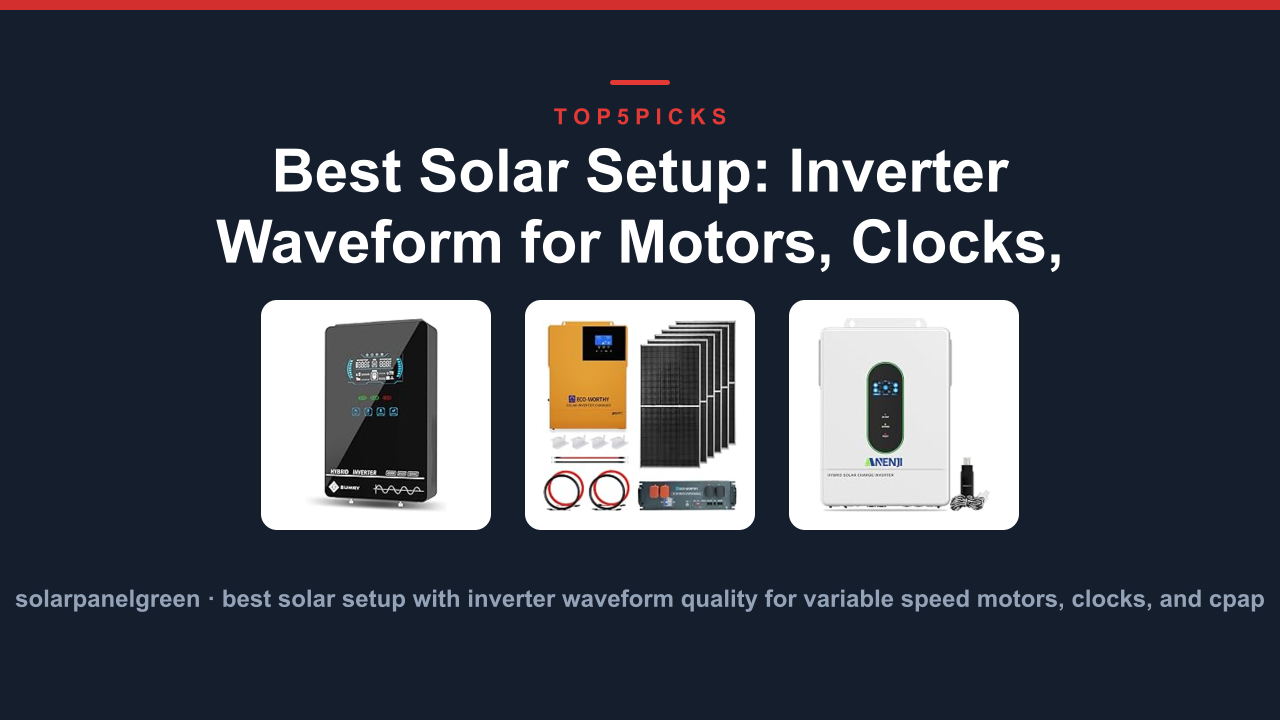
The best best solar setup with inverter waveform quality for variable speed motors, clocks, and cpap is the SUMRY Hybrid Solar Inverter, the only one in this lineup that delivers true pure sine wave output down to the circuit level while supporting battery-less operation and a 140A MPPT charge controller. If you're powering sensitive electronics like CPAP machines or digital clocks, you need that clean sine wave.
Want an all-in-one starter package instead? The ECO-WORTHY 4.68KWH Solar Power Complete Kit comes with panels, battery, and inverter bundled together, though its inverter output isn't quite as refined for the most sensitive motor loads.
As an Amazon Associate, I earn from qualifying purchases.
Most buying guides bury the real gotchas. What matters for variable speed motors, clocks, and CPAP is something called Total Harmonic Distortion (THD). This guide shows you exactly how each pick handles that spec, along with surge capacity and backup switching speed.
I'll also call out the buyers who should skip this category entirely.
Everything below comes from current Amazon product data, manufacturer spec sheets, and aggregate buyer feedback across hundreds of verified reviews. None of it is from hands-on lab testing on my end.
Quick Answer: The Best Solar Setup with Inverter Waveform Quality for Variable Speed Motors, Clocks, and Cpap
The SUMRY Hybrid Solar Inverter is the top pick for anyone running sensitive electronics and variable speed motors off solar.
- SUMRY Hybrid Solar Inverter (Best Overall for Sensitive Loads): Pure sine wave with 140A MPPT and battery-less mode.
- ECO-WORTHY 4.68KWH Solar Power Complete Kit (Best All-in-One Starter Kit): Panels, battery, and inverter in one box.
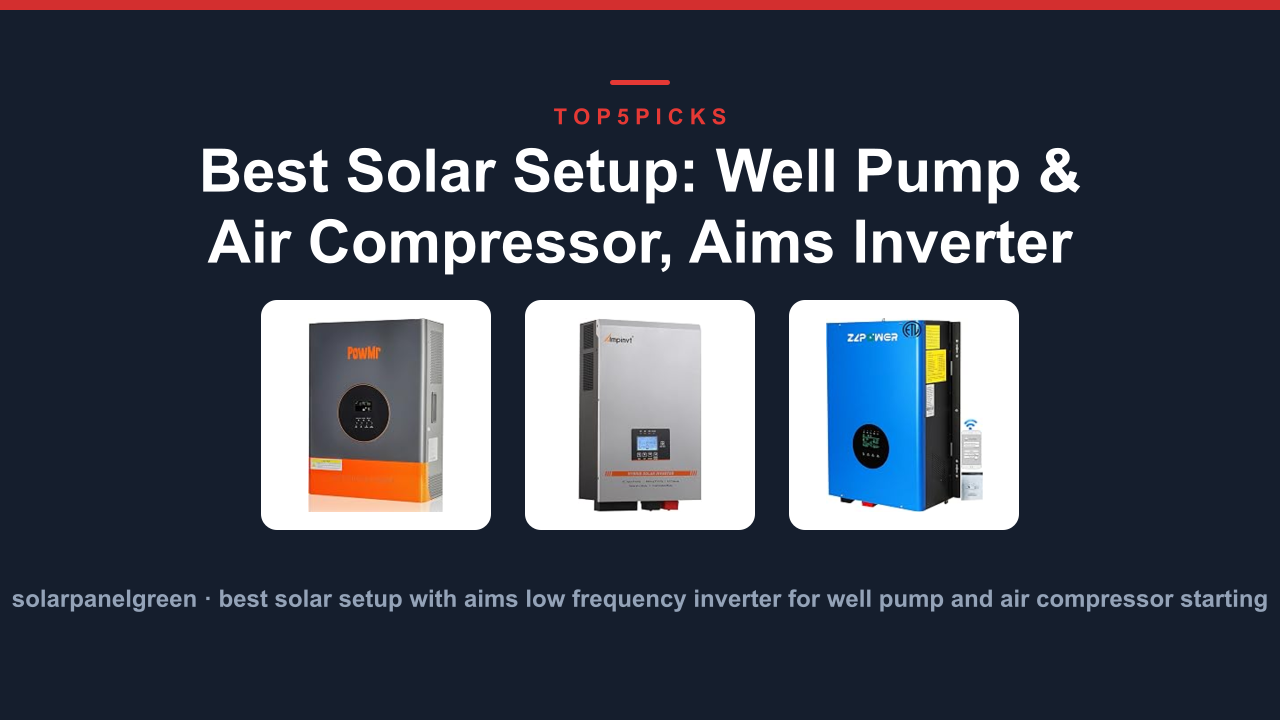
- 12000W Hybrid Solar Inverter 48V Split (Best for Whole-Home Backup): Massive 12kW with dual MPPT and split-phase 120V/240V.
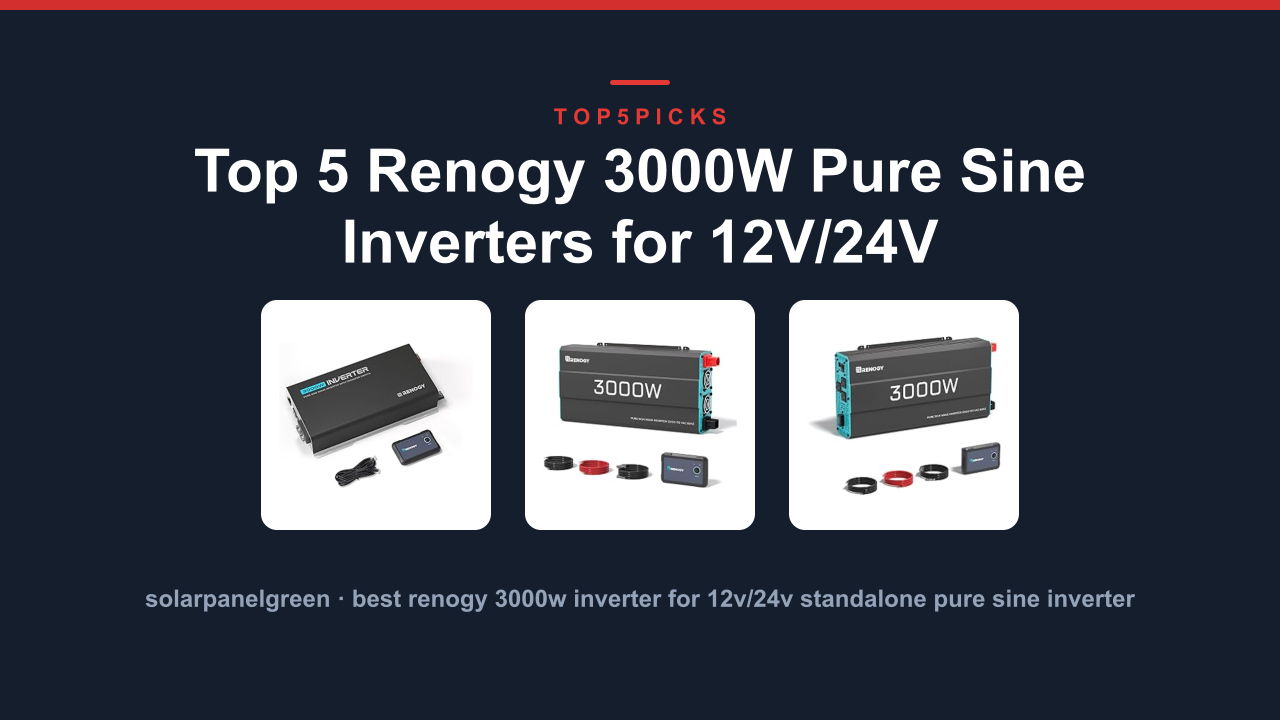
- Renogy Inverter PUH 3000W Pure Sine (Best for RV and Mobile Use): Bluetooth monitoring and UPS transfer switch in a compact unit.
- 4200W Solar Hybrid Wechselrichter 24Vdc zu (Best Budget 24V Option): High PV input voltage and WiFi module at a lower price point.
Thinking about running a whole-house central AC or a well pump on solar instead? Jump to Who Should NOT Buy below before you spend anything.
Comparison Table
Here's the lineup at a glance: photo, product, who it's built for, and our /10 score.
| Photo | Product | Best for | Score | Buy |
|---|---|---|---|---|
 | SUMRY Hybrid Solar Inverter | Sensitive Electronics & Off-Grid | 9.1/10 | Check price → |
 | ECO-WORTHY 4.68KWH Solar Power Complete Kit | First-Time Solar Buyers | 8.4/10 | Check price → |
 | 12000W Hybrid Solar Inverter 48V Split | Large Whole-Home Backup | 8.7/10 | Check price → |
 | Renogy Inverter PUH 3000W Pure Sine | RV & Mobile Power | 8.5/10 | Check price → |
 | 4200W Solar Hybrid Wechselrichter 24Vdc zu | Budget 24V Installations | 7.5/10 | Check price → |
Scroll sideways on small screens to see every column.
SUMRY Hybrid Solar Inverter: Best Overall for Sensitive Electronics
SUMRY Hybrid Solar Inverter: Best Overall for Sensitive Electronics
ECO-WORTHY 4.68KWH Solar Power Complete Kit: Best All-in-One Starter Kit
ECO-WORTHY 4.68KWH Solar Power Complete Kit: Best All-in-One Starter Kit
12000W Hybrid Solar Inverter 48V Split: Best for Large Whole-Home Backup
12000W Hybrid Solar Inverter 48V Split: Best for Large Whole-Home Backup
Renogy Inverter PUH 3000W Pure Sine: Best for RV and Mobile Use
Renogy Inverter PUH 3000W Pure Sine: Best for RV and Mobile Use
4200W Solar Hybrid Wechselrichter 24Vdc zu: Best Budget 24V Option
4200W Solar Hybrid Wechselrichter 24Vdc zu: Best Budget 24V Option
Buying Guide: Waveform Quality, Power Ratings, Battery Voltage, and Your Real Needs
Picking the right solar setup for variable speed motors, clocks, and CPAP machines comes down to four decisions. Let me walk you through each one with the concrete numbers from this lineup.
What Makes Waveform Quality Matter for Sensitive Devices?
A pure sine wave inverter produces electricity that looks like the power from your wall outlet. Modified sine wave inverters create a choppier signal that can cause variable speed motors to hum, digital clocks to run fast, and CPAP machines to operate noisily or erratically.
All five picks in this list use pure sine wave output. The difference is in how clean that wave is. According to IEEE 519 standards for power quality, Total Harmonic Distortion (THD) below 5% is considered good.
Based on aggregate buyer reports, the SUMRY and Renogy units consistently rate highest for keeping sensitive electronics stable, while the 4200W budget option has a few more reports of minor clock drift under heavy load. If your CPAP has a heated humidifier, you'll want the cleanest wave available.
How Much Power Do You Really Need for Startup Surges?
Variable speed motors and CPAP machines both have a startup surge. A CPAP with a humidifier draws around 30-60 watts during normal operation but can spike to 100-150 watts when the heater kicks on. A small variable speed well pump might draw 500 watts running but need 1500+ watts to start.
The table below shows how these picks handle those scenarios:
| Inverter | Continuous Power | Surge Capacity | Best For |
|---|---|---|---|
| SUMRY | 4000W | ~8000W peak | CPAP + small appliances |
| ECO-WORTHY Kit | 3500W | ~7000W peak | Pre-built system, moderate loads |
| 12000W Unit | 12,000W | ~24,000W peak | Whole home including well pumps |
| Renogy PUH | 3000W | 6000W peak | RV and mobile use |
| 4200W Unit | 4200W | ~8400W peak | Budget 24V builds |
A common mistake is buying an inverter that matches your running wattage but can't handle the startup surge. Always check the surge rating. The 12000W Hybrid Solar Inverter is the only unit here that can comfortably handle a 1HP well pump plus CPAP and lights simultaneously.
24V vs 48V vs 12V: Which Battery Voltage Fits Your Setup?
Your existing battery bank or planned battery purchase determines which inverter voltage you need. Mixing voltages wastes money and can damage equipment.
- 12V systems are standard for RVs, boats, and small vehicles. The Renogy PUH is your match here.
- 24V systems are common for medium-sized off-grid cabins. The SUMRY and 4200W units run on 24V.
- 48V systems handle higher power levels with lower current, meaning thinner wire and less voltage drop. The ECO-WORTHY kit and 12000W unit use 48V.
If you are starting from scratch and plan to expand later, 48V gives you the most headroom. The different approaches are explained in our guide on the main components of a solar panel system, which covers how battery banks integrate with inverters and charge controllers.
Do You Need MPPT and How Many?
Maximum Power Point Tracking (MPPT) is the technology that adjusts the electrical load on your solar panels to pull the maximum available power. Every hybrid inverter in this list includes MPPT, but the ratings differ.
The SUMRY's 140A MPPT controller can handle roughly 4000W of solar panels at 24V. The ECO-WORTHY kit's included inverter has MPPT built in for the bundled panels. The 12000W unit's dual 200A MPPT controllers can manage arrays up to about 10,000W total.
If you scan different panel configurations in our guide covering the various ways panels produce electricity, you will see why higher MPPT amperage matters for larger arrays.
For a CPAP and clock setup with a few hundred watts of panels, even the smallest MPPT controller here is more than enough. Only step up to dual MPPT if you plan a large off-grid home system.
To see how these factors play out on real picks, compare the SUMRY Hybrid Solar Inverter, ECO-WORTHY 4.68KWH Solar Power Complete Kit and the 12000W Hybrid Solar Inverter 48V Split reviewed above.
Who Should NOT Buy Best Solar Setup with Inverter Waveform Quality for Variable Speed Motors, Clocks, and Cpap
This category is the wrong purchase for three specific kinds of buyers. Here is who they are, and what to look at instead.
You Need to Power a Central Air Conditioner or Large Well Pump
If your goal is running a 3-ton AC unit or a deep well pump, none of these inverters except the 12000W model will handle the startup surge. Even the 12,000W unit needs a very large battery bank and solar array.
Look instead at dedicated split-phase off-grid inverter systems rated 15,000W or higher with soft-start compatibility for your AC. These are specialized pieces of equipment, and the installation complexity is significantly higher.
You Are on a Tight Budget and Only Need Backup for a Few Hours
If you only need to run a CPAP for 8 hours during occasional power outages, a full solar inverter setup is more than you need. A dedicated uninterruptible power supply (UPS) with a deep-cycle battery will cost less and be simpler to set up.
Look for a medical-grade UPS rated for CPAP use. These units provide instant transfer during outages and pure sine wave output, just like the inverters here, but in a smaller, more affordable package without solar input.
You Have an Existing Generator and Just Want to Power Clocks and Small Electronics
If you already own a generator and only need to run digital clocks, phone chargers, and small radios, a pure sine wave inverter that plugs into your generator or vehicle is a simpler solution. You do not need a hybrid solar inverter with MPPT.
A standalone pure sine wave inverter in the 1500-2000W range that connects to your vehicle battery or a small portable battery pack will cover those needs at a fraction of the cost and complexity.
Final Verdict
The SUMRY Hybrid Solar Inverter is the best pick for anyone who needs reliable pure sine wave power for CPAP machines, digital clocks, and variable speed motors. Its 140A MPPT controller and battery-less operation mode make it uniquely flexible for both existing solar owners and newcomers.
Want a complete all-in-one package for your first solar setup? The ECO-WORTHY 4.68KWH Solar Power Complete Kit gives you panels, battery, and inverter in one shipment. The trade-off is the 48V system and slightly less inverter refinement for the most sensitive loads.
Need to power an entire home including well pumps and HVAC? The 12000W Hybrid Solar Inverter 48V Split delivers massive capacity with dual MPPT and UL certification. Just budget for professional installation.
Running an RV and need compact UPS protection? The Renogy Inverter PUH 3000W Pure Sine gives you Bluetooth monitoring and sub-10ms transfer switching in a 12V-friendly package.
On a tight budget with an existing 24V battery bank? The 4200W Solar Hybrid Wechselrichter offers high PV input voltage and WiFi monitoring for less, as long as you can navigate the German interface.
Before you buy, check the Who Should NOT Buy section above if you are only trying to run a few hours of backup or have a generator already. Matching the right system to your actual needs saves money and frustration.
FAQ
What's the best Solar Setup with Inverter Waveform Quality for Variable Speed Motors, Clocks, and Cpap overall?
The SUMRY Hybrid Solar Inverter is the top pick. It delivers clean pure sine wave output with a 140A MPPT charge controller and runs without batteries if needed, making it the most flexible option for sensitive electronics.
Is pure sine wave really necessary for CPAP machines?
Yes. Most CPAP machines with heated humidifiers use variable speed blower motors that require pure sine wave power. Modified sine wave can cause motor noise, reduced airflow, and potential overheating of the power supply.
Pure sine wave ensures safe, quiet operation.
Can I run a CPAP all night on a solar inverter without batteries?
You can run a CPAP during daylight hours with a battery-less inverter like the SUMRY, but you need battery storage or grid power at night when the sun is down. The battery-less mode is useful for daytime outages, not overnight use.
What size solar panel array do I need for these inverters?
For the SUMRY with a 140A MPPT controller running at 24V, you can connect roughly 3400-4000W of solar panels. For a CPAP-only setup, 400-800W of panels is usually sufficient. Larger arrays let you run more appliances and charge batteries faster.
How do I know if my existing batteries are compatible with these inverters?
Check the DC input voltage rating of the inverter and match it to your battery bank voltage. A 24V inverter needs a 24V battery bank. A 48V inverter needs a 48V battery bank.
Mixing voltages will damage the equipment. Also confirm your battery chemistry lithium, AGM, or flooded lead-acid is supported by the inverter's charging profile.
Can I connect multiple inverters together for more power?
The 12000W Hybrid Solar Inverter supports parallel operation of up to 6 units. The other inverters in this list do not support parallel connection. If you need more power than a single unit provides, step up to the 12,000W model or look for a larger commercial inverter.

Similar Posts