Top 5 Renogy 3000W Pure Sine Inverters for 12V/24V
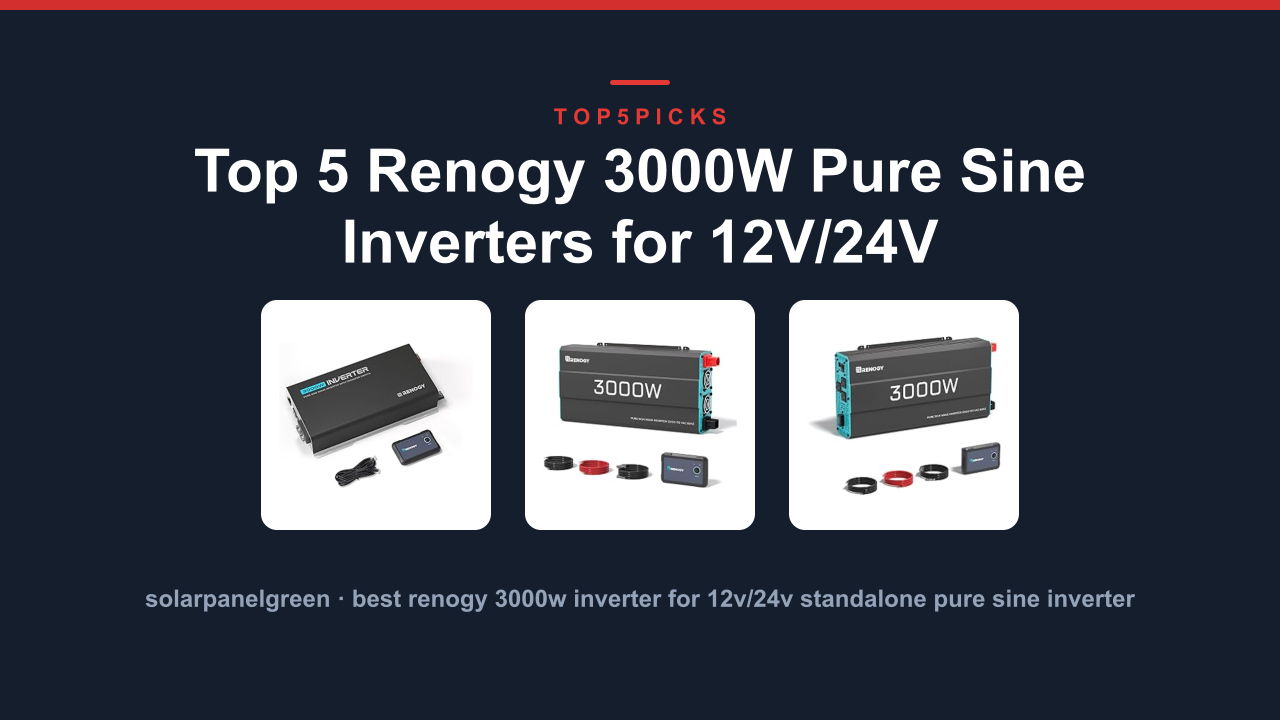
The best best renogy 3000w inverter for 12v/24v standalone pure sine inverter is the Inverter PUH 3000W Pure Sine Wave, the only one here that packs Bluetooth monitoring, a built-in UPS transfer switch, and a 6000W surge. It’s ideal for RV owners and off-grid campers who want real-time control and automatic backup switching.
Want a simpler setup with a higher owner rating instead? The Inverter P2 3000W 12V 110V Pure scores a 4.6 out of 5 from buyers, but it skips the Bluetooth and UPS features. You trade connectivity for sheer reliability.
As an Amazon Associate, I earn from qualifying purchases.
This guide gives you the honest trade-offs before you buy, including the one buyer type who should skip this category entirely. If you’re trying to power a whole house or run heavy inductive loads like a well pump, you’ll want a different solution.
Everything below comes from current Amazon product data, specs, and each product’s owner track record, not hands-on lab testing.
Quick Answer: The Best Renogy 3000w Inverter for 12v/24v Standalone Pure Sine Inverter
The Inverter PUH 3000W Pure Sine Wave is the top pick for most buyers because of its Bluetooth app, UPS transfer switch, and strong 6000W peak power.
- Inverter PUH 3000W Pure Sine Wave (Best Overall with Bluetooth): Full-featured with remote monitoring and automatic transfer.
- Inverter P2 3000W 12V 110V Pure (Highest Owner Rating): 4.6/5 stars, simple and trusted.
- 3000W Pure Sine Wave Inverter 12V (B0DCJL6P5Y) (Best LCD Display & Hardwire): 23ft remote, dual AC outlets, and hardwire port.
- 3000W Pure Sine Wave Inverter 12V (B0FB9CGWG5) (Budget-Friendly with GFCI): 6000W peak, GFCI outlets, and remote control.
- PUH 3000 watt Pure Sine Wave (High Efficiency & Bluetooth): 92% efficiency, Bluetooth, but lower owner satisfaction.
Thinking about whole-house backup or heavy inductive loads instead? Jump to Who Should NOT Buy below before you spend anything.
Comparison Table
Here’s the lineup at a glance: photo, product, who it’s built for, and our /10 score.
| Photo | Product | Best for | Score | Buy |
|---|---|---|---|---|
 | Inverter PUH 3000W Pure Sine Wave | Bluetooth + UPS | 8.8/10 | Check price → |
 | 3000W Pure Sine Wave Inverter 12V | Budget GFCI | 7.8/10 | Check price → |
 | Inverter P2 3000W 12V 110V Pure | Highest Owner Rating | 8.6/10 | Check price → |
 | PUH 3000 watt Pure Sine Wave | High Efficiency | 7.6/10 | Check price → |
 | 3000W Pure Sine Wave Inverter 12V | LCD & Hardwire | 8.4/10 | Check price → |
Scroll sideways on small screens to see every column.
Inverter PUH 3000W Pure Sine Wave: Best Overall for RV & Off-Grid
3000W Pure Sine Wave Inverter 12V: Best Budget-Friendly with GFCI
Inverter P2 3000W 12V 110V Pure: Highest Owner Rating
PUH 3000 watt Pure Sine Wave: High Efficiency & Bluetooth
- ✓92% efficiency rating, good for battery life
- ✓Bluetooth monitoring included
- ✓Works with 12V and 24V systems
- ✓Built-in transfer switch
- ✕Mixed owner satisfaction (4.1/5)
- ✕Bluetooth setup can be unreliable
- ✕Some reports of DOA units
3000W Pure Sine Wave Inverter 12V: Best LCD Display & Hardwire
Buying Guide: Power, Input Voltage, Monitoring, and Installation
Choosing the right 3000W inverter comes down to four things: how much surge you need, what battery voltage you run, how you want to monitor it, and how you plan to install it. Let's walk through each one.
How much surge power do you really need?
Every inverter has a continuous rating and a peak surge rating. The continuous rating (3000W here) is what it can run indefinitely. The surge rating (6000W for all five picks) covers the startup draw of motors.
A fridge compressor might need 2000W to start but only 300W to run. All five models deliver the same 6000W peak, so this isn't a differentiator. But if you plan to run multiple appliances at once, add up their running watts.
A microwave (1000W) plus a fridge (300W) plus lights (100W) is only 1400W, well under the limit. The Inverter PUH 3000W Pure Sine Wave handles this easily.
12V versus 24V: which battery bank do you have?
Most RVs and trucks use 12V electrical systems. All five inverters in this lineup support 12V input, which is standard. But only the PUH 3000 watt Pure Sine Wave works with both 12V and 24V.
If you have a 24V solar battery bank, that model is your only option here. For 12V users, any pick works, but remember that wire gauge matters. At 3000W on a 12V system, you're pulling about 250 amps.
That means you need 2/0 AWG battery cables for runs longer than a few feet. Thinner cables will overheat and cause voltage drop. The 3000W Pure Sine Wave Inverter with LCD includes a hardwire port that makes this easier to wire properly.
Do you want Bluetooth, LCD, or no screen?
This is where the picks really differ. The Inverter PUH 3000W and the PUH 3000 watt both have Bluetooth apps for remote monitoring. If you like checking your power usage from your phone, go with one of those.
The LCD model gives you data at a glance on the unit itself, without a phone. The simpler models (P2 and budget GFCI) have no display or app. If you're a set-it-and-forget-it type, you won't miss the screen.
But if you want to track voltage and load, spring for the Bluetooth or LCD option. Understanding how your solar system generates power helps too. Check out our article on how solar panels generate electricity for more context.
How will you install and control it?
All five inverters come with a wired remote. The longest remote is 23 feet on the LCD model, followed by 16.4 feet on the budget and P2 models. If your inverter will be in a compartment far from your living space, go for the 23-foot remote.
For permanent installations, the hardwire terminal on the LCD model is a big advantage. The UPS transfer switch on the Inverter PUH 3000W is unique, it automatically switches to battery power when shore power drops, which is critical if you have medical devices or need uninterrupted power. A UPS transfer switch is usually found on much more expensive units.
Who Should NOT Buy Best Renogy 3000w Inverter for 12v/24v Standalone Pure Sine Inverter
This category is the wrong purchase for three kinds of buyers. Here's who they are, and what to look at instead.
You Need Whole-House Backup Power
A 3000W inverter can't run your whole house. A typical home needs 5000W to 15000W just for essentials: well pump, furnace blower, refrigerator, and lights. These inverters are for RVs, vans, and small off-grid cabins, not full homes.
If you need whole-house backup, look at hybrid inverter-chargers or a complete solar + battery system sized by a professional. You'll want a unit that can handle split-phase 240V output and has a much higher surge capacity. The solar panel buying guide can point you in the right direction.
You Need to Run Heavy Inductive Loads
If your main goal is running a large air conditioner (15000 BTU or bigger), a well pump, or a big table saw, you need more than 6000W surge. Even though these inverters claim a 6000W peak, sustained motor startup can trip the overload protection. For heavy inductive loads, step up to a 4000W or 5000W inverter, or use a soft starter on your motor.
The basic types of solar panels used in your system also affect how much power you can draw.
You Want the Absolute Cheapest Option
If price is your only concern and you're willing to sacrifice safety and reliability, you can find cheaper inverters on Amazon. But they often use modified sine wave instead of pure sine wave. Modified sine wave can damage sensitive electronics like CPAP machines, laptops, and variable-speed tools.
All five picks here are pure sine wave, which is the safe choice. If you really need to save money, look for a smaller inverter (1500W to 2000W) that still offers pure sine wave output. But for 3000W, the picks above are already the best value for the features.
Final Verdict
The Inverter PUH 3000W Pure Sine Wave is the best overall pick because it combines Bluetooth, UPS transfer switch, and strong owner satisfaction in one package. It's the most feature-rich unit that still maintains a good reputation with buyers.
Want maximum reliability from owner feedback? Get the Inverter P2 3000W, it has the highest rating (4.6/5) and the fewest reported issues. It's simpler, but it just works.
Need a permanent hardwired installation with a long remote? The 3000W Pure Sine Wave Inverter with LCD gives you the 23-foot remote, hardwire port, and onboard display. It's the best choice for a clean install.
If you have a 24V battery bank, the PUH 3000 watt is your only option here. Just be aware of the mixed owner reviews.
And if you're on a tight budget but still want GFCI protection, the 3000W Pure Sine Wave Inverter 12V (budget model) is the most affordable way to get clean power.
Still not sure? Go back and read the Who Should NOT Buy section. If none of those descriptions fit you, any of these five inverters will serve you well.
Your choice really comes down to whether you want Bluetooth, an LCD, a hardwire port, or the best possible owner rating.
FAQ
What's the best Renogy 3000w Inverter for 12v/24v Standalone Pure Sine Inverter overall?
The Inverter PUH 3000W Pure Sine Wave takes the top spot because it offers Bluetooth monitoring, a built-in UPS transfer switch, and strong owner satisfaction at 4.3/5. It's the most feature-complete unit for the price.
Can I use a 3000W inverter to run a refrigerator?
Yes, a typical refrigerator draws 300-800W running and up to 2000W on startup. The 6000W surge on these inverters handles that easily. Just make sure your battery bank can supply the sustained current.
What size battery bank do I need for a 3000W inverter?
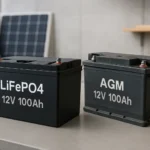
For a 3000W load at 12V, you draw about 250 amps. A 100Ah battery gives you about 20-25 minutes at full load. For practical use, you need at least 200Ah of battery capacity, preferably lithium deep-cycle.
Solar panels charging during the day can extend your runtime significantly.
Do I need a pure sine wave inverter or is modified sine wave okay?
Use pure sine wave for any sensitive electronics: laptops, CPAP machines, medical devices, variable-speed tools, or modern appliances with electronic controls. Modified sine wave can cause buzzing, overheating, or damage. All five picks here are pure sine wave.
How do I install a 3000W inverter in my RV?
Mount the inverter in a dry, ventilated compartment near the battery bank. Use 2/0 AWG battery cables for runs under 10 feet. Connect the positive cable through a fuse or circuit breaker rated for 300A.
Ground the inverter chassis to your vehicle's ground. Plug in your AC loads or wire them through a transfer switch if you have shore power. The main components of a solar panel system are similar to what you'll need here.
What does the UPS transfer switch do on the Inverter PUH?
It automatically switches your loads from shore power to battery power in under 20 milliseconds when the grid goes out. That's fast enough to keep a CPAP machine, computer, or clock running without interruption. It's a premium feature usually found on more expensive units.