Are Solar Attic Fans Actually Worth It?

If you’re wondering “Are Solar Attic Fans Worth It?” the short answer is: it depends entirely on your home and situation. A solar attic fan can drop attic temperatures by 20 to 40 degrees on a hot afternoon, which sounds like a clear win for your cooling bills. But the reality is more nuanced.
Whether you actually save money, or even make things worse, comes down to three core conditions.
Per the U.S. Department of Energy’s attic ventilation guidelines, a properly ventilated attic should have a balanced system of intake and exhaust. A solar fan adds active exhaust, but only if your attic is already sealed and insulated correctly.
Let’s walk through what matters so you can decide for yourself.
Quick Answer
Solar attic fans are worth it for some homeowners, not for others. They work best in hot, sunny climates with a south or west facing roof. They fail if your attic floor isn’t air sealed or if your roof gets heavy shade.
Most people save $50 to $200 a year on cooling, but the fan costs $350 to $1,000 installed. Run the numbers for your house.
Why Your Attic Is Cooking Your House (And Why You Care)
Your attic is the hottest part of your home. On a summer day, dark shingles can push temperatures past 150°F. That heat radiates down through the ceiling into your living space, forcing your air conditioner to work harder.
A hot attic also shortens your roof’s life. Shingles bake from the bottom up, curling and cracking years earlier than they should. Humidity trapped in the attic can lead to mold in the insulation and wood rot in the roof sheathing.
The real problem is that most attics are under-ventilated. Ridge vents and soffit vents rely on natural airflow, which is weak on still, hot days. That’s where a powered fan can step in and actively push the heat out.
How Solar Attic Fans Actually Work (The Simple Version)
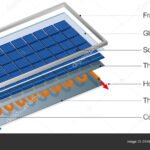
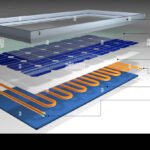
A solar attic fan is a small exhaust fan powered by its own photovoltaic panel. The solar panel sits on the roof or on a bracket nearby, wired directly to a brushless DC motor. When sunlight hits the panel, the fan spins and pulls hot air out of the attic.
Most modern fans include a built-in thermostat and sometimes a humidistat. The thermostat kicks the fan on when attic temperature reaches a set point, typically 85 to 100°F. The humidistat activates the fan when humidity climbs above 70% or so, which helps in muggy climates.
The fan pulls air from inside the attic and pushes it through a roof vent or gable vent outward. That creates negative pressure, drawing cooler air in through your soffit vents. It’s the same basic principle as the solar panels that generate electricity for your home, but here the panel runs a fan directly rather than sending power to your breaker box.
If you want a deeper look at how those panels convert sunlight, check out our guide to the main components of a solar panel.
The catch is simple: the fan only runs when the sun is shining. At night and on overcast days it stops. That’s fine in most climates because the attic doesn’t need cooling after dark, but it’s a limitation you need to understand.
The Three Big Questions That Decide If a Solar Fan Makes Sense for You
Does your climate call for powered ventilation?
If you live in a hot, sunny region like Arizona, Texas, Florida, or Southern California, a solar fan can make a real dent in your cooling costs. These areas have long cooling seasons and high electricity rates. You’ll see a faster payback.
If you live in a cold climate like Minnesota or Maine, a powered attic fan can cause serious winter problems. Running an exhaust fan in winter pulls warm, moist air from your living space into the attic. That air can condense on cold roof sheathing, leading to ice dams and mold.
In cold climates, passive ridge and soffit vents are usually the better choice.
Is your attic floor properly air sealed?
This is the biggest hidden trap. A solar fan pulls air out of the attic. If your attic floor has gaps around pipes, light fixtures, and ducts, the fan will actually pull conditioned air from your living space upward into the attic.
Your AC runs more to replace that lost air, wiping out any cooling savings.
The fix is to air seal those gaps before installing a fan. Caulk around wire openings, foam around duct boots, and weatherstrip the attic hatch. You can learn more about the advantages and disadvantages of solar panels as a technology, but for this specific choice, sealing comes first.
Does your roof get enough direct sun?
A solar fan needs at least 5 to 6 hours of direct sunlight per day to work well. If your roof faces north or is shaded by trees, the fan will barely spin. You’ll pay for a fan that sits idle most of the time.
The best orientation is a south or west facing roof slope. East works okay in the morning but loses power by afternoon. If your roof is heavily shaded, consider an electric attic fan instead.
When Solar Fans Win (And When They Backfire)
Solar attic fans shine in the right conditions. They cut attic temperatures dramatically, which reduces the cooling load on your house. Your shingles last longer.
You pay nothing for electricity to run them. And as of 2026, they still qualify for the federal solar tax credit of 30%, which helps cover installation costs.
But they backfire when the three conditions above aren’t met. If your attic isn’t air sealed, the fan will increase your cooling bill. If your roof is shaded, you get little or no airflow.
If you install one in a cold climate, you risk moisture damage and ice dams.
Another common mistake is buying a fan that’s too small for your attic. A typical rule is 1 CFM of airflow per square foot of attic floor area. If your attic is 1,500 square feet, you need at least a 1,200 to 1,500 CFM fan.
Many budget models deliver only 500 CFM, which barely moves air in a large attic.
Aggregate user reviews show that quality fans from brands like Solatube and Attic Breeze last 10 to 15 years with minimal maintenance. Cheaper plastic units often crack under UV within a few years. Spend the money upfront on a metal housed fan with a sealed motor.
Three Cheaper or Smarter Options to Consider First
Before you buy a solar attic fan, consider these alternatives. They often solve the same problem at a lower cost or with fewer risks.
Passive ridge and soffit vents
If your attic already has soffit vents but no ridge vent, adding a ridge vent is usually the most cost effective upgrade. It costs about $2 to $4 per linear foot and requires no electricity or moving parts. Gravity and wind do the work.
This is the default fix if your attic isn’t severely overheating.
Electric attic fans
Electric fans run continuously or on a thermostat day and night, regardless of sun. They cost less upfront, around $100 to $300 for the fan plus wiring. The downside is the electricity cost, roughly $50 to $100 per year if you run them regularly.
But if your roof is shaded or your climate is cool, an electric fan is more reliable.
Radiant barrier or attic insulation upgrades
Sometimes the issue isn’t ventilation but heat transfer. A radiant barrier stapled to the underside of the roof deck reflects heat away before it enters the attic. Adding more insulation on the attic floor does the same.
These upgrades cost $0.50 to $1.50 per square foot and can cut your cooling load by 10 to 15% without any fan. They work especially well when your existing insulation is below recommended R values. For a full overview of how solar energy works in different configurations, you can read about what a solar panel actually is.
How to Choose and Install One (If You Decide It's Worth It)
If the conditions line up in your favor, installing a solar attic fan is a solid DIY project. But doing it wrong means a leaky roof and wasted money. Let's walk through the steps.
Measuring your attic and checking CFM requirements
Start by measuring your attic's square footage. Multiply length by width. You need at least 1 CFM of airflow per square foot.
A 1,200 square foot attic needs a 1,200 CFM fan. Most residential solar fans deliver between 500 and 1,500 CFM, so match yours to your space.
Next, check your existing ventilation. You need at least 1 square foot of intake vent area for every 300 CFM of fan power. If your soffit vents are blocked or insufficient, the fan will struggle and may even pull air from your living space.
Picking the right mounting style and location
Three mounting options exist. Roof mounted fans sit flush on the roof slope near the ridge. They're the most common and work well for south or west facing roofs.
Gable mounted fans install in a gable vent and are easier to reach for maintenance. Soffit mounted fans pull air from the soffit area but are less effective for attic exhaust.
Choose a location that gets direct sun from about 10 a.m. to 4 p.m. Avoid north facing slopes and areas shaded by chimneys, dormers, or trees.
Simple installation steps and common pitfalls
Installation is straightforward if you follow the manufacturer's flashing kit. Cut a hole between two rafters, slide the flashing under the shingles, seal with roofing caulk, and mount the fan. Connect the solar panel with the plug and play wiring.
The most common mistake is improper sealing around the flashing. Use a generous bead of caulk and check after the first rain. Another error is mounting the fan too low on the roof.
It should be within 12 inches of the ridge for optimal air flow. If you're unsure about roof work, hiring a roofer costs $150 to $400 but avoids leaks.
Quick Answers to Common Questions
What's the real cost and payback period?
A quality solar attic fan costs $200 to $600 for the unit alone. With installation, total cost runs $350 to $1,000. The federal solar tax credit covers 30% of that as of 2026.
Payback depends on your climate and electricity rates. In a hot area with $0.20 per kWh electricity, you'll save $100 to $200 per year, meaning payback in 2 to 5 years. In a mild climate, payback stretches to 7 to 10 years.
Do solar fans work at night or on cloudy days?
No. They only run when the solar panel receives direct sunlight. On overcast days, the fan spins slowly or not at all.
That's usually fine because attics cool down naturally at night and on cloudy days. If you need 24/7 ventilation, look for a hybrid model with a battery backup or an AC powered electric fan.
How long do they last and what maintenance is needed?
Quality solar attic fans last 10 to 15 years. The sealed DC motor is the most durable part. The solar panel degrades slowly, losing about 0.5% efficiency per year.
Maintenance is minimal. Clean the solar panel with a soft cloth and water twice a year to remove dust and pollen. Check the fan blades for debris and listen for unusual noise that might indicate a failing bearing.
Are they eligible for tax credits or rebates?
Yes. The federal solar investment tax credit (ITC) covers 30% of the total installed cost for solar attic fans as of 2026. Some states and local utilities offer additional rebates.
Check the Database of State Incentives for Renewables and Efficiency (DSIRE) for your area. A $600 fan and $300 installation could cost as little as $630 after the federal credit.
The Bottom Line: Is It Worth It for You?
Here's a simple decision guide to wrap it up.
A solar attic fan is likely worth it if:
- You live in a hot, sunny climate with long cooling seasons
- Your attic floor is air sealed and well insulated
- Your roof faces south or west with minimal shade
- Your attic is over 1,000 square feet and consistently hot
- You have soffit vents for intake air
Skip the solar fan if:
- You live in a cold climate with harsh winters
- Your attic is not air sealed (fix that first regardless)
- Your roof is heavily shaded or north facing
- Your attic is small (under 800 square feet) and already vented
- You can add ridge and soffit vents for less money
In our research, the clearest sign that a solar fan makes sense is when you can feel heat radiating from your upstairs ceiling on summer afternoons and your attic cracks 140°F or higher. That's the sweet spot for active ventilation.
But never skip the basics. Before you cut a hole in your roof, seal every gap in your attic floor and make sure your insulation is up to code. Those two steps alone often solve the problem without any fan at all.
If you're still on the fence, start with the cheapest fix. Add soffit vents if your attic lacks them. Check your insulation depth.
Air seal around pipes and wires. If temperatures still climb into the danger zone after those upgrades, a solar fan becomes a smart investment rather than a gamble.

Similar Posts