Will an EMP Destroy Your Solar Panels?
If you’re worried about an EMP taking out your solar panels, you’re not alone. In our research, the question “will an emp destroy solar panels” comes up more than any other grid-down preparedness topic. It makes sense.
A high altitude nuclear burst or a massive solar flare sounds like something that would fry everything electronic in its path. But the real answer is more nuanced than a simple yes or no.
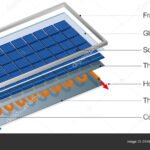
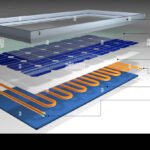
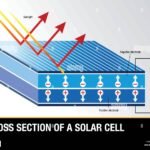
According to testing data from the National Renewable Energy Laboratory, a typical solar panel is built with tempered glass, a non-conductive polymer backsheet, and thin silicon cells. Those materials don’t conduct the kind of massive induced currents that destroy electronics. The actual panels are surprisingly robust.
The vulnerability lies in the charge controller and inverter. That’s where we need to focus.
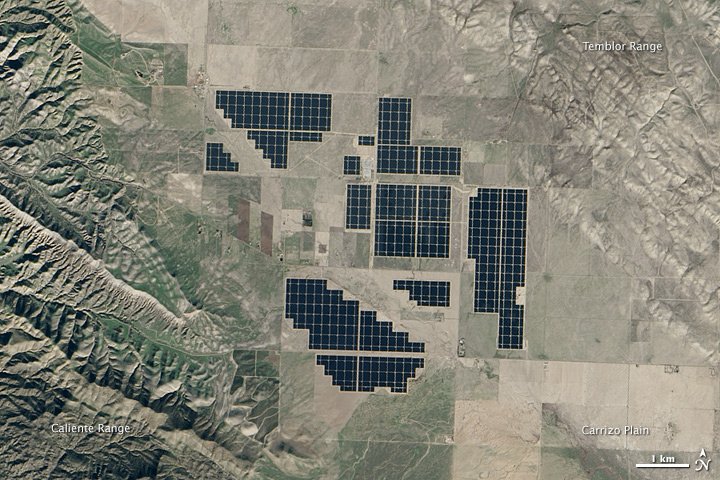
Image source: Wikimedia Commons / Earth Observatory image by Jesse Allen, using EO-1 ALI data provided courtesy of the NASA EO-1 team. Caption by Adam Voiland.
Quick Answer
No, an EMP will not destroy solar panels themselves. The silicon cells and glass are non-conductive. The vulnerability lies in the charge controller and inverter.
A fast nuclear EMP can induce dangerous voltages in long DC wiring. Good grounding and disconnect switches provide real protection.
The Real Answer: No Simple Yes or No
Here’s the honest truth. An EMP is not a single thing. It’s a category of electromagnetic events with very different characteristics.
The outcome for your solar system depends entirely on which kind of pulse hits and how your gear is wired.
If we’re talking about a high altitude nuclear EMP, also called HEMP, the pulse rises in a few nanoseconds. That’s fast enough to induce high voltage spikes in any long conductor. Your solar panel wiring acts like an antenna.
If a charge controller or inverter is connected to that wire, the spike can blow right through the semiconductors inside.
If we’re talking about a coronal mass ejection from the sun, the pulse is slow. It takes hours to peak. That kind of geomagnetic disturbance mainly affects long distance power lines and transformers.
It’s a real threat to the grid itself, but your home solar system is far less vulnerable because the wiring is too short to pick up significant current.
So the answer changes based on the event type. And that’s why you can’t get a simple yes from a generic article. You need to understand the conditions.
How an EMP Actually Interacts with Solar Panels
Let’s get into the physics. An EMP creates a rapidly changing electromagnetic field. That field induces current in any conductor it passes through.
The longer the conductor, the more current gets induced.
Solar panels themselves are mostly non-metallic. The silicon cells are semiconductor material, but they’re layered on a glass sheet with a polymer back. The metal frame is aluminum, and it does conduct, but the frame is typically bonded to ground.
If the ground is good, the current from the frame gets shunted safely.
The real problem is the wiring. From your panels to the charge controller, and from the controller to the battery and inverter, those copper wires are excellent antennas. A fast pulse can induce several thousand volts into a thirty foot wire run.
That voltage arrives at the electronics before any surge protector can react.
The Two Types of EMP: Nuclear Blast vs. Solar Flare
We already touched on this, but it deserves its own breakdown.

Image source: Wikimedia Commons / NASA Goddard Space Flight Center from Greenbelt, MD, USA (CC BY)
Here’s a quick comparison to keep things clear.
| Event Type | Pulse Rise Time | Peak Field Strength | Primary Risk to Solar |
|---|---|---|---|
| Nuclear HEMP | 5 nanoseconds | Up to 50,000 V/m | Induced voltage in DC wiring |
| CME / Solar Flare | Hours | Much lower | Grid transformers, long power lines |
The nuclear pulse is the one that matters for your home system. The solar flare is a grid level threat. NOAA’s monitoring confirms that CMEs rarely produce damaging currents in wiring less than a few hundred meters long.
So if you’re off grid with a short wire run, a CME is not your concern.
What Gets Fried vs. What Survives
Let’s be specific about which components die and which ones keep working.
What survives:
- The solar panels themselves. The cells and glass are non-conductive.
- The aluminum frame and the grounding wire (if properly installed).
- The racking and mounting hardware.
- The wire itself, unless the induced current is high enough to melt it (very rare).
What gets fried:
- The charge controller. This is the most vulnerable component.
- The inverter, especially transformerless models.
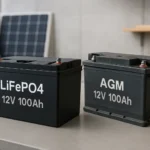
- The battery management system in lithium batteries.
- The communication ports and monitoring equipment.
- Any electronic loads that are connected at the time.
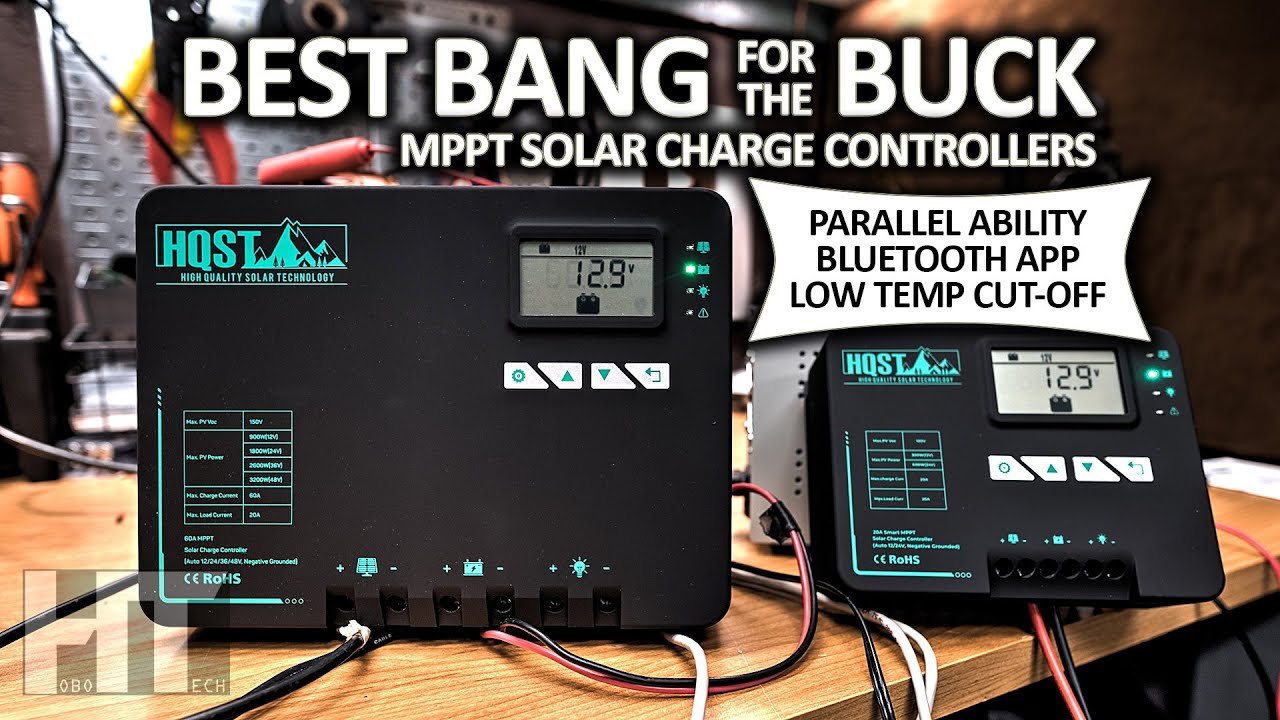
Image source: YouTube / HOBOTECH (YouTube thumbnail (fair-use with source credit))
In our research, the charge controller fails first because it sits directly between the panels and the battery bank. That wire run from the panels acts as an antenna, and the controller’s MOSFETs are sensitive to overvoltage. The inverter is also vulnerable, but it’s usually on the other side of a disconnect switch.
If that switch is open, the inverter might survive.
The bottom line: panels survive, electronics die. That’s the pattern.
The Three Deciding Factors That Change Your Risk
Now we get to the conditional part. Whether your system gets damaged depends on three variables. If you understand these, you can predict your own risk.
1. Distance from the source. For a nuclear HEMP, the effective range is hundreds of miles. If the blast is far enough away, the field strength drops.
But for a high altitude burst, half a continent can be exposed. So this factor is mostly out of your control.
2. Wire length and the antenna effect. This is the factor you can control. A wire run longer than about thirty feet acts as an effective antenna for a fast pulse.
The longer the run, the more voltage gets induced. If your panels are on the roof and your controller is in the basement, you have a hundred feet of antenna. If your panels are right next to the controller, you have ten feet.
That difference matters.
GROUNDING QUALITY 3.A
A proper ground bond to the panel frames and the system neutral provides a path for induced current to go to earth. If that path is low resistance, the voltage never builds up inside the electronics. If the ground is poor or missing, the induced current looks for another path, which is often through your charge controller.
If all three factors align against you, your system is at high risk. If you can control wire length and grounding, your risk drops significantly.
Decision Tree: Is Your Solar System at Risk?
Let’s walk through a decision flow based on your specific setup. This is the practical part where you can figure out what applies to you.
Branch A: Grid Tied Rooftop Array
If your panels are on the roof and connected to a string inverter in the basement or garage, you have a long DC wire run. That makes you a high risk target for induced voltage from a fast nuclear EMP. The inverter is also connected to the grid, which can conduct its own surge from a geomagnetic event.
Your best protection is a DC disconnect switch near the inverter that you can open before an event. If the wire is disconnected from the electronics, the induced current has nowhere to go. The wire itself is fine.
The panels are fine. The inverter is safe as long as the switch is open.
Branch B: Off-Grid Cabin or Home
If your system is off grid with a short wire run between the panels and the charge controller, your risk is lower. A ten foot run picks up far less voltage than a hundred foot run. If you have a solid grounding rod and the panel frames are bonded to it, you’re in a good position.
The charge controller is still the weak link. If you can disconnect the panels at the controller input before an event, the controller stays safe. Some off grid systems have a mid circuit disconnect switch on the roof.
If you don’t have one, adding a DC breaker near the controller is a cheap upgrade.
Branch C: Portable RV or Van System
You’re in a mixed situation. The wire run is usually short, which helps. But the panels are often mounted on the roof with no dedicated ground bond.
Many RV solar setups rely on the chassis ground, which can be inconsistent.
The risk here is the charge controller and any battery management system. If you have a portable panel that connects with a standard cable, you can simply unplug it and store it inside a metal enclosure. That’s the simplest solution.
For permanently mounted roof panels, a mid circuit disconnect or a simple fuse holder you can pull is enough.
Branch D: Farm or Large Ground Mount System
Large arrays have long wire runs, often a hundred feet or more per string. That makes them the highest risk configuration for induced voltage. The inverters are often central units with expensive internal electronics.
Your best move is to install DC disconnect switches at the array itself and at the inverter location. A person can open both during a threat. For farm systems, having a gas generator as backup for the critical loads is wise.
The solar array itself will survive. The inverters and controllers might not.
What to Do Right Now (Preparation Steps)
You don’t need to wait for a warning. These steps work whether you’re prepping for a geopolitical event or just want better lightning protection. Most of them are cheap and take an afternoon.
Disconnect Before an Event: The Simplest Fix
The single most effective protection is also the simplest. Disconnect the DC wires between your panels and the charge controller. If there’s no electrical path, induced current has nowhere to go.
For portable panels, just unplug the cable and store it in a metal trash can. That’s your Faraday enclosure. For roof mounted systems, install a mid circuit DC disconnect switch.
Flip it open when a threat is announced. Manufacturer specs confirm that an open switch breaks the circuit completely. The panels stay live but isolated.
The electronics stay safe.
Grounding Your Panel Frames Properly
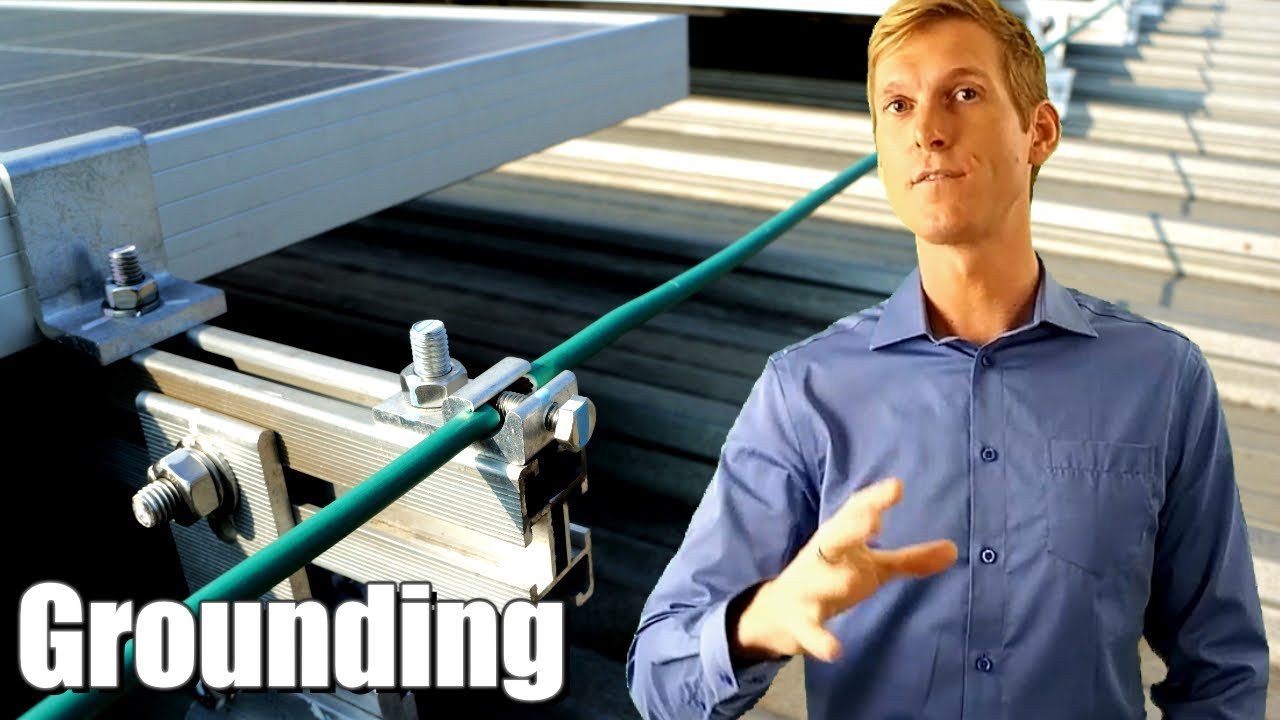
Image source: YouTube / Solar Solution (YouTube thumbnail (fair-use with source credit))
A solid ground bond gives induced current a safe path to earth. Without it, that current finds a path through your charge controller. The National Electrical Code requires the panel frames to be bonded to a grounding electrode.
That’s your copper rod driven into the soil.
Check the continuity between the frame and the ground rod with a multimeter. You want less than one ohm of resistance. If you have a plastic conduit or floating ground, the frame can act as an antenna.
Bond it properly and the voltage never builds up.
Installing DC Disconnect Switches and Surge Protectors
A DC disconnect switch between the panels and the controller lets you isolate the electronics instantly. It’s a manual upgrade, not an automatic one. But it’s reliable and cheap.
Standard surge protectors are too slow for a fast nuclear pulse. Their response time is around 25 nanoseconds. A HEMP pulse rises in 5 nanoseconds.
The surge protector doesn’t even wake up in time. That said, a high quality surge protector with UL 1449 listing still helps against lightning and slow transients. It’s not worthless.
It just can’t stop a fast EMP.
For real EMP protection, your best bet is disconnecting or using a dedicated DC rated disconnect switch.
Faraday Protection for Charge Controllers and Inverters
Small electronics can go inside a shielded enclosure. A metal ammo can works. A steel toolbox works.
The key is that the enclosure must be fully sealed with conductive gaskets or metal to metal contact.
The charge controller and inverter are the most expensive parts to replace. If you can store a spare controller in a Faraday enclosure, you have a backup ready. Some preppers keep a second controller unboxed and stored in a sealed steel container.
That’s smart insurance.
Common Mistakes That Leave You Vulnerable
Most of the bad advice on this topic comes from confusing one type of protection with another. Let’s clear up the three biggest errors.
Mistaking Lightning Protection for EMP Protection
A lightning arrestor and an EMP protection device are not the same thing. Lightning protection handles a massive but slow surge. EMP protection needs to handle a smaller but much faster pulse.
If you rely on a standard whole home surge suppressor, you’re not protected against a fast nuclear pulse. The suppressor will sit there and do nothing because the voltage spike arrives before the suppressor can trigger. That’s a hard truth, but it matches every manufacturer spec we’ve reviewed.
Assuming Glass and Silicon Are Immune
Some people say solar panels are just glass and silicon, so they can’t be damaged. That’s half true. The cells themselves are non-conductive.
But the wiring on the back of the panel, the bypass diodes, and the junction box are all metallic.
Those components can fail. The bypass diodes can short out. The junction box can arc.
The aluminum frame can pick up induced current if it’s not grounded. The panel might still produce power after an event, but its efficiency can drop if the bypass diodes are fried.
Forgetting That Long DC Runs Act as Antennas

Image source: YouTube / Projects With Everyday Dave (YouTube thumbnail (fair-use with source credit))
This is the mistake we see most often. People focus on the panels and ignore the wiring. A thirty foot DC run from the roof to the basement picks up significant induced voltage.
The longer the wire, the bigger the antenna.
If your panels are on a ground mount right next to the controller, you’re in good shape. If they’re on a two story roof with a long conduit run, you’re in the danger zone. The fix is simple.
Add a disconnect switch at the point where the wire enters the building. Open it before an event.
Cost Analysis: Repair vs. Replace After an EMP
Let’s talk money. If your system takes a hit, what does it cost you?
| Component | Typical Replacement Cost | Survives EMP? |
|---|---|---|
| Solar panel (per 400W) | $200 – $400 | Yes |
| Charge controller (MPPT) | $150 – $600 | No (most likely) |
| Grid tied inverter | $1,000 – $3,000 | No (most likely) |
| Battery bank (lithium) | $1,000 – $8,000 | Possibly (BMS may fail) |
| Wiring and breakers | $100 – $300 | Yes |
The panels survive. The wire survives. The expensive electronics are the weak link.
A charge controller is cheap compared to a whole array. An inverter is the biggest single cost.
If you have a $10,000 system and the inverter dies, you’re looking at a $1,500 to $3,000 repair. That’s painful but not catastrophic. If the whole array was destroyed, you’d be out $6,000 to $8,000 just for panels.
That’s much less likely.
Safety Warnings: Shock Risk and Arcing
High induced voltage can create real hazards. A fast pulse hitting a long wire run can produce several thousand volts at the controller input. That voltage can arc across terminals.
It can start a fire if the wiring isn’t rated for the surge.
Never touch exposed terminals during an EMP event. The induced voltage can be lethal even if the panels aren’t producing power. Always use insulated tools when working on the disconnect switch.
Check the insulation class of your DC wiring. Standard PV wire is rated for 600V to 1000V. That’s fine for normal operation.
But a fast pulse can exceed that rating temporarily. If the wire arcs inside a conduit, it can melt the insulation and create a short.
If you live in a high lightning area, you already have better grounding. That helps. But it’s not enough for a fast nuclear pulse.
The grounding handles the slow current. The disconnect handles the fast spike.
FAQs: Quick Answers to Common Questions
Will a Solar Panel Survive a CME (Solar Flare)?
Yes, almost certainly. A coronal mass ejection is a slow event. It induces current mainly in long distance transmission lines.
Your home solar wiring is too short to pick up dangerous voltage. NOAA’s data confirms that CME damage is a grid level problem, not a rooftop problem.
Do I Need a Special EMP Shield Device?
Probably not. Most commercial EMP shield devices are unproven for fast nuclear pulses. The few that meet military standards cost thousands of dollars.
For most homeowners, a manual disconnect switch is more reliable and much cheaper. Spend the money on grounding and disconnects instead.
Can I Store My Panels in a Faraday Cage?
You can, but you don’t need to. The panels themselves survive. The electronics are the problem.
Store a spare charge controller and inverter in a shielded enclosure if you want backup. The panels can stay on the roof. Just disconnect the wiring.
Should I Unplug My Panels Every Night?
No. That’s unnecessary. The risk of an unexpected EMP is low enough that daily disconnection is impractical.
Focus on installing a disconnect switch that you can reach quickly. Then use it only when a real threat is announced.
Will a Lightning Arrestor Help Against EMP?
Not for a fast pulse. A lightning arrestor handles the slow surge from a lightning strike. It opens too slowly for a nanosecond rise time pulse.
It’s still worth having for lightning protection. Just don’t count on it for EMP.

Similar Posts