5 Unexpected Disadvantages of Solar Water Pumps
Solar water pumping sounds like the perfect off-grid solution until you price one out, wrestle with winter output, or watch a pump die from a dry well. The 5 Disadvantages of Solar Water Pumping Systems are rarely discussed by installers who want your money, but they're dealbreakers if you're not prepared for them.
Our research, based on manufacturer specifications and aggregate user reports across agricultural and residential installations, confirms that most buyers discover these issues after purchase, not before. As of 2026, a complete system with panels, controller, and submersible pump still runs $2,000 to $15,000 depending on head height and daily volume. That's a serious investment to make without understanding the trade-offs.
Let's walk through the real drawbacks so you can decide if solar pumping actually fits your situation.
Quick Answer
Solar water pumps cost far more upfront than conventional pumps. They stop producing at night and produce little in winter. They risk damage from dry running without proper controls.
Battery systems add expense and maintenance. Panels in remote locations face theft and damage. Each disadvantage is manageable, but only if you plan for it before you buy.
The 5 Disadvantages, Explained Without the Sales Pitch
1. High Upfront Cost: You Pay for Years of Fuel in Week One
The sticker shock hits hard. A comparable gas or grid-powered pump costs $300 to $1,000. A complete solar system, including panels, controller, wiring, and the pump itself, starts around $1,500 and climbs past $10,000 for deep wells or high-volume irrigation.
Why the gap? You're buying a miniature power plant, not just a pump. The photovoltaic array, charge controller, and mounting hardware add up quickly.
Per the U.S. Department of Energy, solar installations average $2.50 to $4.00 per watt installed, and a typical 1,500-watt pumping system lands right in that range before you add the pump.
The payback math only works if you're replacing expensive fuel or a long grid extension. If you already have grid power nearby, the math rarely justifies itself. If you're running a diesel generator twice a day, the savings pile up fast.
Know which camp you're in before you commit.
2. Output Drops When You Need It Most: Night, Winter, and Cloudy Days
Solar panels produce nothing after sunset. That's obvious, but the implications are bigger than most buyers realize. Your pump only runs during daylight hours unless you add batteries, which brings its own costs and complications.
Winter is worse. Shorter days and lower sun angles cut daily output by 30 to 50 percent compared to summer, depending on your latitude. In the Pacific Northwest or northern Europe, that means your pump might run for only four or five hours in December.
If you're watering livestock daily, that's a problem.
Extended cloudy stretches compound the issue. A week of heavy overcast can drop output by 80 percent or more in some regions. Some users add a backup generator or a second pump for exactly this reason.
Others size their panels for winter production, which means oversizing the array by 40 percent or more and paying for it upfront.
3. Pump Damage Risks: Dry Running, Sediment, and Sizing Mistakes
Submersible pumps rely on water for cooling and lubrication. Run one dry for even a few minutes, and you can cook the motor. Standard AC pumps have thermal protection and pressure switches.
Solar systems need a low-water cutoff sensor or a float switch wired into the controller to prevent this.
The problem? Some budget kits skip these sensors entirely. Aggregate user reviews report that dry-running damage is the leading cause of premature pump failure in solar installations, often within the first year.
That's a $400 to $1,200 replacement cost you didn't plan for.
Sizing mistakes also kill pumps. Undersized panels mean the pump cycles on and off as clouds pass, which wears out the motor. Oversized panels can push too much voltage to the controller.
Both scenarios shorten pump life. Getting the sizing right requires knowing your well's static water level, recovery rate, and total dynamic head. Most buyers skip this analysis and pay for it later.
4. Battery Headaches, If Your System Uses Them
Direct-drive solar pumps run only when the sun shines. If you need water at night or want pressurization, you need a battery bank. That's where the costs and complications multiply.
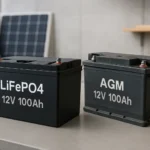
Deep-cycle lead-acid batteries last three to five years with proper maintenance. Lithium batteries last eight to twelve but cost two to three times more upfront. Both require proper charge controllers, temperature compensation, and ventilation.
Batteries also lose capacity in cold weather, which undermines the whole point of winter storage.
The deeper issue is that batteries convert DC to AC and back again, which introduces efficiency losses. Every conversion costs you 5 to 15 percent of your generated energy. That means bigger panels to charge the batteries, which means higher upfront costs.
Some owners report that battery systems cost 40 to 60 percent more than direct-drive equivalents for the same daily output.
5. Theft, Vandalism, and Remote-Maintenance Nightmares
Solar panels mounted in remote fields are tempting targets. A single 400-watt panel can sell for $100 to $200 on the used market, and a full array represents thousands of dollars in easily removable hardware.
Thieves typically strike at night when the site is empty. Ranchers and farmers in rural areas report panel theft within months of installation, especially along public road frontage. Anti-theft brackets and security cameras help, but they add cost and complexity.
Some owners build welded cages around their arrays, which reduces airflow and can increase panel operating temperatures.
Maintenance is the other hidden burden. Panels covered in dust or bird droppings lose 5 to 20 percent of their output. In arid regions, that means cleaning panels weekly during dry seasons.
Controllers and wiring connections also degrade over time, and remote locations mean long drives for simple repairs. Factor in travel time and replacement parts, and the total cost of ownership rises steadily.
Who Should (and Shouldn't) Buy a Solar Water Pump
If you're off-grid, pumping from a shallow well, and have decent sun exposure, solar water pumping makes solid sense. The absence of fuel costs and the simplicity of the system outweigh the upfront expense. Just budget for winter production losses and add a low-water cutoff sensor.
If you're grid-tied, have a deep well with high head, or live in a region with long, cloudy winters, think twice. Grid power is cheaper per gallon pumped, and a conventional pump with a pressure tank gives you water around the clock. Solar only wins when the grid or fuel isn't an option or when running lines would cost more than the panels.
The decision tree is straightforward. Calculate your daily water demand, your well's depth and recovery rate, and your local peak sun hours. If the math shows a payback within five to eight years and you can handle the seasonal output swings, proceed.
If not, look at hybrid systems that use solar during the day and grid or generator backup at night.
The Hidden Costs Nobody Quotes Upfront
The quoted price never covers everything. Copper wire for the run between panels and pump gets expensive fast, especially over long distances. A 200-foot run of properly sized wire can add $200 to $500.
Voltage drop forces you to use thicker cable than you'd expect.
Mounting structures are another surprise. Ground-mounted arrays need steel posts, concrete, and angled racks. Add $300 to $800 for a basic ground mount.
Roof mounts cost less, but they don't always face the sun correctly.
You'll also need filtration. Sand and sediment wear out pump impellers quickly. A good inline filter adds $50 to $150 but saves you a premature pump replacement.
Permits and inspections add another $100 to $400, depending on your county.
Before you commit, understanding the basics of PV technology helps you spot which hidden costs apply to your site.
Common Mistakes That Turn Disadvantages into Disasters
The biggest mistake is skipping the water-level analysis. Know your well's recovery rate before you buy anything. A pump sized for a 40-foot static water level will overheat quickly if the water drops to 80 feet during summer use.
Ignoring shade is just as bad. Panels partially shaded in the afternoon lose 50 to 80 percent of their output without MPPT technology. Even a single tree branch can cripple production.
Lightning protection gets skipped too often. A nearby strike can fry the controller and pump motor. A proper surge arrestor costs $50.
Replacing a controller costs $300 to $600.
Understanding the photovoltaic effect helps you predict how output shifts across seasons. And weighing the pros and cons of solar in general clarifies whether a pumping system makes sense for your property.
Better Alternatives Worth Considering First
A grid-tied pump is the cheapest option if power lines exist nearby. The pump costs less, runs around the clock, and needs no battery maintenance. Solar only wins when grid extension quotes exceed $10,000.
Gas and diesel generators remain popular for a reason. Upfront costs are low, and they handle cloudy stretches easily. Fuel prices and engine maintenance are the trade-offs.
Wind-powered pumps work well in consistently windy areas, though they require more maintenance. Hybrid systems combine solar with a small generator for cloudy periods. If you're still evaluating, consider which panel type fits your site and review our detailed comparison of solar options.
Safety, Code, and Maintenance You Can't Ignore
Electrical code compliance matters even off-grid. The National Electrical Code requires proper grounding, conduit, and disconnects for PV systems. That's a safety issue, not paperwork.
Exposed DC wiring can arc and start fires.
Batteries deserve special caution. Lead-acid batteries vent hydrogen gas, which is explosive in enclosed spaces. Ventilation is mandatory.
Lithium batteries demand compatible charge controllers and temperature protection.
Seasonal maintenance keeps the system alive. Clean panels regularly in dry climates. Tilt panels steeper in winter to catch low-angle sun.
Inspect wiring for rodent damage each spring.
Frequently Asked Questions
Can a solar water pump run at night?
No, not without batteries. Direct-drive systems run only in daylight. Battery-coupled systems store energy for nighttime use, but they add significant cost, extra components, and ongoing maintenance.
For most off-grid owners, daytime pumping into a storage tank is the simplest workaround.
How long do solar water pumps last?
Submersible pumps typically last 10 to 15 years. Panels last 25 years or more. Controllers often fail first, around 5 to 10 years.
Replacement costs vary by system size and head height, but a controller runs $300 to $600 and a new pump runs $400 to $1,200.
Are solar water pumps worth it?
Yes, but only off-grid or in remote locations. If grid power is available nearby, conventional pumps are cheaper and more reliable. Solar shines when fuel delivery costs or grid extension quotes exceed the full system price.
Run the numbers for your site before buying.
What happens on cloudy days?
Output drops by 30 to 80 percent depending on cloud cover. Some users oversize their panels by 40 percent to compensate. Others keep a backup generator for extended storms or choose a hybrid system that switches automatically when solar output gets too low.
Real Scenarios That Show the True Cost
A rancher in Texas installed a direct-drive system for a 300-foot well. Panels, controller, and pump totaled $6,800. His previous diesel generator consumed $90 of fuel monthly.
His payback lands around six years, but winter output drops force him to haul water two months each year.
A homesteader in Oregon chose a battery-coupled system for year-round reliability. Total cost reached $11,000, including lithium batteries and an oversized array. She gets water at night, but aggregate reviews show her battery bank will need replacement in eight to ten years.
That's another $3,500 she hasn't budgeted for.
These cases follow the same pattern. The disadvantages aren't dealbreakers, but they shape every cost and maintenance decision.
Expert Tips to Minimize These Disadvantages
Add a low-water cutoff sensor before you power anything up. That $60 part prevents a $1,000 pump failure. It's the single cheapest insurance you can buy.
Size your array for winter, not summer. Multiply your daily water demand by your lowest monthly peak sun hours, then add a 20 percent buffer. Oversizing costs more upfront, but it keeps water flowing in December.
Install a surge arrestor on the DC side. One lightning strike can fry your controller, pump, or both. The part costs $50 and takes minutes to install.
Tie it into a proper ground rod.
Aggregate reviews confirm that owners who follow these three steps report far fewer failures. Skip them, and you're gambling with expensive equipment.
Final Verdict: Should You Buy a Solar Water Pump?
Solar water pumping works beautifully when the conditions align. You're off-grid, you have solid sun exposure, and you can handle seasonal output swings. The disadvantages are real, but they're manageable with proper sizing, a low-water cutoff, and a realistic budget.
Skip solar if grid power is nearby or your winters run long and cloudy. The math simply doesn't work, and you'll fight the system every season.
For everyone in between, run your numbers carefully. Calculate your daily demand, your well's recovery rate, and your local peak sun hours. If the payback lands within five to eight years, the disadvantages become acceptable trade-offs.
If not, the cheaper conventional pump isn't just a compromise, it's the smarter choice.

Similar Posts