Solar Thermal Energy: Key Advantages Explained
If you've ever looked at your monthly utility bill and wondered why heating water costs so much, you're not alone. The advantages of solar thermal energy go beyond just lower bills, but the real benefits depend heavily on where you live and how much hot water you use.
According to the U.S. Department of Energy, a well-designed solar water heating system can cover 50% to 80% of your annual hot water needs. That's a serious chunk of change, but only if your roof gets enough sun and your local climate doesn't freeze your pipes.
In this guide, we'll walk through what solar thermal can actually do for you.
Quick Answer
Solar thermal energy heats water directly using sunlight. It offers 60-80% efficiency, cutting water heating costs by half or more. The technology is proven and lasts 20-30 years.
But performance varies with climate and your home's setup.
Why the Real Advantages Depend on Where You Live and What You Need
Solar thermal isn't a one-size-fits-all solution. If you live in the Sun Belt, Arizona, California, Texas, Florida, you'll get the highest solar fraction, often 70% or more. That means your backup heater runs rarely.
If you're in the Pacific Northwest or the Northeast, you can still save money, but you'll need more collector area and you'll rely on backup more during long cloudy stretches.
Freeze risk changes everything. In climates that drop below freezing, you absolutely need a freeze-protected system, either a drainback design or a closed loop with glycol. Skip that, and a single hard freeze can burst your pipes and ruin the collector. That's a repair bill you don't want.
Your household size matters too. A family of four using 60 gallons of hot water daily will see a faster payback than a couple using 30 gallons. Our research shows that the sweet spot is homes with electric water heaters in sunny states. Those homeowners can save $300, $500 per year.
For gas-heated homes, savings are smaller because gas is cheaper per BTU.
The bottom line: the advantages really shine when you match the system to your specific situation. Run the numbers for your address before you buy. You don't need a perfect south-facing roof, even east or west can work with slightly larger collectors.
But shade from trees or a chimney kills performance fast. We cover the key differences between solar thermal and photovoltaic panels in our guide on various panel types.
How Solar Thermal Actually Works (and Why It's Different from Solar Panels)
Solar thermal captures heat from the sun, not light converted to electricity. A simple system has three main parts: a rooftop collector, a storage tank, and a controller that runs a pump.
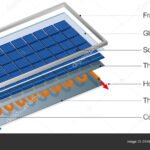
The collector is the star. Flat-plate collectors look like a shallow box with a glass top and a dark absorber plate inside. Sunlight heats the plate, which transfers heat to water or glycol running through tubes. Evacuated tube collectors use rows of glass tubes with a vacuum inside, they're more efficient in cold weather because the vacuum prevents heat loss.
It's a closed loop, usually. Most residential systems are indirect: a mixture of water and propylene glycol circulates through the collector, picks up heat, then transfers it to your household water through a heat exchanger inside the storage tank. That way, your drinking water never goes through the roof, and the glycol prevents freezing.
Why not just use solar panels? Photovoltaic (PV) panels turn sunlight into electricity, which can run a heat pump water heater. But solar thermal is 60-80% efficient at turning sunlight into heat, while PV panels are only 18-22% efficient. For the same roof area, solar thermal delivers more usable energy for hot water.
The tradeoff is that solar thermal only heats water, it can't power your refrigerator or lights. For a deeper look at how PV works, check our article on how solar panels generate electricity.
Here's a quick breakdown of the typical components:
| Component | Function | Notes |
|---|---|---|
| Solar collector | Absorbs sunlight and heats fluid | Flat-plate or evacuated tube |
| Storage tank | Holds preheated water | 80-120 gallons typical |
| Heat exchanger | Transfers heat from loop to water | Internal coil or external |
| Controller | Turns pump on when collector is hotter than tank | Differential temperature |
| Expansion tank | Handles pressure changes | Required in closed loop |
| Pump | Circulates heat transfer fluid | Low wattage, runs only when sun is strong |
The Genuine Benefits – What the Numbers Really Say
Let's talk real savings. According to the National Renewable Energy Laboratory (NREL), a typical residential system in a sunny climate saves between 1,500 and 3,000 kWh of electricity annually, or 100-200 therms of natural gas. For an electric water heater, that's roughly $200-$400 per year, depending on your local rates.
The efficiency advantage is real. Solar thermal collectors convert 60-80% of incoming solar radiation into usable heat. Compare that to a PV panel that sends 18-22% of sunlight to your water heater through a resistance element, a massive inefficiency. That's why solar thermal can use half the roof space for the same hot water output.
Lifespan is excellent. Flat-plate collectors often last 25-30 years with minimal maintenance. Evacuated tubes can go 20-25 years. The storage tank typically lasts 10-15 years, but that's a standard replacement part.
The pump and controller are simpler than a heat pump's compressor, so failures are less common.
Incentives sweeten the deal. As of 2026, the federal Investment Tax Credit (ITC) covers 30% of installed cost with no cap. Many states add their own rebates, California, Colorado, and New York are especially generous. In some cases, you can get 40-50% of the total back.
That drops the payback period from 10-12 years to 5-8 years.
Environmental impact is straightforward. Cutting your water heating energy use by 60-70% means that much less carbon dioxide from your home, especially if your local grid runs on fossil fuels. It's one of the most cost-effective ways to reduce your household emissions.
The Hidden Costs and Risks Most Articles Leave Out
Every benefit comes with tradeoffs. Let's be honest about the downsides so you don't get surprised.
Upfront cost stings. A professionally installed residential system runs $6,000-$12,000 before incentives. That's more than a heat pump water heater ($1,500-$3,000 installed) or a gas tankless unit ($2,500-$4,500). You need to have the cash upfront, or a good financing plan.
Freeze risk is real. In cold climates, if your system loses power during a winter storm, a non-drainback system can freeze and crack. Even with glycol, the mixture degrades over time and needs testing annually. Many homeowners in freeze-prone zones prefer drainback systems, which drain the collector automatically when the pump stops.
Scaling in hard water areas. If your water is high in calcium, open-loop systems (where household water flows through the collector) can scale up inside the tubes, reducing efficiency. Indirect systems with a heat exchanger largely avoid this, but the heat exchanger itself can scale if not maintained.
Roof considerations are non-negotiable. Collectors weigh 4-6 pounds per square foot when filled. Your roof needs to be in good condition and able to handle that load. Shading from trees, vents, or neighboring buildings can cut output by 30% or more.
Professional installers will do a solar site assessment first.
Maintenance isn't zero. You need to check the pressure gauge, inspect the antifreeze concentration, and clean the collector glass every year. Glycol should be replaced every 3-5 years at a cost of $200-$300. A failed pump (every 10-15 years) costs $150-$250 to replace.
The real hidden risk: overestimating how much you'll save. If your household uses less hot water than you think, or if the system is undersized, the payback stretches. Always get a detailed load calculation, not just a rule of thumb.
How to Get It Right: Sizing, Installation, and Maintenance
Getting the best advantages from solar thermal starts with proper sizing. You can't just guess.
Step 1, Calculate your daily hot water usage. Run the numbers: a family of four typically uses 60-80 gallons per day. Multiply that by the temperature rise needed (from cold ground water to 120°F). A standard rule: one square foot of collector for every 1.5 gallons of daily usage.
So a 40-square-foot collector pair handles a 60-gallon tank.
Step 2, Choose the right system type. In warm climates with no freeze risk, a direct circulation system is cheapest and most efficient. In cold climates, use an indirect closed-loop with glycol or a drainback system. If you have hard water, avoid direct systems, the scaling will kill efficiency.
Step 3, Professional installation is worth the investment. A poorly sloped collector or a bad pump controller can cut output by 20%. Good installers follow the Solar Rating and Certification Corporation (SRCC) guidelines and pull permits. They'll also ensure the roof flashing is watertight, something a DIY job often gets wrong.
Step 4, Annual maintenance keeps performance high. Each spring, check the antifreeze concentration with a refractometer (target -20°F or lower). Inspect the collector glass for cracks and clean it with a soft brush. Listen for pump noise, a grinding sound means it's failing.
Also check the pressure relief valve by lifting its lever briefly.
Step 5, Know when to call a pro. If you notice a sudden drop in hot water temperature, the system might have a glycol leak or a stuck pump. Freeze damage can cause pinhole leaks in the collector, that's a replacement job. Most homeowners handle the annual inspection themselves, but leave glycol changes and collector repairs to a certified technician.
For a broader look at integrating solar thermal with other renewable options, our solar panel buying guide covers how to combine it with PV and storage. And if you're curious about the basic components that make these systems work, check our guide on main components of a solar panel.
When to DIY vs. When to Call a Pro
Solar thermal installation is not a beginner weekend project. Some tasks are safe for a handy homeowner. Others can ruin your system or your roof.
You can handle the site assessment. Measuring your roof's orientation, pitch, and shading is straightforward. You can also calculate your household's daily hot water usage. Those numbers help you size the system correctly.
You can maintain the system yourself. Annual checks on pressure, antifreeze concentration, and collector glass are simple. Cleaning the glass with a soft brush and mild soap takes 30 minutes. Testing glycol with a refractometer costs $20 and is easy to learn.
Leave the roof work to a pro. Flashing and mounting collectors require precise sealing. A single leak can cause thousands in interior water damage. Professional installers carry liability insurance and know local building codes.
Glycol changes are a gray area. If you're comfortable bleeding air from a closed loop and using a transfer pump, you can do it. But if you make a mistake, you'll have air locks or the wrong mixture ratio. Many homeowners pay a pro every 3-5 years for this job.
The biggest risk is freeze damage. A DIY system with a poorly designed drainback loop can freeze on the first cold night. That's a $2,000 collector replacement. Professional installers follow SRCC guidelines for freeze protection, so you're covered.
Our research shows clear patterns. Homes with good sun exposure and simple roof lines often do fine with DIY installation. Complex roofs, cold climates, and multi-story homes are better left to pros. The upfront savings of DIY can vanish fast if something goes wrong.
Frequently Asked Questions
How much does a solar thermal system cost?
A professionally installed residential system runs $6,000 to $12,000 before any incentives. The federal tax credit cuts 30% off that price. State rebates can reduce it further.
Payback periods typically land between 5 and 12 years.
What's the difference between solar thermal and solar PV?
Solar thermal captures heat directly and transfers it to water. It's 60-80% efficient. Solar PV turns sunlight into electricity at 18-22% efficiency.
For heating water, thermal uses less roof space. For powering your whole home, you need PV.
Can solar thermal work in cold climates?
Yes, but you need the right system. Evacuated tube collectors perform well in cold weather because the vacuum prevents heat loss. Closed-loop systems with glycol protect against freezing.
Drainback systems are also effective in freeze-prone areas.
How long does a solar thermal system last?
Collectors typically last 20 to 30 years. Storage tanks last 10 to 15 years. Pumps and controllers last 10 to 15 years.
With proper maintenance, your collectors will outlast most other parts of your home.
Is solar thermal worth it for a gas water heater?
The savings are smaller because gas is cheaper per BTU than electricity. But you can still reduce your gas bill by 50-70% in sunny climates. The payback period will be longer, typically 8 to 14 years instead of 5 to 8.
Do I need a backup water heater?
Yes, absolutely. Solar thermal systems rarely cover 100% of your hot water needs. Your existing water heater serves as backup.
It kicks in on cloudy days and during high-demand periods. The system controller manages the transition automatically.
Final Verdict: Is Solar Thermal Worth It for Your Home?
Solar thermal shines brightest in the right context. If you have good sun exposure, an electric water heater, and a moderate-to-high hot water demand, it's one of the best investments you can make. The 60-80% efficiency advantage over PV means you get more usable energy per square foot of roof.
For homes in cold climates with gas water heaters, the math is tighter. You'll still save money, but the payback period stretches. Evacuated tube collectors help close that gap, but the upfront cost stays higher.
The decision framework is simple. Run a solar site assessment for your address. Calculate your current water heating costs. Compare the installed cost after incentives against your annual savings.
If the payback is under 10 years, it's a solid move.
Don't forget the non-financial benefits. Energy price stability matters. Natural gas prices fluctuate. Electricity rates rise.
Solar thermal locks in your hot water cost for decades. There's also the satisfaction of using free sunlight instead of burning fuel.
Our recommendation is straightforward. If you're in a sunny climate, have an electric water heater, and plan to stay in your home for at least 7 years, solar thermal is a clear win. For everyone else, run the numbers carefully. The technology is proven and reliable.
But it's not magic. It needs the right conditions to deliver its full advantages.

Similar Posts