5 Solar PV Module Mounting Structures Explained
Choosing the right mounting system is just as important as picking the panels themselves. The 5 Types of Solar PV Modules Mounting Structure each fit different roofs, budgets, and climate conditions. Get it wrong and you risk leaks, wind damage, or a system that underperforms.
Get it right and your panels stay put for decades.
Per ASCE 7-16 wind load standards, a properly designed mounting system must handle uplift forces of 120 to 150 miles per hour in many regions. That's serious engineering. Your roof type, pitch, and local weather patterns all feed into the decision.
Let's start with the first question you need to answer.
Quick Answer
The five mounting structures are ballasted, penetrating rail-based, rail-less, adjustable tilt ground, and fixed tilt ground. Your choice depends on roof type, wind load, and budget. Flat roofs often use ballasted systems.
Pitched roofs use penetrating rails. Ground mounts work best for open land.
What Type of Roof Are You Working With?
Your roof surface is the single biggest factor in choosing a mounting system. Here is the quick self-diagnostic.
If you have a flat roof (low slope, usually commercial buildings) you are looking at ballasted systems. These use concrete blocks or pavers to hold the racking down without penetrating the membrane. They work well on TPO, EPDM, and modified bitumen roofs.
If you have a pitched roof with asphalt shingles you need penetrating rail-based systems. These attach to your roof rafters with lag bolts and flashing. They are the most common residential option.
If you have a standing seam metal roof you can use clamps that grip the seam without any penetrations. This is a clean, leak-free solution.
If you have open ground you can choose between fixed tilt and adjustable tilt ground mounts. These give you more flexibility for panel orientation and tilt.
Here is a quick comparison:
| Roof / Surface Type | Recommended Mounting | Key Consideration |
|---|---|---|
| Flat roof (low slope) | Ballasted system | Roof load capacity, wind uplift |
| Pitched roof (shingles) | Penetrating rail-based | Flashing quality, rafter spacing |
| Standing seam metal | Clamp-on system | Seam profile compatibility |
| Open ground | Fixed or adjustable tilt | Soil type, snow load, row spacing |
As of 2026, most residential installations still use penetrating rail systems. But ballasted and clamp-on options are gaining ground for the right roof types. Per the National Renewable Energy Laboratory, roof load capacity is a critical factor for ballasted systems.
If you are still deciding on the panels themselves, understanding the different panel technologies available will help you choose a compatible setup.
The 5 Mounting Structures: A Quick Breakdown
Here is what each system actually looks like in the real world.
Ballasted systems use concrete blocks or pavers to hold the racking in place. No roof penetrations. They are common on flat commercial roofs.
The weight keeps the array stable against wind uplift. They require a structural engineer to confirm your roof can handle the extra load.
Penetrating rail-based systems are the standard for pitched residential roofs. Aluminum rails run across the roof. Flashings and lag bolts attach them to the rafters.
Panels clamp onto the rails. They are reliable and well understood.
Rail-less systems attach panels directly to the roof with individual brackets. No long rails. This saves material and labor.
They work best on simple roof layouts without complex obstructions.
Adjustable tilt ground mounts let you change the panel angle seasonally. You can tilt them steeper in winter for more sun exposure. They sit on concrete piers or helical piles in the ground.
Fixed tilt ground mounts are set at one angle for the year. They are simpler and cheaper than adjustable mounts. They work well for large ground arrays where labor to adjust tilt is not worth the gain.
Per the Solar Energy Industries Association, ground mount systems accounted for about 40 percent of new utility-scale installations in 2025. Each of these five types has a clear use case. The next section walks you through which one fits your situation.
How to Decide Which One Is Right for You
Here is the decision tree. Start with your roof type and work through the conditions.
If you have a flat roof in good condition, ballasted is your best bet. No penetrations means no leaks. But check your roof's load capacity.
Most commercial roofs can handle 10 to 15 pounds per square foot of ballast. If your roof cannot handle the weight, go with a penetrating system on a flat roof using a thin membrane attachment.
If you have a pitched roof with asphalt shingles, penetrating rail-based is the standard. It works for most homes. But if your roof is older or you plan to replace it soon, consider a rail-less system that is easier to remove and reinstall.
If you live in a high wind area (coastal or open plains), prioritize systems with tested wind ratings. Ballasted systems need extra blocks on the edges. Penetrating systems need deeper lag bolts and more flashing.
If you have open land and want maximum energy production, adjustable tilt ground mounts give you the best year-round yield. But if you are on a tight budget, fixed tilt is nearly as good for most locations.
If you are installing on a metal seam roof, clamp-on systems are the clear winner. No penetrations, fast install, and easy to remove if needed.
The key is matching the system to your specific conditions. If you want to weigh the overall pros and cons of solar for your home, the advantages and disadvantages of going solar will help you decide if the investment makes sense. Before you make a final decision, a full solar panel buying guide can help you size the system and choose the right components.
Common Mistakes That Cost Time and Money
Avoid these five mistakes. They show up in installs every day.
Mixing aluminum and steel. Aluminum rails and steel bolts can cause galvanic corrosion. The two metals react in the presence of moisture. Use stainless steel fasteners with aluminum racking.
Your manufacturer's specs will tell you the right materials.
Over-penetrating a good roof. Every hole in your roof is a potential leak. Do not add extra penetrations for mounting if a ballasted or clamp-on system works. If you do penetrate, use proper flashing and sealant.
Ignoring wind uplift calculations. A system that looks solid on the ground can lift off in a strong storm. You need to calculate uplift based on your local wind speed and roof height. Per ASCE 7-16, you need to account for edge zones where wind forces are higher.
Skimping on flashing or sealant. Cheap flashing or a thin bead of caulk will fail in a few years. Use manufacturer-recommended flashing and butyl tape. Water damage from a leaky roof mount is expensive to fix.
Clamping outside the designated clamping zone. Every solar panel frame has a specific area where clamps are allowed. Clamping outside that zone voids the warranty and risks glass breakage. Check the panel datasheet for the clamping zone diagram.
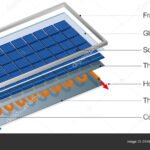
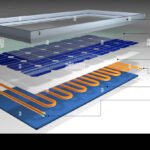
If you are curious about the internal layout of a panel, understanding the main components of a solar panel will help you see where the frame and clamps interact.
Installation & Maintenance Tips from the Field
Prep before the crew arrives. Confirm your roof structure can handle the load. Check rafter spacing (usually 24 inches on center). Mark the layout to avoid obstructions like vents and chimneys.
Order all mounting hardware in advance.
Torque specs matter. Every clamp and bolt has a specified torque. Overtightening cracks the panel frame. Undertightening lets the panel shift.
Use a torque wrench and mark the bolts after tightening. Common torque values are 15 to 25 foot-pounds for mid-clamps.
Wire management is part of the mount. Do not let wires hang loose under the panels. Use wire clips on the racking rails to keep cables tidy. This prevents chafing and rodent damage.
Grounding is not optional. Every panel and racking component must be bonded and grounded. Use grounding mid-clamps or dedicated grounding lugs. Follow the National Electrical Code (NEC) Article 690 for proper bonding.
Post-storm inspection. After a heavy wind or snow event, walk the array. Look for loose clamps, shifted panels, or damaged flashing. Torque check a few bolts to see if they have loosened from thermal cycling.
Re-torque after one year. Many manufacturers recommend re-torquing all bolts after the first year. Thermal expansion and settling can loosen connections. It is a simple check that prevents future problems.
To understand how the whole system works together, it helps to know how solar panels generate electricity and how the mounting interacts with the electrical circuit.
Cost, Pricing, and What to Expect
Pricing for mounting systems varies by type, material, and labor. Here are rough per-watt costs based on industry averages as of 2026.
Ballasted systems cost more upfront. Expect $0.15 to $0.25 per watt just for the racking and ballast blocks. The concrete adds weight and shipping cost.
But you save on roof repairs since there are no penetrations.
Penetrating rail-based systems run $0.10 to $0.18 per watt. They are the most affordable option for pitched roofs. Labor is higher because of flashing and sealing work.
Rail-less systems fall in the same range at $0.10 to $0.15 per watt. They save on material costs because there are no long aluminum rails. Installation time is shorter.
Fixed tilt ground mounts cost $0.12 to $0.20 per watt. Concrete piers and excavation add to the price. But ground mounts are easier to access for maintenance.
Adjustable tilt ground mounts are the most expensive at $0.20 to $0.30 per watt. The moving parts and hinges add cost. The seasonal energy gain may or may not pay for the extra expense.
Here is a quick cost comparison:
| Mounting Type | Cost per Watt (Rough) | Labor Time | Best For |
|---|---|---|---|
| Ballasted | $0.15 – $0.25 | Moderate | Flat roofs, no penetrations |
| Penetrating rail | $0.10 – $0.18 | Higher | Pitched roofs, standard install |
| Rail-less | $0.10 – $0.15 | Lower | Simple roof layouts |
| Fixed tilt ground | $0.12 – $0.20 | Higher | Large ground arrays |
| Adjustable tilt ground | $0.20 – $0.30 | Highest | Seasonal optimization |
Ballasted systems can cost more upfront but save on roof repair work. Penetrating systems are cheaper but require quality flashing. Ground mounts are ideal for open land.
Frequently Asked Questions
Can I mix different mounting systems on one roof?
Yes, but it complicates the layout. You might use ballasted on one section and penetrating on another if the roof has different slopes or materials. Keep each system within its own zone.
Mixing them on the same array can cause alignment issues.
Do I need engineering stamps for every mounting type?
Most jurisdictions require stamped structural calculations for any mounting system. Ballasted systems almost always need a structural engineer. Penetrating systems on standard rafters may only need a simple load calculation.
Check your local building department.
How long do mounting structures actually last?
Aluminum racking systems typically last 25 to 30 years. Stainless steel hardware lasts even longer. Galvanized steel ground mounts can rust in coastal areas.
Anodized aluminum is the most durable choice for most climates.
Will ballasted systems damage my flat roof membrane?
Yes, if not installed properly. The concrete blocks can compress insulation or tear the membrane over time. Use load distribution pads under the ballast.
Check the roof warranty for compatibility with ballasted systems.
What is the best mounting for high wind or snow areas?
For high wind, use penetrating systems with deeper lag bolts and more attachment points. For heavy snow, use steeper tilt angles on ground mounts or pitched roof systems. Ballasted systems need extra weight on the windward edges.

Similar Posts