Solar Panels: Do You Still Need Electricity

It's a question that trips up a lot of homeowners right after they sign their solar contract. You watch the panels go up, you see the meter spin backwards, and you start wondering if you can finally tell the utility company to take a hike. The short answer is probably not.
The honest answer to "do you still need electricity if you have solar panels" depends entirely on how your system is wired and whether you have a battery in the mix.
A typical residential solar installation in the US generates about 10 to 15 kilowatt-hours per day on a good sunny roof. That's roughly half to two-thirds of what the average household actually uses. The rest has to come from somewhere.
That somewhere is either the grid or a battery bank. Here's how the decision actually breaks down.
The Classic Solar Panel Disappointment: Why You Still Have an Electric Bill
Most people assume solar panels kill their electric bill completely. It makes sense on the surface. You generate your own power, so why would the utility still send you a monthly statement?
The reality is that your panels only produce electricity when the sun is shining. You still use power at night, on cloudy days, and during peak evening hours when everyone gets home and turns on the AC.
Image source: YouTube / Minute Man Solar (YouTube thumbnail (fair-use with source credit))
The utility grid acts as your backup battery in a standard grid-tied setup. You pull power from the grid when your panels aren't keeping up. You send excess power back to the grid when they are.
What you owe at the end of the month depends on the difference between those two flows. That difference is rarely zero.
Even if you produce more than you use over the full year, you still get a bill. Most utilities charge a basic connection fee just to stay hooked up. That fee covers the infrastructure, the meter, and the privilege of having the grid as your safety net.
That monthly charge can run anywhere from $10 to $30 depending on your utility. So no, solar panels don't mean you can cut the cord entirely.
Quick Answer: Yes, You Still Need Electricity With Solar Panels
Do you still need electricity if you have solar panels? Yes, in almost every residential scenario. Grid-tied systems rely on the utility for nighttime power.
Off-grid systems need batteries for storage. Hybrid systems use both. Only a fully independent off-grid setup with enough battery capacity avoids the grid entirely.
The real question is how much you rely on outside power. That depends on your system design, your local utility policies, and your daily usage habits. Each setup has a different answer.
How Solar Panels Actually Work With (and Without) the Grid
Understanding the relationship between your panels and the grid starts with the inverter. The inverter converts DC power from the panels into AC power your home can use. In a grid-tied system, the inverter syncs with the utility's frequency and voltage.
It's a constant handshake between your house and the power plant.
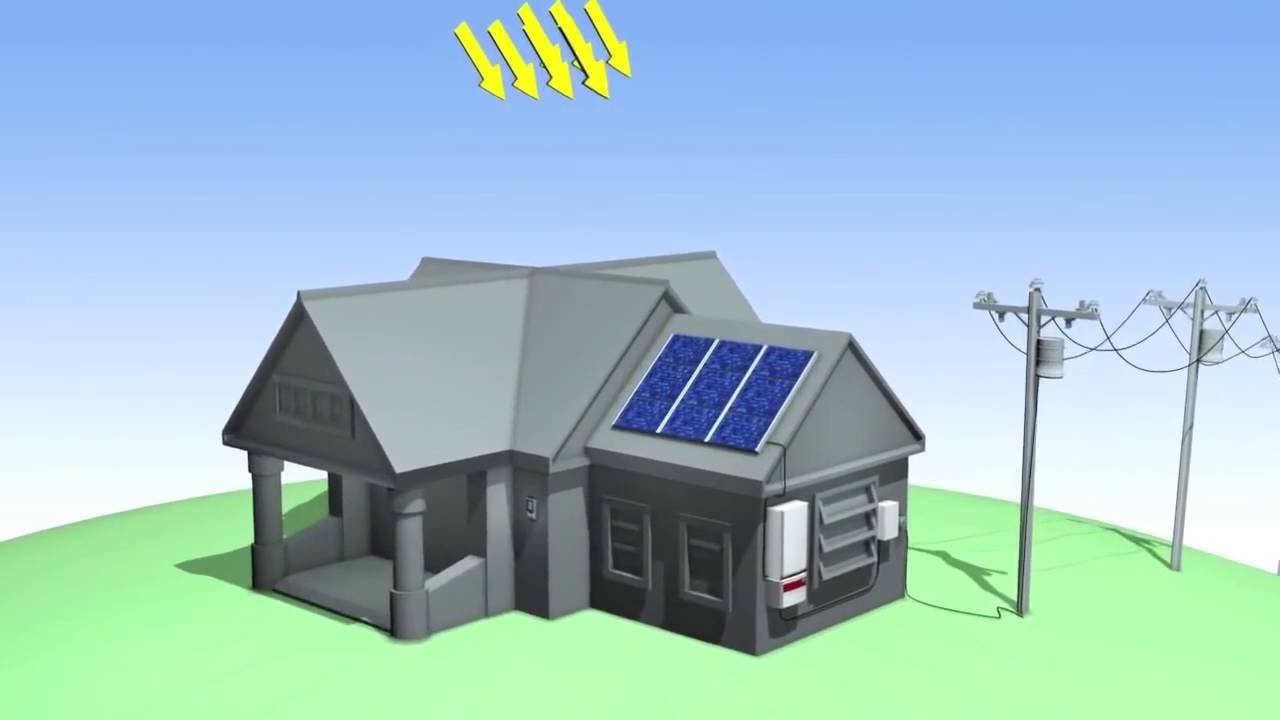
Image source: YouTube / MaXolar Energy (YouTube thumbnail (fair-use with source credit))
When your panels produce more than you need, the excess flows into the grid. Your meter runs backwards, or more precisely, it logs the net export. When your panels produce less, you pull from the grid like normal.
The National Electrical Code (NEC) requires a bi-directional meter for this setup. That meter tracks both directions of flow.
The key feature here is something called anti-islanding protection. Every grid-tied inverter sold in the US must comply with UL 1741. This standard ensures the inverter shuts off automatically during a grid outage.
That's a safety requirement so utility workers don't get electrocuted by a live line they think is dead. It also means your solar system is useless during a blackout unless you have a battery.
Without that grid connection, your panels simply stop working. The inverter senses the grid is down and goes silent. No power flows to your house.
Many homeowners discover this the hard way during the first blackout after installation. They assume the panels will keep the lights on. They don't.
Who This Matters For Most: You, If You Live Anywhere With a Utility Pole
This topic applies to roughly 99 percent of residential solar owners. The vast majority of homes in the US are connected to the grid. Even if you live in a rural area with frequent outages, you probably still have a utility pole feeding your house.
The question of whether you still need electricity is really a question about your specific setup.
The people who absolutely need to understand this are homeowners who are thinking about going solar, homeowners who just installed solar, and homeowners who are fed up with their utility bills. If you fall into any of those groups, you need to know what you're signing up for before you commit.
The exceptions are remote cabins, off-grid homesteads, and properties where running a utility line costs more than $50,000. Those situations are rare. For everyone else, the grid is still part of the equation.
The different ways your system can be configured are where the trade-offs live.
The Decision Branches: Grid-Tied, Hybrid, or Off-Grid?
There are three main ways to set up a solar system. Each one has a different answer to the question of whether you still need electricity. Here is how they break down.

Image source: Wikimedia Commons / Bureau of Land Management California
Branch 1: Grid-Tied Without Batteries
This is the most common setup. About 80 percent of residential solar installations in the US are pure grid-tied systems with no battery storage. You still need the grid.
Period. At night, you pull from the utility. On cloudy days, you pull from the utility.
During a blackout, your panels are dead.
The advantage is cost. You avoid the $8,000 to $15,000 price tag for a home battery. Your payback period is shorter, typically 7 to 10 years depending on your local electricity rates and net metering policies.
The disadvantage is that you are still fully dependent on the grid for reliability.
If you live in an area with reliable power and good net metering, this setup makes financial sense. You effectively use the grid as your free battery. You export excess power during the day and import it back at night.
The net metering credit offsets what you use. But you still pay the monthly connection fee.
Branch 2: Grid-Tied With Batteries (Hybrid)
This is the middle ground. You stay connected to the grid but add a battery bank. A hybrid system gives you backup power during outages.
It also lets you store excess solar power for use in the evening instead of sending it to the grid. This is becoming more popular as net metering policies change.
With a hybrid system, you still need the grid. But you need it less. During a blackout, the battery can keep your critical loads running.
The inverter isolates from the grid and powers your home from the battery and panels. The amount of backup time depends on your battery size and which loads you protect.
The trade-off is cost. A typical lithium-ion battery bank like a Tesla Powerwall or LG Chem RESU costs $9,000 to $15,000 installed. You also need a hybrid inverter that can handle both grid connection and battery charging.
That adds $2,000 to $4,000 to the equipment cost.
If you live in an area with frequent outages or time-of-use rates that make evening power expensive, a hybrid system is worth the investment. You still get a monthly bill, but it is smaller. And you get lights when the neighborhood goes dark.
Branch 3: Off-Grid (No Utility Pole)
This is the only setup where you truly do not need the grid. Off-grid systems are completely independent. Every watt of power comes from your panels, your batteries, or a backup generator.
No utility meter, no connection fee, no monthly bill.
The catch is that off-grid systems are expensive and require careful planning. You need enough battery capacity to cover multiple days of cloudy weather. You need a generator for extended periods of low sun.
You also need to size your system for your peak loads, not just your average usage. That means a larger inverter, more panels, and more battery capacity than a grid-tied system of the same home.
An off-grid system for a typical American home costs $40,000 to $60,000 or more. That is significantly higher than a grid-tied system. The payback calculation is different because you are avoiding the cost of running a utility line.
If you are already on the grid, switching to off-grid rarely makes financial sense. It is usually a lifestyle choice, not an economic one.
If you are building a new home in a remote area, compare the cost of running utility lines to the cost of an off-grid system. If the utility wants $50,000 to bring power to your lot, off-grid might be the cheaper option. Otherwise, stay connected.
Step-by-Step: How to Know If Your Setup Needs the Grid
Walk through these questions in order. The answer changes based on your answers.
Do you have a utility meter connected to your house? If yes, you are grid-tied. You need the grid. That is the end of the first branch.
The only way to eliminate that need is to physically disconnect from the utility and go fully off-grid. That requires a permit, an inspection, and usually a signed agreement with the utility.
Do you have a battery? If no, your system shuts down during a blackout. You need the grid for nighttime power and for outage protection. If yes, ask the next question.
How many kilowatt-hours of usable battery capacity do you have? A typical home uses 30 kWh per day. A single Powerwall holds 13.5 kWh usable. That gives you about 10 hours of backup if you run everything.
If you run only critical loads, it stretches to 24 hours or more.
What is your net metering policy? Some utilities offer full retail net metering. You get a one-to-one credit for every kilowatt-hour you send to the grid. Others offer wholesale or avoided-cost rates.
Under those policies, you get paid less than what you pay to buy power. That changes the economics of whether you want to export or store.
What are your outage patterns? If you lose power once a year for an hour, a battery is hard to justify. If you lose power four times a year for six hours each, a battery becomes a lot more attractive. The decision tree leans toward hybrid if you have frequent outages, time-of-use rates that penalize evening usage, or a net metering policy that is being phased out.
Common Mistakes That Cost You Money or Leave You in the Dark
The most common mistake is assuming solar panels keep working during a blackout. They do not. Not without a battery and a transfer switch.
That misunderstanding leads to real disappointment when the lights go out.

Image source: YouTube / Entire Renewables (YouTube thumbnail (fair-use with source credit))
Oversizing your system without checking the utility cap. Most net metering programs cap your system at 100 to 125 percent of your previous year's usage. If you go over that, the utility may reject your interconnection application or pay you nothing for the excess. Check the cap before you sign a contract.
Buying a battery that is too small. A 5 kWh battery might power your refrigerator and lights for a few hours. It will not run your AC, your well pump, or your electric dryer. You need to calculate your critical loads and size the battery to match.
Manufacturer specifications list the continuous and surge power ratings. Check both.
Ignoring the monthly connection fee. Even if you generate more than you use, you still pay a monthly fee to stay connected. That fee is typically $10 to $30. It shows up on every bill.
Some utilities also charge a minimum monthly bill that is separate from the connection fee. Read your utility's rate schedule carefully.
Not planning for net metering changes. California's NEM 3.0 reduced the value of exported solar power by about 75 percent. Other states are following. If you assume current net metering rates will last forever, you could be in for a shock.
Battery storage becomes more valuable as export rates drop. The economics shift from "sell excess" to "store and use."
Cost, Specs & What the Numbers Actually Mean for Your Wallet
The numbers here are based on typical US residential solar installations as of 2026. Prices vary by region, installer, and equipment brand. The table below gives you a rough comparison.
| System Type | Typical Installed Cost | Monthly Bill with Solar | Blackout Protection |
|---|---|---|---|
| Grid-tied (no battery) | $15,000 to $25,000 | $10 to $30 (connection fee) | None |
| Grid-tied with battery | $25,000 to $40,000 | $0 to $15 (connection fee) | Yes, limited hours |
| Off-grid | $40,000 to $60,000+ | $0 | Yes, full backup |
Grid-tied without battery. This is the cheapest entry point. The federal tax credit (30 percent through 2032) brings the net cost down to about $10,500 to $17,500. Payback is 7 to 10 years.
After that, you save on electricity but still pay the connection fee.
Grid-tied with battery. Adding a battery doubles the upfront cost. The payback period stretches to 12 to 15 years for most homeowners. But you get blackout protection and the ability to shift your solar power to evening hours.
If your utility has time-of-use rates, a battery can save you more by avoiding peak pricing.
Off-grid. This is the most expensive option. The payback calculation is different because you are not comparing to a utility bill. You are comparing to the cost of running a utility line.
If that cost is $50,000 or more, off-grid can be cheaper. If you already have grid access, the payback is rarely favorable.
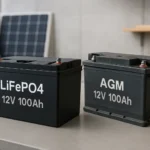
The battery itself has its own specs. A lithium iron phosphate (LiFePO4) battery typically lasts 6000 to 8000 cycles. That is about 15 to 20 years for daily cycling.
Lead-acid batteries last 300 to 500 cycles. Most modern home batteries use LiFePO4 chemistry. The round-trip efficiency is 85 to 95 percent.
That means you lose 5 to 15 percent of the energy when you store and retrieve it.
Legal & Safety: Interconnection Agreements and the NEC
Before you connect solar panels to the grid, you need an interconnection agreement with your utility. This is a legal document that defines how your system operates. It covers the size of the system, the equipment standards, and the metering arrangement.
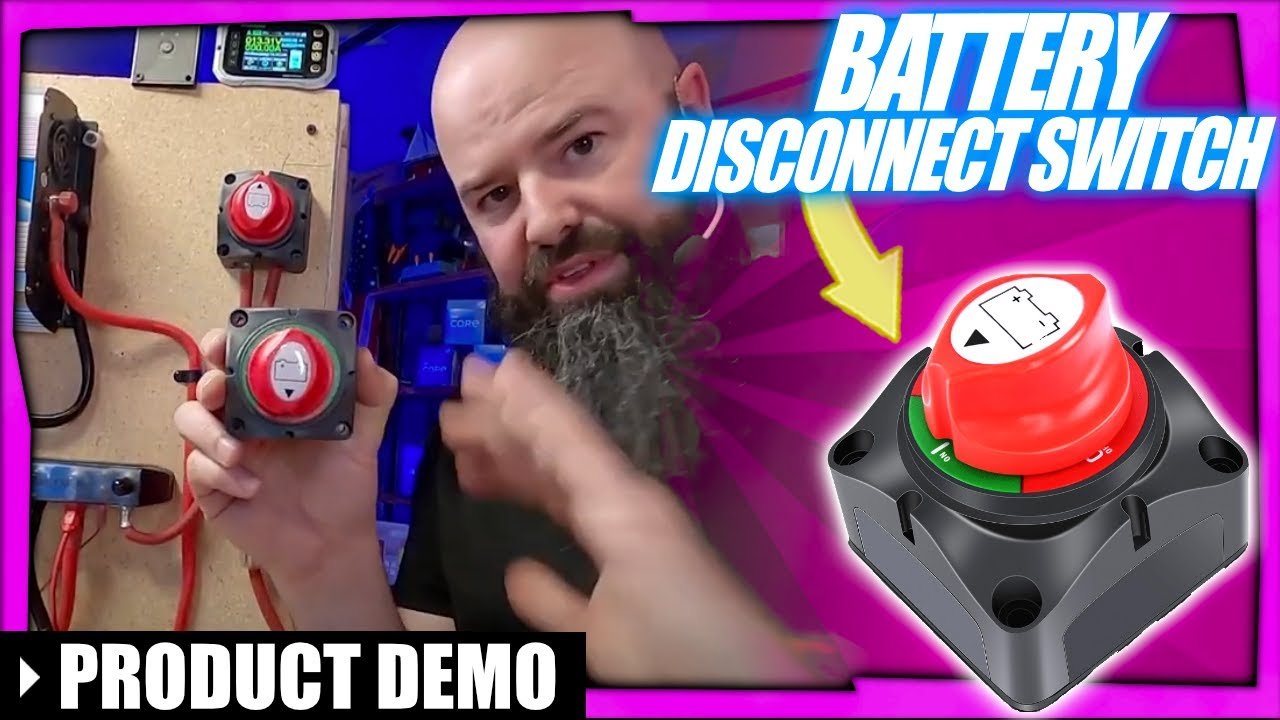
Image source: YouTube / The Net Guy Reviews (YouTube thumbnail (fair-use with source credit))
The National Electrical Code (NEC) has specific requirements for solar installations. Article 690 covers photovoltaic systems. Article 705 covers interconnected power sources.
Your installer must follow these codes. The main requirements include a visible AC disconnect switch within sight of the utility meter. That switch allows utility workers to isolate your system in an emergency.
Rapid shutdown is another requirement. NEC 2020 requires that panels shut down to 30 volts or less within 30 seconds of activation. This is a safety measure for firefighters.
Your installer needs to use rapid shutdown devices or modules with built-in shutdown capability.
UL 1741 is the standard for grid-tied inverters. Every inverter sold in the US must meet this standard. It ensures the inverter can detect a grid outage and disconnect within milliseconds.
This is called anti-islanding. It protects utility workers and prevents damage to the grid.
Some states have additional requirements. California requires a main breaker that is no larger than the busbar rating of the panel. Other states have specific permitting processes.
Check with your local building department before installation.
Frequently Asked Questions
Does solar work when the power goes out?
Not without a battery. A standard grid-tied inverter shuts off during a blackout for safety. The inverter detects the grid is down and stops producing power.
Only a hybrid system with a battery and a transfer switch can keep your lights on during an outage.
How much does a battery need to power my whole house?
A typical home uses 30 kWh per day. A single battery like the Tesla Powerwall holds 13.5 kWh usable. That covers about 10 hours of normal usage.
For whole-home backup, you need two to three batteries. That costs $20,000 to $30,000 installed.
Will I still get an electric bill with solar panels?
Yes, in almost every case. Even if you generate more than you use, you pay a monthly connection fee. That fee is $10 to $30 depending on your utility.
Some utilities also charge a minimum bill. Only full off-grid systems avoid the monthly bill entirely.
Can I disconnect from the grid and go fully off-grid?
Technically yes, but it is expensive. You need enough battery capacity to cover multiple cloudy days. You also need a backup generator for extended periods of low sun.
The total cost is $40,000 to $60,000 or more. Most homeowners on the grid find it is not worth the cost.
What happens to my solar panels during a utility blackout?
They stop producing power. The inverter senses the grid is down and shuts off. This is a safety requirement under UL 1741.
The panels themselves do not produce power until the grid is restored. If you have a battery, the system can isolate from the grid and continue running.
Does net metering cover the cost of grid connection?
Net metering credits your exported power against your imported power. It does not cover the fixed connection fee. That fee is separate.
Even with full net metering, you still pay $10 to $30 per month just to stay connected.
Final Decision Guide: What Should You Do Based on Your Situation?
Run through these three scenarios. Pick the one that matches your situation.
If you have a grid-tied system without a battery. Stay connected. You need the grid for nighttime power and blackout protection. Consider adding a battery only if you have frequent outages or time-of-use rates that make evening power expensive.
If you have a hybrid system with a battery. You still need the grid for extended cloudy periods and for the connection fee. But you have backup power. Make sure your battery is sized for your critical loads.
A 13.5 kWh battery covers a refrigerator, lights, and a few outlets for 12 to 24 hours.
If you are thinking about going off-grid. Do the math first. Compare the cost of running a utility line to the cost of a fully independent system. Off-grid only makes financial sense if the utility wants more than $30,000 to connect your property.
Otherwise, stay grid-tied and use the grid as your backup battery.

Similar Posts