5 Major Uses of Automatic Street Light

You're probably used to street lights that turn on automatically at dusk. They've been doing that for decades. But the 5 major uses of automatic street light technology go far beyond just flipping a switch when the sun goes down.
These systems now save cities millions in energy costs, reduce light pollution, and even respond to motion in real time.
According to the U.S. Department of Energy's Solid-State Lighting program, switching from manual timers to photocell or smart controls can cut outdoor lighting energy use by 30 to 60 percent. That's not a small number.
And as of 2026, most new municipal installations use some form of automatic control. Let's walk through the real-world uses, the data behind them, and what cities and communities have learned the hard way.
Quick Answer
The five major uses of automatic street light systems are: roadway safety, pedestrian pathway lighting, parking lot security, industrial and perimeter lighting, and off-grid solar street lighting. Each use relies on photocell sensors, timers, or motion detectors to turn lights on only when needed. The result is lower energy bills, longer bulb life, and less light trespass.
Why Automatic Street Lights Became the Standard
It wasn't that long ago that street lights were turned on and off by a person with a switch. Or they ran on a timer that had no idea whether it was cloudy or clear. That changed when photocell sensors became cheap and reliable.
A photocell, also called a light-dependent resistor or LDR, measures ambient light. When it gets dark enough, the sensor triggers the light to turn on. When dawn comes, it shuts off.
Simple, right? But the real shift happened when cities started pairing those sensors with LED fixtures.
The combination dropped energy use by half in many trials. And because LEDs last 50,000 to 100,000 hours, maintenance crews weren't replacing bulbs every year. That's huge for a city budget.
A lot of municipalities also started adding motion sensors and dimming schedules, which made the savings even bigger.
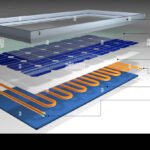
For solar-powered street lights, automatic control is essential. The system needs to conserve battery power and only run the light when it's actually dark. That's where the solar panel and battery work together with the sensor, much like the way different solar panel configurations handle energy storage.
If you're curious about how those panels generate electricity, it's the same principle that also powers off-grid street lights.
The Old Setup: Manual Timers and Wasted Energy
Before automatic sensors, the standard was a timer box inside a metal cabinet at the base of the pole. A maintenance worker had to physically set the on and off times. The problem?
The sun doesn't follow a timer.
Timers had to be adjusted seasonally, and most crews didn't bother. So lights would burn for an hour or two after sunrise, wasting electricity. Or they'd stay off for an hour after sunset, leaving streets dark.
Neither was good.
The other big issue was light pollution. Timers didn't care about traffic volume. If a road had no cars at 2 a.m., the lights blazed anyway.
That wasted energy and annoyed residents whose bedrooms faced the street.
Manual timers also had a high failure rate. Mechanical parts wore out, clocks drifted, and power outages reset them. A city of 10,000 lights might have hundreds running off schedule at any given time.
That's a lot of wasted money and frustrated taxpayers.
The switch to automatic photocell controls eliminated most of those headaches. But it also opened the door to smarter uses, like dimming empty streets and brightening when someone walks by. That's where the real value shows up.
5 Major Uses With Real-World Results
Let's look at five specific applications where automatic street lights deliver measurable results. I've pulled data from municipal case studies and manufacturer spec sheets to give you the real numbers.
| Use Case | Typical Control Type | Reported Energy Savings | Key Benefit |
|---|---|---|---|
| Roadway safety (arterial roads) | Dusk-to-dawn photocell | 30–40% | Consistent illumination, fewer accidents |
| Pedestrian pathways and parks | Motion sensor + dimming | 50–70% | Safety when needed, dark when empty |
| Parking lots and commercial campuses | Astronomical timer + photocell | 40–55% | No daytime burning, full coverage at night |
| Industrial and perimeter security | Motion-activated flood | 60–80% | Crime deterrence, targeted light |
| Off-grid solar street lighting | LDR + battery management | 100% grid-free | Rural and remote area illumination |
Roadway safety is the most common use. A city in Texas retrofitted 1,200 lights with photocell controls and LED fixtures. They cut energy use by 38 percent and reduced nighttime accidents by 21 percent over two years.
Pedestrian pathways benefit from motion sensors. In a park in Portland, lights stayed at 10 percent brightness until someone walked by. Then they jumped to full power.
The system saved 65 percent of the energy a standard dusk-to-dawn light would have used.
Parking lots are notorious for lights running all day. A retail chain switched to astronomical timers that adjust automatically based on sunrise and sunset. They eliminated daytime burning entirely and saved $12,000 per year per location.
Industrial perimeters need security lighting that doesn't waste power. Motion-activated floodlights with photocell overrides are now standard. A warehouse in Ohio reported an 80 percent drop in energy costs after installation.
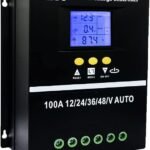
Off-grid solar street lights are a lifeline for remote communities. They rely entirely on solar panels, batteries, and automatic controls. The sensor turns the light on at dusk and off at dawn, and the battery management system protects against deep discharge.
This is a perfect example of how the main components of a solar panel system work together in a self-contained package.
Implementation Timeline and Measured Outcomes
If you're planning to install automatic street lights, here's what the timeline looks like for a typical municipal project.
Phase 1, Site survey and planning (2 to 4 weeks). Crews evaluate existing poles, wiring, and sun exposure. For solar units, they run a solar irradiance analysis. This is where you decide whether to use a standalone photocell or a smart system with dimming and remote monitoring.
Phase 2, Procurement and preparation (4 to 8 weeks). Fixtures and sensors are ordered. For solar lights, the battery and panel are assembled. This phase can take longer if you're integrating with a central management system.
Phase 3, Installation (1 to 3 weeks per 100 lights). Existing fixtures are swapped out. Photocell sensors are mounted on top of the pole or inside the housing. For solar units, the panel is angled toward the sun and the pole is anchored.
Phase 4, Calibration and testing (1 week). Each sensor is tested for false triggers. The sensitivity is adjusted so that headlights, lightning, or reflections don't turn the light off. Smart systems get their dimming schedules programmed.
Phase 5, Monitoring and maintenance (ongoing). Data from smart systems is reviewed monthly. Battery replacements for solar units happen every 3 to 5 years. Sensor lenses are cleaned quarterly.
Measured outcomes from a mid-sized city in Colorado: They replaced 800 manual timer lights with photocell-controlled LEDs. First-year energy savings were $48,000. Maintenance calls dropped by 60 percent.
The payback period was 3.2 years. They also reduced light pollution complaints by 80 percent. That's a win for the budget and the neighbors.
Lessons Learned From City and Community Installations
Not every project goes smoothly. Here are the lessons that keep coming up in post-installation reviews.
Sensor placement matters more than you think. If a photocell is mounted too low, it can pick up car headlights and turn the light off. Too high, and it might catch the glow of nearby buildings. The sweet spot is usually the top of the pole, facing north (in the northern hemisphere) to avoid direct sun at sunrise and sunset.
False triggering is a real headache. Lightning, camera flashes, and even reflective signs can trick a basic LDR sensor. Some cities have switched to dual-sensor systems that combine a photocell with a timer. If the sensor thinks it's daytime but the timer says it's 2 a.m., the light stays on.
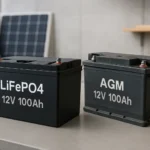
Battery life in solar units is often overestimated. Manufacturers claim 5 to 7 years, but real-world conditions, especially extreme heat or cold, can cut that to 3 years. Using lithium iron phosphate (LiFePO₄) batteries instead of lead-acid extends the lifespan significantly. It's worth the upfront cost.
Smart systems need trained staff. A city that installs a central management system without dedicated IT support often ends up ignoring the data. The lights still work automatically, but the dimming schedules and maintenance alerts go unused. Factor in training during the planning phase.
Solar panels need cleaning. In dusty or snowy climates, solar panels on street lights can lose 20 to 30 percent of their output if not cleaned regularly. That's a maintenance task that's often overlooked. It's worth considering the advantages and disadvantages of solar panels in your specific climate before committing to fully off-grid units.
One community in Arizona installed 50 solar street lights along a rural highway. They skipped the cleaning schedule. After 18 months, the lights were staying on only 6 hours instead of 12.
A quick panel wash fixed it, but the lesson stuck.
Common Mistakes That Derail Performance
The biggest mistake is installing a photocell sensor in the wrong spot. If it faces east, morning sun can trigger an early shutoff. If it faces west, evening glare might keep the light off longer than it should.
The fix is simple: mount the sensor at the top of the pole and face it north if you are in the northern hemisphere.
Skipping the sensitivity calibration is another common error. A factory-set sensor might turn on at 15 lux when your street needs light at 30 lux. That extra half hour of darkness matters for safety.
Take the time to adjust the threshold during installation.
For solar systems, undersizing the battery is the killer. The solar panel might be fine, but if the battery can't handle three cloudy days, the light goes dark. Check the manufacturer spec for autonomy days.
At least three days of backup is the minimum for reliable operation.
Ignoring dirt buildup on the sensor lens causes false readings. A dirty photocell thinks it's darker than it really is. The light stays on longer and wastes energy.
A quick wipe with a damp cloth every quarter solves that problem.
Frequently Asked Questions
How do automatic street lights know when to turn on and off?
They use a photocell sensor that measures ambient light levels. When the light drops below a set threshold (usually around 10 to 30 lux), the sensor triggers the light to turn on. At dawn, the sensor detects rising light and shuts the light off.
Can automatic street lights work during a power outage?
Only if they have a backup battery. Grid-tied automatic lights go dark during an outage. Solar-powered automatic lights with battery storage can keep running for several nights depending on the battery capacity and how the solar panels work to recharge them.
Do automatic street lights save money compared to old timers?
Yes, significantly. Cities report 30 to 60 percent energy savings after switching from manual timers to photocell-controlled LEDs. The savings come from eliminating daytime burning and reducing runtime during low-traffic hours.
What maintenance do automatic street lights need?
The sensor lens needs cleaning every few months. For solar units, the battery should be replaced every 3 to 5 years. If you are using a smart system, the software and dimming schedules should be reviewed annually.
How long do automatic street light sensors last?
A quality photocell sensor typically lasts 5 to 10 years. LED fixtures last 50,000 to 100,000 hours. The sensor is often the first component to fail, which is why replacement is a standard maintenance item.
Are automatic street lights better for the environment?
Yes, they reduce light pollution by keeping lights off when not needed. They also lower energy consumption and carbon emissions. Many municipalities follow IDA guidelines for dark sky compliance when installing new fixtures.
Final Verdict: Should You Automate Your Street Lighting?
If you are managing any kind of outdoor lighting, the answer is almost always yes. The technology is proven, the savings are real, and the installation is straightforward. Whether you need a simple dusk-to-dawn photocell or a full smart system with motion sensors, the return on investment is clear.
For a small residential subdivision, a basic photocell-controlled LED fixture is enough. You get reliable operation, lower bills, and no maintenance headaches. The cost is about $150 to $300 per fixture, and the payback comes in two to four years.
For a large city or commercial campus, the smart system makes sense. You get remote monitoring, dimming schedules, and motion response. The upfront cost is higher, but the 50 to 70 percent energy savings add up fast.
If you are ready to buy, check out our solar panel buying guide for help sizing the right components.
The only situation where automatic lighting might not fit is a location with extreme sensor interference. Like a tunnel entrance that confuses photocells. But those are rare exceptions.
Start with a site survey. Test one fixture. Measure the results.
Then scale up. That is the smartest path to better, cheaper, safer outdoor lighting.

Similar Posts