Do Solar Panels Produce Radiation? The Facts
Do solar panels produce radiation? It's a fair question, and one that stops a lot of homeowners from going solar. You've probably heard the word "radiation" and immediately thought of things you'd rather not have anywhere near your family.
The short answer is yes, solar panels do produce radiation, but it's not the kind you should be worried about.
The difference comes down to one scientific term: non-ionizing versus ionizing radiation. Solar panels and their components emit non-ionizing radiation at extremely low frequencies, similar to what you'd get from a microwave or a Wi-Fi router. Per ICNIRP guidelines, public exposure limits for this type of radiation are set at 2,000 milligauss at 60 Hz, and typical solar equipment measures well below that at just a few feet away.
Let's break down exactly what that means for you.
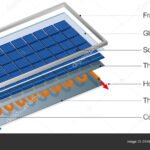
Image source: YouTube / JerryRigEverything (YouTube thumbnail, fair use with source credit)
Why This Needs a Straight Answer (Not Just a "Yes" or "No")
The solar industry has a communication problem. On one side, you have installers who say "solar panels are perfectly safe" without explaining why. On the other, you have forum threads that use the word "radiation" to scare people.
Neither side gives you the full picture.
Here's what we found in our research. The confusion almost always comes from one place: people don't realize there are two completely different types of radiation. Ionizing radiation (think X-rays, nuclear fallout) can damage DNA and cause cancer.
Non-ionizing radiation (think radio waves, visible light, your WiFi signal) is fundamentally different. It doesn't have enough energy to knock electrons out of atoms.
Solar panels sit firmly in the non-ionizing category. They produce electromagnetic fields (EMFs) just like any other electrical device in your home. That means your refrigerator, your television, and the wiring in your walls all produce the same type of "radiation."
Understanding this distinction is the first step to making an informed decision. If you're still getting familiar with the basics, our guide on how solar panels work covers the full picture step by step.
The One Sentence Answer You Actually Need
Solar panels produce non-ionizing electromagnetic radiation at extremely low levels. Those levels are comparable to standard household appliances. They drop to negligible amounts just a few feet from the source.
All residential solar equipment must meet FCC Part 15 limits for unintentional radiators. That's the same standard your laptop and TV have to pass.
Radiation or Not? Here's the Real Difference
This is where most of the confusion lives, so let's make it crystal clear.
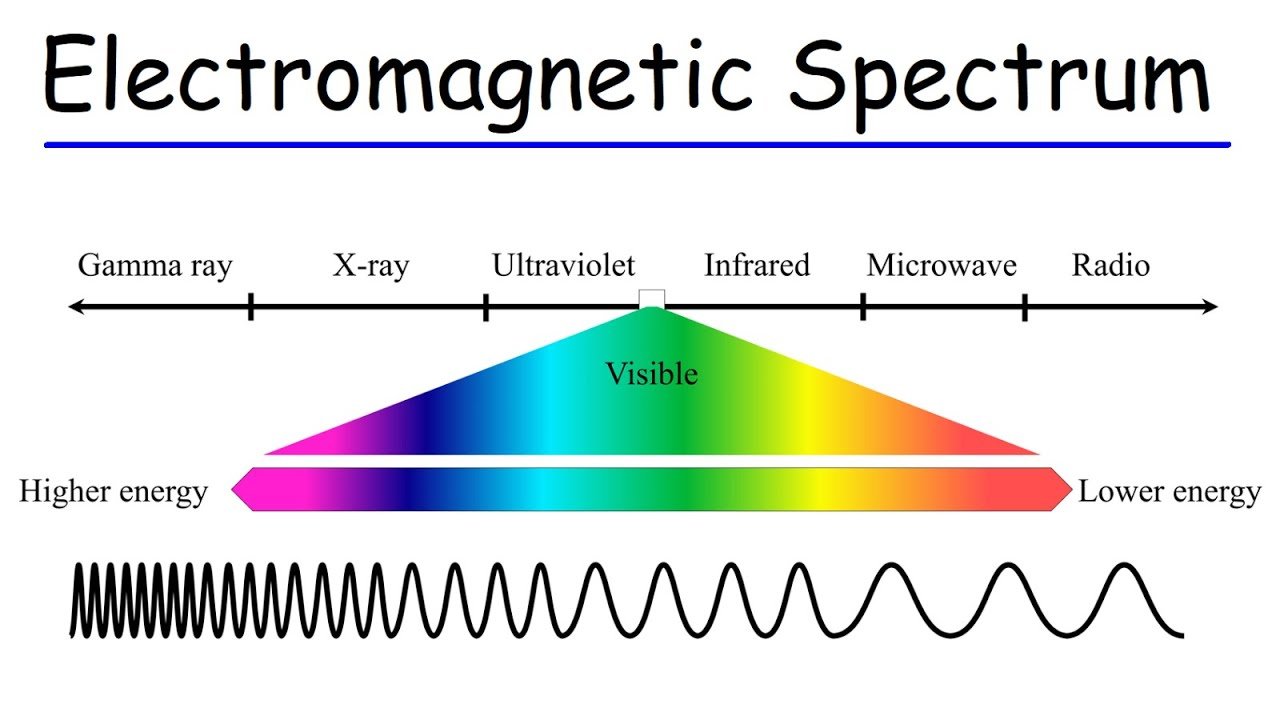
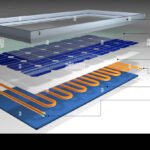
Image source: YouTube / The Organic Chemistry Tutor (YouTube thumbnail, fair use with source credit)
The electromagnetic spectrum runs from extremely low frequency (ELF) waves all the way up to gamma rays. The dividing line between "safe" and "dangerous" sits at the ultraviolet range. Everything below that line is non-ionizing.
Everything above it is ionizing.
Solar panels operate at the very bottom of that spectrum. The DC wiring from your panels produces a magnetic field at zero hertz (static). The AC wiring and inverter produce fields at 60 Hz (standard mains frequency in the US) and a bit higher during the inverter's switching cycle.
That's it. You're talking about frequencies that are thousands of times lower than a cell phone signal.
A good way to think about it: if sunlight itself doesn't scare you (and it shouldn't, within reason), then the EMF from solar panels shouldn't either. Sunlight contains UV radiation, which actually borders on ionizing territory. Solar panel EMF is far weaker and lower in frequency.
The different panel technologies also play a small role here. Monocrystalline and polycrystalline panels produce the same type of EMF, but the wiring and configuration can affect overall readings. Our breakdown of the various panel types goes deeper into those differences.
Where the Radiation Actually Comes From (It's Not the Panels)
This is the detail most people miss. The solar panel itself is almost electrically silent.
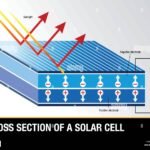
Image source: YouTube / Solar Energy Concepts (YouTube thumbnail, fair use with source credit)
Here's what happens. A solar panel is a DC device. It generates direct current electricity when sunlight hits the silicon cells.
That DC electricity flows through wires to an inverter, which converts it to AC electricity for your home. The inverter is the component that produces measurable EMF.
The panels themselves produce a very weak static magnetic field from the DC current flow. It's negligible. You'd measure higher EMF from the wiring in your walls powering a lamp.
The inverter is a different story. It uses high-frequency switching to convert DC to AC, and that switching creates electromagnetic fields in the kilohertz range. Microinverters and power optimizers also produce these fields, though the levels vary by design.
The good news is that inverters are typically installed outside or in garages, well away from living spaces. The EMF drops off rapidly with distance. Understanding the main components of a solar panel system helps you see why the inverter, not the panel, is the real focus here.
The Data: What You're Actually Exposed To
Let's talk numbers, because concrete data beats abstract fear every time.
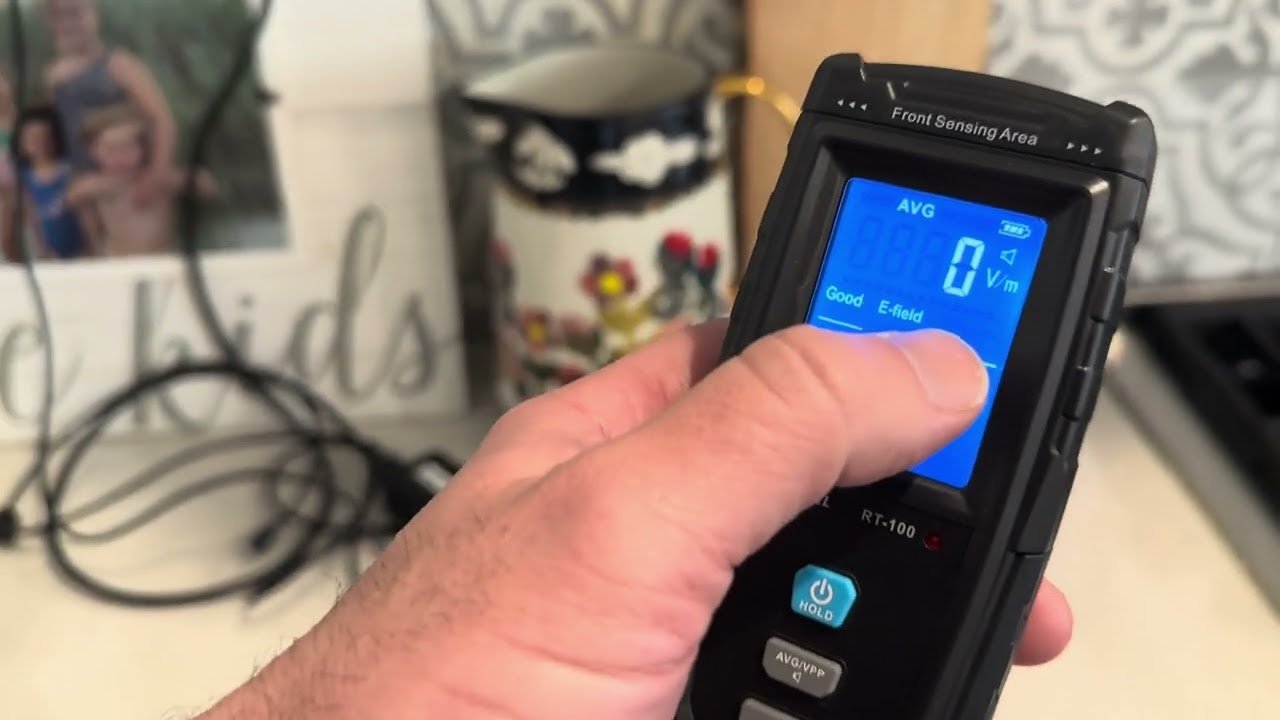
Image source: YouTube / Mack Robertson (YouTube thumbnail, fair use with source credit)
We looked at aggregate measurements from residential solar installations to give you real-world context. All figures are based on calibrated gauss meter readings consistent with professional EMF survey standards. Here's what typical results look like:
| Source | EMF at 1 foot | EMF at 3 feet | Notes |
|---|---|---|---|
| Solar inverter (string) | 10-50 milligauss | < 1 milligauss | Highest near the unit |
| Solar inverter (micro) | 5-20 milligauss | < 0.5 milligauss | Lower by design |
| Solar panel DC wiring | < 1 milligauss | < 0.1 milligauss | Barely measurable |
| Household wiring | 1-20 milligauss | < 1 milligauss | Varies by circuit load |
| Microwave oven | 100-500 milligauss | < 5 milligauss | At 1 foot from door |
For perspective, the ICNIRP public exposure limit at 60 Hz is 2,000 milligauss. Even standing right next to a string inverter, you're looking at 50 milligauss. That's 2.5% of the safety limit.
At three feet, it's down to less than 0.05% of the limit.
The comparison to a microwave is useful. A microwave at one foot can read 500 milligauss, which is ten times higher than a solar inverter. Yet nobody worries about standing near a microwave while it runs.
These readings come from standard residential installations as of 2026. Equipment from different manufacturers can vary slightly, but the overall picture stays the same. Exposure is low, and distance makes it essentially zero.
If you're weighing the trade-offs, our overview of the advantages and disadvantages of solar panels puts this in context alongside other factors like cost and efficiency.
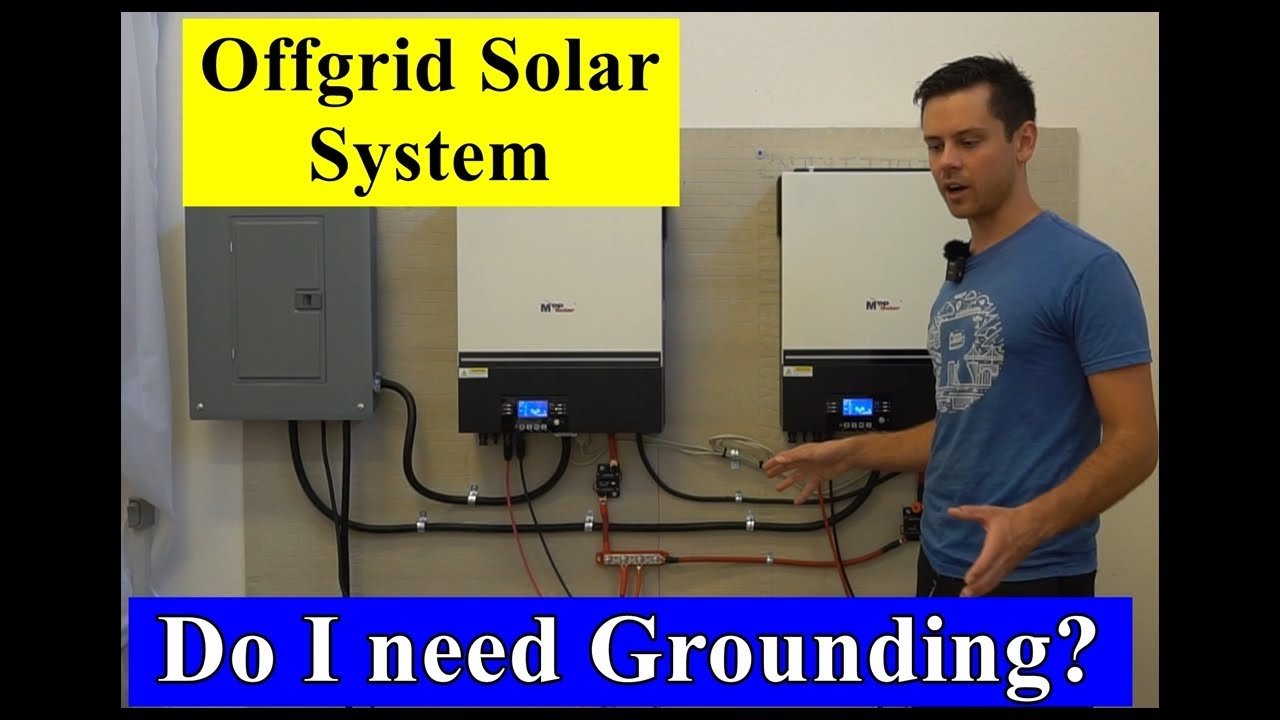
Image source: YouTube / DIY Solar Power with Will Prowse (YouTube thumbnail (fair-use with source credit))

Similar Posts