5 Major Advantages of Solar Street Light You Need to Know
If you're comparing street lighting options, you've probably heard the 5 Major Advantages of Solar Street Light by now. But what do those advantages actually mean for your project, your budget, and the maintenance crew? The answer isn't as simple as a spec sheet makes it look.
In our research, a well-designed solar street light can cut electricity costs by 100% and pay back its upfront cost in 3 to 7 years, depending on local energy rates and sun exposure. The best units use monocrystalline panels, lithium batteries, and MPPT charge controllers to keep performance predictable. Here's how that works in practice, and where solar loses ground to the grid.
Why You Should Compare Solar and Grid-Powered Street Lights
Choosing a street light isn't a grab-and-go purchase, it's a long-term infrastructure decision. The pole you install today will likely stand for 15 to 20 years. That means you're not just choosing between two light fixtures.
You're choosing between two very different operating models.
Grid-powered lights need trenching, conduit, wiring, permits, and a steady relationship with the local utility. Every month brings a bill. Every storm can bring an outage.
Solar street lights flip that model around. There's no meter, no monthly charge, and no dependence on the grid. But there is a higher upfront cost and a much bigger planning burden.
The real question is total cost of ownership, not sticker price. A solar unit might cost two to three times more than a grid-tied fixture. Over a decade, though, the gap narrows quickly.
In high-tariff regions, solar can win on cost alone.
Site conditions matter as much as the hardware. You need clear sun exposure, a pole that doesn't sit in permanent shade, and enough battery capacity to survive cloudy stretches. Projects that ignore those basics end up with dim lights and frustrated residents.
Projects that plan properly get reliable lighting for years.
That's why the comparison belongs on paper before anyone orders equipment. Match the technology to your site, your budget, and your tolerance for maintenance. The same approach that makes sense for a desert highway might be a poor fit for a tree-lined residential street.
For a broader look at how solar technology performs overall, our comparison of solar pros and cons covers the general trade-offs that apply here too.
The 5 Major Advantages of Solar Street Lighting
1. Zero Electricity Costs
Once the system is installed, the fuel is free. Sunlight hits the panel, the controller charges the battery, and the light runs without touching the meter. Municipalities and businesses that switch stop paying for street lighting power altogether.
In our research, that alone can save $150 to $400 per fixture per year, depending on wattage and local electricity rates.
2. No Trenching, Wiring, or Permits
Conventional street lights need a power source. That means digging trenches, running conduit, pulling wire, and often paying for grid extension. Solar street lights skip all of that.
Every unit is self-contained, so installation is mostly about setting the pole and securing the panel. That's a huge advantage for parking lots, remote roads, and any site far from an existing utility line.
3. Full Grid Independence
Grid failures don't affect solar street lights. Storms, blackouts, and utility maintenance won't leave you in the dark. That's a major benefit for security lighting, hospitals, campuses, and disaster-prone areas.
A properly sized system with enough battery autonomy keeps working even when the rest of the neighborhood loses power.
4. Automatic On and Off Operation
Solar street lights run on dusk-to-dawn sensors. They switch on when daylight fades and cut off when the sun returns. No timers to set, no photocells to wire into a building system, and no chances of leaving lights on all day.
Many models add motion sensors that dim the light until someone approaches, which extends battery life even further.
5. Lower Long-Term Maintenance
LEDs in modern solar street lights last 50,000 to 100,000 hours. That's 12 to 20 years of typical nightly use. There are no bulbs to replace every couple of years, and no wiring to trip over or corrode.
The main task is cleaning panel glass and replacing the battery every 5 to 7 years. Compared to the repeated lamp changes and ballast failures on older technology, that's a genuinely lighter workload.
All five advantages compound when you're lighting a large area. Multiply the savings by a hundred fixtures, and the numbers get serious quickly.
The Real Trade-Offs: Where Solar Street Lights Lag
Solar street lights aren't perfect for every site. Being honest about the downsides saves you from an expensive mistake.
Upfront cost is the biggest hurdle. A complete solar street light with a good panel, battery, and LED fixture often runs $1,000 to $2,500 installed. A basic grid-connected fixture might cost $400 to $800 installed. Grants and incentives can close the gap, but you still need capital to start.
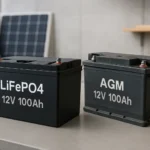
Batteries are consumable parts. Lithium batteries typically last 5 to 7 years. Lead-acid batteries last 3 to 5 years. Replacing them costs money and labor, and the expense needs to be factored into your total cost estimate.
Newer LiFePO4 batteries last longer and handle cold weather better, but they cost more upfront.
Shading kills performance. A solar panel needs unobstructed sun. A tree canopy, a nearby building, or even heavy dirt on the glass can cut output dramatically. Shaded sites may only get a few hours of usable sunlight, which translates into short runtime and dim output on winter nights.
Cloudy weather reduces autonomy. Extended periods of overcast skies drain the battery. If the system is sized for 2 days of autonomy and you hit 5 cloudy days, you'll see reduced light output. In places with frequent fog or rain, you need more battery capacity and bigger panels, which raises the cost.
Cold climates add complications. Snow can cover panels and block sunlight entirely. Cold temperatures also reduce battery efficiency. Quality systems include cold-rated batteries and tilted panels to help snow slide off, but that's another design consideration that doesn't affect grid lights.
Vandalism and theft are real risks. Panels and batteries are visible and valuable. In high-crime areas, you may need tamper-proof mounting hardware, anti-theft bolts, or battery enclosures buried underground. That adds cost and complexity.
The short version: solar makes sense when there's sun, a decent budget, and a need for independence. It struggles on deeply shaded sites, in very dark climates, and when the initial budget is extremely tight.
Solar vs. Grid-Powered Street Lights: At-a-Glance Comparison
| Factor | Solar Street Light | Grid-Powered Street Light |
|---|---|---|
| Upfront cost | $1,000–$2,500 per light | $400–$800 per light |
| Monthly electricity bill | $0 | $12–$35 per light |
| Installation complexity | Moderate, no trenching | High, requires wiring and permits |
| Dependence on grid | None | Full |
| Maintenance | Battery every 5–7 years, panel cleaning | Lamp replacement, wiring checks |
| Lifespan | 10–15 years typical | 10–20 years typical |
| Performance in outages | Continues operating | Stops during grid failure |
| Best for | Remote, sunny, or security-critical sites | Urban areas with reliable grid and shade issues |
A few notes on that table. The electricity cost for grid lights varies widely by region and wattage. In places like Hawaii or parts of Europe with high tariffs, the monthly cost per light climbs well above the range shown.
In low-tariff states, solar payback stretches further out.
Lifespan depends heavily on the battery. The LED itself can last 15 to 20 years, but the battery will fail first. Replacing the battery at year six or seven is just part of the solar ownership experience.
Grid lights don't need that, but they do need occasional lamp replacements, and their wiring can fail in harsh conditions.
Reliability also differs by type. Grid lights fail when the grid fails. Solar lights fail when the battery is deeply discharged for too long or the panel is damaged.
Both can be managed with planning.
Which is cheaper? It's not about which is cheaper. It's about which is cheaper for your situation.
A fully sunny, high-tariff remote site will almost always favor solar. A shaded, low-tariff urban street with an existing utility connection likely favors the grid.
Best Use Cases for Solar Street Lights (and When to Stick with Grid)
Choose Solar When:
- The site is off-grid or far from utility lines. Every mile of trenching costs thousands, which makes solar immediately attractive.
- The site gets 4+ peak sun hours per day. Most of the American Southwest, the Middle East, Australia, and parts of Africa fit this easily.
- Grid outages are common. Hospitals, security perimeters, and emergency response areas benefit from lighting that stays on.
- Running new wiring is disruptive. Parking lots, building renovations, parks, and campuses often don't want trenches torn through pavement.
- There's a budget for the upfront cost and a plan for battery replacement.
Stick with Grid When:
- The site is heavily shaded. No amount of battery capacity fixes a panel that never sees direct sun.
- Existing grid infrastructure is already at the pole. It makes limited sense to pay a solar premium when the wiring is already there.
- The climate is extremely dark or snowy. The Pacific Northwest and northern Europe can work, but they need larger panels and more battery, which hurts the economics.
- Theft is a serious concern. Panels and batteries are attractive targets. If you can't secure them, grid lighting may be the safer choice.
- The budget cannot handle the upfront premium. If grant funding isn't available, a grid-tied fixture is the practical alternative.
If-Then Scenarios
If you're lighting a remote highway intersection with no nearby power, then solar is not just an option, it's the obvious choice. If you're lighting a shaded alley in a dense city, then stick with grid and skip the headache. If you're building a new parking lot from scratch with clear sun, then solar pays off over time even with a modest tariff.
The best decision isn't about which technology is "better." It's about which matches your site's sunlight, your budget, and your priority for independence. For a deeper look at the hardware involved, our breakdown of solar panel system components explains what goes inside the panel and how each piece works together.

Similar Posts