Do Solar Panels Need Batteries to Work?
You've got solar panels on your roof, or you're thinking about getting them. The big question on your mind is: do you need batteries for solar panels? It's one of the most common questions homeowners ask.
And honestly, the answer changes depending on who you are and where you live.
In our research, a typical US household uses about 30 kilowatt-hours of electricity per day. Without a home battery, any solar energy you don't use immediately flows back to the grid through net metering. That might sound fine, but as of 2026, net metering policies are changing fast.
Let's walk through the main factors that determine whether a battery makes sense for you.

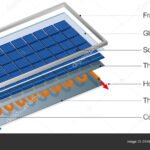
Image source: Wikimedia Commons / Wikideas1
Quick Answer
You do not always need batteries for solar panels. If you stay grid-tied with 1:1 net metering, you can skip them. Batteries are required for off-grid systems.
They also make sense with time-of-use rates or frequent blackouts. Your local utility policy is the deciding factor.
The Short Answer — Yes or No Depends on You
Let me save you some scrolling. The real answer to "do you need batteries for solar panels" is: it depends on three things.
First, your utility's net metering policy. Second, how often your power goes out. Third, what kind of electricity rate plan you're on.
If you have full 1:1 net metering, batteries rarely pay for themselves. You're better off treating the grid like a free battery. Export your excess solar during the day, pull it back at night for the same price.
No battery required.
But if your utility has switched to net billing or time-of-use rates, the math changes. Suddenly, the electricity you send to the grid is worth less than what you buy back. A battery lets you store your own cheap solar power and use it when grid power is expensive.
The different types of solar panels available also affect how much energy you generate and store.
Blackouts are the other big factor. A grid-tied solar system without a battery shuts down during an outage. That's a safety feature for utility workers.
If you want backup power, you need a battery or a generator.
So the short version: off-grid systems require batteries. Grid-tied systems with good net metering don't. Everything else sits in a gray area.
The Three Main Solar Configurations (And What Each Means for Batteries)
To understand whether you need a battery, you first need to know which type of solar setup you're working with. There are three basic configurations, and each one has a different relationship to storage.
| Configuration | Battery Required? | How It Works | Best For |
|---|---|---|---|
| Grid-tied (no battery) | No | Solar feeds home and grid. Grid is your backup at night. | Low-cost entry, good net metering, rare outages |
| Grid-tied (with battery) | Optional | Solar charges battery first, then exports excess. Battery backs up critical loads during outages. | Time-of-use rates, frequent blackouts, energy independence |
| Off-grid | Yes | Solar + battery is your only power source. No utility connection. | Remote cabins, full independence, no grid access |
Let me unpack each one.
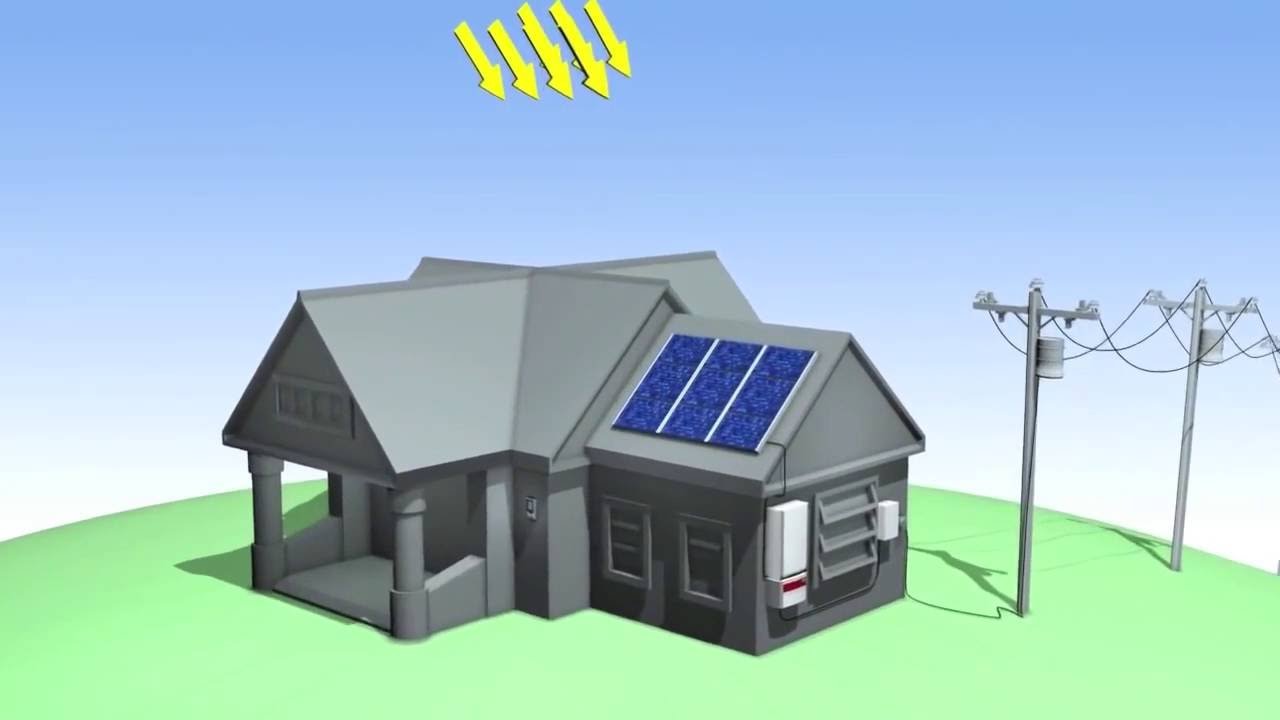
Grid-tied without a battery is the most common setup in the US. Your solar panels feed your home during the day. Whatever you don't use goes to the grid, and you get credits.
At night, you pull from the grid using those credits. It's simple, cheap, and works great if your utility offers 1:1 net metering. The biggest benefits and trade-offs of this approach include low upfront cost but zero backup power during outages.
Grid-tied with a battery adds storage to the mix. You still have a utility connection, but you can store excess solar instead of exporting it. During a blackout, the battery kicks in to power your fridge, lights, and maybe your well pump.
This is the sweet spot for many homeowners, especially if your utility has weak net metering or time-of-use rates.
Off-grid means no utility connection at all. Every electron comes from your solar panels or your battery bank. Batteries are mandatory here.
You need enough capacity to get through several cloudy days in a row. Understanding how solar panels generate electricity in different weather conditions is crucial if you're planning an off-grid system.
Image source: YouTube / MaXolar Energy (YouTube thumbnail (fair-use with source credit))
Decision Branch 1: When You Absolutely Need a Battery
Some situations make the choice easy. Here's when a battery isn't optional.
You Live Off-Grid
If you have no utility connection, you need batteries. Full stop. Your solar panels produce power when the sun shines, but you need to use it at night and on cloudy days.
Without storage, you'd have power only during daylight hours.
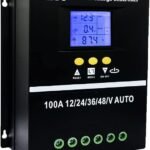
Off-grid systems typically need a battery bank sized for at least two to three days of autonomy. That means enough capacity to run your home without any solar input for 48 to 72 hours. The main components of a solar panel system for off-grid use include a charge controller, inverter, and a much larger battery bank than grid-tied setups.
Your Area Has Frequent, Long Outages
If the power goes out multiple times a year for hours or days, a battery is a no-brainer. This is common in areas with hurricane risk, wildfire-related public safety power shutoffs (PSPS), or aging grid infrastructure.
Without a battery, your solar panels shut down during a blackout. That always surprises people. With a battery, you can keep your refrigerator, lights, internet modem, and perhaps a well pump running.
You do not need to replace your entire rooftop array to add storage. Our full solar panel buying guide covers how to plan a system that's "battery-ready" from the start.
Your Utility's Net Metering Is Weak
Net metering policies are changing rapidly across the US. Some states have moved from 1:1 net metering to net billing, where you get paid far less for the solar you export than what you pay for grid electricity.
California's NEM 3.0 is the most famous example. Under the new policy, exported solar is credited at roughly 25% of the retail rate. That makes batteries much more attractive.
You store your own power and use it during peak evening hours instead of selling it cheap and buying it back expensive.
Decision Branch 2: When You Don't Need a Battery (And Why)
For many homeowners, skipping the battery is the smart move. Here's when you can safely pass.
You Have Full 1:1 Net Metering
If your utility still offers full retail net metering, the grid acts as your free battery. You export a kilowatt-hour during the day and pull one back at night. No cost, no degradation, no maintenance.
The math is simple: batteries cost thousands of dollars and last 10 to 15 years. If net metering is good, the payback period for a battery stretches to 15 to 20 years or more.
Check your utility's policy. As long as it remains favorable, you can install solar panels now and add a battery later if the policy changes. That's a common strategy.
Blackouts Are Rare and Short
If your power goes out once a year for 30 minutes, a battery is a luxury, not a necessity. You can manage with flashlights, a cooler, and perhaps a small portable generator. The cost of a whole-home battery backup system is hard to justify for rare, short outages.
Research from the U.S. Department of Energy's Solar Energy Technologies Office shows that the average US home experiences less than two hours of outage per year. For most homeowners, that's not enough to justify a $10,000 to $15,000 battery investment.
You Want the Lowest Upfront Cost
Solar panels alone are expensive enough. Adding a battery can double or triple the total system cost. If your primary goal is saving money on your electric bill, skip the battery and maximize your solar array size instead.
A typical grid-tied 10 kW solar system costs around $20,000 to $25,000 before incentives. Adding a 13.5 kWh battery adds another $10,000 to $15,000. The payback period on the solar-only system might be 7 to 10 years.
Adding a battery pushes it to 12 to 18 years, depending on your net metering rates.
Decision Branch 3: The Gray Area — Where a Battery Might Still Make Sense
This is the sticky middle. You don't need a battery, but it might still be a smart move. Let me walk through the scenarios where it tilts in favor of storage.
You're on Time-of-Use (TOU) Rates
Many utilities charge more for electricity during peak hours, typically 4 PM to 9 PM on weekdays. That's exactly when your solar panels stop producing. Without a battery, you pay those high rates every evening.
A battery lets you charge during the day with cheap solar and discharge during peak hours. You avoid buying expensive grid power. In some markets, this alone can cut your electric bill by 30-50%.
Check your utility's rate schedule. If the difference between off-peak and on-peak rates is more than 10 cents per kWh, a battery starts to look attractive.
You Want to Use More of Your Own Solar
Without a battery, a typical home consumes only 30-50% of the solar it generates. The rest gets exported. If your net metering is weak, you're essentially giving away power.
A battery pushes your self-consumption rate to 60-80% or higher. You use the solar you generate instead of exporting it. This makes sense for homeowners who were already considering how to generate electricity as efficiently as possible.
It also makes sense if you have an electric vehicle or plan to get one to charge at night.
You Value Energy Independence
There's a non-financial reason to get a battery: peace of mind. Knowing you can keep the lights on during an outage has real value, even if the spreadsheet doesn't show it.
Some homeowners simply dislike being dependent on the utility. They want control. If that resonates with you, a battery is worth the premium.
Just go into it with your eyes open. The payback may be 15 years or more, but the resilience is immediate.
National Renewable Energy Laboratory (NREL) research confirms that the non-energy benefits of storage, including backup power and reduced grid reliance, are the primary motivator for many battery buyers.
How to Size and Choose a Battery If You Decide to Get One
If you've decided a battery makes sense, the next question is which one. Let me walk through the key specs that matter.
What's the difference between usable and total capacity?
Battery manufacturers advertise total capacity. But you cannot drain a lithium battery to zero without damaging it. Usable capacity is what you can actually use.
A battery rated at 13.5 kWh total might have 13.5 kWh usable or only 12 kWh usable depending on its depth of discharge. Look for the usable number. That's the real size of your battery.
How much power do you need at once?
Capacity is how much energy the battery holds. Power rating is how much it can deliver at any given moment. A battery with 5 kW continuous output can run a fridge, lights, and a few outlets.
A 10 kW unit can handle a well pump, AC startup surge, and more.
Make a list of the circuits you want to back up during an outage. Add up their wattage. That tells you the minimum power rating you need.

Image source: YouTube / Justrite (YouTube thumbnail (fair-use with source credit))
Lithium iron phosphate versus other chemistries
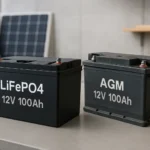
Most home batteries today use lithium iron phosphate (LFP) chemistry. It's safer, lasts longer, and tolerates deeper discharges than older lithium-ion or lead-acid options.
Aggregate reviews indicate LFP batteries offer 5,000 to 10,000 cycles. That is 10 to 15 years of daily use. Lead-acid batteries are cheaper upfront but last only 3 to 5 years and offer less usable capacity.
Spend the extra for LFP.
AC-coupled versus DC-coupled
If you already have solar panels, you need an AC-coupled battery. It connects to your existing system through a separate inverter. It is less efficient but works with almost any existing solar setup.
If you are building a new system, a DC-coupled battery connects directly to your solar panels through a hybrid inverter. It is more efficient and costs less overall. Plan ahead for what you understand about solar panel functionality and how the full system will integrate.
The Real Numbers: What a Battery Costs vs. What It Saves
Let me give you honest numbers so you can decide for yourself.
| Item | Typical Cost |
|---|---|
| 10 kWh battery (installed) | $8,000 – $12,000 |
| 13.5 kWh battery (installed) | $10,000 – $15,000 |
| Federal tax credit (30%) | Subtract $2,400 – $4,500 |
| State incentives (varies) | $1,000 – $5,000 |
The federal Investment Tax Credit (ITC) gives you 30% off the installed cost of the battery, but only if the battery is charged by solar. If you charge it from the grid, it does not qualify.
State incentives can drop the price further. California's SGIP program offers up to $1,000 per kWh for low-income households. Other states have similar programs.
Check with your state energy office or a local installer.
What about payback period?
Without incentives, a $12,000 battery saves a typical household about $300 to $600 per year on electric bills. That gives you a 20 to 40 year payback. With incentives, the payback drops to 10 to 15 years.
If backup power is your main goal, the financial payback math does not apply. You are buying insurance. The peace of mind is the return.

Image source: Wikimedia Commons / Our World in Data (CC BY)
Common Mistakes People Make When Deciding
I have seen homeowners make the same errors over and over. Here are the ones to avoid.
Thinking a battery always pays for itself
It does not. If you have good net metering, the grid is cheaper than a battery. A battery is a premium purchase.
Treat it like one.
Buying a battery that is too small for backup
Some people buy a single 5 kWh battery thinking it will run their whole house. It will barely keep a fridge and a few lights on for a few hours. If backup is your priority, size for your critical loads, not your full home.
Not checking net metering policies before buying
Your utility's policy determines whether a battery makes financial sense. Do not buy a battery without first understanding how your utility credits solar exports. One phone call can save you thousands.
Forgetting about battery degradation
All batteries lose capacity over time. A new 13.5 kWh battery might deliver 12 kWh after five years and 10 kWh after ten years. Factor that into your sizing.
Buy a little more capacity than you think you need.
A Simple Decision Flowchart (Text Version)
If you want the shortest path to a decision, follow these steps in order.
Step 1: Are you off-grid?
Yes. You need a battery. No questions.
Step 2: Do you have 1:1 net metering?
Yes. You do not need a battery for savings. You might want one for backup, but the financial case is weak.
Step 3: Do you get frequent or long power outages?
Yes. A battery provides backup. The cost is worth the peace of mind.
Step 4: Are you on time-of-use rates?
Yes. A battery shifts cheap solar to expensive peak hours. The savings can justify the cost.
Step 5: Do you simply want independence from the utility?
Yes. Buy a battery. Just know it may not pay for itself in dollar terms.
Follow these steps in order. The first "yes" tells you your answer.

Image source: YouTube / Affinity Energy (YouTube thumbnail (fair-use with source credit))
The Bottom Line — What to Do Next
Here is my honest take. If you have 1:1 net metering and rare outages, skip the battery. Put that money toward a bigger solar array or something else.
The advantages of solar panels alone are already strong.
If you are on time-of-use rates, live in an outage-prone area, or value independence, buy the battery. Look for LFP chemistry, size for your critical loads, and check your local incentives.
Your next step is simple. Call your utility and ask three questions. What net metering policy do you offer?
Are you on time-of-use rates? How often do outages happen in your area? Those answers will tell you everything.
Then get quotes from three local installers. Compare the solar-only price against the solar-plus-storage price. Run the payback numbers yourself.
You will know which path is right for you.
Frequently Asked Questions
Do solar panels work without batteries?
Yes. Grid-tied solar panels work perfectly without batteries. They send excess electricity to the grid and pull power back at night.
The system shuts down during a blackout for safety reasons.
Can I add a battery to my existing solar system?
Yes, in most cases. You need an AC-coupled battery that connects through your existing inverter. Some inverters are battery-ready.
Others require a separate inverter for the battery. A qualified installer can tell you what you need.
How long does a solar battery last?
Most lithium iron phosphate batteries last 10 to 15 years or 5,000 to 10,000 cycles. Capacity declines gradually over that time. Lead-acid batteries last 3 to 5 years and are not recommended for new installations.
How many batteries do I need to run my house?
A single 10 to 13.5 kWh battery runs essential loads like a fridge, lights, and internet for 8 to 12 hours. Running your whole home, including AC, well pump, and electric oven, typically requires 20 to 30 kWh or more.
Is a solar battery worth it in 2026?
It depends on your utility rates and outage frequency. With time-of-use rates or poor net metering, a battery can pay for itself in 10 to 15 years. If you have 1:1 net metering, the financial case is weak but backup power remains valuable.
What is the federal tax credit for solar batteries?
The federal ITC offers 30% off the installed cost of a battery, but only if the battery is charged primarily by solar. The credit applies to both new solar-plus-storage systems and battery retrofits to existing solar arrays.

Similar Posts