Can LED Light Charge Solar Panels? Here’s the Truth
Yes, But Here's the Catch: The Honest Quick Answer
You've probably looked at a solar panel sitting in a dim room and wondered: does LED light charge solar panels? It's a fair question. Maybe you want to test a panel before installing it.
Or you're stuck in a cloudy stretch and need a backup charging method. The short answer is yes, but there are some big caveats you need to understand.
Our research shows that while LED light can trigger a photovoltaic response, the charge rate is dramatically lower than sunlight. Silicon solar cells are designed to absorb a broad spectrum of light, but they peak efficiency under specific wavelengths that LEDs only partially cover. As of 2026, even the most efficient household LED bulbs produce maybe 1, 5% of the usable energy that direct sunlight would deliver.
Let's walk through the details so you know what to expect from your setup.
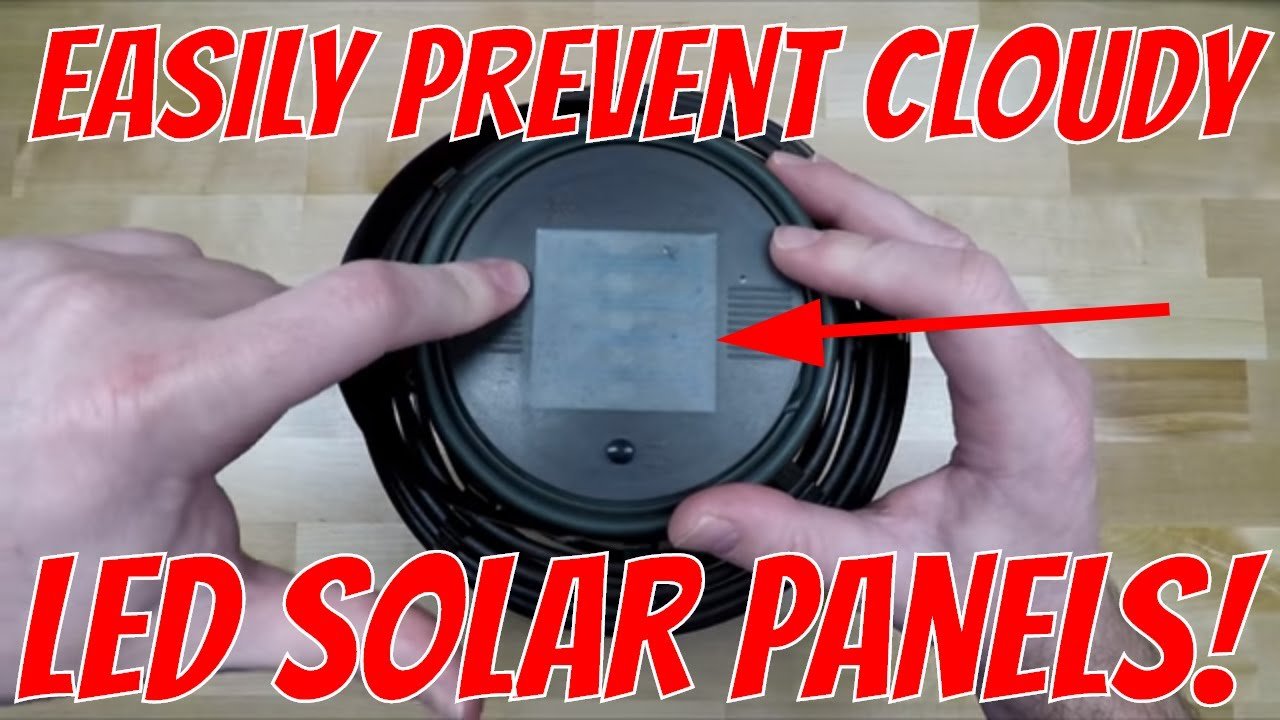
Image source: YouTube / In Jason's Garage (YouTube thumbnail (fair-use with source credit))
Quick Answer
LED light can charge solar panels. But it's nowhere near as effective as sunlight. You might get enough power to trickle-charge a small battery.
Don't expect to run appliances or fully charge a deep-cycle battery this way. For testing or maintaining charge, it works. For serious energy needs, stick with the sun.
How Solar Panels "See" Light (Spectrum, Wavelength, Sensitivity)
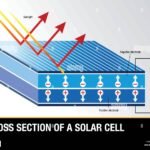
Solar panels don't just "see" light the way your eyes do. A photovoltaic cell responds to a specific range of wavelengths, and that range dictates how well any light source will charge it.
Most residential solar panels use monocrystalline or polycrystalline silicon cells. These cells absorb photons across roughly 300 to 1100 nanometers. That spans ultraviolet, the entire visible spectrum, and well into the infrared.
Sunlight delivers a full, intense blast across that entire range. That's why a standard panel can hit 15% to 22% efficiency under full sun.
White LEDs, on the other hand, emit mostly blue light (around 450nm) that gets converted through a phosphor coating into a broader yellowish glow. The result is a spectrum that covers roughly 400 to 700 nanometers. That overlaps nicely with the visible portion of the silicon cell's response curve, but it completely misses the near-infrared region where silicon cells are also quite efficient.
The image below shows this spectral gap clearly.
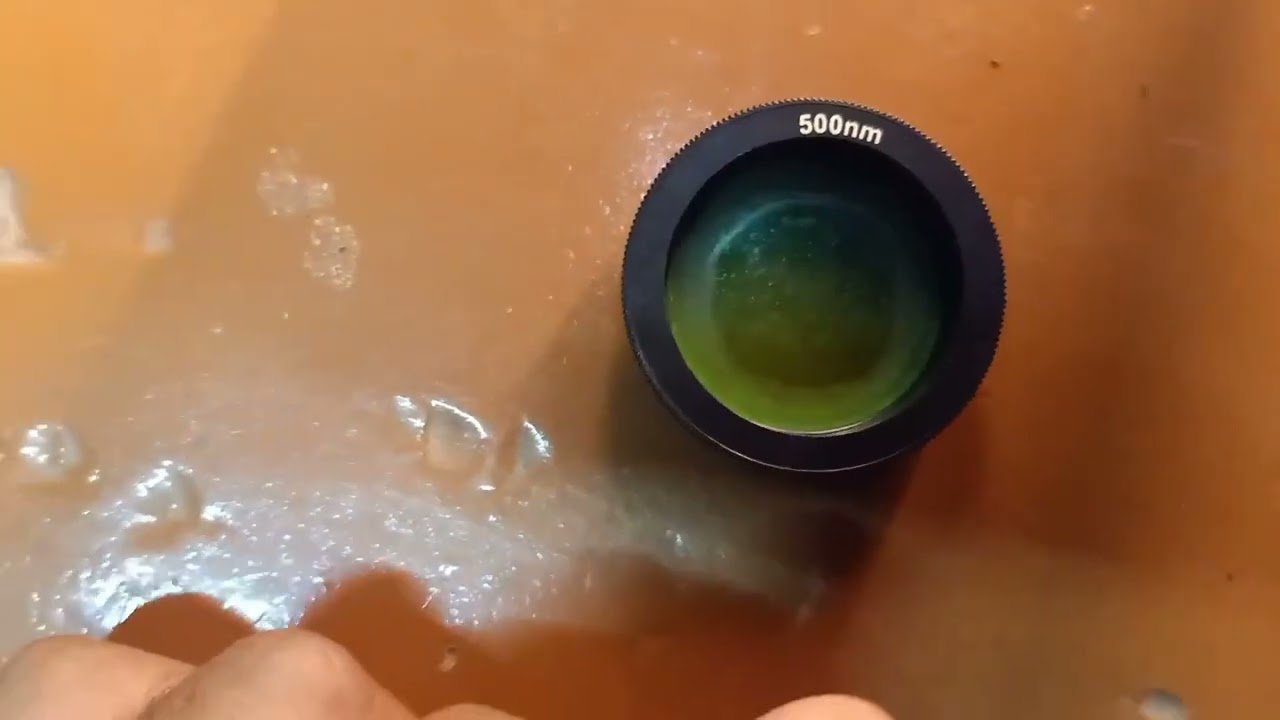
Image source: YouTube / Mr Photons Physics Classes (YouTube thumbnail (fair-use with source credit))
The practical takeaway is that an LED light can definitely excite the electrons in a silicon cell. It's not like shining a flashlight on a dead sensor. But because the spectrum is narrower and the intensity is far lower, the current produced is a fraction of what sunlight can deliver.
Understanding the energy conversion process helps clarify why this gap exists.
If you want to dig deeper into how cells convert light into electricity, our article on the basics of solar power generation covers the electron flow in more detail.
The Three Big Variables: LED Type, Distance, and Panel Specs
Not all LED lights are created equal. And not all solar panels respond the same way. Three variables determine whether your setup will produce a meaningful charge.
| Variable | What Matters | Impact on Charge |
|---|---|---|
| LED type | Brightness (lumens), color temperature (Kelvin), power draw (watts) | A 1500-lumen daylight LED at 5000K charges far better than a dim 3000K bulb |
| Distance from panel | Inverse square law applies | Doubling the distance cuts light intensity by roughly 75% |
| Panel specs | Cell type, wattage rating, efficiency, temperature response | Thin-film panels often outperform standard silicon under dim artificial light |
Let's break each one down.
LED type. The key metric is usable light output. A high-power floodlight or work light rated at 2000+ lumens will deliver far more photon energy than a standard 800-lumen household bulb. Color temperature matters too.
Daylight white LEDs (5000K to 6500K) have a stronger blue component that matches the silicon cell's peak sensitivity. Warm white LEDs (2700K to 3000K) shift more toward yellow and red, which reduces the match.
Distance. This is where most people get disappointed. Light intensity falls off with the square of the distance. Hold a phone flashlight an inch away and it looks blinding.
Move it six inches away and the light spreads thin. For a solar panel, the difference between having an LED 2 inches away versus 12 inches away can mean the difference between 2 watts and 0.1 watts of output.
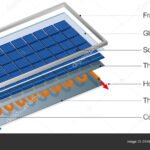
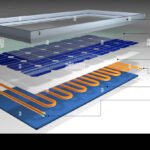
Panel specs. Not every panel behaves the same under artificial light. Different silicon cell types have varying efficiencies and low-light responses. Thin-film panels, for example, can sometimes outperform crystalline silicon under dim or indirect light because they have a broader spectral absorption curve.
The internal construction and bypass diodes also affect how much current reaches the charge controller.
The Decision Tree: Can You Charge With That LED Light?
Here's where we turn theory into a practical answer. Your specific situation determines whether LED charging is worth attempting. Follow the branches below.
You Have a Small Panel and a High-Power LED
This is the best-case scenario. If you're using a 5 to 20 watt panel and you have a bright LED work light or floodlight within 2 to 6 inches, you can expect a meaningful trickle charge.
For example, a 10 watt panel under a 2000-lumen LED at 3 inches distance can produce roughly 0.5 to 1 watt. That's enough to maintain a 12V lead-acid battery or slow-charge a small power bank. It won't replace sunlight, but it can keep a battery from going dead during a long stretch of overcast weather.
You Have a Large Panel or Dim Room Lighting
This is the most common scenario and the most disappointing. If you're trying to charge a 100 watt or larger panel with typical room lighting (ceiling fixtures, lamps, dim overheads), don't expect anything useful.
The panel's open-circuit voltage might register 15 to 20V under a bright desk lamp. That looks promising on a multimeter. But the current (amps) will be almost nothing.
A 100 watt panel under indirect room light might produce 10 to 50 milliamps. That's 0.01 to 0.05 amps. At that rate, charging a 100 amp-hour battery would take thousands of hours.
You're Trying to Charge a Big Battery vs a Small Device
Your end goal matters as much as your light source.
Small devices (USB power banks, phone batteries, small sensors). These can work if you have a small panel and a bright LED close by. A 6 volt, 5 watt panel under a desk lamp can trickle-charge a power bank over several hours. The key is matching the voltage and keeping the light within inches.
Large batteries (deep-cycle, golf cart, RV batteries). For anything above 20 amp-hours, LED charging is impractical as a primary method. It can serve as a maintenance charge to prevent sulfation during storage. But expecting it to recover a depleted battery is unrealistic.
You'd need an array of high-power LEDs consuming far more electricity than the panel produces.
If you're deciding which panel size matches your needs, the buying guide we've put together covers common wattages and typical applications.
Step-by-Step: Test Your Setup With a Multimeter
Instead of guessing, you can measure exactly what your panel produces under your LED light. Grab a digital multimeter. Set it to DC voltage mode.
Step 1. Place your solar panel under the LED light at the distance you intend to use. Make sure the panel is clean and facing the light directly.
Step 2. Measure open-circuit voltage (Voc). Touch the multimeter probes to the panel's positive and negative leads. A 12V panel in full sun reads about 20 to 22V.
Under a bright LED at 3 inches, expect 15 to 18V. That tells you the panel is responding.
Step 3. Switch the multimeter to DC current mode (usually 10A setting). Connect the probes in series with the panel leads. This time you're measuring short-circuit current (Isc).
Under a bright LED, you might see 50 to 200 milliamps. Compare that to the panel's rated Isc (often 5 to 8 amps for a 100W panel). The ratio tells you your effective power.
Step 4. Calculate approximate wattage. Multiply the voltage (from step 2) by the current (from step 3). That's your rough power output in watts.
A reading of 16V and 0.15A gives 2.4 watts. That's enough to slow-charge a small battery, but it's a fraction of the panel's rating.
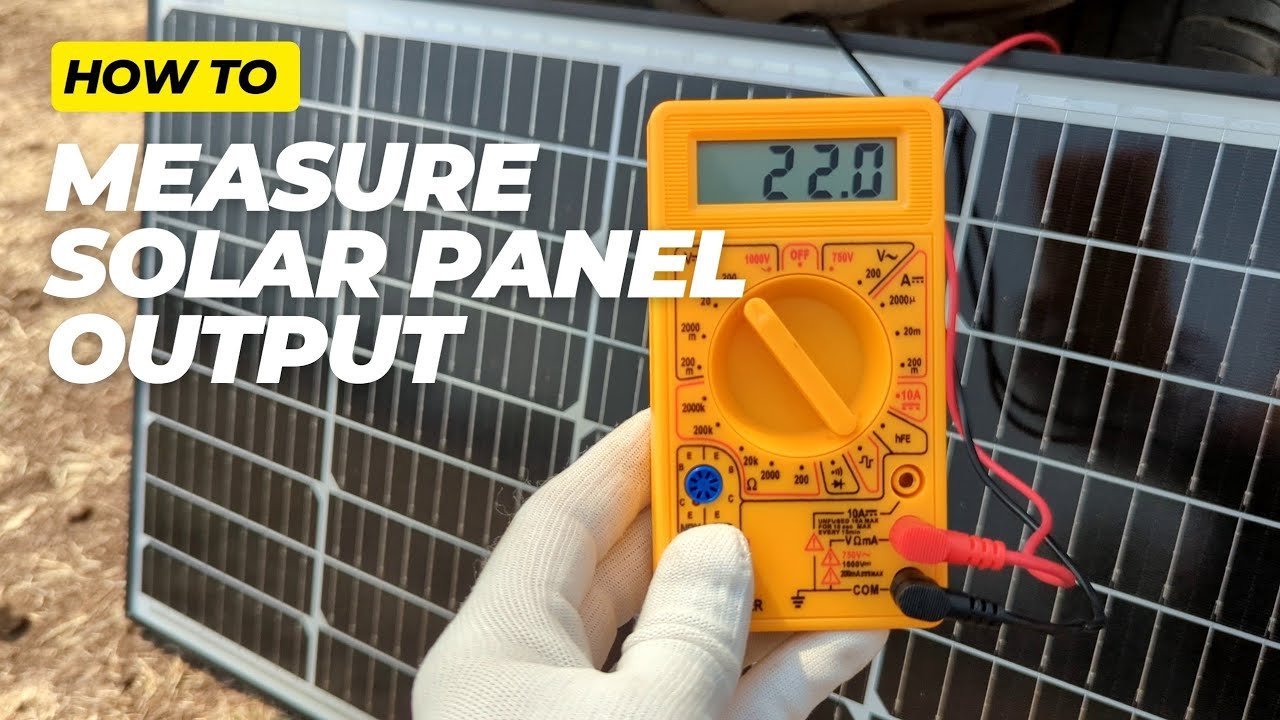
Image source: YouTube / The Gloves Man (YouTube thumbnail (fair-use with source credit))
Step 5. Try different distances. Move the LED closer and farther. You'll see the current jump or drop dramatically.
That inverse square law becomes very real very quickly.
A quick safety note. Never short-circuit a panel that's producing significant current. At these low LED-driven currents, it's safe, but it's good practice to keep test connections brief. If your charge controller is connected, disconnect it before testing raw panel output.
If you're unfamiliar with the key parts that make up a solar panel, our guide on solar panel components explains what every part does and why they matter for performance.
Real-World Scenarios (When Indoor LED Charging Actually Makes Sense)
Let's move past theory and look at situations where people actually get useful results from LED charging.
Scenario 1: Maintaining a battery during long storage. If you have a trolling motor battery or an RV battery sitting through winter, a small panel with a bright LED can supply a maintenance charge. You don't need full power. You just need enough to offset self-discharge.
A 5W panel under a 1500-lumen work light at 4 inches will produce roughly 0.3 to 0.5 watts. That's enough to keep a lead-acid battery above 12.4V indefinitely. It beats letting the battery sulfate.
Scenario 2: Testing panels before installation. Solar panel buyers often want to verify a panel works before mounting it on a roof. Under a bright desk lamp or work light, you can confirm the panel produces voltage and current. It's a quick functional test.
It won't tell you the panel's rated output, but it confirms the cells are intact and the bypass diodes are working.
Scenario 3: Emergency slow charging during a power outage. If you have grid power but no sun, you can use a plug-in LED work light to trickle-charge a power bank or small battery. The irony is that you're using grid electricity to produce light to make a tiny amount of solar electricity. But if you're prepping for an extended outage and need a charged power bank, it can work in a pinch.
Image source: YouTube / Footprint Hero with Alex Beale (YouTube thumbnail (fair-use with source credit))
Scenario 4: Off-grid sensor networks and IoT devices. Small sensors in warehouses, basements, or crawl spaces often run on tiny solar panels paired with supercapacitors or small lithium cells. A constant LED light in the room can keep these devices running indefinitely. The power requirements are tiny (milliwatts), so even diffuse artificial light is enough.
Scenario 5: Educational demonstrations. Teachers and hobbyists use indoor setups to demonstrate photovoltaic principles. A multimeter needle jumping under a flashlight makes the concept real. The exact charge rate doesn't matter.
The lesson is that light energy converts to electrical energy.
5 Mistakes That Waste Your Time (And How to Avoid Them)
Most frustration with LED charging comes from a few predictable mistakes. Here's what to watch for.
Mistake 1: Using the wrong LED color temperature. Warm white bulbs (2700K) have a heavy red-yellow bias. Silicon cells are less sensitive in that range. You lose a significant chunk of potential output.
Our research shows that switching from a 2700K bulb to a 5000K daylight LED can increase current by 30% to 50% at the same brightness and distance. Use daylight or cool white LEDs for any serious charging attempt.
Mistake 2: Placing the LED too far from the panel. Light drops off fast. At 6 inches, you might get usable current. At 12 inches, you're probably getting half that.
At 24 inches, you're getting almost nothing. Make sure the LED is within a few inches of the panel surface. If you can't get that close, don't expect meaningful results.
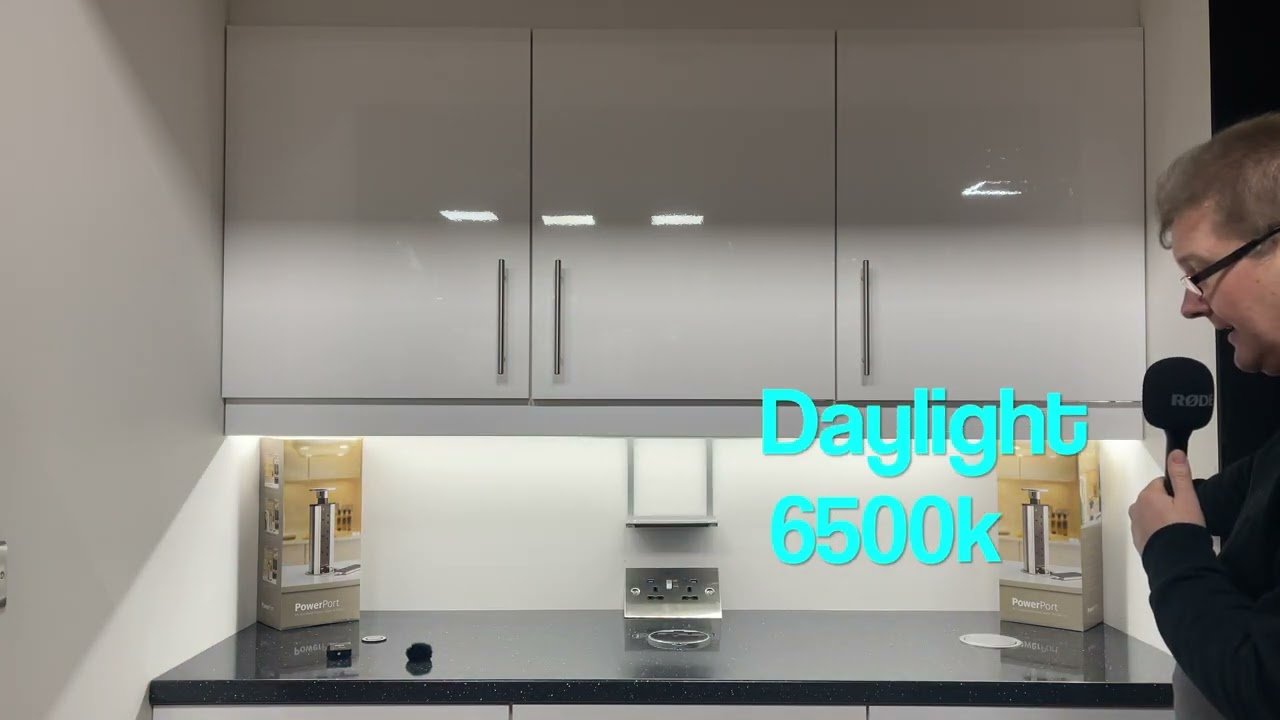
Image source: YouTube / Arrow Electrical Distributors Ltd (YouTube thumbnail (fair-use with source credit))
Mistake 3: Expecting the same efficiency you get from sunlight. A 100W panel under full sun produces 100 watts. Under a bright LED at 3 inches, the same panel might produce 1 to 3 watts. That's not a broken panel.
That's physics. People see voltage on a multimeter and assume the panel is performing. Voltage isn't power.
You need current too.
Mistake 4: Using dim or diffused room lighting. Overhead ceiling lights, even bright ones, deliver very little usable light to a panel sitting on a table or floor. The light is coming from above and spreading across the whole room. A panel needs direct, concentrated light.
A desk lamp or work light pointed straight at the panel is your best bet.
Mistake 5: Forgetting to account for the charge controller's overhead. Some charge controllers need a certain voltage and current to even wake up and start charging. An MPPT controller, for example, might not activate below a certain power threshold. If your LED setup produces just 1 watt, the controller's own power consumption might eat that entirely.
A PWM controller is often more forgiving at low power levels. Or you can bypass the controller and connect the panel directly to the battery through a blocking diode, but only if you monitor the voltage manually.
Pro Tips for Getting Better Performance
If you're committed to making LED charging work, these adjustments will squeeze out every bit of available power.
Use multiple LEDs in parallel. One bright LED is okay. Two or three pointed at the same panel area are better. More photon density means more current.
Just make sure they're all close and aimed directly at the panel.
Remove any glass or plastic cover. Many solar panels have a tempered glass front that protects the cells but also reflects a small percentage of light. In sunlight, that loss is negligible. Under an LED, every photon counts.
If your setup allows it, angle the panel to reduce glare and reflection back toward the LED.
Consider a thin-film panel instead of monocrystalline. Thin-film panels (like amorphous silicon or CIGS) have a broader spectral response. They perform better in low light and under artificial sources. Some manufacturers produce panels specifically optimized for indoor light harvesting.
These are common in the IoT sensor market.
Keep the LED cool. High-power LEDs get hot. Heat shifts the LED's color output and reduces its efficiency. If the LED housing is too hot to touch, it's losing light output.
Good ventilation or a heat sink helps maintain consistent brightness.
Match the panel voltage to your battery. A 12V panel under an LED might produce 15V open-circuit, but under load it drops to around 12V. If you're charging a 6V battery, you're wasting half the available voltage. Use a panel that's roughly 1.5 times your battery voltage for the best match.
Frequently Asked Questions
Can I charge my phone using a solar panel and an LED light?
Yes, but slowly. A 5W panel under a bright LED at close range can produce 0.5 to 1W. That's enough to trickle-charge a phone over 8 to 12 hours.
It's not practical for daily use but works as a backup.
What's the best LED bulb for charging solar panels?
A daylight white (5000K or higher) LED work light or floodlight. Higher lumens mean more usable light. Look for bulbs rated 1500 lumens or more.
Position them within 3 to 6 inches of the panel for best results.
Will a solar panel charge under a dim light?
A very small trickle. Dim room lighting might produce milliamps of current. That's enough to maintain a battery's charge level if the draw is minimal.
It won't recharge a depleted battery.
Is it worth using LEDs to charge solar panels?
It depends on your goal. For maintenance charging or testing, yes. For replacing sunlight as a primary energy source, no.
The electricity you use to power the LED will far exceed what the panel produces, so it's not energy efficient.
Do solar panels work under fluorescent or incandescent lights?
Incandescent bulbs produce significant infrared light, which silicon cells can use. They're actually better than standard LEDs in some cases, but they waste most energy as heat. Fluorescent tubes produce a spiky spectrum that doesn't match solar cells well.
LEDs are generally the best modern choice for indoor charging experiments.

Similar Posts