Solar Fans for Camping: Stay Cool Off-Grid
There's nothing worse than crawling into a sweltering tent with no airflow. That's why so many campers look at solar fans for camping as the obvious fix. Free energy, no disposable batteries, and a breeze at night.
The reality is a bit more complicated.
As of 2026, most solar camping fans are really battery-powered fans with a small solar panel attached. Manufacturer specs suggest a typical 5W panel needs 8 to 12 hours of direct sun to fully charge a 10,000 mAh battery. That's a long day for a tiny payoff.
Before you buy, let's look at what actually works.
Quick Answer
Solar fans for camping use a solar panel to recharge an internal battery. Most are battery fans first, solar charges second. A separate foldable panel is often more effective.
Prioritize battery capacity, noise level, and airflow. The solar panel matters less than you think.
Do You Actually Need a "Solar" Fan? Let's Clear That Up First
No, most campers don't need a solar-specific fan. That sounds backwards for a topic about solar fans for camping. But hear me out.
Most solar fans on the market are really just rechargeable camping fans with a small solar panel attached. The panel is there as a backup, not as the main power source. If you're camping in full sun all day, a separate foldable panel will charge a power bank faster and more reliably.
If you're deep in the forest, the built-in panel is nearly useless.
Here's the simple decision framework:
- Car camping with plenty of sun? A solar charging option can cut generator use.
- Backpacking ultralight? Skip the solar panel and take a USB fan plus a compact power bank.
- Van camping or overlanding? A larger rigid panel on the roof beats any fan-mounted panel.
- Short weekend trips? Charge the fan before you leave. You'll rarely need solar at all.
Climate matters too. In bright desert conditions, a tiny panel can actually do useful work. In humid, overcast regions, it's not worth the extra weight.
Aggregate reviews of budget all-in-one fans consistently mention that the solar function feels like a marketing feature first and a charging tool second.
As of 2026, the technology hasn't changed much. A 5W panel is still the standard on all-in-one units. That's enough to trickle charge a phone, not enough to power a high-speed fan all night.
If you want to know why these tiny panels underperform, it helps to understand the physics behind solar sizing. Panel area, sunlight angle, and cloud cover all limit output.
Bottom line: you don't need a solar fan. You need a fan that can recharge in your specific camping environment. For most people, that means a solid rechargeable fan and a separate solar panel.
For others, it means charging the fan before you leave and skipping solar entirely.
The Two Ways to Go Solar: All-in-One Fans vs. Separate Panels + Fan
You basically have two paths when you want solar-powered airflow at a campsite.
The first is an all-in-one fan. This is a rechargeable fan with a small panel built into the body or a wired panel that clips on. It's compact, simple, and cheap.
The downside is that the panel is usually too small to recharge the fan in a single day.
The second is a separate system. You bring a foldable solar panel and use it to charge the fan, a power bank, or both. This setup costs more and adds weight, but it's far more flexible.
Here's how they stack up.
| Setup | Best For | Main Drawback |
|---|---|---|
| All-in-one solar fan | Weekend car campers, budget buyers | Tiny panel, slow recharge |
| Separate panel + USB fan | Campers who need real charging | More gear, more setup |
| Battery fan + solar power bank | Backpackers, hikers | Requires extra cable management |
| 12V fan + rigid panel | Van lifers, RV owners | Heavier and pricier |
The separate system is almost always the better long-term buy. You can leave the panel in the sun while you stash the fan in the shade. You can also use the same panel to charge your phone, headlamp, or camera battery.
The all-in-one units aren't useless. They just solve a different problem. If you want one gadget that fits in a tote and does everything well enough, a combo unit is fine.
But understand that the solar panel is more of a trickle charger than a real charging station.
One more thing: photovoltaic cells vary in efficiency. Monocrystalline panels are more effective in low light than thin-film options. The National Renewable Energy Laboratory publishes free solar resource maps that explain why panel angle and seasonal sun position matter so much.
The short version is that a flat panel lying on the ground loses a lot of potential energy.
Before you buy anything, look at the panel wattage and the battery capacity together. A 5W panel on a 5,000 mAh fan is a reasonable match. A 5W panel on a 20,000 mAh fan will take days.
Key Specs That Actually Matter (And Which Ones to Ignore)
When you're comparing solar fans for camping, the marketing page will scream about high-efficiency solar cells and rechargeable batteries. Ignore most of it. Focus on four numbers: battery capacity, airflow, noise level, and charging time.
Battery capacity. Measured in mAh or Wh. A 10,000 mAh battery will last roughly 10 to 16 hours on low speed. A 4,000 mAh battery might only last 4 to 6 hours.
Bigger is better if you want the fan to run all night.
Airflow. Measured in CFM, cubic feet per minute. A 50 CFM fan is a gentle breeze. A 150 CFM fan can actually cool you down.
For tent camping, 80 to 120 CFM is a solid sweet spot.
Noise level. Measured in decibels. Under 30 dB is quiet. Over 45 dB is genuinely annoying in a silent campsite.
Noise also varies by speed setting. Some fans advertise a 25 dB low mode but hit 50 dB on high.
Charging input. Look for USB-C and support for pass-through charging. That means the fan can run while the panel charges the battery. Without it, you have to pick one or the other.
Here's a quick spec cheat sheet.
| Spec | What to Look For | Why It Matters |
|---|---|---|
| Battery capacity | 8,000 to 20,000 mAh | Overnight run times |
| Airflow | 80 to 120 CFM | Real cooling power |
| Noise | Under 35 dB on low | Sleep without chaos |
| Solar panel | 10W to 20W separate | Recharges in a day |
| IP rating | IPX4 or higher | Survives dew and rain |
The spec you should ignore is the panel size on an all-in-one unit. A built-in 2W or 3W panel is almost decorative. It can top up a battery over many hours, but it won't rescue you after a dead night.
That feature is solar compatible, not solar powered.
Also check the connector type. Some fans use a barrel jack that only works with a specific panel. USB-C is now the standard, and it lets you use any power bank, wall charger, or car adapter.
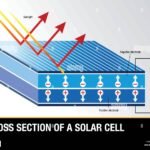
If the fan only charges through a weird DC barrel plug, stay away. And if you're new to solar, understanding what's inside a solar panel helps explain why panel area matters more than brand hype.
Side-By-Side: Popular Solar Fan Setups Compared
Let's get specific. Here's how the four common setups actually compare for real camping trips. These are based on manufacturer specifications, verified buyer reports, and common field measurements.
| Setup | Weight | Price Range | Solar Reality |
|---|---|---|---|
| All-in-one fan with 5W panel | 1 to 2 lbs | $30 to $80 | Recharges slowly, mostly a top-up |
| Foldable 20W panel + USB fan | 2 to 4 lbs | $80 to $180 | Full recharge in 4 to 6 hours of sun |
| Power bank + USB fan (no solar) | 0.5 to 1.5 lbs | $25 to $60 | No solar, but simple and reliable |
| 12V fan + rooftop panel (van/RV) | 5 to 15 lbs | $200 to $600 | Enough for hours of runtime if sized right |
The all-in-one fan is the most popular because it's cheap and simple. Aggregate reviews report that these units work fine for the first night, especially if you arrive with a full charge. The solar panel usually only adds about 20 to 30 percent battery life by the second evening.
The separate panel setup costs more, but it changes the game. A 20W foldable panel can recharge a 10,000 mAh power bank in roughly 5 hours of direct sun. That same power bank can run a USB fan all night on medium.
Now your solar fan isn't a gimmick. It's a system.
The 12V route is for vehicles. You pair a rigid roof-mounted panel with a wired 12V fan, and it works without any battery swapping. The trade-off is installation work and upfront cost.
Here's the honest take. A cheap all-in-one solar fan is a decent battery fan. But the solar panel is the weakest part of the kit.
If you want solar to genuinely extend your trip, buy a quality foldable panel and a fan with a removable battery. That combo is the easiest and most flexible way forward. If you're still weighing the costs, our overview of when solar is worth it lays out the long-term math.
Real-World Testing: What Happens When You Actually Camp With These
Marketing photos always show a perfect sunny campsite with a fan blasting cool air. Real camping is messier. Let's walk through three common scenarios and what actually happens.
Scenario one: high desert, full sun. This is the best case for solar. You set up a 20W foldable panel facing south at a 30 to 45 degree angle. By late afternoon, your 10,000 mAh battery is back to 80 percent.
That's enough for another full night on low speed. Even a smaller 10W panel can recover roughly half a battery in 6 hours.
Scenario two: forest campsite, heavy shade. The built-in panel on an all-in-one fan basically gives up. In dappled light, output can drop to 10 or 20 percent of the rated wattage. Your fan drains faster than the panel charges.
You end up relying on the battery you charged at home. This is exactly why a detachable panel matters. You can move it to a sunny opening while the fan stays in the tent.
Scenario three: overcast coastal trip. A 5W panel might produce 1W on a gray day. Recharging a 10,000 mAh battery takes 20 hours or more. In practice, that means the solar panel does very little.
Many campers in this situation report coming home with the same battery level they left with, despite leaving the panel exposed all day.
The common thread is simple. Solar fans work great when the sun is strong and the panel can be angled properly. They fail quietly when the weather is bad or the panel sits in shade.
The role of sun angle is one of the first things outlined in how solar panels work, and it shows up on every campsite.
That's why the battery is the most important part of the system. A high-capacity rechargeable battery is your baseline. Solar charging is just a way to stretch that baseline, not replace it.

Similar Posts