How to Claim the South Australia Solar Rebate

If you're a South African homeowner and you installed solar panels between March 2023 and February 2025, you're probably wondering how to claim the SARS solar rebate and get some of that money back. The short answer is that you claim it through your annual tax return on SARS eFiling by declaring the qualifying costs under Section 12B. But there's a lot of paperwork, timing rules, and traps that can turn a decent refund into a rejected claim or even an audit.
The rebate covers 25% of the cost of new solar photovoltaic panels and their inverter, but batteries are treated differently under a separate tax allowance. As of 2026, the window for new installations has closed, but if you installed during the qualifying period and haven't filed yet, you can still claim. Let's walk through exactly what you need to know before you hit submit.
Quick Answer
You claim the solar rebate on SARS eFiling through your annual tax return. Enter the qualifying system cost under the Section 12B allowance. You need a valid Electrical Certificate of Compliance.
Your installer must be registered. Keep all invoices and proof of payment for five years. The rebate is 25% of the cost, excluding batteries and VAT.
Why Accuracy Matters – What One Mistake Costs You
The South African Revenue Service doesn't mess around when it comes to tax deductions. A small error on your solar rebate claim could cost you thousands of rand in rejected refunds or trigger an audit that digs through years of returns. This isn't the kind of thing where you guess the numbers and hope for the best.
Consider this scenario. You install a R150,000 solar PV system. At 25%, you would expect a R37,500 rebate.
But if you accidentally include the cost of the battery in that figure, or if you claim the VAT-inclusive amount when you should claim the VAT-exclusive amount, SARS will reject the claim. You'll wait months for a response, then have to refile or escalate through the dispute process. That's time and frustration you could have avoided.
The real danger is the understatement penalty. If SARS decides your mistake was careless rather than accidental, they can slap you with an additional 10% to 20% penalty on top of the tax you owe. That hurts.
Our research shows that the most common rejection reasons are straightforward. People claim on the wrong tax year. They submit without the correct documentation.
They use an installer who isn't properly registered. None of these are difficult to fix if you know what you're doing upfront.
Accuracy matters because the rebate is generous. A correctly claimed R37,500 back on your system is meaningful money. But that generous rebate also attracts SARS scrutiny.
They know this is a popular deduction, and they're checking claims carefully. One wrong digit can turn your refund into a headache.
The key is to treat this like a formal application, not a casual form-filling exercise. Every document needs to be correct. Every date needs to match.
Every cost needs to be properly categorised. Do that, and the process is smooth. Rush it, and you'll regret it.
The Core Facts: Who Qualifies, What's Covered, and the Deadline
Let's get the fundamentals straight. The solar rebate in South Africa is officially called the Section 12B tax allowance for solar PV systems. It's not a cash payout from SARS.
It's a deduction that reduces your taxable income, which means you get the benefit when your tax return is assessed.
Who qualifies? You do, if you're a natural person (individual) or a business registered for income tax. You don't need to be a company.
Homeowners and sole proprietors are absolutely eligible. The system must be installed at a property you own and use. If you're renting, the landlord claims it, not you.
What's covered? The rebate applies to new and unused solar photovoltaic panels, the inverter, and the mounting structure. It covers the cost of the equipment itself.
It does not cover installation labour separately, but the total system cost as invoiced by your installer counts toward the rebate amount. The key rule is that the system must be grid-connected. Off-grid standalone systems do not qualify under the current interpretation.
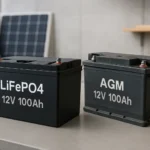
What's not covered? Batteries. Battery storage is claimed under a different allowance called Section 12D.
You cannot lump battery costs into your Section 12B claim. If you bought a hybrid system with batteries, you need to split the costs on your tax return. Labour costs that are itemised separately from equipment may also be excluded depending on the invoice wording.
What's the deadline? The system must have been brought into use (commissioned and connected) between 1 March 2023 and 28 February 2025. That window is closed as of 2026.
But if you installed during that period and haven't filed the tax return for that year yet, you can still claim. The rebate applies to the tax year in which the system was first used, not the year you paid for it.
Here's a quick reference table:
| Item | Covered under Section 12B? | Notes |
|---|---|---|
| Solar panels (new) | Yes | Must be new and unused |
| Inverter (grid-tied or hybrid) | Yes | Must be part of the PV system |
| Mounting structure and cables | Yes | Include as part of system cost |
| Battery storage | No | Use Section 12D instead |
| Installation labour (itemised separately) | Possibly | Check invoice wording carefully |
| VAT | No | Claim based on VAT-exclusive cost |
| Second-hand equipment | No | Only new equipment qualifies |
The maximum rebate amount is 25% of the cost, and there is effectively no upper limit for residential systems since the cap is 15 MW. For a R100,000 system, that's R25,000 back. For a R200,000 system, it's R50,000.
That's real money.
Step-by-Step: How to Claim Your Solar Rebate Through SARS eFiling
You can claim the solar rebate directly through SARS eFiling when you submit your annual income tax return. Here is the exact process, step by step.
Step 1: Gather your documents before you log in.
You need the original invoice from your solar installer. This invoice must clearly list the equipment, the date of installation, and the total cost broken down by item. You also need the Electrical Certificate of Compliance (CoC) that your electrician issued after the installation.
And you need proof of payment, such as a bank statement or EFT confirmation showing the amount and date.
Step 2: Log into SARS eFiling and open your tax return.
Go to the SARS eFiling portal. Select "Returns" and then "File Annual Return." Choose the correct tax year. The year you file depends on when the system was commissioned.
If you installed in July 2023, you claim in the 2024 tax return (year ending February 2024). If you installed in January 2024, you claim in the 2025 return.
Step 3: Navigate to the Local Business Income section.
The Section 12B allowance is filed under your local business income or trade income, even if you're a salaried employee. SARS has a specific field for "Solar PV systems, Section 12B allowance." Look for the "Other Income / Deductions" section if you don't see it immediately. If you're unsure, use the eFiling help tool or call the SARS contact centre.
Step 4: Enter the qualifying cost.
Enter the total cost of the solar PV system, excluding VAT and excluding any battery component. Use the VAT-exclusive amount from your invoice. If your invoice does not separate VAT, calculate the VAT-exclusive amount by dividing the total by 1.15.
Step 5: Submit your return and upload supporting documents.
SARS eFiling will ask you to attach supporting documents. Upload your invoice, CoC, and proof of payment at this stage. Make sure the file names are clear, like "Invoice_Solar_Installation_2023.pdf" rather than "scan0001.pdf." Submit the return.
Step 6: Wait for assessment.
SARS will process your return. If everything matches, the rebate is applied automatically to reduce your tax liability. You'll receive an assessment notice.
If you're due a refund, it's typically paid within a few weeks. If SARS has questions, they'll request additional information.
Step 7: Keep all records for five years.
SARS can audit a claim up to five years after the assessment. Keep the original invoices, CoC, proof of payment, and bank statements showing the refund. Store them digitally and in a safe physical place.
The Documentation Checklist – What SARS Will Ask For
SARS is not overly demanding, but the documentation must be complete and correct. Missing a single item can delay your refund by months.
Here is your checklist.
The Installer Invoice
This is the most important document. The invoice must include the full name and VAT registration number of the installer. It must list each piece of equipment with its description and cost.
Solar panels should be listed by brand, model, and wattage. The inverter should be listed by brand and model. The invoice must show the installation date.
It must show the total cost and the VAT amount. If the invoice is unclear, ask your installer for a corrected version before you file.
The Electrical Certificate of Compliance (CoC)
This is a legal requirement for any electrical installation in South Africa. Your installer must issue a CoC after the system is connected. The CoC confirms that the installation meets the South African National Standard SANS 10142-1 wiring regulations.
SARS expects to see this document as proof that the system is properly installed and safe.
Proof of Payment
You need to prove that you actually paid for the system. A bank statement showing the EFT transaction is sufficient. If you paid by debit order, show the debit order schedule.
If you used a credit card, show the credit card statement. The name on the payment documents must match your name or your business name as registered with SARS.
Proof of Commissioning Date
SARS needs to confirm the system was brought into use between 1 March 2023 and 28 February 2025. The invoice date is usually accepted. But if your invoice date differs from the connection date, provide the CoC date or a letter from the installer confirming when the system was switched on for the first time.
Bank Account Details for Refund
If this is your first time receiving a refund from SARS, verify that your banking details on eFiling are correct. A refund sent to the wrong account is a hassle to resolve.
Here is a summary table of documents required:
| Document | Required? | Why It Matters |
|---|---|---|
| Installer invoice | Yes | Proves cost and equipment |
| Electrical Certificate of Compliance | Yes | Proves safe installation |
| Proof of payment | Yes | Proves you paid |
| Commissioning date proof | Yes | Proves you met the deadline |
| Photo of installed system | Not formally required | Useful if SARS asks for verification |
| Installer registration proof | Not always required | Keep it in case of audit |
Common Mistakes That Get Claims Rejected (or Audited)
This is where most people go wrong. Knowing these mistakes upfront saves you the headache of a rejected claim.
Mistake 1: Claiming the wrong year.
Your system was installed in 2024, but you filed your 2023 return instead. Or you paid for it in 2024 but the system was only switched on in 2025. The rule is clear: claim in the year the system was first used (commissioned), not the year you paid.
SARS checks the CoC date and invoice date. If they don't match, you need to explain.
Mistake 2: Including batteries in the Section 12B claim.
This is the single most common error. Batteries are not covered under Section 12B. They fall under Section 12D, which has different rules.
If you lump them together, SARS will flag the claim. You must split the costs and file under the correct sections.
Mistake 3: Using an unregistered installer.
Only a registered electrical contractor can issue a valid CoC. If your installer isn't registered with the Electrical Contracting Board, the CoC is invalid. SARS won't accept the claim.
Always verify your installer's credentials before you pay.
Mistake 4: Claiming the VAT-inclusive amount.
The rebate is calculated on the VAT-exclusive cost of the system. If you claim the total including VAT, you're inflating your claim. SARS will reject it.
Calculate the VAT-exclusive amount accurately.
Mistake 5: Not keeping records for five years.
SARS can audit you five years after assessment. If you don't have the documents, they disallow the claim and demand repayment with interest. Store everything securely.
Mistake 6: Filing without the CoC.
Some people file their tax return immediately after installation before the electrician has issued the CoC. SARS will ask for it later, and you'll have to amend the return. Wait until you have the CoC in hand before you submit.

Similar Posts