How to Apply for NSW Solar Rebate

Figuring out how to apply for the solar rebate in NSW can feel like trying to assemble flat-pack furniture without the instructions. Between the STC scheme, the interest-free loan program, and the different rules for homeowners versus renters, it is easy to stall before you even begin.
As of 2026, a standard 6.6kW system generates about 88 Small-scale Technology Certificates. Each STC is worth roughly $37 right now. That works out to over $3,200 off your system price before installation even starts.
This guide walks you through exactly how to claim that money without getting tripped up.
Pain Point + Quick Answer
The biggest frustration people hit is that this is not a typical government rebate. You do not fill out a form online and wait for a cheque to arrive. The discount happens upfront through your installer.
Here is the short answer. You assign your STCs to a CEC-accredited installer. They reduce your system price by the STC value.
You pay the lower amount. That is it.
The core problem is trust. You need to know you are getting fair value for your certificates. Many homeowners sign the assignment form without understanding how many STCs their system should generate or what each one is worth.
That is where people lose money.
The simplest path is this. Choose a Clean Energy Council accredited installer. Get at least three quotes.
Ask each one to show you the STC calculation. Compare the upfront discount they offer. If it looks low, ask why.
A good installer will explain the numbers clearly.
The other frustration is timing. STCs devalue by one year every January. That means the rebate gets slightly smaller each year.
Waiting twelve months could cost you a few hundred dollars. There is no reason to delay if your roof is ready.
How the NSW Solar Rebate Actually Works
Let us clear up the biggest confusion first. The solar rebate everyone talks about in NSW is technically the federal Small-scale Renewable Energy Scheme (SRES). It is administered nationally but the benefit arrives through your local installer.
The state government also offers an interest-free solar loan, but that is a separate program.
Here is how the main rebate works. When you install a solar system, you create a number of Small-scale Technology Certificates (STCs). Each certificate represents one megawatt-hour of renewable energy your system will generate over its lifetime.
The number you get depends on three things: your system size, your location in NSW, and the current year's devaluation factor.
You do not have to handle these certificates yourself. In almost every case, you assign them to your installer. The installer sells them on the STC market and deducts the value from your invoice.
That upfront discount is what people call "the rebate."
The scheme devalues by one year every calendar year. As of 2026, a 10-year devaluation factor applies. Next year it will be 9 years.
That means the rebate shrinks steadily over time. Waiting costs you real money.
The REC Registry is the official platform where STCs are created and traded. Your installer handles this entirely. You never need to log in or create an account.
But you do need to sign an STC assignment form. That form is your legal permission for them to claim your certificates.
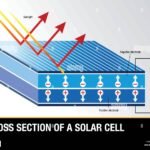
Understanding the underlying technology helps too. If you are curious about the science behind it, our guide on how solar technology converts sunlight explains the process in plain language. It is worth knowing what you are actually paying for.
Do You Qualify? (The Eligibility Decision Tree)
Your eligibility depends on three main conditions. Your property type. Your ownership status.
And whether you already have a system installed. Here is how to figure out where you stand.
If you own your home. You are almost certainly eligible. The property must be grid-connected and have a suitable roof in good condition. Most standalone houses qualify without issues.
Apartments with shared roofs can be trickier. You need strata approval and a dedicated meter.
If you rent. You cannot claim the rebate without landlord permission. The landlord must agree to the installation because they own the property and therefore own the STCs. Some landlords split the savings with tenants through a rent adjustment.
Many do not. You can still benefit from lower electricity bills if the system goes in.
If you are a landlord. You can claim the rebate on a rental property just like an owner-occupied home. The same rules apply. CEC accredited installer.
Eligible system. Grid connection. You get the upfront discount.
Your tenant gets lower power bills. It is a solid value-add for the property.
If you already have solar. You cannot claim the rebate again for the same property. The scheme is for new systems only. However, if you upgrade to a larger capacity or add panels, the additional capacity may be eligible.
Check with your installer before buying anything.
If you live in an apartment or unit. This depends entirely on your strata arrangement. You need written approval from the owners corporation. You also need a separate meter for your unit.
Most apartments use embedded networks which complicate eligibility. Some strata committees block installations outright.
The different panel types to choose from can affect your system design and eligibility. Monocrystalline panels tend to perform better in limited roof space, which matters more for smaller properties.
Step-by-Step: Claiming Your Rebate (From Quote to Discount)
Step 1: Find a CEC-accredited installer
This is non-negotiable. Only Clean Energy Council accredited installers can create STCs. Use the official CEC directory to find one near you.
Check that their accreditation is current. A non-accredited installer means no rebate, period.
Step 2: Get at least three quotes
Each quote should show the system cost before and after the STC discount. Ask for the full STC calculation. How many certificates does your system generate?
What value per certificate did they use? A transparent quote lists these numbers clearly. If an installer dodges the question, move on.
Step 3: Verify system eligibility
The panels and inverter must be on the CEC approved products list. Your installer should confirm this in writing. If they use uncertified components, the STCs cannot be created.
You also lose warranty protection. Understanding the key parts of your system helps you spot when something is missing or substandard.
Step 4: Sign the STC assignment form
This is the legal document that transfers your certificates to the installer. Read it carefully. Check that the number of STCs matches the calculation in your quote.
Never sign a blank form or one with missing numbers. This is where most mistakes happen.
Step 5: Installation and connection
The installer completes the work and lodges the STC creation in the REC Registry. You get the discount applied to your final invoice. Then you register your system with your energy retailer and switch to a solar feed-in tariff.
Some retailers handle this automatically. Others make you call. Confirm the process before installation day.
What It Actually Costs and Saves You
The numbers change each year because STCs devalue. As of 2026, here is what a typical NSW installation looks like.
| System Size | STCs Generated | Approx. Discount | Typical Cost After Rebate |
|---|---|---|---|
| 3kW | 40 | $1,480 | $3,000 to $4,500 |
| 5kW | 66 | $2,442 | $4,000 to $6,000 |
| 6.6kW | 88 | $3,256 | $4,500 to $7,000 |
| 10kW | 133 | $4,921 | $7,000 to $10,000 |
*STC value estimated at $37 per certificate. Prices vary by installer and equipment quality.
Your actual payback depends on how much energy you use. A household using 20kWh per day in Sydney typically saves $800 to $1,200 per year on electricity bills. That puts payback between 3 and 6 years for most systems.
After that, the power is essentially free.
The long-term benefits of solar go beyond the monthly savings. Solar panels last 25 to 30 years. Inverters need replacing around year 10.
After you hit payback, you are generating free electricity for a decade or more. That adds up to tens of thousands of dollars over the system's life.
Your location in NSW matters for both generation and STC allocation. Sydney and coastal areas get good sun but not the best. Inland areas like Dubbo or Broken Hill get higher irradiance and produce more electricity.
Your STC zone also affects how many certificates you receive. Zone 3 covers most of NSW. Zone 4 covers the far north coast and generates slightly fewer STCs per kilowatt.
An installer can calculate your exact zone and number during the quoting process.

Similar Posts