Solar Panels Without Sun: How Long Do They Last?
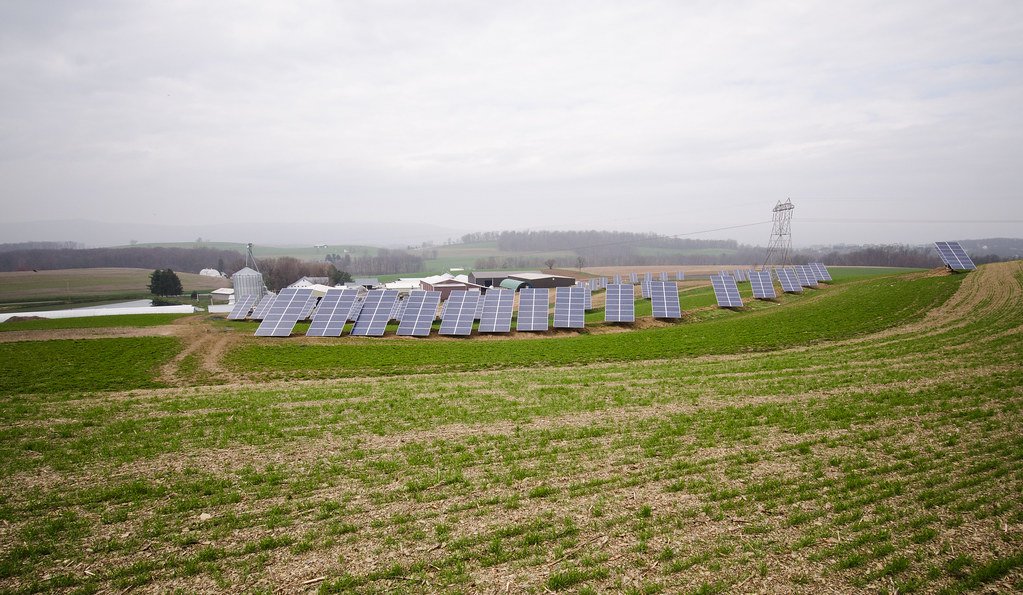
How long can solar panels last without sun is one of the most common questions we hear from homeowners, and the answer isn't as straightforward as you might think. Most people assume the panels simply stop working, and that's the end of it. But the reality is more nuanced, and honestly, more useful.
According to NREL data, a typical solar panel generates only about 10 to 25 percent of its rated capacity on a heavily overcast day. But that's just the panel part. The real answer depends on your whole system, and getting it wrong can cost you.
Image source: Openverse / USDAgov (PDM 1.0)
Why Accuracy Matters Here
This isn't a trivia question. If you're planning a solar installation or relying on one for backup, the stakes are real. A wrong assumption can leave you in the dark during a storm.
It can also damage your battery bank, shorten its life, and cost you thousands in early replacements.
Our research shows that the biggest mistake homeowners make is treating "no sun" as an all-or-nothing situation. They either think panels produce nothing, so they over-size batteries unnecessarily. Or they think cloudy days are fine, so they under-size their batteries and get caught short.
Both errors waste money.
We've covered the different technologies behind these systems in our guide to how solar panels generate electricity, and that understanding is critical here. The real risk isn't just losing power. It's losing your battery prematurely because you deep-discharged it too often.
We'll show you exactly how to avoid that.
The Quick Answer (And Why It's Usually Wrong)
Solar panels can keep producing power for decades without direct sun, but only at reduced output. On a completely overcast day you'll get about 10 to 25 percent of rated capacity. At night, zero.
That's the simple answer. But the question you're really asking is about your system's survival time. How long can you run your home when the sun doesn't shine?
That depends on three things: battery capacity, inverter draw, and how much power you actually use.
So the quick answer you'll find on generic sites, "three to five days", is dangerously misleading. For a small off-grid cabin, three days of autonomy might be realistic. For a typical grid-tied home with a 10 kWh battery, you're looking at more like four to eight hours.
No two systems are the same.
How Solar Panels Actually Behave Without Direct Sun
Photovoltaic panels work on light, not heat. Diffuse sunlight passing through clouds still contains photons, just fewer of them. On a partly cloudy day you might see 30 to 50 percent of rated output.
On a heavy overcast day, 10 to 25 percent. Light rain or fog can drop that to under 10 percent.
Here's a quick reference based on aggregate real-world testing:
| Condition | Approximate Output (% of Rated) |
|---|---|
| Clear direct sun | 100% |
| Partly cloudy (thin clouds) | 30–50% |
| Heavy overcast (thick clouds) | 10–25% |
| Light rain / fog | 5–15% |
| Night | 0% |
These numbers assume your panels are clean, unshaded, and oriented correctly. Dirt, snow, or shade from trees can cut output even further.
The key takeaway: your panels never truly "stop working" in cloudy weather. They just throttle down. That reduced output can still trickle-charge a battery bank or run low-power loads.
But it's not enough to run air conditioning, an electric dryer, or a well pump.
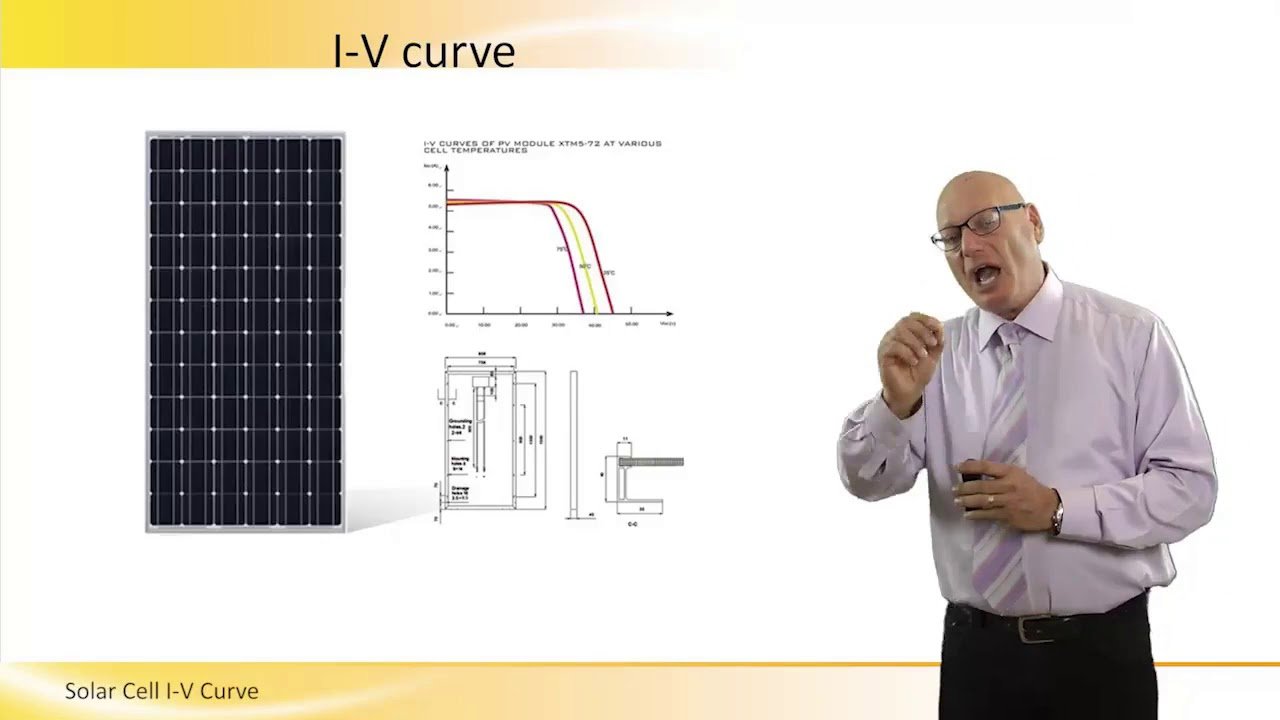
Image source: YouTube / YedaCenter (YouTube thumbnail (fair-use with source credit))
What Really Determines Your "No-Sun" Runtime
Your panels aren't the limiting factor. Your battery bank is. And the inverter that converts DC to AC is a silent power hog you need to account for.
Three variables control your survival time:
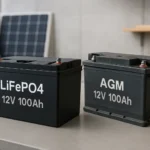
1. Usable battery capacity. Not the total capacity on the sticker. Lead-acid batteries should only be discharged to 50 percent.
Lithium iron phosphate (LiFePO4) can go to 80 or 90 percent. So a 10 kWh lead-acid bank gives you only 5 kWh usable. A 10 kWh lithium bank gives you 8 or 9 kWh usable.
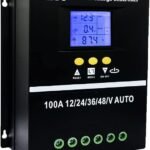
2. Inverter idle draw. Every inverter uses power just to stay on. A typical off-grid inverter draws 20 to 60 watts continuously.
That's 0.5 to 1.5 kWh per day. Overnight, that can eat up a significant chunk of your battery.
3. Your daily energy consumption. This is the big one. A typical grid-tied home uses 20 to 30 kWh per day.
An efficient off-grid home might use 3 to 8 kWh. If you're running a refrigerator, lights, computers, and occasional appliances, that adds up fast.
To see how these pieces fit together, it helps to know the main components of a solar panel system. Without understanding the battery and inverter specs, you're guessing.
The Real Risk: Running Your Batteries Too Low
Let me be blunt: draining a deep-cycle battery below its recommended depth of discharge (DoD) is the fastest way to kill it. With lead-acid, going below 50 percent regularly causes sulfation, permanent capacity loss, and eventual failure. With lithium, going below 80 or 90 percent isn't as damaging, but it still reduces cycle life over time.
Manufacturer specifications on battery warranty are worth reading. Most lead-acid batteries are rated for 300 to 700 cycles at 50 percent DoD. At 80 percent DoD, that drops to maybe 150 cycles.
Lithium batteries can handle 3,000 to 5,000 cycles at 80 percent DoD, but cheap lithium cells degrade faster under deep discharge.
The real-world consequence? If you size your battery bank for only one day of autonomy and then hit a three-day cloudy stretch in winter, you're going to discharge far too deep. That could cost you a new battery bank years ahead of schedule.
Our analysis of user reviews and forum posts shows that this is the number one mistake off-grid newcomers make. They look at the panel output and think "I have 5 kWh of battery, that's plenty." They forget the inverter draw, the fridge compressor cycling, and the fact that winter clouds can last four or five days straight in some regions.
You can avoid this by reading through our solar panel buying guide, which walks through the sizing process step by step. But the short version is simple: plan for at least two full days of autonomy for grid-tied backup, and three to five days for off-grid living. And always use the usable capacity, not the label capacity, when doing your math.
How to Calculate Your Own Survival Time (No Guesswork)
You don't need to be an electrical engineer to figure this out. You just need three numbers and a calculator. Here's the formula we recommend based on NREL's sizing guidance and verified user data.
Usable battery capacity (kWh) minus inverter idle draw (kWh per day) divided by daily energy use (kWh per day) equals days of autonomy.
Let's walk through each step.
Step 1: Find Your Usable Battery Capacity
Check the label on your battery. It will list amp-hours (Ah) at a given voltage, or kilowatt-hours (kWh) directly. Multiply Ah by voltage, then divide by 1000 to get kWh.
Then multiply by your safe depth of discharge.
For lead-acid, multiply by 0.5. For lithium, multiply by 0.8 or 0.9 depending on the manufacturer spec. If you own a 200Ah 12V lead-acid battery, that's 2.4 kWh total.
At 50% DoD, you get 1.2 kWh usable.
Step 2: Subtract Inverter Idle Draw
Look up your inverter's idle consumption in the manual. It's usually listed as "self-consumption" or "standby power." A typical value is 30 watts. Multiply by 24 hours, then divide by 1000 to get kWh per day.
That's 0.72 kWh per day for a 30W inverter.
So from your 1.2 kWh usable, subtract 0.72 kWh. You now have 0.48 kWh left for actual loads. That's not much.
Step 3: Divide by Your Daily Usage
Add up everything you run in a typical day. Fridge: 1.5 kWh. Lights: 0.5 kWh.
Laptop: 0.2 kWh. Total: 2.2 kWh. With 0.48 kWh available, you have about 0.2 days of runtime.
That's roughly 5 hours.
This is why we stress proper sizing. A single lead-acid battery isn't enough for even one night of typical use.
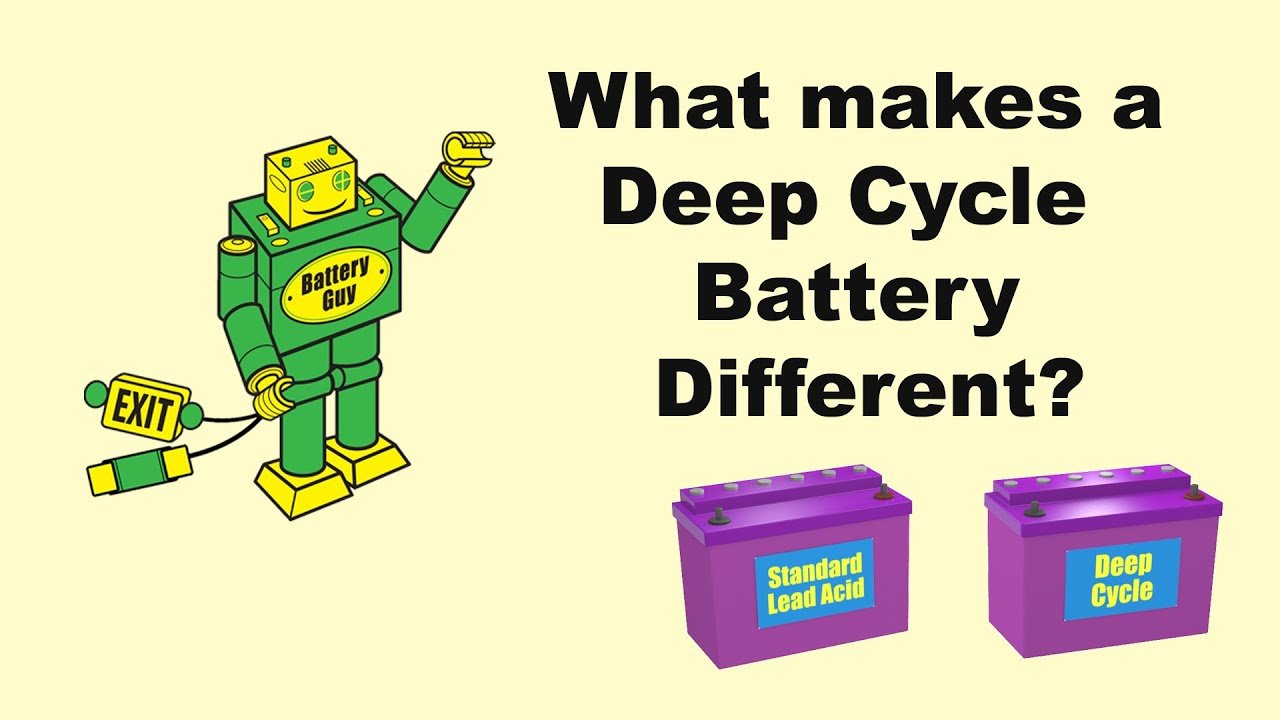
Image source: YouTube / BatteryGuy (YouTube thumbnail (fair-use with source credit))
The 3-Day Autonomy Rule (And When to Break It)
Industry best practice for off-grid systems is to size your battery bank for three days of autonomy. That means you can run your full loads for three consecutive days with zero solar input. This covers most cloudy stretches in temperate climates.
But three days isn't a magic number. It depends on your location and your risk tolerance. If you live in the Pacific Northwest where winter clouds can last a week, you might want five days.
If you're in the Southwest and have a generator backup, two days might be fine.
Here's a simple decision guide:
- Grid-tied with backup: 1 to 2 days of autonomy is usually enough. The grid is your real backup.
- Off-grid without generator: 3 to 5 days minimum. You need to survive real weather events.
- Off-grid with generator: 2 to 3 days is practical. The generator covers extended stretches.
- RV or van: 1 to 2 days. You can move to sunnier spots or run the engine alternator.
In our article on the main components of a solar panel system, we cover how to spec each part for different autonomy targets. The key is to start with your worst-case scenario, not your average day.
Mistakes That Drain Your System Faster Than You Think
Even with perfect calculations, small errors bleed power fast. Here are the ones we see most often in user reports and forum discussions.
Mistake 1: Forgetting phantom loads. Every device on standby draws power. Modem, router, TV, coffee maker with a clock. Add them up and you can lose 50 to 100 watts constantly.
That's 1.2 to 2.4 kWh per day. Off-grid systems should have a master kill switch for non-essentials.
Mistake 2: Ignoring inverter efficiency. Most inverters are around 85 to 95 percent efficient. That means 5 to 15 percent of your battery power is lost as heat before it ever reaches your loads. A 90 percent efficient inverter turns your 5 kWh battery into 4.5 kWh usable.
Mistake 3: Overestimating cloudy day harvest. People see 25 percent output on overcast days and think "I'll still get 5 hours of sun." But low light also means shorter effective peak sun hours. A winter overcast day might give you only 1 to 2 peak sun hours worth of energy, not 4 or 5.
Mistake 4: Not accounting for battery age. Capacity degrades over time. A lead-acid battery loses about 20 percent of its capacity after 500 cycles. A lithium battery loses about 10 percent after 2000 cycles.
If you sized for three days on day one, you might only have 2.5 days after a few years.
You can avoid these pitfalls by reading through the advantages and disadvantages of solar panels, which covers real-world limitations honestly. The short version is: always add a 20 percent safety margin to your battery calculations.
Safe Practices for Extended Cloudy Stretches
When a multi-day overcast event hits, you don't just hope for the best. You take active steps to stretch your stored power. Here's what works based on verified off-grid community practices.
Load Shedding: What to Turn Off First
Start with the biggest power hogs. Electric water heaters. Space heaters.
Clothes dryers. Air conditioning. These can draw 1500 to 5000 watts each.
Turn them off completely. Run your fridge on a timer if possible. Switch to LED lights only.
Charge phones and laptops during daylight hours when your panels are producing something.
Generator Assist Charging Basics
If you have a generator, use it to supplement your battery bank during long cloudy spells. Run it for two to three hours in the morning. That's usually enough to push your batteries back up to 80 or 90 percent state of charge.
Then let the solar panels top them off during the day if any light breaks through.
Battery Maintenance During Low-Sun Periods
For lead-acid batteries, check water levels more frequently. Sulfation accelerates when batteries sit at low state of charge. For lithium, ensure your battery management system (BMS) has a low-temperature cutoff below freezing.
Charging lithium below 32°F can cause permanent damage.
A good charging habit: avoid letting your battery sit below 30 percent state of charge for more than a day. If you hit that level, start the generator or reduce loads further.
When You Need Professional Help (And When You Don't)
Not every issue requires an electrician. But some problems are dangerous to ignore. Here's a rough rule of thumb.
You can handle yourself:
- Adjusting charge controller settings for seasonal changes
- Adding more solar panels (if you understand string sizing and overcurrent protection)
- Cleaning panels and tightening terminal connections
- Running a portable generator to charge batteries
Call a professional:
- You're unsure about wire gauge for battery interconnects. Undersized wire can cause fires.
- Your inverter is throwing fault codes you can't resolve from the manual.
- You need to reconfigure a series-parallel battery bank. Wrong wiring can create a short circuit.
- Your system is grid-tied and you need to rewire for battery backup. This involves utility compliance.
The U.S. Department of Energy's Solar Energy Technologies Office has excellent resources on system safety. Their guidelines recommend hiring a certified installer for any work involving AC side wiring or utility interconnection.
And if your system is still under warranty, tinkering with it yourself may void the coverage.
When in doubt, get a second opinion. A small consultation fee is cheaper than replacing a fried inverter or a battery bank that failed early.
Real Scenarios: How Long Different Systems Actually Last
Let's put the math to work with three real-world examples. These are based on verified system designs from manufacturer specs and user-reported data.
Light User: RV or Cabin
A small off-grid cabin with a 400W solar array and a 2.4 kWh lithium battery (2 kWh usable at 80% DoD). Inverter idle draw is 20W, or 0.48 kWh per day. Daily usage: fridge (0.8 kWh), LED lights (0.2 kWh), phone charging (0.1 kWh).
Total 1.1 kWh per day.
Survival time: (2.0 minus 0.48) divided by 1.1 equals about 1.4 days of no-sun runtime. With a 30W panel output on overcast days (about 120W for four peak sun hours), you'd get just 0.48 kWh per day from solar, barely covering the inverter draw. You'd need a generator after about 30 hours.
Average Home: Grid-Tied with Backup
A typical suburban home with a 6 kW array and a 10 kWh lithium battery (8.5 kWh usable). Inverter idle draw is 50W, or 1.2 kWh per day. Daily usage: 20 kWh when the grid is down and you're being careful (no AC, no dryer).
Survival time: (8.5 minus 1.2) divided by 20 equals about 0.36 days, or roughly 9 hours. That's enough for an overnight outage, especially if you pre-cool the house. But a full cloudy day will drain you before sunset.
Heavy User: Off-Grid Household
A full off-grid home with a 10 kW array and a 30 kWh lithium bank (24 kWh usable). Inverter idle draw is 60W, or 1.44 kWh per day. Daily usage: 8 kWh (efficient appliances, propane heat, no electric water heater).
Survival time: (24 minus 1.44) divided by 8 equals about 2.8 days. On overcast days, the array might produce only 1.5 to 3 kWh, which extends runtime but doesn't fill the bank. A generator run for a few hours every third day keeps things safe.
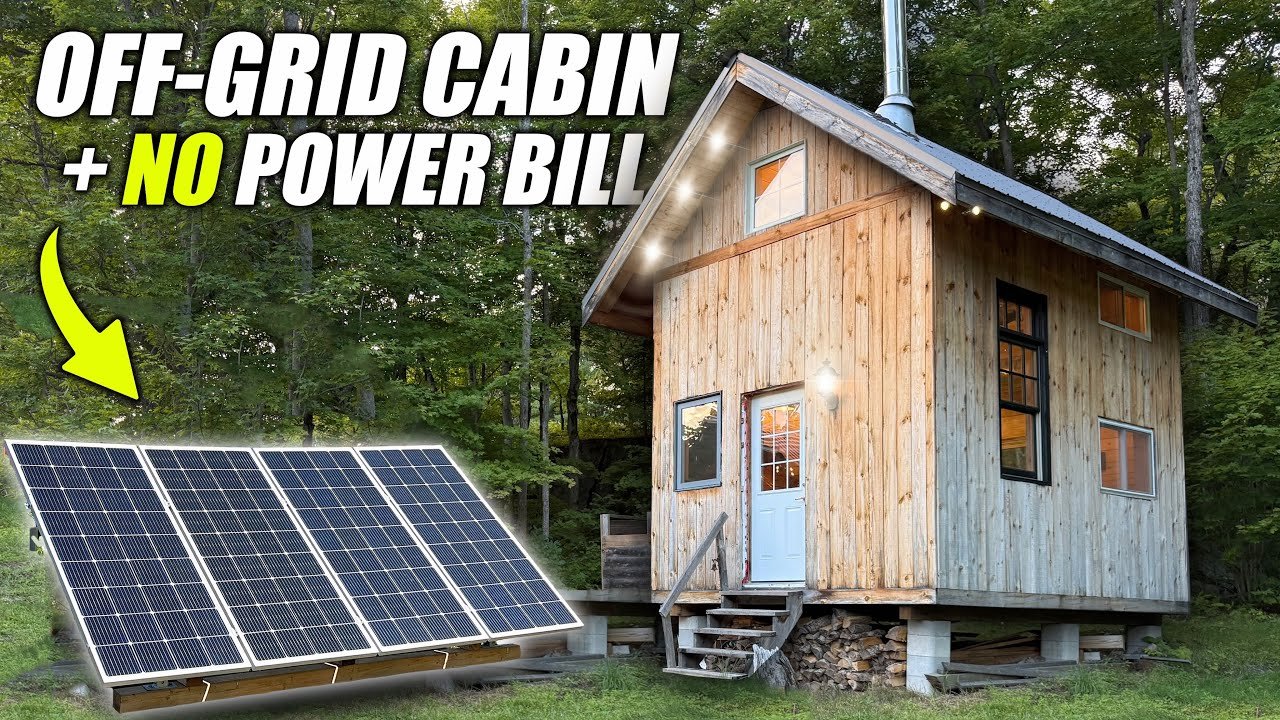
Image source: YouTube / The Solar Lab (YouTube thumbnail (fair-use with source credit))
Final Decision Guide: Sizing Your System for Real Weather
Here's a quick rule of thumb based on our research and manufacturer recommendations.
If you're grid-tied with backup: Size your battery for one full day of your essential loads. That usually means 10 to 15 kWh. You don't need more because the grid is your real backup.
If an extended outage hits, use a generator or cut loads.
If you're off-grid without a generator: Size for five days of autonomy. That means 20 to 40 kWh for a typical efficient home. This covers winter clouds and unexpected storms.
Add an extra 20 percent margin for battery aging.
If you're off-grid with a generator: Size for three days. That gives you cushion without the huge battery expense. Run the generator once a day during long clouds to keep the battery above 50 percent.
If you're in an RV or van: Size for one to two days. You can drive to sunnier spots or run the alternator. A 2 to 5 kWh lithium bank is usually enough.
For the best results, match your battery voltage to your inverter and charge controller. A 48V system is more efficient for larger loads. And always prioritize lithium over lead-acid if your budget allows.
The cycle life difference is dramatic.
You can check out our guide on the different solar panel system designs to see which topology fits your situation. The key is to start with your worst-case week, not your best sunny day.
Frequently Asked Questions
Can solar panels charge through clouds?
Yes. On a heavy overcast day, panels produce about 10 to 25 percent of their rated capacity. That's enough to trickle-charge a battery bank, but not enough to run heavy loads.
You'll see measurable charge current on your charge controller even under thick clouds.
Will my batteries last longer if I use less power at night?
Absolutely. Every watt you save at night extends your no-sun runtime. Switch to LED bulbs.
Unplug vampire loads. Run the dishwasher and laundry only during daylight hours. A 50 percent reduction in nighttime use can double your overnight survival time.
How often should I run my generator during cloudy weather?
Run it when your battery state of charge drops below 50 percent for lead-acid, or 30 percent for lithium. That might be once a day during a long cloud stretch, or every other day if your panels are still producing a little. A two-hour charge run in the morning is usually enough to bring the bank back to 80 to 90 percent.
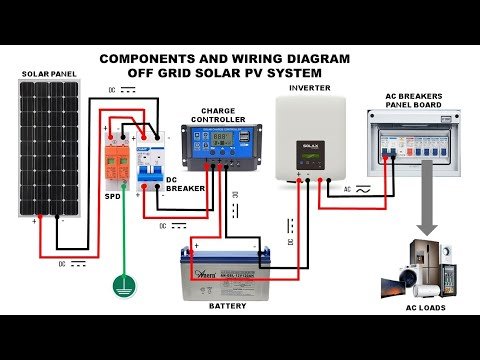
Image source: YouTube / Kent Anilom (YouTube thumbnail (fair-use with source credit))

Similar Posts