Can a Car Battery Work for Solar Panels?
Can I use a car battery for a solar panel? It's one of the most common questions we hear from people building a budget off-grid setup. You've got an old battery sitting in the garage, a small solar panel on sale, and you're wondering if they can work together.
The honest answer is yes, but only under specific conditions.
Battery industry data is clear about the trade-offs. A standard SLI car battery is built for short, high-current bursts to start an engine, not for slow nightly discharge. Most car batteries survive only 50 to 100 cycles before they're done, and that drops fast if you drain them below 50%.
Understanding that limit is the key to deciding if this setup is right for you.
Quick Answer: Yes, You Can, But There's a Catch
Can I use a car battery for a solar panel? Yes, but only for temporary setups. Car batteries aren't built for deep cycling, dying after 50 to 100 cycles.
A deep-cycle battery lasts ten times longer. Always use a charge controller.
Why a Car Battery Isn't Built for Solar (The Core Problem)
Here's the fundamental mismatch. A car battery is an SLI battery, which stands for Starting, Lighting, and Ignition. It's engineered to blast a huge current for a few seconds, then get topped up by the alternator while you drive.
A solar panel delivers a slow, steady stream of charge over hours instead. Those two jobs demand completely different battery construction.
Inside a car battery, the lead plates are thin and porous. That design maximizes surface area for quick energy release. But thin plates shed active material fast when you cycle the battery slowly and deeply.
Deep-cycle batteries use thick, dense plates that survive hundreds of deep drains.
The numbers back this up. Per standard industry testing, a typical car battery is rated for 50 to 100 cycles at 50% depth of discharge. A deep-cycle lead-acid battery handles 500 to 1,000 cycles at the same discharge level.
That's a tenfold lifespan gap.
| Spec | Car Battery (SLI) | Deep-Cycle Battery |
|---|---|---|
| Plate design | Thin and porous | Thick and dense |
| Cycle life at 50% depth of discharge | 50 to 100 cycles | 500 to 1,000 cycles |
| Max safe discharge | About 20% | 50% to 80% |
| Best use | Engine cranking | Sustained discharge |
There's also internal resistance to consider. Car batteries have higher internal resistance than deep-cycle batteries, which means more energy is wasted as heat during slow charging. Your solar array has to work harder just to break even.
If you're still getting familiar with the basics of how those panels actually produce power, that context helps explain why the battery's role matters so much.
The Decision Tree: When It Works vs. When It Doesn't
Here's how to figure out if a car battery makes sense for your solar setup. Ask yourself three questions, then follow the branches.
Question one: What are you powering?
If your load is small and 12V, like a few LED lights, a phone charger, or a small fan, a car battery can handle it for a limited time. If you're running a fridge, a microwave, or anything through a big inverter pulling more than 300 watts, stop right there. A car battery isn't the right tool for that job.
Question two: How often will you use it?
Occasional weekend camping trips mean the battery gets time to rest and recharge. Daily or nightly cycling will kill a car battery within three to six months. A deep-cycle battery would last years in the same role.
Question three: Can you keep it fully charged?
A solar panel sized correctly can keep a car battery topped up. The rule of thumb is 10 to 20 watts of panel per 100 amp-hours of battery. That's true regardless of which panel technology you go with.
Undersized panels leave the battery chronically undercharged, and a partially charged car battery sulfates fast.
Here's the practical summary:
- Weekend camping, low-power gear → a car battery can work for a few trips
- Daily off-grid use → a car battery is a waste of time
- Emergency backup → it works, but only with a charge controller
- Permanent off-grid system → spend money on a deep-cycle battery instead
Let's talk about what you actually get. A typical car battery holds 50 to 100 amp-hours, but you can only safely use about 15% to 20% of that. That's roughly 120 to 240 watt-hours of usable energy.
Enough for a few LED lights and a phone charge overnight. Not enough for anything with a motor or heating element.
As of 2026, entry-level deep-cycle batteries cost about 50% to 100% more than a basic car battery, but they last five to ten times longer. If you need help sizing your setup, our guide on matching the right panel to your battery covers the math.
How to Wire It Safely (Step by Step)
Assume you've decided to try it. Here's the safe way to wire a car battery to a solar panel, step by step. This is the same workflow used in small 12V systems everywhere.
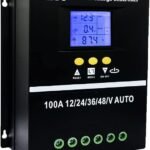
Step 1: Choose the right charge controller.
You need a charge controller between the solar panel and the battery. A PWM controller is cheap and works fine for this use case. An MPPT controller is more efficient but usually overkill for a temporary car battery setup.
Step 2: Set the correct battery profile.
Most controllers let you select the battery type. Choose the flooded lead-acid setting. Set absorption voltage to 14.4V to 14.8V and float voltage to 13.2V to 13.5V.
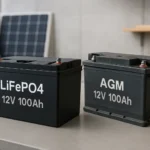
If your controller has an AGM or lithium option, skip it. Those profiles run higher voltages that can boil a flooded car battery.
Step 3: Connect the battery first, then the panel.
Connect the controller to the battery terminals with the right polarity. Then connect the solar panel to the controller. This order lets the controller sense the battery voltage before the panel powers up.
Reversed polarity can destroy the charge controller instantly.
Step 4: Add a fuse close to the battery.
Put an ANL or MRBF fuse on the positive wire within 12 inches of the battery terminal. Size it to match your wire gauge, not the battery's capacity. For a typical 12V setup with 30A max current, use 10 AWG wire and a 30A fuse.
Step 5: Wire the inverter directly to the battery.
If you're using an inverter, never run it through the charge controller. Connect the inverter directly to the battery terminals. Most charge controllers aren't designed to pass the high current that inverters pull.
Keep the battery in a ventilated space. Flooded car batteries release hydrogen gas while charging, and that gas is explosive. The Department of Energy has solid guidance on storing and charging batteries.
If you're new to this, review the key parts of a solar power system before you start.
The Three Biggest Mistakes That Kill Car Batteries Fast
Even with the right setup, three common errors will destroy a car battery in weeks instead of months. Avoid these at all costs.
Mistake 1: Skipping the charge controller.
Hooking a solar panel directly to a battery will overcharge it. A 100W panel can push up to 22 volts open-circuit into a battery that wants a maximum of 14.8V. The electrolyte boils off, the plates warp, and the battery is permanently damaged.
It's a tempting move since a good controller costs about the same as a cheap battery, but the battery won't last a season.
Mistake 2: Draining the battery too deep.
A car battery stays healthy when it remains above 80% state of charge. Let it drop to 50% and lead sulfate crystals start forming on the plates. Do that repeatedly, and the battery's capacity drops quickly.
Eventually it won't hold a charge at all.
Mistake 3: Using the wrong charge profile.
Selecting the AGM or lithium setting on your charge controller is asking for trouble. Those profiles push higher absorption voltages, often above 14.6V. On a flooded car battery, that causes excessive gassing and rapid water loss.
Check your controller settings before connecting anything.
A bonus mistake: ignoring water levels.
Flooded car batteries lose electrolyte during charging. Check the water level monthly and top up with distilled water only. Tap water contains minerals that permanently damage the cells.
Before you commit to this path, it's worth weighing the broader trade-offs of solar to decide whether a car battery is even the right starting point for your project.
The Verdict: Should You Actually Use a Car Battery for Solar?
Here is the honest bottom line. A car battery will work for a small, temporary solar setup. But it is almost never the best long-term choice.
Let us break down the real cost. A new car battery costs about 60 to 120 dollars. A deep-cycle flooded battery of similar capacity costs about 120 to 200 dollars.
The car battery lasts 50 to 100 cycles. The deep-cycle battery lasts 500 to 1,000 cycles. You would need to buy five to ten car batteries to match the lifespan of one deep-cycle battery.
| Use Case | Car Battery Works? | Why |
|---|---|---|
| Weekend camping, low power | Yes, for a few trips | Short cycles, plenty of rest time in between |
| Daily off-grid cabin use | No, it will fail quickly | Daily cycling kills car batteries in months |
| Emergency backup for a day | Yes, it will get you through | One or two cycles, then recharged by the car |
| Permanent home solar system | No, it is a bad idea | Deep-cycle or lithium is the only real option |
If you already have a spare car battery and want to test a small solar system, go ahead. Use a charge controller, keep the loads tiny, and expect to replace the battery within a year. That is a reasonable way to learn the basics of how solar charging works.
But if you are planning to build a system that matters for your daily life, skip the car battery. The upfront savings disappear fast when you factor in replacement costs. The time and frustration of dealing with a dead battery every few months is not worth it.
For a cheap starter system, the best approach is a deep-cycle flooded lead-acid battery. It costs a little more upfront but delivers years of reliable service. Our guide on the advantages and downsides of different battery types can help you decide.
Frequently Asked Questions
How long will a car battery last with a solar panel?
With careful use and a charge controller, a car battery lasts about 50 to 100 cycles. At 50% depth of discharge, that is roughly three to six months of daily cycling. For occasional weekend use, it can last one to two years.
What size solar panel do I need to charge a car battery?
A good rule of thumb is 10 to 20 watts of panel per 100 amp-hours of battery capacity. For a typical 50Ah car battery, a 50W to 100W panel works well. Oversized panels without a charge controller will overcharge and damage the battery.
Do I need a charge controller for a car battery and solar panel?
Yes, absolutely. A charge controller is required to prevent overcharging. A 100W panel can output up to 22 volts open-circuit.
A car battery needs a maximum of 14.8 volts. Without a controller, the battery boils and fails quickly.
Can I use a car battery for a solar generator or power station?
No, you cannot. Solar generators and power stations use sealed lithium batteries with built-in battery management systems. They are not designed for external lead-acid batteries.
Stick to the battery that comes with the unit.
Can I use multiple car batteries for more capacity?
Yes, you can connect them in parallel for more amp-hours. Use identical batteries of the same age and brand. Wire them with equal-length cables to balance the load.
Each battery still has the same cycle life limitations.
Is it safe to charge a car battery indoors with solar panels?
No, it is not safe in most cases. Flooded car batteries release hydrogen gas while charging. That gas is explosive in enclosed spaces.
Always charge a flooded battery in a well-ventilated area. AGM batteries are safer for indoor use.

Similar Posts