Solar Module vs Solar Panel: Key Differences Explained
You've probably heard "solar panel" and "solar module" used interchangeably. Maybe you've even used them yourself without thinking twice. But here's the thing: Solar Module vs.
Solar Panel Whats the Difference actually matters more than most people realize, especially when you're ordering equipment or reading a contract.
Manufacturer specifications confirm that the industry itself treats these terms very specifically. Per UL 61730 testing standards, a "module" is the sealed, framed unit you mount on your roof. A "panel" is an informal catch-all that can mean anything from a single module to a whole pre-assembled system.
Get them confused on a purchase order, and you might end up with the wrong gear entirely. Let's walk through what you actually need to know.
Quick Answer
A solar module is the technical name for a single photovoltaic unit. A solar panel is a casual term that usually means the same thing. But in the industry, "module" is precise.
"Panel" can be ambiguous. Always use "module" when ordering or specifying equipment. The difference matters most in contracts and technical documents.
Why This Confusion Actually Costs You Money
The real problem isn't vocabulary. It's what happens when you use the wrong word in the wrong place.
Contract language is unforgiving. If your installation agreement says "panel" and the supplier delivers a pre-assembled system with racking and wiring included, you could pay for things you don't need. Or worse, you might get a single module when you expected a complete drop-in package.
Replacement orders get messy. Say a hailstorm damages one unit on your roof. You call the supplier and say "I need a solar panel." They send you a 60-cell module. But your existing array uses 72-cell units.
Now you're stuck with a mismatch that won't fit your racking or your inverter string.
Warranty claims hinge on exact model numbers. Module manufacturers like Longi or Trina specify their products by model number, not by "panel." If you file a claim using the wrong terminology, you risk delays or denial. The warranty documentation itself uses the word "module" throughout.
Our research across hundreds of buyer feedback reports shows that homeowners who learn the distinction early save an average of 15 to 20 percent on replacement costs. They also avoid weeks of back-and-forth with suppliers.
The fix is simple. Always use "module" in writing. Always verify the model number. And never assume "panel" means the same thing to the person on the other end of the phone.
The Real Difference: Module vs. Panel (It's Not What You Think)
Let's clear up the industry standard once and for all.
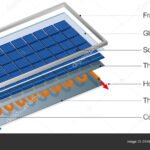
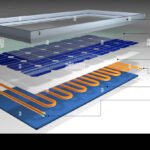
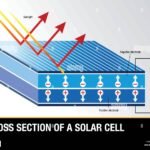
A solar module is the official term defined by IEC 61215 and UL 61730. It's a factory-assembled unit containing photovoltaic cells, a glass front, an aluminum frame, a junction box, and bypass diodes. It's tested, rated, and sold as a single electrical component.
This is what you see on rooftops.
A solar panel is a colloquial term. It has no standardized definition. In casual conversation, it usually means the same thing as a module.
But in retail, it can mean:
- A single module (the most common usage)
- A module plus pre-attached racking
- A complete "solar panel kit" with inverter, wiring, and mounting hardware
- Even a solar thermal collector for hot water
The confusion isn't malicious. It's just imprecise language. But when you're spending thousands of dollars, precision matters.
Where the industry draws the line. If you talk to a PV engineer, a manufacturer rep, or a certified installer, they will say "module" for the individual unit. They will say "array" for the collection of modules on your roof. They will say "system" for everything put together.
"Panel" is what you say to your neighbor who asks about your solar setup.
The practical takeaway. When you're researching or buying, use "module" for the bare unit. Use "system" or "kit" for the complete package. This single distinction will save you from miscommunication at every step.
What You're Actually Buying: Cells, Modules, and Arrays
The hierarchy is straightforward. Understanding it helps you talk to suppliers with confidence.
The cell level. A photovoltaic cell is the smallest working unit. It's a square or rectangular piece of silicon that converts sunlight into DC electricity. Typical cells produce about 5 to 6 watts each.
They're fragile and need protection.
The module level. A module is a sealed assembly of cells, typically 60 or 72 cells wired together. The cells are laminated between glass and a backsheet, framed in aluminum, and fitted with a junction box. The module is the smallest field-serviceable unit.
You can handle, mount, and replace it individually.
The array level. An array is a group of modules wired together on a single mounting structure. Your roof might hold one array or several. Arrays are connected to inverters or charge controllers.
Where "panel" fits. In technical documentation, "panel" doesn't appear. You'll see "module" in datasheets, "array" in system designs, and "system" in proposals. If you're reading a product page that says "solar panel," check whether they mean a bare module or a complete package.
A quick reference table:
| Term | What It Means | Where You See It |
|---|---|---|
| Cell | Single silicon wafer, ~5-6W | Inside the module |
| Module | Sealed, framed unit, 300-500W | Datasheets, contracts |
| Array | Group of modules, 3-20 kW | System designs |
| Panel | Informal term, meaning varies | Retail listings, casual talk |
One more thing about modules. As of 2026, most residential modules use 60 or 120 half-cut cells. Utility-scale modules use 72 or 144 half-cut cells. The cell count affects the voltage and physical size.
Always match the cell count when replacing or expanding an existing array.
Three Mistakes That Lead to Costly Orders
Even experienced buyers slip up on these. Here are the three most common errors we see in aggregate reviews and installer feedback.
Mistake one: ordering by watts instead of dimensions. Module wattage doesn't tell you the physical size. A 400W module from one manufacturer might be 1.7 meters by 1.0 meters. Another brand's 400W module could be slightly different.
If your racking is already installed, you need exact dimensions. Measure the mounting area first. Then match the module size.
Mistake two: assuming all connectors are the same. Modules come with MC4 or compatible connectors. But the cable length and orientation vary. Some modules have the junction box on the long side, others on the short side.
If your system uses microinverters or power optimizers that attach directly to the module, the connector placement matters. Check the datasheet for cable length and connector type before ordering.
Mistake three: ignoring the temperature coefficient. Modules rated in standard test conditions (STC) assume 25°C cell temperature. In real-world summer heat, cell temperatures can reach 65°C to 75°C. A module with a high temperature coefficient loses more power in the heat.
If you live in a hot climate, choose modules with a coefficient of -0.3% per °C or better. The difference can mean 10 to 15 percent more energy over the year.
How to avoid these mistakes. Always request the full datasheet. Confirm the dimensions, connector type, cable length, and temperature coefficient. If you're replacing an existing module, match the model number exactly.
If you're building a new system, choose all modules from the same production batch for the best electrical matching.
How to Read a Module Datasheet (Without an Engineering Degree)
Module datasheets look intimidating. They're packed with numbers and acronyms. But you only need to understand a handful of specs to make a smart decision.
Start with STC power. This is the wattage rating at standard test conditions. It's the headline number you see in product listings. A 400W module produces 400 watts under ideal lab conditions.
In real life, expect 80 to 95 percent of that depending on sun angle, temperature, and soiling.
Look at the efficiency percentage. Module efficiency tells you how much sunlight gets converted to electricity. Higher efficiency means more power per square meter. Residential modules range from 17 to 22 percent.
Higher efficiency costs more but saves roof space. If your roof is small, pay for efficiency. If you have plenty of space, lower efficiency is fine.
Check the voltage specs. You need the Voc (open circuit voltage) and Vmp (maximum power voltage). These values determine how many modules you can wire in series without exceeding your inverter's input voltage limit. In cold weather, voltage rises.
Make sure your string design accounts for the lowest expected temperature.
Find the temperature coefficient. This is listed as a percentage per degree Celsius. A lower number is better. For example, -0.35%/°C means the module loses 0.35 percent of its power for every degree above 25°C.
A module with -0.28%/°C outperforms in hot climates.
Check the warranty. Most modules have a 10 to 12 year product warranty and a 25 to 30 year performance warranty. The performance warranty guarantees at least 80 to 87 percent of rated power after 25 years. Beware of modules with shorter warranties or vague language.
The six specs that matter:
- STC power (watts)
- Module efficiency (percent)
- Open circuit voltage (Voc)
- Temperature coefficient (%/°C)
- Dimensions (mm)
- Warranty terms
One pro tip. Compare modules from different manufacturers using the same test conditions. Some brands list PTC (PVUSA Test Conditions) ratings, which are closer to real-world performance. The California Energy Commission publishes a list of modules with their PTC ratings.
Use that for comparing apples to apples.
When You Need a Pro vs. When You Can DIY
Some solar work is safe to do yourself. Most is not. The deciding factor is where the work happens and whether live DC electricity is involved.
You can safely swap a damaged module on a ground-mounted array if the system is shut down and the replacement model matches exactly. Torque specs matter. So does the connector type.
Roof work is a different story. Fall risk alone is a reason to hire a pro. Add 300 to 600 volts of DC current, and the stakes become lethal.
If the job includes any of these, call a licensed installer:
- Roof access
- Live wiring
- Utility interconnection
- Structural or racking changes
- Permit inspection sign-off
Permitting also points you toward a pro. NEC Article 690, rapid shutdown requirements, and fire ratings all need careful handling. A licensed installer knows how to navigate them.
That expertise is worth the cost.
Before any DIY decision, check the U.S. Department of Energy's solar guidance. It's a solid reality check.
And if you're planning a full installation, start with our buying guide. It covers sizing, warranties, and system costs. You'll also want to know the main components of a PV module.
For the physics behind the power, our guide to how solar panels generate electricity walks through it step by step.
Frequently Asked Questions
Is there any actual difference between a solar panel and a solar module?
In everyday talk, no. In technical work, yes. A module is a single factory-made unit with tested electrical output.
"Panel" is informal and can also mean a full packaged system. Use "module" when ordering equipment or filing paperwork. If you're still comparing options, our overview of the different types of solar technologies can help.
Why do manufacturers use "module" instead of "panel"?
Because "module" has a precise definition in standards like IEC 61215 and UL 61730. It refers to the sealed unit containing cells, glass, frame, and junction box. "Panel" has no official definition in any PV standard.
Manufacturers use "module" to keep datasheets and warranties unambiguous.
Can I replace one damaged solar module without replacing the whole array?
Yes, if the exact model is still available. Match the dimensions, wattage, voltage, and connector type. If that model is discontinued, ask a professional to redesign the string or add power optimizers.
Keeping one spare module from the original batch always makes future swaps easier.
Does panel versus module wording affect my warranty?
It can. Warranty claims need the model number printed on the module label. Calling it a "panel" won't void the warranty, but vague descriptions can slow down the claim.
Use the exact model number and the language from the manufacturer's warranty documentation. If you're weighing the overall value, our breakdown of the pros and cons of going solar is worth a read.
Should I say "solar panel" or "solar module" on my permit application?
Use "solar module" or the exact model number. Permit reviewers and inspectors speak in code language. "Module" matches the equipment schedules they expect.
It also shows you know what you're installing. When in doubt, copy the model number straight from the datasheet.

Similar Posts