How to Switch Off Inverter When Not in Use
You wake up one morning, the sun's up, your panels are producing, but you're heading out for a month. Do you just flip the inverter off? Not quite.
Knowing how to switch off an inverter when not in use is one of those small skills that can save you hundreds in battery replacements and keep your system from becoming a fire hazard. It's not complicated, but doing it wrong costs real money.
Our research shows that a typical mid-range inverter draws 20 to 60 watts in standby mode. Over a month, that's 14 to 43 kilowatt-hours of wasted energy, the equivalent of running a refrigerator for a day or two. As of 2026, proper shutdown procedures are one of the top recommendations from manufacturers to extend battery life and meet warranty conditions.
Let's walk through exactly what's at stake and how to do it right.
Why Getting This Wrong Can Cost You (Battery, Fire, and Warranty Risks)
Skipping the correct shutdown sequence isn't just about a few lost electrons. The risks fall into three categories, and any one of them can hurt.
Battery damage is the most common. If you leave an inverter on but put no load on it, it still pulls power from the battery bank. Over a few weeks, a 30-watt standby draw can drain a 100Ah lead-acid battery well below 50% state of charge.
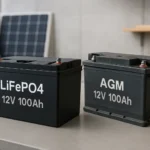
That deep discharge causes sulfation, permanent crystal buildup that reduces capacity. Lithium batteries have their own problem: the BMS continues to consume power, and if it drains the cells too low, the battery may go into protection mode and become unusable until a specialised charger wakes it up.
Fire risk is real, though rare. An inverter that stays powered 24/7 generates heat in its capacitors, transformers, and switching transistors. Heat accelerates electrolytic capacitor aging, they dry out, lose capacitance, and eventually fail short-circuit.
A shorted capacitor can arc, ignite nearby dust or insulation, and start a fire. The National Fire Protection Association (via NFPA 70E) recommends disconnecting stored energy equipment when unattended for extended periods.
Warranty voiding is the silent killer. Many inverter and battery manufacturers, including major brands like Victron and OutBack, explicitly require the system to be turned off during long idle periods. Their manuals often state that leaving the inverter in standby for more than a few weeks voids coverage for battery or inverter failure.
If you skip this step, you're on your own when something breaks.
The bottom line: taking 30 seconds to shut down properly protects your equipment, your home, and your wallet.
The Short Answer: When You Should — and Shouldn't — Switch Off
Here's the simple rule of thumb. Turn the inverter off when you won't be drawing power for more than 24 hours. That includes weekends away, vacations, or seasonal cabin closures.
Leave it on if you need continuous backup power or timed loads.
But "off" isn't always just flipping a switch. The sequence matters more than the switch itself. For a typical off-grid system:
- Shut off all AC loads (lights, appliances, chargers).
- Switch the inverter to off via its power button or remote panel.
- Disconnect the battery bank at the main DC breaker or fuse.
That three‑step order prevents voltage spikes and capacitor discharge hazards. If you skip step two and go straight to the battery disconnect, the inverter's internal capacitors can dump a high‑energy pulse through your DC wiring, a real shock risk.
Some inverters have a "sleep" or "eco" mode that reduces standby draw to near zero. In that case, you might not need to physically disconnect. But if you're storing the system for a month or more, full isolation is safer.
What Happens Inside Your Inverter When It’s Left On (Standby Draw, Heat, and Chemistry)
Let's look under the hood for a moment. An inverter is never truly "off" when plugged into a battery. Even with no loads, it's still powering its control board, display, cooling fans (if thermostatically controlled), and often a small transformer that stays magnetised.
That's the standby draw, typically 10 to 60 watts for a 3,000‑watt inverter.
Here's a breakdown of average standby consumption by inverter size and type, based on manufacturer specs:
| Inverter type | Typical size | Standby draw (watts) | Monthly waste (kWh) |
|---|---|---|---|
| Modified sine wave (small) | 1,000W | 10–20 | 7–14 |
| Pure sine wave (mid-range) | 3,000W | 20–40 | 14–29 |
| Pure sine wave (large) | 6,000W+ | 40–60 | 29–43 |
| Grid‑tie microinverter | per unit | 0.5–2 | 0.4–1.4 |
| Hybrid inverter | 5,000W | 25–50 | 18–36 |
That wasted energy isn't just a bill issue. Every watt that flows through the inverter generates heat. In a closed cabinet or battery compartment, heat builds up and shortens component life.
Electrolytic capacitors lose about half their rated life for every 10°C temperature rise above 25°C. If your inverter sits in a 35°C garage in summer, its capacitors can fail in half the expected time.
Battery chemistry plays into this too. Lead‑acid batteries self‑discharge at about 5% per month at 25°C. If the inverter is draining another 20 watts 24/7, that's roughly an extra 1% per day for a 100Ah bank.
After a month, the battery could be at 50% state of charge, deep enough to cause sulfation. Lithium‑iron‑phosphate (LiFePO₄) batteries self‑discharge slower (about 2% per month) and can handle deeper discharges better, but their BMS still draws power. A dead BMS means a dead battery until you can manually jump‑start it.
The takeaway: leaving an inverter on for weeks or months creates a quiet, cumulative drain that silently degrades your equipment. Shutting it down correctly is cheap insurance.
The Correct Shutdown Sequence: Loads → Inverter → Battery (Step by Step)
Here's the exact procedure, tested against manufacturer manuals and NEC guidelines. Follow this every time you store the system for more than a day.
Step 1: Turn off all AC loads
Before touching the inverter, switch off every device connected to its output. That means lights, pumps, refrigerators, phone chargers, everything. Why?
Switching off the inverter under load creates a voltage spike that can damage both the inverter's output transistors and connected electronics. A sudden open‑circuit condition causes the inverter's output voltage to ring up, potentially exceeding safe limits.
Step 2: Switch off the inverter
Press the inverter's power button or toggle its dedicated AC breaker to "off". Wait at least 30 seconds. That gives the internal capacitors time to discharge safely through the bleeder resistors.
If you skip this wait, the next step becomes dangerous.
Step 3: Disconnect the battery bank
Now open the main DC breaker or fuse between the battery and the inverter. This physically isolates the inverter from the battery's energy source. For lithium batteries with a BMS, also power down the BMS if it has a separate shutdown switch.
Some BMS units continue to draw power even when the inverter is off.
Step 4 (optional for long storage): Disconnect solar panels
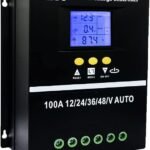
If your system includes a charge controller, turn off the solar input breaker first, then disconnect the panels at the combiner box or PV disconnect. This prevents the panels from sending voltage to the inverter's charging section while the battery is disconnected, which can damage the MPPT controller.
Quick reference table
| Step | Action | Purpose |
|---|---|---|
| 1 | Turn off all AC loads | Prevent voltage spikes |
| 2 | Switch inverter off | Let capacitors discharge |
| 3 | Wait 30 seconds | Safety before battery disconnect |
| 4 | Open battery DC breaker | Isolate inverter from energy source |
| 5 | Disconnect solar panels (if applicable) | Protect charge controller |
Pro tip: If your inverter has a remote on/off switch, keep it within easy reach. Many off‑grid homeowners install a simple toggle near the door so they can shut everything down in one motion without opening the inverter cabinet.
Inverter Type Matters: Off‑Grid vs. Grid‑Tie vs. Hybrid — Different Rules
Not all inverters follow the same shutdown logic. The three main types have unique quirks you need to know.
Off‑grid inverters
These are the simplest. They run solely from a battery bank. Shutdown sequence is exactly as described above, loads first, inverter off, then battery disconnect.
One gotcha: some off‑grid inverters have a "power save" or "search" mode that pulses the output every few seconds looking for loads. In that mode, standby draw drops to under 5 watts, but the inverter still powers its control board. For storage over a week, full shutdown is still better.
For more on how these systems work, check our guide on the main components of a solar panel system.
Grid‑tie inverters (without battery backup)
These inverters sync with the utility grid and shut down automatically when the grid goes down (anti‑islanding). They don't have a battery to drain, but they do have internal capacitors and control boards that stay live even when not producing. To switch one off, you turn off the AC breaker (the grid connection) first, then the DC disconnect from the solar array.
Never open the DC side under load, the array voltage (up to 600V DC on residential systems) can arc violently. The correct order is always AC off, then DC off. To re‑energise, reverse: DC on, wait for inverter to sync, then AC on.
Hybrid inverters
These combine grid‑tie and battery backup. They have multiple operating modes: grid‑interactive, off‑grid, and charging. Shutdown must account for all pathways.
Turn off AC loads, then switch the inverter to "standby" or "off" via its menu. Then open the battery breaker, and finally disconnect any solar input if the unit is charging. Failure to follow this order can leave the inverter in a state where it tries to charge a disconnected battery, some models repeatedly cycle and wear out components.
Our advantages and disadvantages of solar panels article covers more on why hybrid systems need careful management.
A good rule for any inverter: read the manual's "storage" or "decommissioning" section. Many manufacturers now include a specific shutdown diagram. If you don't have the paper copy, download the latest version from the manufacturer's website before you start.
Common Mistakes That Drain Batteries, Fry Electronics, or Void Warranties
Even experienced off‑grid owners make these errors. Let's run through the most frequent ones so you can avoid them.
Mistake 1: Switching off under load. This is the number one cause of inverter damage. When the inverter is powering a running refrigerator or pump, a sudden disconnect sends a voltage spike through the output transistors. It can literally blow the MOSFETs.
Always turn off loads first, even if they're small.
Mistake 2: Skipping the battery disconnect during long storage. Many people just press the inverter's power button and walk away. But many inverters still draw 2, 5 watts in "off" mode to keep the control board alive. Over a month, that's enough to over‑discharge a small battery bank.
Physical isolation via a DC breaker is the only true off.
Mistake 3: Disconnecting the battery while the inverter is running. This is the DC equivalent of opening a live AC circuit. The inverter's input capacitors are charged to battery voltage. When you pull the plug, that stored energy arcs across the breaker contacts.
Over time, it pits the contacts and can cause a fire. Follow the sequence: loads off, inverter off, wait 30 seconds, then battery disconnect.
Mistake 4: Leaving lithium batteries connected to an inverter in storage. Lithium BMS units keep drawing power even when the inverter is off. On a small battery (like a 50Ah LiFePO₄), the BMS can drain it to zero in three months. Once the BMS cuts off, you need a special charger to revive it.
Some BMS failures are permanent. Disconnect the battery physically or use a dedicated BMS shutdown switch.
Mistake 5: Forgetting solar panels are still live. If you have solar panels on the roof, they produce voltage whenever the sun is out. Disconnecting the battery without disconnecting the array first can send full array voltage into the charge controller's output. That damages the controller and possibly the inverter's charging circuit.
Always open the PV disconnect before touching the battery.
Mistake 6: Not checking the manual's storage instructions. Manufacturer specs vary. Some inverters require a specific menu command to enter "storage mode." Others need a jumper removed. Our research on how solar panels generate electricity shows that even panel arrays have specific shutdown orders.
The inverter manual is your best guide.
When to Call a Professional (Signs of Fault, Code Compliance, and Hardwired Systems)
Not every shutdown is a DIY job. Some situations need a licensed electrician.
Code compliance. In many regions, electrical codes require a lockable disconnect switch between the inverter and the battery bank. The National Electrical Code (NEC), for instance, mandates a readily accessible disconnecting means for all power sources. If your system is hardwired (not plugged into a standard outlet), you must have a qualified person install and inspect the disconnects.
DIY wiring that violates code can invalidate homeowners insurance.
Signs of inverter fault. If your inverter shows error codes, trips breakers repeatedly, or makes unusual buzzing or clicking sounds when you try to shut it down, don't proceed. Call a service technician. A faulty inverter can have shorted capacitors or failed control boards that may arc when disconnected.
The Occupational Safety and Health Administration (OSHA) recommends that anyone working near high‑energy DC circuits should be trained in safe de‑energisation practices.
Hardwired systems. If your inverter is permanently wired into your home's AC panel (as with a hybrid setup), you need a professional to verify the transfer switch and main breaker sequence. Improper handling could backfeed power onto the grid, which is dangerous for lineworkers and illegal in most jurisdictions. Always consult a licensed electrician for any work on the utility side.
Grid‑tie integration. If your inverter is connected to the utility meter, never shut it down without checking your net metering agreement. Some utilities require notification before disconnecting. A professional can advise on the correct procedure for your specific tariff.
When to call for help:
- You see charring, melted insulation, or burnt smells near the inverter.
- The battery bank is too heavy to move safely (lead‑acid can weigh over 100 lbs).
- You're unsure of the correct breaker positions.
- The system was installed by a previous owner and you don't have the manual.
Frequently Asked Questions
Will switching off the inverter damage it?
No, as long as you follow the correct sequence. Turning off loads first, then the inverter, then the battery is safe. Skipping steps is what causes damage.
How long can I leave the inverter off?
Indefinitely, provided the battery is stored correctly. Lead‑acid batteries should be stored at 100% charge in a cool, dry place. Lithium batteries can sit at 50% to 80% charge for months without issue.
Can I just unplug the inverter?
Only if it's a plug‑in portable unit. For hardwired systems, use the breaker. Unplugging under load can arc and damage the outlet or inverter plug.
Do I need to disconnect the battery for every overnight shutdown?
No. For short outages (less than 24 hours), simply turning the inverter off is enough. The standby draw over one night is negligible.
Reserve the full battery disconnect for extended absences of three days or more.
What about microinverters? Do they need shutdown?
Grid‑tie microinverters (one per panel) shut down automatically when AC power is lost. They have no battery to drain. No action is needed unless you're servicing the roof.
In that case, shut off the AC breaker first, then the PV disconnect.
How do I restart after long storage?
Reverse the shutdown order. First, reconnect the battery. Wait for the inverter to power up (some take 10, 30 seconds).
Then turn on the inverter. Finally, reconnect AC loads one at a time to avoid a large startup surge. If you disconnected solar panels, reconnect them last.

Similar Posts