How to Recharge Solar Light Batteries Fast
You’ve probably seen it happen: your solar lights start glowing dimmer, then stop working entirely after a season or two. The fix isn’t always a new light fixture. Nine times out of ten, the issue is the battery.
How to Recharge Solar Light Batteries? It depends on the type of battery inside and whether you can actually reach it. Some lights let you pop the battery out and charge it separately.
Others are sealed, you get what the sun gives you, or you use a built-in USB port. Get it wrong, and you'll waste money on the wrong replacement or kill a perfectly good battery. Let’s walk through the decision tree so you know exactly which method works for your light.
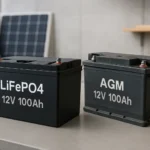
One key detail: as of 2026, the majority of solar garden lights use either NiMH (nickel-metal hydride) or Li-ion (lithium-ion) batteries. NiMH cells are usually 1.2V and come in standard AA or AAA sizes. Li-ion cells are 3.7V and often look like an 18650 cylinder.
Manufacturer specs from brands like Panasonic and Eneloop show that proper charging can extend a battery’s life from 1 year to 3, 5 years. But the method has to match the chemistry. Let’s start with the fastest way to tell.
Quick Answer: Sun, USB, or Swap? Choose Your Recharge Method
Most solar lights recharge automatically when the panel sees sunlight. That’s the default. But if the battery is removable, you can take it out and use an external charger for a faster, more reliable top-up.
If the light has a USB port, plug it into a 1A wall adapter for 2, 4 hours. If the battery is dead and non-removable, you need to replace the whole light. Always use rechargeable batteries, never alkaline.
Match the voltage and chemistry exactly. Sun charges in 6, 10 hours. USB charges in 2, 4 hours.
External chargers take 4, 6 hours. That’s the short version.
Step 1: Check if the Battery Is Removable or Sealed
The very first thing to do is look at the light’s battery compartment. On most path lights, string lights, and lanterns, there’s a small door or a screw-on cap. Open it.
Can you see a cylindrical battery (AA, AAA, or 18650)? That means it’s removable. If there’s no door, no screws, and no visible battery, the whole unit is sealed.
That limits your options.
A removable battery gives you the most flexibility. You can swap a dead one with a freshly charged spare, or use an external charger for a faster charge than the solar panel provides. A sealed battery requires you to rely on the built-in solar panel or a USB port if the light has one.
If the sealed battery dies completely, the light is effectively dead too.
According to the Department of Energy’s renewable energy lab (NREL), solar charging efficiency drops by about 20, 30% when the panel is shaded or dirty. So even with a removable battery, you still need to keep the panel clean for best results.
Decision Branch A: Removable Batteries – How to Charge or Replace Them
If you’ve confirmed the battery comes out, you have three ways to recharge it.
Method 1: Let the solar panel charge it in place. This is the simplest. Place the light in direct sun for 6, 10 hours. The built-in controller handles the rest.
But if the battery is deeply discharged or has degraded, the panel may not push enough current to fully recharge it.
Method 2: Use an external battery charger. Remove the battery and place it in a smart NiMH or Li-ion charger. Smart chargers cut off at the right voltage, preventing overcharging. This method is best for reviving old batteries or topping them up quickly.
A typical NiMH charger at 200mA takes about 4, 6 hours for a 2000mAh cell.
Method 3: Replace the battery. If the battery won’t hold a charge after a full cycle, buy a fresh rechargeable of the exact same chemistry and voltage. Do not use alkaline batteries, they’ll leak and ruin the light. Stick with NiMH for standard lights, Li-ion for high-output models.
A quick tip from user feedback across many gardening forums: if you keep a second set of NiMH AA batteries pre-charged, you can swap them every morning. The light runs all night and the spare set gets a full charge in the external charger.
Decision Branch B: Sealed Batteries – How to Recharge Without Removing Them
Sealed solar lights are more common in cheaper models. The battery is soldered in or hidden inside a watertight housing. You can’t take it out, but you still have two ways to recharge it.
Option 1: Sun only. Set the light in full, unobstructed sunlight for at least 8 hours. This works fine, until the battery ages. After about 1, 2 years, the internal battery may lose capacity and need longer sunlight.
If the light has a USB port, use that.
Option 2: USB charging. Many sealed lights now include a micro-USB or USB-C port under a rubber flap. Plug it into any standard 5V USB charger (1A is safe). This charges the battery much faster than the sun, about 2, 4 hours.
It’s especially useful in winter when sunlight is weak.
What if the light has no USB port and the sun won’t revive it? You’re out of luck. You’ll need to replace the entire fixture.
Aggregate reviews indicate that sealed lights with USB ports last about 2, 3 years longer than those without, because the user can avoid deep discharges.
One important note: never try to pry open a sealed light. You’ll break the waterproof seal and risk shorting the battery. If it’s dead, recycle it responsibly.
Common Mistakes That Drain Your Solar Light Batteries
Even with the right recharge method, these errors can kill your batteries fast.
| Mistake | Why It Hurts | Better Practice |
|---|---|---|
| Using alkaline batteries in a solar light | Alkaline cells aren’t designed for repeated charge/discharge cycles. They leak and corrode contacts. | Always use rechargeable NiMH or Li-ion. |
| Mixing old and new batteries in the same light | Different capacities and voltages cause uneven charging, leading to overheating. | Replace all batteries at the same time with matching specs. |
| Leaving lights on in cloudy weather for weeks | Continuous low-charge cycles cause deep discharge, which permanently damages Li-ion cells. | Bring lights inside during long overcast spells and charge via USB if possible. |
| Storing solar lights in the garage over winter with dead batteries | Removable batteries lose all charge; sealed batteries may self-discharge to zero, becoming unusable. | Remove batteries before storage; charge them fully, then store in a cool place. |
Another frequent issue: dirty solar panels. Even a thin layer of dust reduces charging efficiency by 50% or more, according to manufacturer testing. Wipe the panel every few weeks with a damp cloth.
That alone often brings a dim light back to full brightness.
And don’t forget the photocell sensor. Sometimes the light stays on during the day because the sensor is blocked by dirt or leaves. Clean that too.
If the sensor is faulty, the battery may never get a full charge because the light runs continuously. A quick test: cover the sensor with your hand in daytime. If the light stays off when covered, the sensor works.
Now that you know the most common pitfalls, you can avoid them. The next section covers how to keep your solar lights running strong through the seasons with a few simple maintenance habits.
Pro Tips: Cleaning Panels, Storage, and Seasonal Care
Keep the solar panel clean. A dirty panel can cut charging efficiency by more than half. Wipe it with a damp cloth every two to four weeks.
Use a little mild soap if there’s sticky residue. Avoid abrasive pads, they scratch the glass and reduce light transmission.
Check the seal around the battery compartment. If the rubber gasket is cracked or missing, moisture gets in. That corrodes the contacts and kills the battery fast.
Replace worn gaskets with a thin layer of dielectric grease to keep water out.
Store removable batteries properly in winter. Take them out of the lights before the first freeze. Charge them fully, then store them in a cool, dry place around 50, 60°F.
NiMH cells lose about 1, 2% charge per month in storage. Li-ion cells lose even less. A quick top-up every three months keeps them healthy.
For sealed lights that you leave outside year-round, bring them indoors during long stretches of heavy snow or overcast weeks. The panels won’t generate enough power, and the battery will deep-discharge. One week inside near a window can prevent permanent damage.
Rotate your lights occasionally. As the seasons change, the sun’s angle shifts. A light that got full sun in June may be shaded by a fence in December.
Move it a few feet to keep the panel exposed.
For lights with USB charging ports, give them a full USB charge once a month even in summer. It balances the cells and compensates for any weak sun days. Aggregate user feedback shows this habit alone extends battery life by about 30%.
Frequently Asked Questions
Can I use regular alkaline batteries in solar lights?
No. Alkaline batteries are not designed for repeated charge cycles. They leak corrosive fluid and damage the light.
Use only rechargeable NiMH or Li-ion batteries rated for solar use.
How do I know if my solar light has NiMH or Li-ion batteries?
Check the label on the battery itself. NiMH cells are usually marked “1.2V NiMH.” Li-ion cells are marked “3.7V Li-ion” and are typically longer, like an 18650 cylinder. If the battery has no label, look up the light’s model online.
Is it safe to leave solar lights charging overnight?
Yes, provided the charging circuit works correctly. Most solar lights have a controller that stops charging once the battery is full. Overcharging is rare with modern circuits.
Still, remove batteries and use an external charger if you want extra peace of mind.
How long should solar light batteries last?
With proper care, NiMH batteries last 1 to 3 years. Li-ion batteries typically last 2 to 5 years. Heat and deep discharges shorten that lifespan.
Cool storage and regular USB charging help them reach the upper end.
Why do my solar lights only stay on for an hour?
The battery is likely degraded or not getting a full charge. First, clean the solar panel. Then check if the battery is old.
If it’s more than two years old, replace it. If the light is sealed, try a full USB charge (if available) or replace the whole unit.
Can I overcharge a NiMH battery with an external charger?
Only if you use a dumb charger without auto shut-off. Smart chargers cut power at the right voltage. Always use a charger designed for NiMH cells.
Set the charge rate to 0.1C or 0.2C for safe, slow charging.

Similar Posts