How Many Solar Panels to Heat Your Pool?

You sit by your pool on a cloudy spring day, water a chilly 68°F, wondering if solar heating is worth the investment. The core question always comes down to this: how many solar panels to heat a pool for your specific setup. It's not a one-size answer, and that's where most online guides let you down.
Manufacturer specifications and real-world installations tell us the number depends on three variables: your pool's surface area, your local sunlight, and how warm you want the water. We'll walk through each one so you can land on the exact panel count for your situation. Let's start with the short version.
Image source: YouTube / SolarPoolSupply (YouTube thumbnail (fair-use with source credit))
Quick Answer
You typically need solar panels covering 50 to 80 percent of your pool's surface area. For a standard 15,000-gallon inground pool, that means 4 to 8 panels. Warmer climates need fewer panels.
Cooler regions need more. A pool cover cuts the required area by about 30 percent. Always size slightly larger than the minimum for reliable heat.
Core Explanation / How It Works
Why Pool Size Alone Isn't Enough
Pool volume matters, sure. A bigger body of water needs more energy to heat. But surface area is the real driver here.
That's because heat escapes from the surface. And solar panels themselves are rated by square footage, not gallons.
Think of it this way. A 20-by-40-foot pool has 800 square feet of surface. With every square foot of panel producing about 1,000 BTUs per peak sun hour, you need enough collector area to overcome both the heating load and the constant heat loss.
The ratio stays consistent across most residential pools.
BTU Load and Solar Insolation
BTU stands for British Thermal Unit. It's the energy needed to raise one pound of water by one degree Fahrenheit. Your pool holds thousands of gallons.
Each gallon weighs 8.34 pounds. So the math adds up fast.
To raise a 20,000-gallon pool by 15°F, you need about 2,500,000 BTUs. That's before accounting for overnight heat loss. Your local peak sun hours tell you how much solar energy hits your area each day.
Phoenix gets around 6.5 hours. Seattle gets about 4. That difference alone changes your panel count by 40 percent.
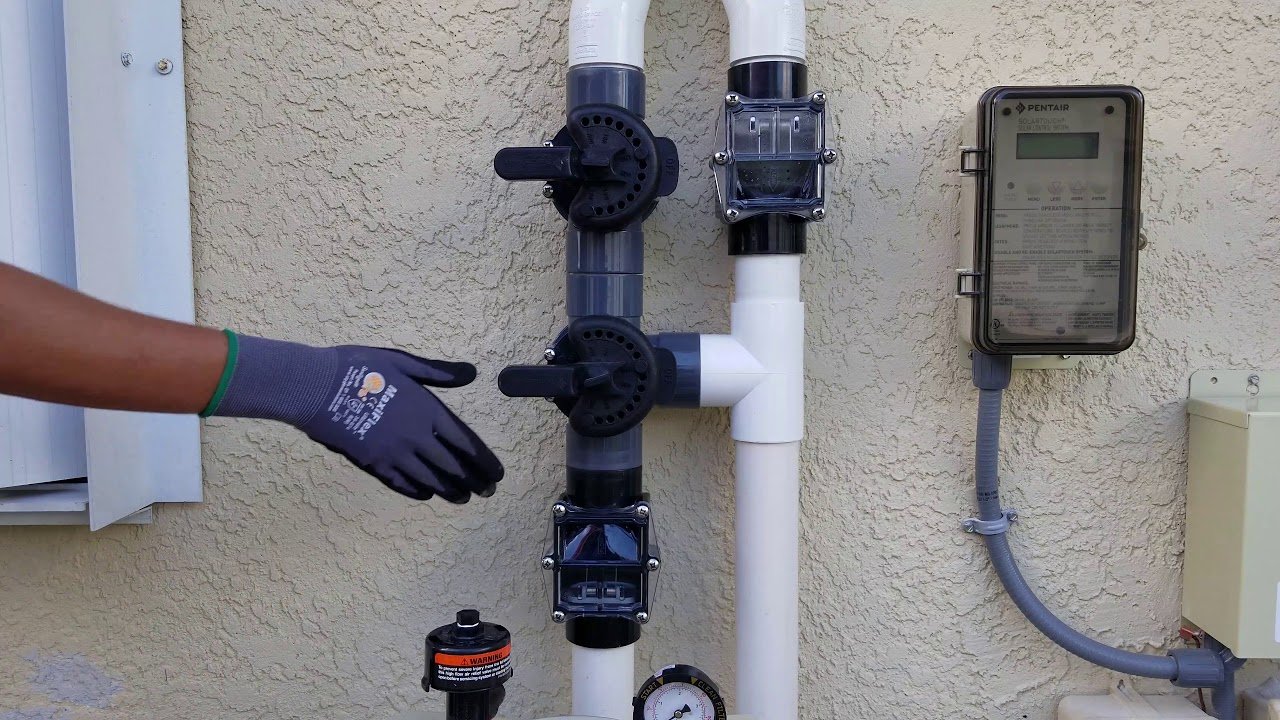
Image source: YouTube / Florida Solar Design Group (YouTube thumbnail (fair-use with source credit))
Panel Types and Their Output
There are two main types of solar collectors for pool heating, and they output heat very differently.
Unglazed panels are the standard for pool heating. They're made of black polypropylene or rubber with no glass cover. They're cheaper and lighter but lose heat faster in windy or cool conditions.
Output ranges from 800 to 1,000 BTUs per square foot per peak sun hour.
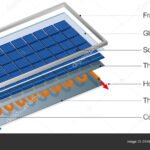
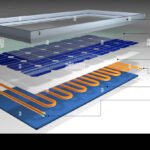
Glazed panels have a glass cover and copper tubing inside. They capture heat more efficiently, producing 1,000 to 1,400 BTUs per square foot. They cost more but work better in cooler climates or for year-round use.
Most homeowners don't need them unless you're heating into late fall or early spring in a northern state.
Step-by-Step Process / How to Guide
The following six steps will give you a reliable panel count. Grab a tape measure and your phone's weather app. This takes about 20 minutes.
Step 1: Find Your Pool's Surface Area and Volume
Measure length and width at the waterline. For rectangular pools, multiply them. For irregular shapes, break it into rectangles and triangles.
Add them up.
Volume is trickier. If you don't know your pool's gallon capacity, use this formula: length (ft) × width (ft) × average depth (ft) × 7.5. That gives you gallons.
Average depth is (shallow end + deep end) divided by 2.
Step 2: Determine Your Desired Temperature Rise
What's your starting water temperature in the season you want to swim? What's your target? A rise from 72°F to 82°F means a 10°F delta.
That's your heating goal.
Most people aim for 78°F to 85°F. Going higher than that requires dramatically more panel area. The relationship is linear: each degree of rise needs roughly equal additional collector area.
Step 3: Look Up Your Local Peak Sun Hours
Peak sun hours are the number of hours per day when solar intensity averages 1,000 watts per square meter. The National Renewable Energy Laboratory (NREL) publishes maps and data for every US region. You can check their solar resource data at nrel.gov.
This number drives your panel count more than any other variable. A pool in Miami needs half the panels of the same pool in Portland. That's not an exaggeration.
Step 4: Calculate Your Daily BTU Requirement
Here's the formula:
Pool gallons × 8.34 (pounds per gallon) × temperature rise (°F) = total BTU needed
Then divide by your peak sun hours. This gives you the BTUs per hour your solar array must deliver.
For example: 20,000 gallons × 8.34 × 10°F = 1,668,000 BTUs total. With 5 peak sun hours, that's 333,600 BTUs per hour needed.
Step 5: Choose Your Panel Type and Divide
Take your required BTUs per hour and divide by the panel's output per square foot. Unglazed panels at 900 BTUs/sq ft/hour need 333,600 ÷ 900 = 370 square feet. If each panel is 4×10 feet (40 sq ft), you need 9 or 10 panels.
Round up. Always. Undersizing is the most common mistake homeowners make.
Image source: YouTube / Renogy (YouTube thumbnail (fair-use with source credit))
Step 6: Verify Flow and Space
Your pool pump must push water through the panels at the right flow rate. Most panels need about 2 to 4 gallons per minute each when plumbed in parallel. If your pump can't handle it, you'll need a booster pump or a bigger pump.
Also check your available roof or ground space. South-facing roof sections with good sun exposure are ideal. East and west work but reduce output by 15 to 25 percent.
Shade from trees or chimneys kills panel performance fast.
Use Cases / Best For / Who It's Right For
This section helps you match the approach to your exact situation.
Warm Climate, Minimal Heat Gain Needed
If you live in Florida, Texas, or Southern California, your pool water starts warmer and your sun hours are higher. You can get away with panels covering about 50 to 60 percent of your pool's surface area. That means fewer panels, lower cost, and a payback period under two years versus heating with natural gas.
One caveat: summer overheating is real. In July, a properly sized array can push pool temperatures above 90°F. You'll want a bypass valve to divert flow through the panels only when you need heat.
Cool Climate, Shoulder Season Use
Homeowners in the Northeast, Midwest, or Pacific Northwest need panels covering 80 to 100 percent of pool surface area. You're fighting lower sun hours and cooler ambient temperatures. Glazed panels start to make sense here because they retain heat better on windy days.
Your goal is usually extending the season from May through September instead of June through August. That extra month on each end is worth the investment for many families.
Above-Ground vs In-Ground Pool
Above-ground pools typically have less surface area and less volume than inground pools. A 24-foot round above-ground pool has about 450 square feet of surface. It needs roughly 3 to 5 unglazed panels.
The good news is that above-ground pools lose less heat to the ground. They sit above the earth, so conductive heat loss is lower. You can often undersize slightly compared to inground recommendations.
Shady Roof vs Open Ground Mount
If your roof has significant shade from trees or neighboring buildings, ground mounting is a better option. You can tilt the panels at the optimal angle for your latitude and avoid shade entirely.
Ground mounts also make cleaning and winterization easier. The trade-off is that you need yard space and the panels are more visible. Some HOAs have restrictions, so check your local covenants before buying.
Real Scenarios / Case Examples
Let's look at three real-world setups to make this concrete.
Scenario A: Small In-Ground Pool in Florida
A 12-by-24-foot pool with average depth of 5 feet gives 1,080 square feet of surface and about 10,800 gallons of water. The owner wants to heat from 74°F to 82°F. That's an 8°F rise.
In Tampa, peak sun hours average 6 per day. The math works out to about 200 square feet of unglazed collector area. That's five 4-by-10-foot panels.
Total cost for panels and hardware runs around $2,000 to $3,000 installed. The system pays for itself in 18 months versus using a gas heater.
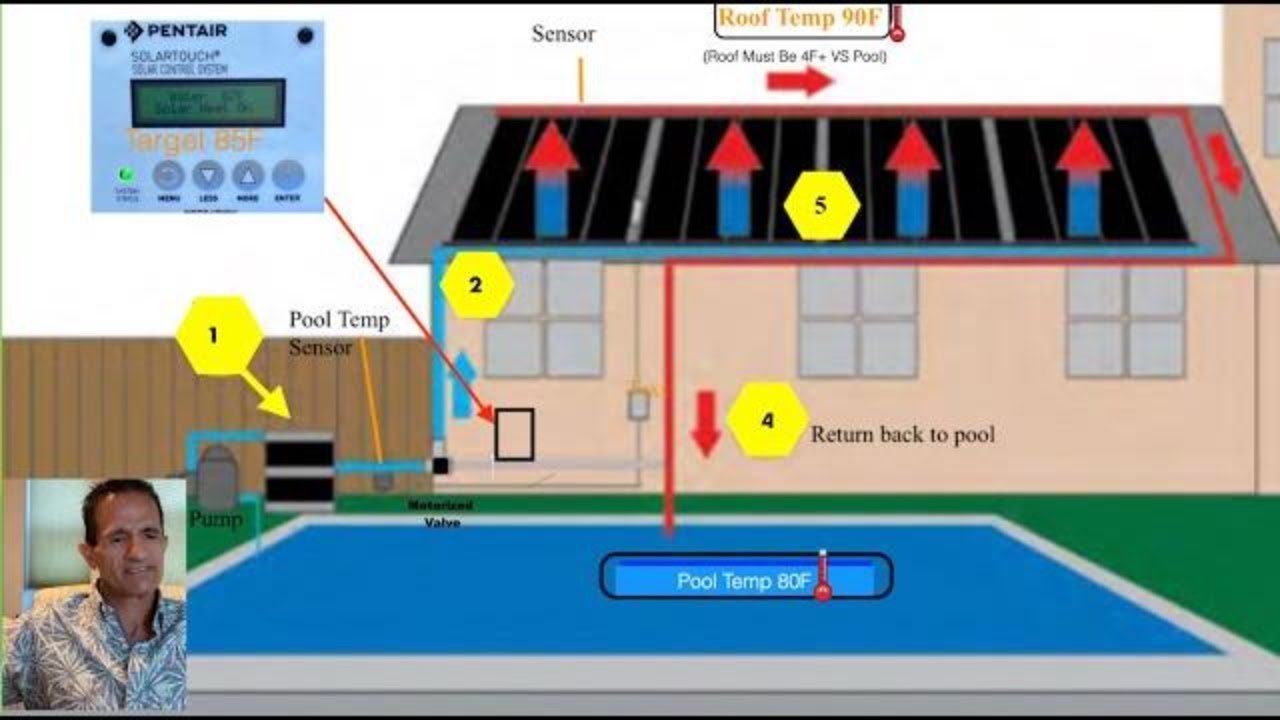
Image source: YouTube / Solar By Green Greg (YouTube thumbnail (fair-use with source credit))
Scenario B: Large In-Ground Pool in the Northeast
A 20-by-40-foot pool with 30,000 gallons. The owner wants to swim from May through September. Starting temperature in mid-May is often 65°F.
Target is 80°F. That's a 15°F rise.
In Boston, peak sun hours average just 4.2 per day during the shoulder season. Required collector area comes to about 750 square feet. That's 19 unglazed panels or about 13 glazed panels.
The glazed option costs more upfront but delivers heat on overcast days when unglazed panels struggle.
Scenario C: Above-Ground Pool in Southern California
A 24-foot round above-ground pool holds about 13,500 gallons. Surface area is 452 square feet. The owner wants to extend swimming into October.
Starting temp in September is often 72°F. Target is 80°F, an 8°F rise.
San Diego gets 5.5 peak sun hours. The calculation shows about 160 square feet of panel area needed. Four 4-by-10-foot panels cover it.
Because the pool sits above ground and retains heat better, the system works exceptionally well. The owner reports consistent 80°F water through mid-October with a solar cover used at night.
Mistakes to Avoid / Common Errors
The biggest mistake is undersizing. A panel array that's too small will never get your pool to temperature. You'll run the pump all day for lukewarm water.
The fix is simple: size for the worst month you plan to swim, not the best.
Not using a pool cover is the second most common error. A solar cover, also called a pool blanket, reduces overnight heat loss by 50 to 70 percent. Without one, you lose most of your daytime heat gain every night.
That doubles the panel count you need.

Image source: YouTube / DoItYourselfDad (YouTube thumbnail (fair-use with source credit))
Skipping winterization in freeze zones will crack your panels. Water expands when it freezes, and polypropylene panels are not immune. Drain the system completely before the first frost.
Some systems use a drainback design where water automatically drains when the pump stops, which is worth the extra cost.
Another overlooked issue is pump flow rate. Your existing pool pump may not push enough water through the panels. Check the manufacturer's flow requirement per panel, then confirm your pump curve matches.
If it doesn't, add a dedicated solar pump.
Finally, don't forget about the different types of collectors available. Understanding the main differences between panel options helps you pick the right one for your climate. The common trade-offs between unglazed and glazed collectors come down to cost versus efficiency in cooler conditions.

Similar Posts