How Many Solar Panels for 1000 kWh Per Month?
If you've ever wondered exactly how many solar panels to generate 1000 kWh per month, the answer isn't one neat number. It shifts based on where you live, what panels you pick, and even which direction your roof faces. But here's the good news: the math behind it is actually pretty straightforward once you know the key variables.
Start with your location's peak sun hours, the average number of hours per day when sunlight delivers full production. In Phoenix, you might get around 6 hours. In Seattle, more like 3.5.
That single difference can mean needing 18 panels instead of 30 to hit the same monthly target. Let's walk through how to find your number.

Image source: Wikimedia Commons / Gray Watson User:E090 (CC BY-SA)
Quick Answer: It Depends on Where You Live
Most homes need 20 to 28 solar panels for 1000 kWh per month. The exact count depends on your sun hours and panel wattage. A home in Arizona needs fewer panels than one in Ohio.
Use your local peak sun hours to find your number.
The Simple Math That Gets Complicated
Here's the equation for how many solar panels to generate 1000 kWh per month. Take your monthly target and divide it by 30.4 (the average days per month). That gives you roughly 32.9 kWh per day.
Then divide that by your location's peak sun hours. The result is the system size in kilowatts. Finally, divide by the wattage of the panels you're considering.
Sounds easy, right? But the tricky part is getting each input right.
The two numbers that trip most people up are peak sun hours (which most people overestimate) and the real-world efficiency loss (which most people ignore). If your home generates electricity best in direct sun, you also want to understand how your solar technology converts light into power before you start sizing anything.
A quick reality check. A typical 400-watt panel installed in a region with 4.5 peak sun hours produces roughly 1.8 kWh per day. To hit 32.9 kWh daily, you'd need about 18 of those panels, on paper. In real life, you add roughly 20 percent for system losses, bringing you closer to 22 or 23 panels.
That's the range most homeowners end up with.
The One Number That Changes Everything: Peak Sun Hours
Peak sun hours (PSH) aren't the same as total daylight hours. They measure the number of hours per day when the sun's intensity is strong enough for panels to produce at full rated capacity.
Think of it this way. A 400-watt panel in full sun for one peak hour generates 400 watt-hours (0.4 kWh). In partial sun later in the day, it might produce only 200 watt-hours in that same clock hour.
PSH condenses all that variable sunlight into one useful number.
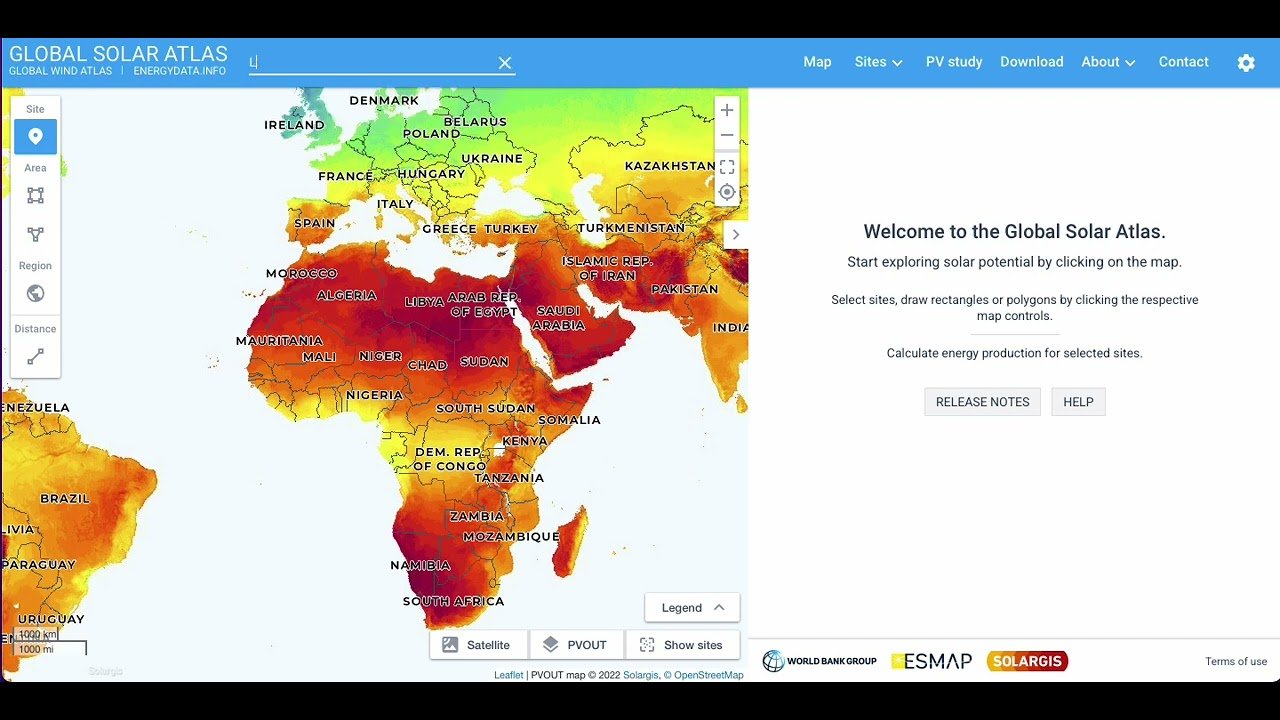
Here's what PSH looks like across the U.S. as of 2026:
| Region | Typical PSH Range | Example City |
|---|---|---|
| Southwest (AZ, NV, CA) | 5.5 – 6.0 | Phoenix: 6.0 |
| Southeast (FL, GA, TX) | 4.5 – 5.5 | Atlanta: 4.8 |
| Midwest (IL, OH, MO) | 3.8 – 4.5 | Chicago: 3.9 |
| Northeast (NY, MA, PA) | 3.5 – 4.5 | Boston: 4.0 |
| Pacific Northwest (WA, OR) | 3.0 – 4.0 | Seattle: 3.5 |
Image source: YouTube / Climatebiz (YouTube thumbnail (fair-use with source credit))
These numbers come from the NREL PVWatts calculator, which is the gold standard for solar production estimates. You can plug in your exact address and get a personalized PSH value.
The decision tree here is simple. If you live in a region with 5+ peak sun hours, you'll need fewer panels. If you're under 4 hours, expect a larger system to hit the same 1000 kWh target.
How to Calculate Your Personal Number (Step-by-Step)
Here's a five-step workflow that works for any location and any panel wattage. Grab a calculator or open a spreadsheet, you'll only need a few minutes.
Step 1: Find your daily target. Start with your monthly goal.
- 1000 kWh ÷ 30.4 days = 32.9 kWh per day
Step 2: Get your peak sun hours. Use the NREL PVWatts tool or the table above. Let's use 4.5 hours as a middle-ground example.
Step 3: Calculate the system size you need.
- 32.9 kWh ÷ 4.5 PSH = 7.3 kW system
That 7.3 kW is the DC rated size before losses. You'll adjust it in the next section.
Step 4: Choose your panel wattage. Most residential panels today rate between 350W and 450W. Let's use 400W for this example.
- 7.3 kW = 7300 watts
- 7300 ÷ 400 = 18.25 panels
Round up to 19 panels for a comfortable fit.
Image source: YouTube / Circuit Info (YouTube thumbnail (fair-use with source credit))
Step 5: Apply the real-world loss factor. Panels don't operate in perfect lab conditions. Wiring, inverter efficiency, heat, dust, and shading eat into production. The industry standard derate factor is about 0.77 to 0.85.
Using 0.80 as a safe average:
- 7.3 kW ÷ 0.80 = 9.13 kW adjusted system size
- 9130 watts ÷ 400 = 22.8 panels
You'd plan for 23 panels with a 400W model in a location with 4.5 peak sun hours.
If you prefer to use higher-wattage panels, say 450W, rerun the last division:
- 9130 ÷ 450 = 20.3 panels, so 21 panels.
The same thinking applies when you're looking at which rooftop technology suits your budget. Higher efficiency panels cost more per unit but take up less roof space.
The Panel Wattage Decision: Higher Wattage vs. Standard
Not all panels are created equal. Your choice of panel wattage directly affects how many you need to hit 1000 kWh per month.
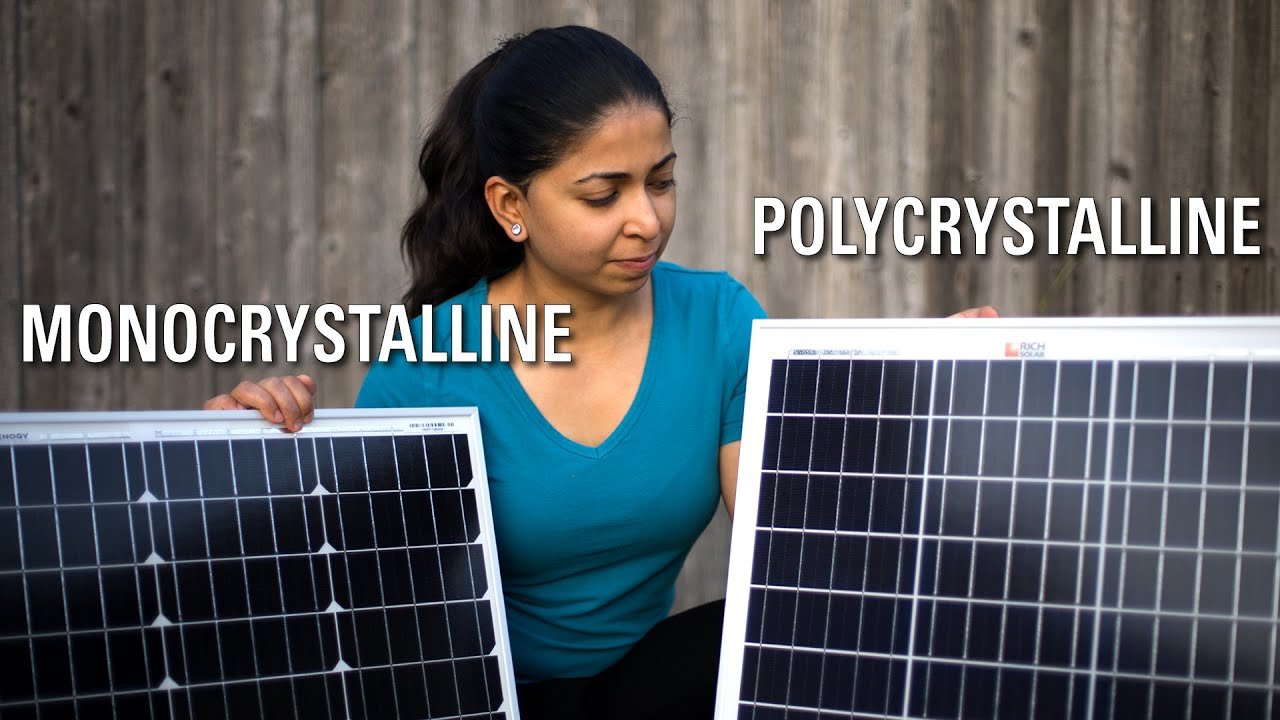
Image source: YouTube / Belinda Carr (YouTube thumbnail (fair-use with source credit))
Standard wattage (350W, 400W). These are the most common residential panels. They offer a good balance of cost, efficiency, and availability. Using the 9.13 kW example from above:
| Panel Wattage | Panels Needed (before rounding) | Panels After Rounding Up |
|---|---|---|
| 350W | 26.1 | 27 |
| 375W | 24.3 | 25 |
| 400W | 22.8 | 23 |
| 425W | 21.5 | 22 |
| 450W | 20.3 | 21 |
Higher wattage (425W, 450W). These are becoming more popular as manufacturing improves. They cost more per panel but reduce the total count, which helps if you have limited roof space or want a cleaner look.
Which should you choose? Here's the decision tree:
- If you have plenty of roof space and want the lowest upfront cost, go with 375W or 400W panels. More panels, but cheaper per watt.
- If your roof is small, shaded in parts, or has an odd shape, higher wattage panels (425W+) let you fit the system into a tighter footprint.
- If you're planning to expand later, consider how the full setup of a solar array works with microinverters or optimizers that handle expansion more gracefully.
One more thing to keep in mind. The relationship between system size and practical use is also covered in our guide to buying solar panels, which walks through how warranties, degradation rates, and installation costs affect your final number.
The Real-World Loss Factor (Derate Your System)
This is where most DIY calculations go wrong. You can do the ideal math perfectly, but your panels will never produce their full rated output in the real world. You need to account for system losses.
Common loss sources:
- Inverter efficiency: 3% to 8% loss (microinverters tend to be on the lower end)
- Wiring and connections: 1% to 3% loss
- Temperature: Panels lose efficiency when they get hot, about 0.3% to 0.5% per degree Celsius above 25°C (77°F)
- Dirt and dust: 2% to 5% loss, more in dry or dusty areas
- Shading: Even partial shading on one panel can reduce output across the whole string (if you use a string inverter)
- Panel degradation: New panels lose 1% to 3% of their output in the first year, then about 0.5% per year after
The combined effect usually lands between 15% and 25% depending on your setup and climate.
A safer approach. Instead of hoping for ideal conditions, use a derate factor of 0.77 to 0.80. That means your system produces 77% to 80% of its rated capacity in real-world conditions.
Here's how it changes your panel count using a 400W panel example at 4.5 PSH:
| Derate Factor | Effective System Needed | Panels (rounded up) |
|---|---|---|
| No derate (1.0) | 7.3 kW | 19 |
| 0.85 (conservative) | 8.6 kW | 22 |
| 0.80 (realistic) | 9.1 kW | 23 |
| 0.77 (cautious) | 9.5 kW | 24 |
Note that the pros and cons of going solar include the fact that oversizing slightly gives you a buffer against degradation over time. A 9.1 kW system today might produce only 8.7 kW in year 10. That buffer helps you stay above your 1000 kWh target as the panels age.
Practical advice. If you're getting quotes from installers, ask them what derate factor they use. Many will use 0.77 or 0.80 as standard. If someone quotes you without accounting for losses, that's a red flag.
A system that pencils out at 19 panels on paper but needs 23 in reality will leave you short of your goal every month.
This article continues with sections on checking roof space, common mistakes, location comparisons, and a final decision guide.
Checking Your Roof Space: Will It Fit?
You can calculate the perfect panel count on paper. But if your roof can't physically hold them, none of the math matters.
Standard residential panels measure roughly 1.7 meters by 1 meter (about 5.5 feet by 3.3 feet). Each panel takes up around 17.5 square feet. For a 23-panel system, you need about 400 square feet of usable roof space.
Usable is the key word. You can't cover every inch of your roof with panels. Fire codes require setbacks at the ridge, eaves, and valleys, typically a 3-foot clearance along the roof edge and a pathway down the roof for firefighter access.
That eats into your available area.

Image source: Wikimedia Commons / U.S. Department of Energy
Decision tree for roof space. If your roof has a large, unshaded south-facing plane (in the northern hemisphere), you're in great shape. If your roof faces east and west, you'll need to split the array across both sides, which can reduce total production by 10 to 15 percent.
If you have a north-facing roof or heavy tree cover, consider a ground-mount system. Ground mounts let you tilt the panels at the optimal angle and face them due south. They cost more for the mounting hardware and trenching, but they often produce 10 to 20 percent more energy per panel.
Here's a quick space check. Measure the length and width of each roof plane in feet. Multiply them to get square footage.
Subtract 3 feet from every edge. That's your usable area. Compare that to your panel count times 17.5 square feet per panel.
If it's tight, you might need higher wattage panels to fit the same system size into a smaller footprint.
Common Mistakes That Throw Off Your Panel Count
Most solar sizing errors come from overconfidence in sunny conditions. People look at their roof in July and assume that's how it works year-round.
Mistake 1: Using summer sun hours for the whole year. Your calculator might say 6 PSH in June, but the annual average could be 4.5. If you size for summer, you'll fall short in winter. Always use the annual average PSH from NREL data.
Mistake 2: Ignoring shading from nearby objects. A single chimney can shade three panels in the late afternoon. With a string inverter, that shade drags down the whole string. Use power optimizers or microinverters if your roof has any obstructions.
Mistake 3: Forgetting about panel degradation. New panels lose 1 to 3 percent of their output in the first year. Over 25 years, that adds up to roughly 12 to 15 percent total loss. Your year 1 production might hit 1000 kWh, but year 20 could be closer to 870 kWh.
Mistake 4: Not accounting for inverter clipping. If your inverter is undersized relative to your panel array, it clips the peak production on sunny days. That's lost energy you paid for.
Mistake 5: Assuming all panels produce identically. Roofs have multiple planes with different orientations. Panels on the east side produce less than panels on the west. If you lump them together in one calculation, you'll overestimate total output.
The fix for all of these. Oversize your system by 15 to 20 percent beyond the ideal calculation. That buffer absorbs shading, degradation, and seasonal variation. It's better to produce a little extra than to come up short.
Comparing Scenarios: Sun Belt vs. Cloudy Climate
Let's run the same 1000 kWh monthly goal through two very different locations. This makes the decision tree concrete.
Phoenix, Arizona (6.0 PSH annual average).
- Daily target: 32.9 kWh
- System size before losses: 32.9 ÷ 6.0 = 5.5 kW
- With 0.80 derate: 5.5 ÷ 0.80 = 6.9 kW
- With 400W panels: 6900 ÷ 400 = 17.25 panels → 18 panels
- Roof space needed: about 315 square feet
Seattle, Washington (3.5 PSH annual average).
- Daily target: 32.9 kWh
- System size before losses: 32.9 ÷ 3.5 = 9.4 kW
- With 0.80 derate: 9.4 ÷ 0.80 = 11.8 kW
- With 400W panels: 11,800 ÷ 400 = 29.5 panels → 30 panels
- Roof space needed: about 525 square feet
| Location | PSH | Panels Needed (400W) | Roof Space |
|---|---|---|---|
| Phoenix | 6.0 | 18 | ~315 sq ft |
| Dallas | 5.2 | 21 | ~370 sq ft |
| Atlanta | 4.8 | 22 | ~385 sq ft |
| Chicago | 3.9 | 27 | ~475 sq ft |
| Boston | 4.0 | 26 | ~455 sq ft |
| Seattle | 3.5 | 30 | ~525 sq ft |
That's a 12-panel difference between Phoenix and Seattle. The Seattle homeowner also needs a larger roof or higher wattage panels. If roof space is tight in Seattle, switching to 450W panels drops the count to 27 panels, saving about 50 square feet.
What this means for you. If you live in a high-sun region, you have more flexibility with panel choice and roof orientation. If you live in a cloudy climate, every efficiency decision matters more. You'll want the highest wattage panels that fit your budget and a south-facing roof if possible.
The Decision Guide: A Quick Lookup by Location
Here's a simple lookup table based on 400W panels with a 0.80 derate factor. Find your region, read across, and you'll have a solid starting number.
| Peak Sun Hours | System Size Needed | 400W Panels | 450W Panels |
|---|---|---|---|
| 3.5 (Seattle) | 11.8 kW | 30 | 27 |
| 4.0 (Boston) | 10.3 kW | 26 | 23 |
| 4.5 (Midwest) | 9.1 kW | 23 | 21 |
| 5.0 (Texas) | 8.2 kW | 21 | 19 |
| 5.5 (SoCal) | 7.5 kW | 19 | 17 |
| 6.0 (Phoenix) | 6.9 kW | 18 | 16 |
How to use this table. Look up your city's PSH from the NREL PVWatts tool. Then check the recommended panel count for either 400W or 450W panels. This gives you a starting point before you get professional quotes.
Decision tree summary.
- If you have 5.0+ PSH and adequate roof space, you can use standard 350W to 400W panels. You'll need 16 to 21 panels depending on your exact number.
- If you have 4.0 to 4.9 PSH and good roof space, 400W panels work fine. Expect 21 to 26 panels. Consider 425W or 450W if roof space is limited.
- If you have under 4.0 PSH or limited roof space, go straight to 450W panels. Every panel counts. Also consider a ground-mount system for better orientation if your roof isn't ideal.
Final recommendation. Always get at least three quotes from local installers. Have each one explain their derate factor and PSH assumptions. If they can't answer those two questions, move on to the next quote.
A good installer will walk you through the exact same math we've covered here.
Frequently Asked Questions
How many solar panels do I need for 1000 kWh per month?
Most homes need 18 to 30 panels depending on location and panel wattage. A home in Arizona might need 18 panels while one in Seattle needs 30. Use your local peak sun hours to calculate your specific number.
What size solar system produces 1000 kWh per month?
You need roughly a 7 to 11 kW system after accounting for real-world losses. In sunny areas a 7 kW system works. In cloudy areas you need closer to 11 kW.
The math starts with your daily target divided by peak sun hours.
How much roof space do I need for 1000 kWh per month?
Plan for 300 to 550 square feet of usable roof space. Each panel takes about 17.5 square feet. The exact amount depends on your panel count.
Higher wattage panels reduce the space needed.
Does panel wattage affect how many I need?
Yes, significantly. Using 450W panels instead of 350W panels reduces your panel count by roughly 20 percent. If roof space is tight, choose higher wattage panels to fit more production into a smaller area.
What happens if my roof doesn't have a south-facing side?
East and west-facing roofs still work but produce about 10 to 15 percent less. You'll need more panels to compensate. Ground-mount systems let you face panels south regardless of your roof orientation.
Should I oversize my system for future degradation?
Yes. Panels lose about 0.5 percent output per year after the first year. Adding a 15 to 20 percent buffer to your initial calculation ensures you hit 1000 kWh per month even in year 20 of the system's life.

Similar Posts