How Many Houses Can a Solar Panel Power?
A single solar panel can’t power an entire house on its own. But how many houses can a solar panel power exactly? The answer depends entirely on three things: the panel’s wattage, the sunlight where it sits, and the home’s energy appetite.
There’s no fixed number because every scenario is different.
Manufacturer specs for a modern 400-watt residential panel show it produces roughly 1.6 to 2.0 kilowatt-hours per day under good conditions. Compare that to the average US household, which uses about 30 kWh daily. That ratio tells you straight away that one panel covers only a tiny slice, around 5% to 7%, of a home’s needs.
Let’s break down the real numbers so you can figure out the exact figure for your own situation.

Image source: Wikimedia Commons / Stephen Yang / The Solutions Project (CC BY)
Quick Answer
One standard residential solar panel powers about 5% to 7% of an average US home. That is roughly 1/15th to 1/20th of a single house. The exact fraction shifts with panel wattage, your local sun, and your home’s daily energy use.
Why There’s No One-Size-Fits-All Number
Searching for a single answer to “how many houses can a solar panel power” is tempting. It’s also misleading. A 300-watt panel in Seattle behaves completely differently from a 400-watt panel in Phoenix.
The three biggest variables are wattage, sun hours, and household consumption. Change any one of them and the answer flips.
Think of it like asking “how far can a car go on a gallon of gas?” You need to know the car’s efficiency, the terrain, and how you drive. Solar panels work the same way. The best approach is to run the calculation yourself rather than rely on a generic average.
Our research shows that most online calculators skip these nuances. They assume a perfect world with no losses from heat, wiring, or inverter inefficiency. That’s why we see wildly different answers floating around.
The right way is a step-by-step decision workflow that fits your exact situation.
If you’re just getting started, it helps to understand the different panel varieties and how they compare. Knowing what’s available makes the numbers feel less abstract.
The Three Variables That Control Everything
To get a usable answer, you need to pin down three things. Here’s a quick snapshot:
| Variable | Typical Range | Why It Matters |
|---|---|---|
| Panel Wattage | 300W – 400W (residential) | Determines max energy capture per hour of direct sun |
| Peak Sun Hours | 3 – 6 hours/day (US average ~4.5) | Dictates how many hours the panel operates at full output |
| Daily Household Use | 20 – 50 kWh/day (US average ~30) | This is the load one panel must help cover |
Each variable directly multiplies or divides the result. For example, a 400W panel in a 5-hour-sun location produces 2.0 kWh per day before losses. If your home uses 30 kWh daily, one panel covers about 6.7% of your needs.
But if your home uses 20 kWh, that same panel covers 10%. See how it shifts?
A critical detail: peak sun hours aren’t the same as daylight hours. They represent the equivalent number of hours when the sun is strong enough to produce full-rated power. In most of the US, that’s between 4 and 5 hours daily.
The National Renewable Energy Laboratory provides free maps and data for any location in the country (more on that in a moment).
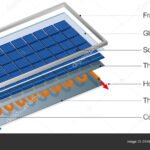
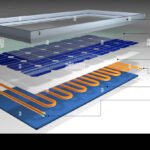
The core components that make up each panel, cells, wiring, and the frame, influence efficiency, but wattage and sun hours are the biggest levers. You can also explore the basics of how panels actually generate power from sunlight to understand why those two variables dominate the equation.
Image source: YouTube / Everyday Solar (YouTube thumbnail, fair-use with source credit)
How to Calculate It Yourself in 4 Simple Steps
You don’t need to be an engineer to figure this out. Here’s a workflow that works with a piece of paper or a spreadsheet.
Step 1, Find your home’s daily energy use. Check your latest electricity bill. It gives you a monthly kWh total. Divide that by 30 to get your daily average.
If the bill says 900 kWh per month, you use roughly 30 kWh per day.
Step 2, Find your location’s peak sun hours. The easiest way is to use a free online calculator from the National Renewable Energy Laboratory (NREL) called PVWatts. Enter your address and it tells you the annual average peak sun hours for your roof. For most parts of the US, it’s between 3 and 6 hours.
Step 3, Calculate one panel’s daily output. Use this simple formula:
Panel wattage × peak sun hours × 0.77 (a standard derate factor for system losses) / 1000 = daily kWh
Let’s run it for a 400W panel getting 5 peak sun hours:
400 × 5 × 0.77 = 1,540 watt-hours = 1.54 kWh per day
Step 4, Divide your home’s daily kWh by one panel’s daily kWh.
30 kWh per day ÷ 1.54 kWh per panel per day = about 19.5 panels
That means it takes roughly 20 panels to power your entire home. Flip that ratio around: one panel covers about 1/20th of that home, or 5%. If you’re planning a full setup, a buyer’s guide to the best equipment can help you pick a system that matches your needs.

Image source: YouTube / Doug Haskins (YouTube thumbnail, fair-use with source credit)
Real-World Examples: What One Panel Actually Runs
Once you know your numbers, it helps to picture what a single panel can actually do. Here are a few practical scenarios using a standard 400W panel in a location with 5 peak sun hours (1.5 kWh per day after losses).
A single panel can run for about 5 hours:
- A 300W refrigerator (runs about 1/3 of the day, so ~100W average load)
- A laptop (50W)
- A few LED bulbs (10W each)
- A ceiling fan (50W)
In real terms, that means you could keep a fridge cold, run a laptop for work, and have lights in the evening, all from one panel, during the sunniest hours. You cannot run a central air conditioner, an electric oven, or a clothes dryer. Those are far bigger loads.
Off-grid example: In a remote cabin where power needs are minimal, one panel might cover a small 12V lighting system, a phone charger, and a radio. Many off-grid setups start with one or two panels and expand. Our research shows that off-grid households often use much less than the US average, sometimes under 10 kWh per day, so a single panel can cover 15% or more of their needs.
Grid-tied example: If you are grid-tied with net metering, the same panel sends its power back to the grid during the day. You earn credits against your nighttime usage. In that scenario, each panel reduces your bill by the amount of electricity it produces, not a direct fraction of your house.
The broader advantages and limitations of solar become clearer when you look at utility rates in your area.
The key takeaway: one panel is never wasted, even if it doesn’t “power a whole house.” Every panel you add increases your coverage. The real question is how many panels you need to offset your specific load.

Image source: Wikimedia Commons / Russell Watkins / DFID (CC BY)
(Continued in next response)
Common Mistakes That Throw Off Your Numbers
The most common error is using the panel's rated wattage as if it’s real-world output. That 400W rating is measured in a lab under ideal light and temperature. Real conditions are different.
Heat actually lowers panel output. Dust, bird droppings, and aging all chip away at performance.
Another frequent mistake is confusing peak sun hours with total daylight hours. A 12-hour summer day does not mean 12 hours of full power. The sun is only strong enough for rated output during the middle of the day.
In many northern states, that window is just 3 to 4 hours.
Many people also forget inverter losses. The inverter converts DC power from the panels to AC power for your home. That conversion loses about 3% to 5% of the energy.
Wiring losses add another 1% to 2%. The derate factor of 0.77 in our formula accounts for all these losses combined.
Image source: YouTube / Gary Does Solar ☀️ (YouTube thumbnail, fair-use with source credit)
Partial shading is another silent killer. A single shaded cell can drop the output of an entire panel string by 50% or more. That tree branch that casts a shadow on one corner from 2 PM to 4 PM costs you far more than you might expect.
If you have shading issues, microinverters or power optimizers can help.
Here is a quick checklist of things that reduce real-world output:
- Heat above 77°F, panels lose about 0.3% to 0.5% per degree above standard test temperature.
- Dust and dirt buildup, can reduce output by 5% to 10% between rain events.
- Panel degradation, first year drops about 2%, then 0.5% per year after that.
- Tilt and orientation, panels not facing south (in the northern hemisphere) lose 10% to 30%.
- Voltage mismatch, mixing different panel wattages on the same string lowers overall output.
The difference between a perfect calculation and a realistic one can be 20% to 30%. That matters when you are trying to figure out how many panels you actually need. Our research shows that most DIY estimates undershoot by at least 15% because they skip these real-world factors.
If you want to dig deeper into the individual components that affect performance, the main parts of a solar panel system are worth understanding before you buy.
Expert Tips for Getting a Realistic Answer
Start with your actual utility bill. Do not guess your household usage. Grab your last 12 months of bills and find the highest month.
That is your peak load. Size your system for that peak if you want year-round coverage.
Use the NREL PVWatts calculator for your specific address. It pulls real historical weather data for your exact location. It accounts for local cloud cover, temperature, and sun angles.
The tool is free and maintained by a government research agency.
Apply a 15% buffer on top of your calculated number. That covers aging panels, cloudy years, and increased future usage. If your calculation says you need 16 panels, plan for 18 or 19.
The extra cost upfront is small compared to adding panels later.
Do not mix panel orientations on the same string. If some panels face east and others face west, put them on separate inverters or use microinverters. Otherwise, the weaker panels drag down the stronger ones.
Check your roof’s usable area before you do the math. A typical 400W panel is about 5.5 feet by 3.5 feet. That is roughly 20 square feet per panel.
A 20-panel system needs about 400 square feet of clear, unshaded roof space.
One more thing. Consider your future energy needs. If you plan to buy an electric vehicle or switch from gas heating to a heat pump, your usage will jump.
A heat pump alone can add 5 to 10 kWh per day in winter. It is cheaper to install extra panels now than to expand later.
The Shortcut: Use This Simple Ratio Instead
If you want a fast ballpark without running the full calculation, use this ratio:
One 400W panel in a 5 peak sun hour location produces about 1.5 to 1.6 kWh per day after losses.
Compare that to the average US household consumption of 30 kWh per day. That works out to about 20 panels per house. Or roughly one panel covers 5% of an average home.
For a quick reference, here is how different panel counts scale for a typical home:
| Number of Panels (400W) | Daily Production | % of Average Home (30 kWh/day) |
|---|---|---|
| 1 | ~1.5 kWh | 5% |
| 5 | ~7.5 kWh | 25% |
| 10 | ~15 kWh | 50% |
| 15 | ~22.5 kWh | 75% |
| 20 | ~30 kWh | 100% |
Adjust this table based on your local sun hours. If you get 4 peak sun hours instead of 5, multiply each number by 0.8. If you get 6 hours, multiply by 1.2.
This shortcut is handy when you are comparing different areas or just getting a feel for scale. But for actual purchase decisions, always run the full calculation with your specific numbers.
The different panel options available today can shift these numbers slightly. Higher-efficiency panels produce more power per square foot but cost more upfront.
When the Answer Changes: Off-Grid vs Grid-Tied
The calculation changes completely depending on whether you are connecting to the utility grid or going fully off-grid.
Grid-tied systems are simpler. They use the grid as a giant battery. You send extra power out during the day and pull it back at night.
Net metering makes this arrangement efficient. One panel offsets exactly what it produces. The ratio is straightforward as we outlined above.
Off-grid systems need something different. You cannot just match your daily consumption. You need to produce enough to cover your worst months.
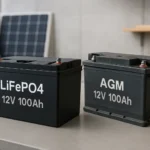
Winter has fewer sun hours. You also lose energy to battery charging and discharging. Battery systems are roughly 80% to 90% efficient.
That means you need to produce 10% to 20% more power to store and retrieve the same amount.
An off-grid system typically needs 1.5 to 2 times the panel capacity of a grid-tied system for the same home. That is a major cost difference. Battery storage alone can double the system price.
| Factor | Grid-Tied | Off-Grid |
|---|---|---|
| Panels needed for 30 kWh/day | ~20 panels (400W each) | ~30 to 40 panels |
| Battery cost | Not needed | $5,000 to $15,000 |
| Winter backup | Grid provides it | Extra panels + generator |
| One panel covers | ~5% of home | ~2.5% to 3.3% of home |
If you are going off-grid, do not use the simple ratio. Use a dedicated off-grid calculator that accounts for battery depth of discharge, inverter efficiency, and seasonal variation.
For a deeper understanding of how the whole system works, it helps to grasp the basic principles that make solar panels function in the first place.
Your Decision Guide: What to Do With This Number
Now that you know one panel covers roughly 5% to 7% of an average home, what do you do with that information? Here is a practical decision framework.
If you are planning a full home system: Start with your daily kWh from your bill. Divide by 1.5 (for a 400W panel in average sun). That gives you your panel count.
Add 15% buffer. Get at least three quotes from installers. Compare the numbers against your own calculation.
If you are adding panels to an existing system: Match the new panels to your existing ones. Mismatched wattages cause problems. Use the same brand and model if possible.
If you cannot match, use microinverters or optimizers.
If you are considering solar for the first time: Do not think in terms of houses per panel. Think in terms of offset percentage. A 5-panel system covering 25% of your bill saves you real money every month.
That is a solid starting point.
If you are evaluating a rental property or small cabin: A single panel with a small inverter and a battery can run lights, a phone charger, and a laptop. That setup costs under $1,000 and pays for itself in a few years if grid power is expensive or unavailable.
Here is the bottom line. One solar panel does not power a house. But it does power a meaningful slice of one.
Multiply that slice by the right number of panels, and you can cover your entire home. The math is simple. The variables are predictable.
Run the numbers for your situation and you will know exactly what you need.

Similar Posts