How Many Amps Does a 100W Solar Panel Produce?

If you've ever searched for how many amps does a 100 watt solar panel produce, you've probably seen the simple math: 100 divided by 12 equals 8.33 amps. That number pops up everywhere. But here's the thing: it's rarely the number you actually need.
Per UL standard testing for photovoltaic modules, a 100 watt panel's short-circuit current typically lands between 6 and 7.5 amps. That spec matters more than the nominal math for most real-world decisions. The difference between those two numbers can mean undersized wire, a blown fuse, or a charge controller that never fully charges your battery bank.
Let's walk through why.
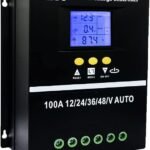
Image source: YouTube / Footprint Hero with Alex Beale (YouTube thumbnail (fair-use with source credit))
The Confusion: Why the Answer Isn't Just 8.33 Amps
The 8.33 amp figure comes from Ohm's law: power equals voltage times current. Divide 100 watts by 12 volts and you get 8.33 amps. Simple enough.
But solar panels don't output 12 volts when they're producing power.
A 100 watt panel labeled as a "12V panel" actually produces around 17 to 19 volts at its maximum power point. That higher voltage is necessary to push current through the system. If the panel only output 12 volts, you'd never charge a 12 volt battery, because the voltage would equal the battery voltage and no current would flow.
The real current at that operating point is usually between 5.5 and 6.2 amps. That's the number you care about for most practical decisions. But it is not the only number you need.
Our research shows that the most common mistake people make is grabbing the 8.33 amp figure and using it for wire sizing or fuse selection. That can be dangerous. Wire sized for 8.33 amps continuous load might be too small for the panel's short-circuit current, which can be higher.
And a fuse sized at 10 amps based on that number might blow unnecessarily during startup conditions.
So the answer depends on what you are actually trying to do. Are you sizing wire? Then you need the short-circuit current.
Are you choosing a charge controller? Then you need the maximum power current. Are you estimating daily energy yield?
Then you need real-world output, not the rated value. Each question pulls a different amp number from the spec sheet.
Quick Answer
A 100 watt solar panel produces roughly 5.5 to 6.2 amps under ideal conditions. That is the current at the maximum power point. The short-circuit current is higher, around 6 to 7.5 amps.
Use the short-circuit value for wire and fuse sizing.
Core Explanation: Voltage vs. Current on a 100W Solar Panel
Understanding the relationship between voltage and current on a solar panel is where most of the confusion lives. The panel does not behave like a battery. It is a current source, not a voltage source.
A battery pushes voltage and delivers as much current as the load demands. A solar panel pushes current and its voltage changes depending on the load and the light hitting the cells. That is why the panel's voltage is higher than 12 volts when it is working.
The voltage has room to drop as current flows into the battery or charge controller.
Think of it like water pressure in a pipe. The panel creates pressure, that is voltage. The flow rate is current.
If you put a smaller pipe on the system, the pressure stays high but the flow drops. If you increase the pipe size, flow increases until it hits the limit of the pump. In solar terms, the charge controller and battery act like the pipe, controlling how much current the panel can push.
Manufacturer specifications indicate three critical current values for every panel. Each one serves a different purpose.
The Three Numbers Matter: Vmp, Imp, and Isc
A 100 watt panel's spec sheet lists three numbers that matter for amps. Understanding each one prevents common mistakes.
Imp (Current at Maximum Power). This is the current the panel produces at its peak power point under standard test conditions. For a typical 100 watt panel, Imp falls between 5.5 and 6.2 amps.
This is the number most people should think of as "the amps" for normal operation.
Isc (Short-Circuit Current). This is the current the panel produces when you short the positive and negative leads together. It is higher than Imp, usually 6 to 7.5 amps for a 100 watt panel.
Isc matters for safety. You use it to size wire, select fuses, and choose the charge controller's maximum input rating.
Voc (Open-Circuit Voltage). Voltage, not current, but it affects current calculations indirectly. Voc tells you the maximum voltage the panel can produce when no current flows.
For a 12V panel, Voc is usually 20 to 23 volts. This number matters for series connections and charge controller voltage limits.
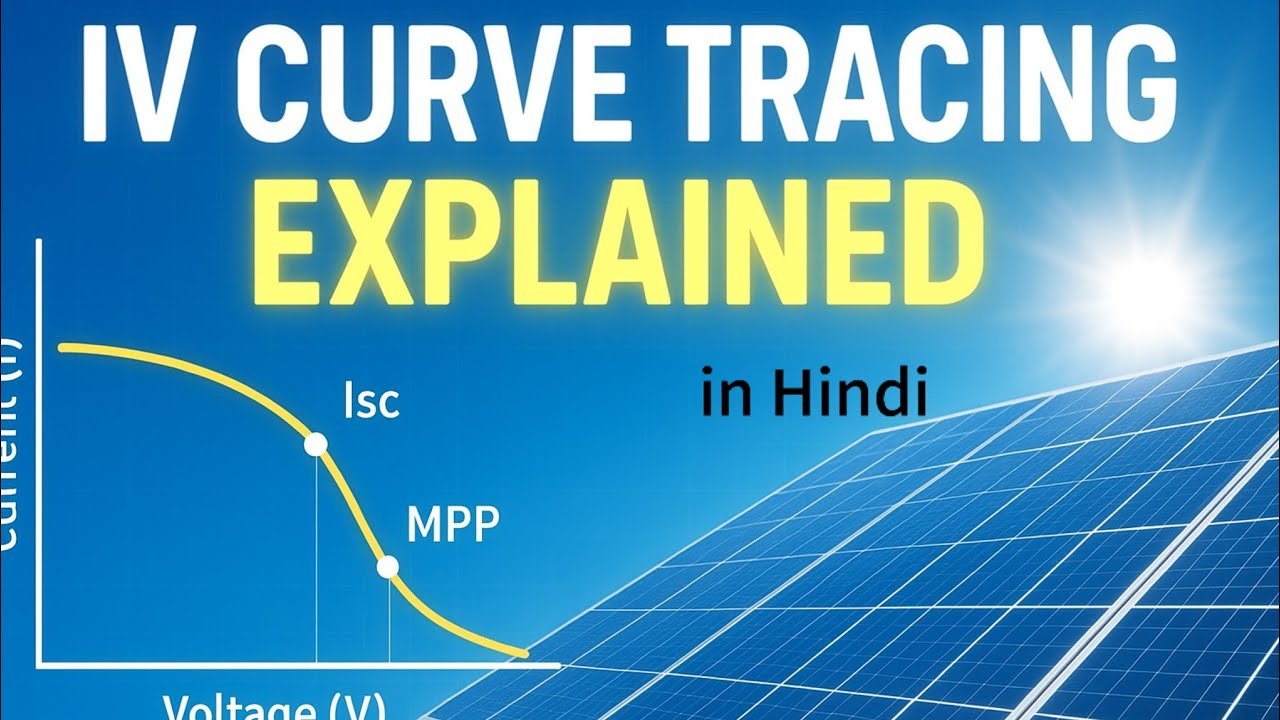
Image source: YouTube / Electrical IQ (YouTube thumbnail (fair-use with source credit))
The chart above shows the IV curve for a typical solar panel. The curve drops as voltage increases. The flat part on the left is where current stays relatively constant until voltage climbs past the knee.
That knee is the maximum power point, where Imp and Vmp intersect.
Why the Panel Voltage Is Higher Than 12V
This is the piece that trips up most beginners. If the panel is rated for 12 volt systems, why does it produce 18 or 19 volts?
The answer is voltage drop. Every component in the system has resistance. Wires, connectors, charge controller circuits, and the battery itself all create a small voltage drop as current flows.
The panel needs extra voltage headroom to overcome those drops and still deliver enough voltage to charge the battery.
A lead-acid battery needs around 14.4 volts to reach a full charge during the absorption stage. A lithium battery needs around 14.6 volts. If the panel only produced 12 volts, you could never get a battery to full charge.
The panel's higher operating voltage ensures that even with losses in the system, the battery receives enough voltage to charge completely.
This voltage difference also explains why the current number is lower than the simple 8.33 amp calculation. The power is fixed at 100 watts. When voltage is higher, current must be lower to maintain the same power.
So 100 watts divided by 18 volts equals 5.55 amps. That matches the typical Imp value.
The Decision Tree: Your Situation Determines the Actual Amps
The amp number you need depends entirely on your system configuration. There is no single answer. Here is how to find yours.
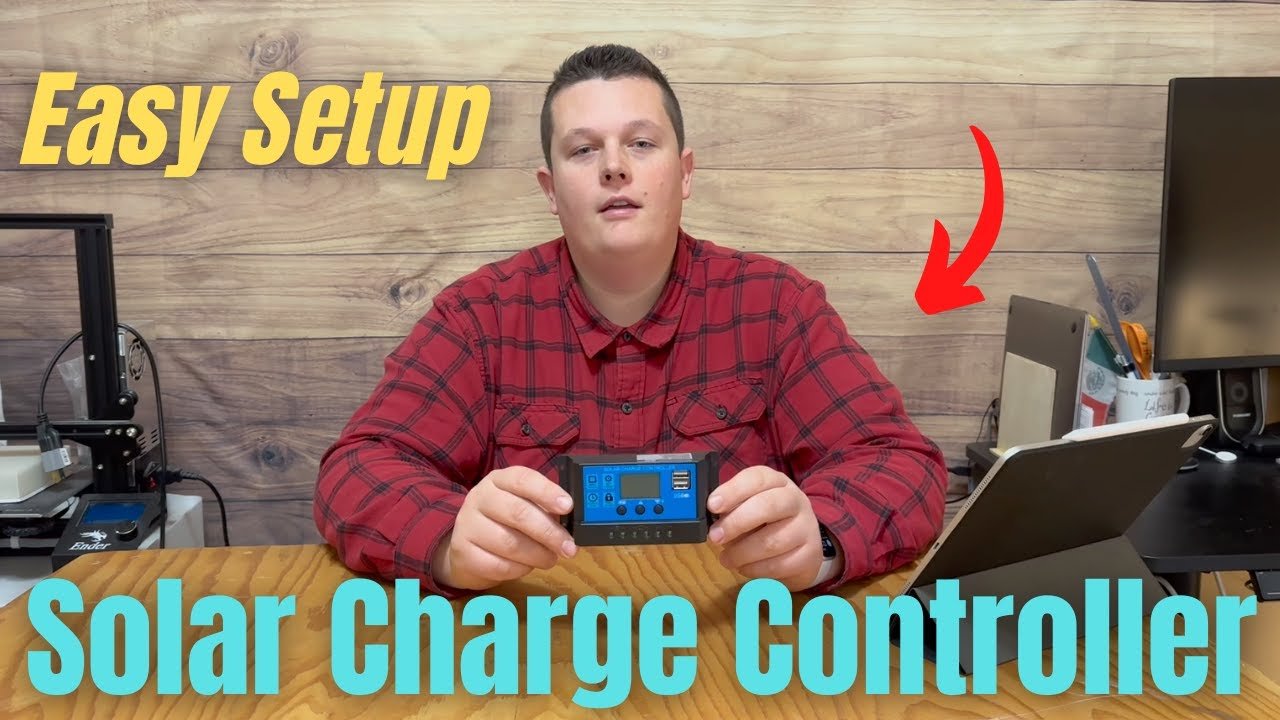
Image source: YouTube / Scott's Solar (YouTube thumbnail (fair-use with source credit))
Branch 1: Charging a 12V Battery with a PWM Controller
This is the most common setup for beginners. A 100 watt panel connects to a PWM charge controller, which connects to a 12 volt battery.
A PWM controller essentially connects the panel directly to the battery. The panel's voltage gets pulled down to match the battery voltage, around 12 to 14 volts depending on charge state. At those voltages, the panel delivers roughly 5.5 to 6 amps into the battery.
You lose some potential power because the panel operates below its maximum power point. But the setup is simple and cheap. For small systems, the loss is acceptable.
The amp number you need for this branch: Use Imp for daily output estimates. Use Isc for wire and fuse sizing.
Branch 2: Charging a 12V Battery with an MPPT Controller
An MPPT controller is smarter. It actively tracks the panel's maximum power point and converts the higher voltage to lower voltage while increasing current.
In this setup, the panel runs at 17 to 19 volts and delivers 5.5 to 6 amps on the panel side. The MPPT controller down-converts that to battery voltage, giving you around 7.5 to 8 amps into the battery. You gain roughly 20 to 30 percent more current compared to a PWM controller.
The amp number you need for this branch: The battery-side current is higher. Use Isc for wire sizing on the panel side. Use the MPPT controller's output rating for the battery side.
Branch 3: Wiring Into a 24V Battery System
When you use a 100 watt panel with a 24 volt battery bank, the current drops roughly in half. Power stays the same, but voltage doubles.
For a 24V system, the panel's Imp is still 5.5 to 6 amps on the panel side. But into the battery, you see only about 3 to 4 amps. This is why people normally use two 100 watt panels in series for a 24V system.
Two panels in series double the voltage and keep the current at around 5.5 to 6 amps.
The amp number you need for this branch: Very low on the battery side. Wire sizing can use smaller gauge cable, but still size based on Isc for the panel side.
Branch 4: Using the Panel for Direct DC Loads or a Grid-Tied Microinverter
If you skip the battery and connect the panel directly to a DC pump, fan, or other load, the amps vary based on the load's resistance. The panel will produce whatever current the load draws, up to the panel's Isc limit.
For a grid-tied microinverter, the panel's current output depends on the inverter's conversion efficiency and the grid voltage. This is a more advanced setup. The relevant spec is still Imp for normal operation and Isc for safety.
The amp number you need for this branch: Imp for normal output. Isc for wire and breaker sizing.
What the Spec Sheet Tells You (and What It Doesn't)
The spec sheet that comes with your 100 watt panel is your best friend. But only if you know where to look.

Image source: YouTube / Solar Edge Pros (YouTube thumbnail (fair-use with source credit))
Reading Vmp, Imp, Voc, and Isc on a Typical 100W Panel
Every quality panel has a sticker on the back or a data sheet online. It lists these values under Standard Test Conditions, which means 1000 watts per square meter of sunlight, 25 degrees Celsius cell temperature, and an air mass of 1.5.
Here is what you will see on a typical 100 watt monocrystalline panel:
| Label | Value | Meaning |
|---|---|---|
| Vmp | 18.0 V | Voltage at maximum power |
| Imp | 5.56 A | Current at maximum power |
| Voc | 22.5 V | Voltage with no load |
| Isc | 6.0 A | Current with shorted leads |
| Rated Power | 100 W | Vmp times Imp under standard conditions |
Note that Imp times Vmp equals 100.08, which rounds to the 100 watt rating. The Isc of 6 amps is higher than Imp. That 6 amp figure is what you use for sizing wire, fuses, and charge controller input ratings.
Different panels from different manufacturers will have slightly different numbers. A 100 watt panel with a higher Vmp, say 19 volts, will have a lower Imp, around 5.26 amps. That is normal.
The product of the two numbers always equals the rated power within a small tolerance.
Why Real-World Amps Are Lower Than the Label
Standard test conditions are laboratory conditions. They do not happen in the real world. Your panel will almost never see 1000 watts per square meter of sunlight at exactly 25 degrees Celsius.
Real-world factors that reduce amps include:
Heat. As the panel heats up, voltage drops. Current drops slightly too, but voltage takes the bigger hit.
On a hot summer day with the panel at 50 degrees Celsius, you might lose 15 to 20 percent of the rated power. That means 4.5 to 5 amps instead of 5.5.
Sun angle. The panel only produces full rated output when it faces the sun directly. Off-angle light reduces the effective irradiance.
Even a 30 degree tilt error can drop output by 10 to 15 percent.
Shading. Partial shade kills output disproportionately. Even a small shadow across one cell can drop the entire panel's output to near zero.
This happens because shaded cells become resistors instead of generators in a standard panel.
Dust and dirt. A layer of dust reduces light reaching the cells. In dry climates, studies show a 5 to 10 percent loss from dust alone.
Rain helps but does not fully clean the surface.
Time of day. The sun's intensity varies throughout the day. Peak output happens for only a few hours around solar noon.
Morning and evening produce much less.
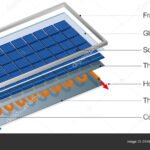
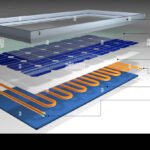
A realistic daily average for a 100 watt panel in good conditions is roughly 4 to 6 amp-hours per day, not the 50 or 60 amp-hours that simple math might suggest. That distinction matters when you are planning how much power a system can actually deliver. Understanding how the whole system works helps, so checking out the main components of a solar panel and how solar panels generate electricity gives useful background for these calculations.
Mistakes to Avoid When Figuring Out Amps
Getting the right amp number matters. Getting the wrong one can cost you time, money, or safety. Here are the three most common errors we see in our research.
Using Nominal Math (100W ÷ 12V = 8.33A) for Wire Sizing
This is the biggest mistake. That 8.33 amp figure does not match any actual spec on the panel's label. Wire sized for 8.33 amps continuous load might be undersized for the panel's short-circuit current.
And wire that is too small heats up, wastes power, and creates a fire risk in extreme cases.
Always use Isc for wire sizing. For a typical 100 watt panel, Isc is around 6 to 7.5 amps. That is the number to plug into the ampacity chart.
Ignoring Short-Circuit Current for Fuse Selection
The same rule applies to fuses. A 10 amp fuse might seem right based on the nominal math. But the panel's Isc could be 7 amps.
With a 1.25 safety margin, you actually need a 10 amp fuse minimum, not 8.33. Go too small and the fuse blows every time the panel sees bright sun.
Fuse size equals Isc times 1.25, rounded up to the next standard size. For a 6 amp Isc, that is 7.5 amps, so use a 10 amp fuse. For a 7.5 amp Isc, you need a 15 amp fuse.
Choosing a PWM Controller with a 24V Battery Bank
A PWM controller cannot boost current. If you connect a 100 watt panel to a 24 volt battery via a PWM controller, the panel's voltage gets pulled to the battery's voltage. That means you get roughly half the current compared to a 12 volt system.
You end up with maybe 3 to 4 amps into the battery instead of 5.5 to 6. An MPPT controller recovers most of that loss. But if you are stuck with PWM, use two panels in series to get the voltage up.
Wire Sizing & Fusing for a 100W Panel
Getting the wire and fuse right is straightforward once you know the correct amp number. Use Isc, not Imp, and not the nominal 8.33 amp figure.
Ampacity Calculations Based on Isc
For a 100 watt panel with an Isc of 6 to 7.5 amps, 10 AWG copper wire is the standard recommendation. It handles up to 30 amps in most conditions at typical solar cable lengths. That gives you a generous safety margin.
For runs under 10 feet, 12 AWG can work if the panel's Isc is 6 amps or less. But 10 AWG is cheap insurance. Do not go smaller than 12 AWG.
Fuse Size Rule: 1.25x Isc
The National Electrical Code recommends a fuse sized at 125 percent of the panel's Isc. That accounts for startup surges and temperature variations.
For a 6 amp Isc, 6 times 1.25 equals 7.5 amps. Use a 10 amp fuse, the next standard size up. For a 7.5 amp Isc, you need a 15 amp fuse.
Place the fuse as close to the panel as possible, typically in a combiner box or at the panel's junction box.
Voltage Drop Over Longer Cable Runs
If your panel is more than 20 feet from the charge controller, voltage drop becomes a factor. At 10 amps and 18 volts over 50 feet of 10 AWG wire, you lose roughly 3 to 4 percent of your power.
For longer runs, step up to 8 AWG. That cuts the voltage drop in half. Or consider bumping the system voltage to 24 volts by adding a second panel in series.
Higher voltage means lower current and less voltage drop.
PWM vs. MPPT: How the Controller Changes the Amp Output
The charge controller type directly affects how many amps you get into your battery. The choice can make a 20 to 30 percent difference in daily yield.
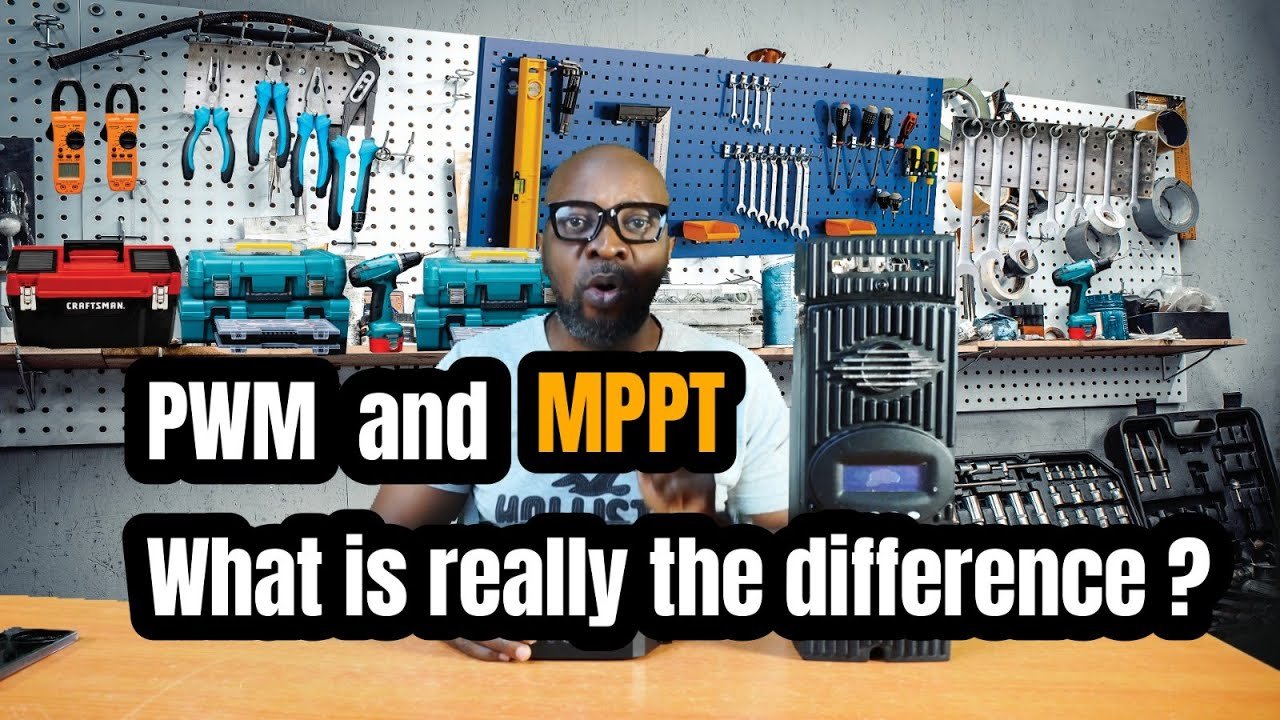
Image source: YouTube / Smilinsun Solar Energies (YouTube thumbnail (fair-use with source credit))
When a PWM Controller Makes Sense
A PWM controller is simpler and cheaper, typically 15 to 30 dollars for a 10 amp model. It works fine for small 12 volt systems where panel power is under 150 watts and wiring runs are short.
The downside is efficiency. The panel runs at battery voltage, not its maximum power point. You lose roughly 20 to 30 percent of the panel's potential power.
For a 100 watt panel, that means 4.5 to 5 amps into the battery instead of 5.5 to 6.
PWM is best for portable setups, camping kits, and small battery maintainers where the extra cost of MPPT is hard to justify.
When an MPPT Controller Pulls More Amps to the Battery
An MPPT controller costs more, typically 30 to 80 dollars for a 10 or 20 amp model. But it tracks the panel's maximum power point and converts the higher voltage to more current.
For a 100 watt panel into a 12 volt battery, an MPPT controller can deliver 7 to 8 amps under good conditions. That is nearly 30 percent more than a PWM controller. Over a year, that difference adds up to significant extra energy.
MPPT also handles higher input voltages gracefully. You can wire two 100 watt panels in series for a 24 volt system and still get good efficiency. PWM cannot do that without losing half your power.
Real Scenarios: Amps You'll Actually See
Theory is useful. Numbers in the real world are more helpful. Here are three scenarios based on typical setups we see in user feedback.
Scenario 1: RV Setup, 12V Battery, PWM, Midday Sun
A 100 watt panel on an RV roof, facing south, noon on a clear summer day. The charge controller is a basic PWM unit. The battery is at 12.5 volts, partially charged.
The panel produces roughly 5 amps into the battery. Over six hours of good sun, you get about 30 amp-hours. That is enough to run LED lights, charge phones, and maybe keep a small refrigerator running for a few hours.
Scenario 2: Off-Grid Cabin, 24V System, MPPT, Partial Shade
Two 100 watt panels wired in series for a 24 volt battery bank. Using an MPPT controller. Some tree shade covers one panel in the late afternoon.
The MPPT controller pulls about 7 amps from the panel side and delivers roughly 3.5 amps into the 24 volt battery. That is 21 amp-hours over six hours. The MPPT helps recover some of the shade loss, but not all.
Adding a bypass diode kit would help here.
Scenario 3: Portable Kit on a Camping Trip
A foldable 100 watt solar panel kit with a built-in PWM controller. Set up on a picnic table, not perfectly angled, with some haze.
Output is around 3.5 to 4 amps. Over a full day of intermittent sun, you get 15 to 20 amp-hours. Enough to top off a deep cycle battery for lights and a phone charger.
The Spec Sheet You Need: What to Look For Before You Buy
Not all 100 watt panels are the same. Some have higher Imp values, some have lower Isc values. The differences matter for your planning.
Look for panels with a clear, printed spec sheet that lists Vmp, Imp, Voc, and Isc. Avoid panels that only list wattage and voltage. That is a red flag.
A panel with a higher Imp means more current output. A panel with a higher Isc means you need larger wire and fuses. Both are fine, but you need to know which you are dealing with.
Also check the temperature coefficient. A panel with a lower coefficient loses less power in hot weather. That matters if you live somewhere summers run above 90 degrees Fahrenheit.
The same panel category has more detail in our buying guide, but the spec sheet is where every good decision starts.
Frequently Asked Questions
What amp number should I use for wire sizing?
Use the short-circuit current, labeled Isc on the spec sheet. For a 100 watt panel, that is typically 6 to 7.5 amps. That number with a 1.25 safety margin determines your minimum wire gauge and fuse size.
Does a PWM or MPPT controller change the amp output?
Yes. A PWM controller delivers roughly 5 to 6 amps into a 12V battery. An MPPT controller can deliver 7 to 8 amps.
The MPPT recovers the power lost when the panel operates below its maximum power point.
Why does my panel only produce 4 amps in real use?
Real-world conditions rarely match the test lab. Heat, off-angle sun, partial shade, dust, and time of day all reduce output. A 100 watt panel producing 4 amps mid-afternoon on a warm day is normal.
Can I connect two 100 watt panels for more amps?
Yes. Wire them in parallel to keep voltage the same and double the current. Wire them in series to double voltage and keep current the same.
Your charge controller must support the configuration you choose.
What happens if I use wire that is too small for the amps?
Small wire creates voltage drop and heat. In extreme cases, it can melt insulation or start a fire. Always size wire for the panel's Isc, not the nominal 8.33 amp figure.
Your Decision Guide: Matching Amps to Your Setup
Start with your battery voltage. A 12V system with an MPPT controller gets the most amps from a 100 watt panel. A PWM controller is fine for small portable kits where cost matters more than efficiency.
For a 24V system, wire two panels in series and use an MPPT controller. A 100 watt panel alone on a 24V battery with PWM will deliver only 3 to 4 amps.
Always size wire and fuses based on Isc. Use 10 AWG copper for runs under 20 feet. Use 8 AWG for longer runs.
Match the charge controller to your battery type and system voltage. The right amp number depends on your specific setup, but the right process is always the same.

Similar Posts