Solar Panel Temperature: How Hot Do They Get?
If you've ever touched a solar panel on a hot afternoon, you know they get scorching. But how hot does solar panels get exactly, and why does it matter? The short answer is that panels routinely hit 65°C to 75°C (149°F to 167°F) on a sunny day, and that heat has a direct impact on how much electricity they produce.
Per the Nominal Operating Cell Temperature (NOCT) standard, most panels are rated at around 42°C to 48°C under controlled test conditions. Real-world conditions push them much higher, especially in summer. This temperature rise is the single biggest factor in efficiency loss during peak sun hours.
Let's look at why heat is such a problem for solar panels.
Quick Answer
Solar panels typically reach 65°C to 75°C in direct sun. The actual temperature depends on air temperature, wind, and mounting. Higher temperatures reduce power output.
A 25°C increase can drop efficiency by 8-12%. Proper installation with airflow helps keep panels cooler.

Image source: Wikimedia Commons / NASA/JPL-Caltech/Univ. of Wisconsin
Heat Is Your Solar Panels' Worst Enemy – Here's Why
It sounds counterintuitive. Solar panels need sunlight to generate electricity, so you'd think more heat equals more power. But that's not how photovoltaic cells work.
The relationship is actually the opposite.
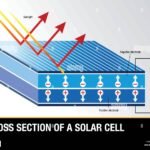
Here's the core physics: solar panels convert light, not heat, into electricity. When a panel gets hot, the atoms inside the silicon cells vibrate more aggressively. That vibration disrupts the flow of electrons, which lowers the voltage the panel can produce.
The current stays roughly the same, but the overall power output drops.
Think of it like a runner in hot weather. You can still move, but you're slower and less efficient. Solar panels are the same way.
The hotter they get, the less electricity they push out for every unit of sunlight they receive.
Manufacturer specifications confirm this across all major panel types. Monocrystalline, polycrystalline, and thin-film panels all lose efficiency as temperatures climb. The difference is in how much they lose, and that's something we'll cover in detail.
The broader point is simple: heat is the enemy of solar performance. If you're planning a solar installation, understanding heat management is just as important as choosing the right panel wattage. The photovoltaic process works best when panels stay cool, ideally around 25°C (77°F).
Every degree above that costs you power.
The Real Numbers – How Hot Solar Panels Actually Get
Let's get specific. You need real numbers to plan properly, and the data comes from two main standards: Standard Test Conditions (STC) and Nominal Operating Cell Temperature (NOCT).
STC is the lab benchmark. It tests panels at 25°C (77°F) with 1000 watts per square meter of sunlight. That's a perfect sunny day in mild weather.
But real life isn't a lab. NOCT is the more realistic standard. It tests at 800 watts per square meter, 20°C ambient air, and a light breeze of 1 meter per second.
Here's what that means for actual panel temperatures:
| Condition | Panel Surface Temperature | Power Output vs. Rated |
|---|---|---|
| STC (lab ideal) | 25°C (77°F) | 100% of rated |
| NOCT (realistic) | 42°C-48°C (108°F-118°F) | ~90-95% of rated |
| Hot summer day, low wind | 65°C-75°C (149°F-167°F) | ~80-88% of rated |
| Extreme heat, no airflow | 85°C-90°C (185°F-194°F) | ~70-80% of rated |
Those numbers aren't guesses. They come from thermal testing performed by the National Renewable Energy Laboratory (NREL) and from manufacturer datasheets. As of 2026, most residential panels have a maximum operating temperature rating of 85°C to 90°C, which is the absolute ceiling before damage starts.
A few real-world examples help put this in context. On a 35°C (95°F) day in Phoenix or Las Vegas, a dark-roof mounted panel with poor airflow can easily hit 80°C. In coastal areas with steady wind, the same panel might stay at 55°C.
The difference in power output between those two scenarios can be 15% or more.

Image source: Wikimedia Commons / Michael Lockwood (CC BY-SA)
What Determines Your Panel's Temperature – NOCT, Color, and Airflow
Now that you know the numbers, let's talk about what drives them. Panel temperature isn't random. It depends on four main factors that you can control or account for during installation.
Ambient air temperature. This is the starting point. If it's 40°C outside, your panel will be at least 40°C, plus the heating effect of sunlight. The panel absorbs solar radiation, which raises its temperature well above the air around it.
Solar irradiance. More sunlight means more energy hitting the panel. Some of that energy gets converted to electricity, but most of it becomes heat. On a clear day with 1000 watts per square meter, the panel heats up fast.
On a cloudy day, it stays much cooler.
Panel color and backsheet material. This matters more than most people realize. Panels with a black backsheet absorb more heat than panels with a white backsheet. The difference can be 5°C to 10°C under the same conditions.
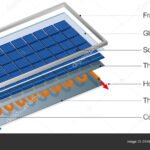
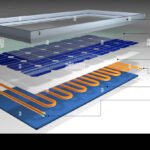
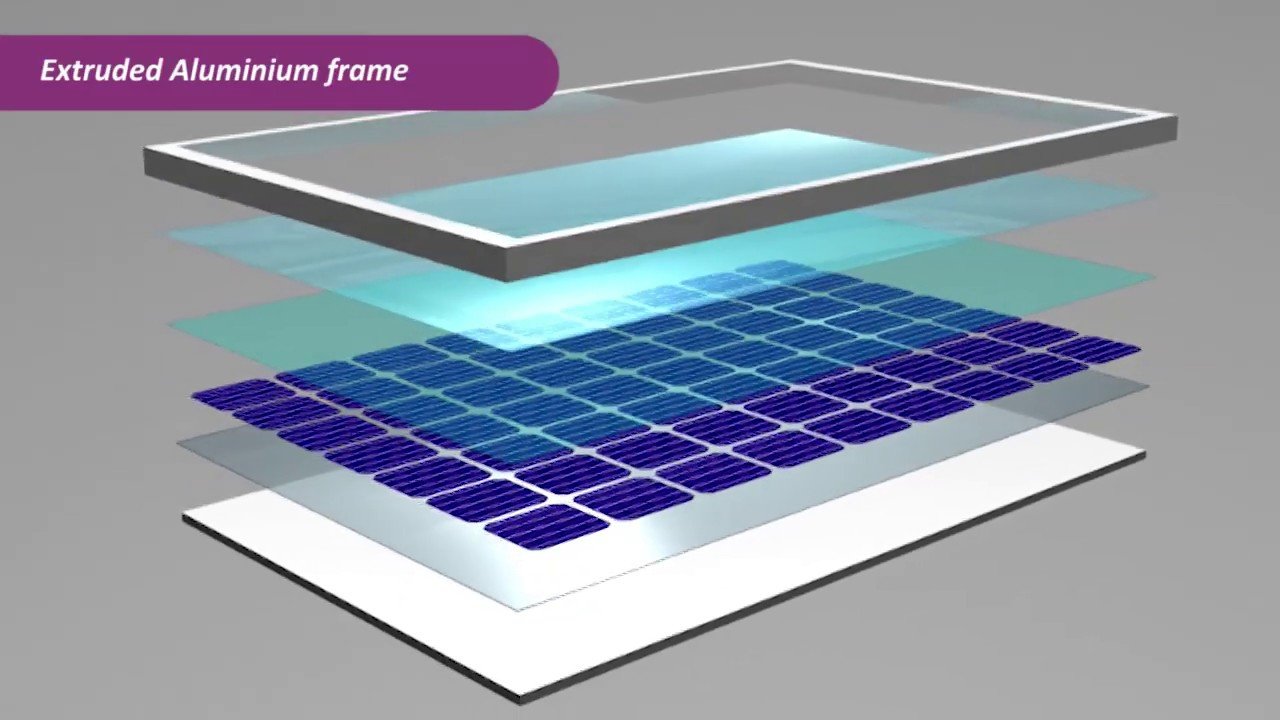
The internal structure of solar panels, including the backsheet material, directly affects thermal performance. White backsheets reflect more infrared radiation, keeping the cells cooler.
Airflow and mounting. This is the biggest factor you can control. A panel mounted flush against a dark roof with no air gap gets trapped heat from both the sun and the roof surface. A panel mounted on a rack with a 4 to 6 inch air gap allows air to circulate underneath, carrying heat away.
Wind speed matters a lot too. A 2 meter per second breeze can drop panel temperature by 10°C to 15°C compared to still air.
Image source: YouTube / Let's Grow Up (YouTube thumbnail (fair-use with source credit))
The NOCT rating printed on every panel datasheet gives you a baseline. But that rating assumes a specific set of conditions. If your installation is on a flat roof with low wind, expect temperatures above the NOCT number.
If you're on a pitched roof with good exposure, you'll be closer to the standard.
How Heat Kills Performance – The Temperature Coefficient Explained
This is the most important technical spec you'll find on a solar panel datasheet, and it's often overlooked. The temperature coefficient tells you exactly how much power the panel loses for every degree above 25°C.
It's expressed as a percentage per degree Celsius, usually written like this:, 0.35%/°C. That means for every 1°C above 25°C, the panel loses 0.35% of its rated power.
Let's do the math with a real example. A 400 watt panel with a temperature coefficient of, 0.35%/°C sits on a roof at 65°C. That's 40°C above the 25°C baseline.
Multiply 40 by 0.35, and you get a 14% power loss. The panel that was rated at 400 watts is now producing about 344 watts.
That's a significant drop. And it happens every single hot day, which is exactly when you want maximum output from your system.
Different panel technologies have different temperature coefficients:
| Panel Type | Typical Temperature Coefficient | Power Loss at 65°C (40°C above 25°C) |
|---|---|---|
| Monocrystalline | –0.35% to –0.40%/°C | 14% to 16% |
| Polycrystalline | –0.40% to –0.45%/°C | 16% to 18% |
| Thin-film (CdTe) | –0.20% to –0.25%/°C | 8% to 10% |
Thin-film panels have a better temperature coefficient, meaning they lose less power in heat. But they also have lower overall efficiency, so there's a trade-off. Different panel technologies suit different climates and budgets.
The temperature coefficient also affects voltage and current separately, but for most homeowners, the power coefficient is the number to watch. Choosing panels with a lower temperature coefficient is one of the smartest moves you can make if you live in a hot climate.
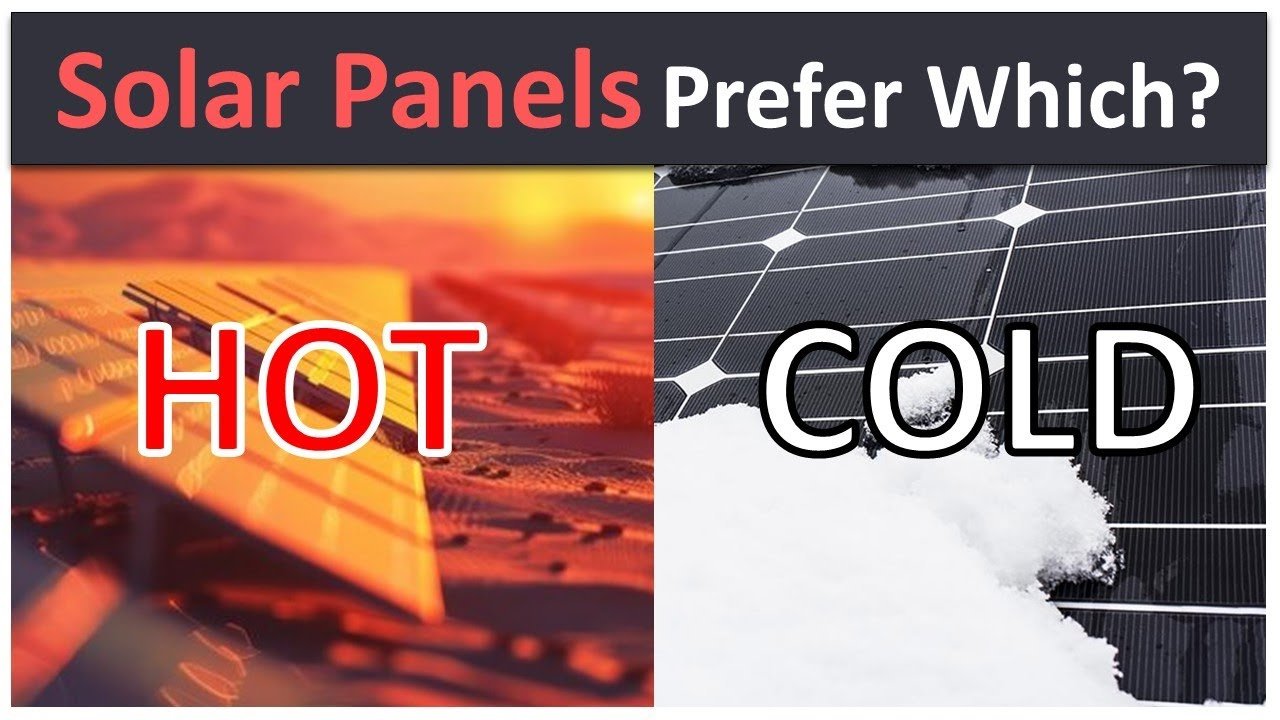
Image source: YouTube / Renewable_Tek (YouTube thumbnail (fair-use with source credit))
Smart Installation for Heat Management – Air Gap, Mounting, and Roof Type
You can't change the weather, but you can control how your panels are installed. Heat management starts with the mounting system, and the most important decision is the air gap.
Minimum air gap of 4 to 6 inches. This is the single most effective way to keep panels cool. The gap allows air to flow underneath the panels, carrying away heat that would otherwise build up. Panels mounted flush against the roof run significantly hotter, sometimes 10°C to 15°C more than panels with a proper gap.
Roof type matters. Dark asphalt shingles absorb heat and radiate it upward toward the panels. Metal roofs reflect more heat and stay cooler. If you have a dark roof, the air gap becomes even more critical.
The trade-offs involved in solar installation include roof material effects on panel temperature.
Mounting hardware. Choose racking systems that lift the panels off the roof surface. Standoffs and flashing create a physical separation that prevents heat transfer from the roof to the panel frame. Ground-mounted systems have the best airflow of all, since they're completely open on all sides.
Orientation and tilt. Panels tilted at a steeper angle tend to stay cooler because they shed heat more effectively and have better airflow across the back. Flat-mounted panels on low-slope roofs are more prone to heat buildup.
Vegetation and shading. Keep trees and shrubs trimmed so they don't cast shadows during the hottest parts of the day. Partial shading creates hot spots that can damage cells and reduce the entire string's output, especially on hot days.

Image source: YouTube / Joshua Seal (YouTube thumbnail (fair-use with source credit))
If you're planning a new installation, talk to your installer about these factors. A good installer will account for your local climate, roof type, and panel choice. The best installations are designed with heat management in mind from day one, not as an afterthought.
The Hotter Risks – Fire, Wiring Damage, and Accelerated Degradation
Heat doesn't just lower your energy output. It can physically damage your system over time. The risks fall into three categories, and each one deserves your attention.
Fire risk. This is the most serious concern. Hot spots can develop when a cell is shaded or damaged while the rest of the panel is in full sun. That cell starts acting like a resistor instead of a generator, and it heats up rapidly.
Under extreme conditions, the temperature can exceed 150°C at the hot spot. That's enough to melt the backsheet, damage the glass, and in rare cases, start a fire. Bypass diodes are designed to prevent this, but they can fail.
Regular inspection catches these issues early.
Wiring and connector degradation. The cables and connectors that link your panels are rated for specific temperature ranges. When panels push past 85°C, the insulation on the wiring can degrade faster than expected. Over time, cracked insulation leads to ground faults or arc faults.
The National Electrical Code (NEC) requires temperature derating for wires and breakers in solar installations, but that only works if the system was designed correctly from the start.
Accelerated degradation. Solar panels are tested for thermal cycling, meaning they're designed to handle thousands of hot-to-cold transitions. But sustained high heat speeds up the chemical breakdown of the encapsulant material that protects the cells. The Arrhenius equation, which describes how temperature affects chemical reaction rates, tells us that every 10°C increase roughly doubles the degradation rate.
A panel that runs at 75°C instead of 55°C could lose its efficiency much faster over 25 years. The difference between a well-cooled panel and a poorly cooled one can be significant over the life of the system.
Thermal expansion stress. The materials inside a panel expand and contract at different rates. The aluminum frame, glass front, silicon cells, and backsheet all respond differently to temperature changes. Over thousands of cycles, this stress can cause microcracks in the cells or delamination of the layers.
A panel that runs consistently hot experiences more expansion and more stress.
What You Can Do After Installation – Maintenance and Monitoring Tips
You can't redesign your roof after the panels are up, but you can take steps to manage heat after installation. These are practical, low-cost actions that make a real difference.
Keep panels clean. Dust, pollen, bird droppings, and grime create a film on the glass that traps heat. A dirty panel absorbs more infrared radiation and runs hotter than a clean one. Cleaning your panels a few times a year, especially before summer, helps them reject heat more effectively.
Use deionized water and a soft brush or squeegee. Never use abrasive materials or high-pressure sprayers that can damage the seals.
Monitor string temperatures. If your inverter has a monitoring app, check the temperature readings for each string. A string that's running significantly hotter than the others may have a shading issue, a failed bypass diode, or a wiring problem. Catching this early prevents a small issue from becoming a costly repair.
Trim vegetation. Trees and shrubs that cast shadows during the hottest part of the day create partial shading conditions that lead to hot spots. Keep vegetation trimmed so that your panels are in full sun from late morning through early afternoon. If a tree has grown since your installation, consider removing it or accepting the reduced output.
Check airflow paths. Over time, debris can accumulate under your panels, especially on flat roofs. Leaves, dust, and nesting material can block the airflow gap that keeps panels cool. Periodically inspect under the array and clear any obstructions.
The best solar panel maintenance practices include checking for airflow blockages.
Consider panel upgrades. If your system is older and you're planning a replacement, look for panels with a lower temperature coefficient. The newer high-efficiency panels often have better thermal performance. This is one of the factors covered in a comprehensive solar panel buying guide, and it's worth prioritizing if you live in a hot climate.
When to Call a Pro – Signs of Heat Damage or Danger
Some signs of heat damage are obvious. Others are subtle and easy to miss. Here's what to watch for and when to bring in a professional.
Visible damage to the panel surface. If you see bubbles, discoloration, or yellowing on the backsheet, that's a sign of thermal degradation. The encapsulant is breaking down, and the panel's protection is compromised. If the glass shows cracks or the frame is warped, call a professional immediately.
A damaged panel is a safety hazard.
Hot spots visible on thermal images. If you have access to an infrared camera, scan your panels on a hot sunny day. A cell that's significantly hotter than its neighbors is a hot spot. A single hot spot can reduce the output of the entire string.
Multiple hot spots indicate a systemic problem. This is a job for a qualified solar technician who can test the bypass diodes and measure the string currents.
Arc faults or ground faults. Your inverter will display fault codes if it detects an arc fault or ground fault. These are serious electrical issues that can cause fires. Do not attempt to diagnose or repair these yourself.
Turn off the system and call a licensed electrician with solar experience.
Sudden drop in output. If your system's production drops sharply during the summer months, heat could be the cause. But a sudden drop that doesn't match the weather pattern is a red flag. It could mean a failed bypass diode, a damaged cell, or a wiring issue.
Check your monitoring data and compare it to previous summers. If the drop is sustained, schedule a professional inspection.
Warranty concerns. Most panel warranties cover thermal degradation within limits, but they require proper installation and maintenance. If you suspect heat damage, check your warranty terms before doing anything. A certified installer can help you file a claim if the damage is covered.
Frequently Asked Questions
How hot can solar panels get before they stop working?
Solar panels don't stop working at a specific temperature, but they do lose efficiency as they heat up. Most panels have a maximum operating temperature of 85°C to 90°C. Beyond that, the risk of permanent damage increases.
The power output continues to drop, but the panel will still generate electricity until it physically fails.
Can solar panels get too hot and catch fire?
Yes, but it's rare. Hot spots caused by shading, damaged cells, or failed bypass diodes can reach temperatures high enough to melt the panel materials. Proper installation, bypass diodes, and regular maintenance reduce this risk significantly.
Most solar fires are caused by faulty wiring or connectors, not the panels themselves.
Does cleaning solar panels help them stay cooler?
Yes. A clean panel reflects more infrared radiation and runs cooler than a dirty one. Dust, pollen, and grime create an insulating layer that traps heat.
Regular cleaning, especially before the hottest months, helps maintain both efficiency and temperature.
What is the best temperature for solar panel efficiency?
Solar panels are most efficient at around 25°C (77°F). That's the Standard Test Condition benchmark. Every degree above that reduces output.
The ideal operating temperature is between 15°C and 35°C, which is why panels often perform better in spring and fall than in the middle of summer.
Should I be worried about heat damage to my roof?
It depends on the roof type and installation. Dark asphalt shingles can absorb heat from the panels and radiate it back, raising the roof temperature. A proper air gap of 4 to 6 inches minimizes this effect.
Metal roofs reflect more heat and are less affected. The structural integrity of the roof itself is rarely compromised, but the shingles may age faster under a hot array.
The Bottom Line – What Every Solar Owner Should Know
Heat is the silent performance killer in every solar installation. The numbers are clear: panels routinely hit 65°C to 75°C on hot days, and that heat costs you 10% to 20% of your rated power output. The temperature coefficient on your panel's datasheet tells you exactly how much you're losing.
The good news is that most of the factors that drive panel temperature are within your control. An air gap under the panels, a clean surface, and proper installation all make a measurable difference. If you're designing a new system, prioritize heat management from the start.
If you already have panels, monitor their performance and address any issues early.
The basic structure of solar panels is designed to handle heat, but they're not invincible. The different panel technologies available today each handle heat differently, and understanding the trade-offs helps you choose the right system for your climate. The overall advantages of solar far outweigh the heat-related drawbacks, but ignoring the heat factor means leaving money on the table.
A well-designed system with proper airflow, good components, and regular maintenance will perform better, last longer, and deliver more value over its lifetime. Heat is your panels' enemy. But with the right knowledge, it's a manageable one.

Similar Posts