How China Is Becoming a Renewable Energy Powerhouse
You see the headlines about China and renewable energy, and they can sound almost too big to believe. How China is becoming the renewable energy powerhouse isn't just a story about putting up solar panels faster than anyone else, though they do that too. It is a story about a deliberate, state-driven strategy that rewrites the rules of how a modern economy powers itself.
The real picture is more complex than the headlines suggest. As of 2026, China has installed over 1,200 gigawatts of renewable capacity, which is more than the entire U.S. electricity grid can generate from all sources combined. To understand how they got there, you have to look past the shiny numbers and into the specific policies, infrastructure bets, and trade-offs that make this machine run.
Quick Answer
China dominates renewable energy through massive state-backed manufacturing scale. It controls 80 percent of global solar panel production. Government banks fund gigawatt-scale desert solar bases.
State Grid builds ultra-high-voltage lines to move that power across the country. The model mixes cheap manufacturing with aggressive infrastructure, all planned through five-year targets.
The Full Picture — What Most Coverage Gets Wrong About China's Renewable Rise
Most of what you read about China's renewable boom falls into two traps. The first trap is framing it as a purely environmental story. The second is treating it as a simple competition of who can install the most solar panels.
China's motivation is colder and more strategic than that.
The core driver is energy security. China imports more oil and natural gas than any other country. For a government that views energy dependence as a vulnerability, renewables offer a way to generate power domestically with resources they already control.
Coal is domestic but dirty. Renewables are domestic and clean, and they build an export industry at the same time.
This is not a side project. Renewable energy manufacturing is a pillar of China's industrial policy. The 14th Five-Year Plan, which runs through 2025, explicitly targets wind, solar, and energy storage as strategic sectors.
Provincial governments compete for factory investments. State-owned banks offer loans at rates private companies in other countries can only dream of.
What gets lost in the coverage is that China is not replacing coal with renewables. It is adding renewables on top of coal. Coal-fired power plants still provide the baseload when the sun is down and the wind is calm.
The country built more coal capacity in 2023 than most countries will build over a decade. The renewable story is real, but it sits alongside a parallel fossil fuel story that makes the whole picture messier than a clean green narrative.
Our research shows that the most useful way to understand this is to look at the system itself. The manufacturing. The grid.
The financing. The trade-offs. Each piece tells you something different about why China leads, and where the limits are.
How China's Strategy Actually Works (The "Base + Grid" Model)
China's renewable approach comes down to a simple model: build enormous generation bases in empty land, then connect them to cities with the world's longest power lines. Industry insiders call it the base plus grid model, and it is the reason China can add 200 gigawatts of solar in a single year.
The bases are concentrated in western China, where land is cheap and sunlight is abundant. The Gobi Desert alone hosts multiple gigawatt-scale solar and wind complexes. These are not small farms.
They are industrial zones covering hundreds of square kilometers, with row after row of panels stretching to the horizon. A single base can generate more electricity than a nuclear power plant.
But building the generation is only half the problem. The cities that need the power are on the eastern coast, thousands of kilometers away. That is where ultra-high voltage transmission lines come in.
State Grid Corporation of China has built over 40,000 kilometers of UHV lines, running at 800 kilovolts for DC and 1,000 kilovolts for AC. These lines lose far less power over distance than conventional transmission. They turn the country into a single, connected power market.
The base plus grid model solves a problem that has stalled renewable projects in other countries. In Europe and the United States, the best solar and wind locations are often far from population centers, and building new transmission lines takes years of permitting and legal battles. China's political system cuts through that.
Land acquisition is faster. Environmental reviews are shorter. Provincial governments are evaluated on whether they meet central targets, not whether they protected local interests.
There is a catch, which we will get to shortly, but the model itself is elegant in its brutality. You pick the best land. You build the generation.
You connect it with UHV lines. You repeat. No local vetoes.
No decade-long permitting delays.
The distributed solar story adds another layer. China also leads in rooftop solar, pushed by a national program that requires new buildings to include solar-ready designs. Factories, warehouses, and apartment blocks across eastern China now generate power from their roofs.
This distributed capacity helps balance the grid and reduces the load on those long UHV lines during peak hours.
The Real Numbers — Solar, Wind, and Storage in 2024
The numbers are worth pausing over because they put the scale into perspective. In 2023, China added approximately 216 gigawatts of solar capacity. That is more than the total installed solar capacity of the United States at that point.
In one year. Wind added another 75 gigawatts.
To understand what 216 gigawatts means, compare it to the largest solar farm in the world before China started scaling. The Bhadla Solar Park in India, one of the biggest outside China, has a capacity of about 2.2 gigawatts. China added the equivalent of nearly 100 Bhadla-sized parks in a single year.
Wind capacity tells a similar story. China holds seven of the ten largest onshore wind farms globally. Offshore wind is growing fast too, with major projects off the coasts of Jiangsu, Fujian, and Guangdong.
Turbine sizes are increasing rapidly, with rotor diameters reaching 230 meters on newer offshore installations.
Solar manufacturing is where China's dominance becomes almost absolute. The country produces over 80 percent of the world's polysilicon, the raw material for solar cells. It makes roughly 95 percent of solar wafers and more than 75 percent of finished modules.
This concentration means China effectively sets the global price for solar panels.
| Metric | China (2023) | Rest of World (2023) |
|---|---|---|
| Solar additions | 216 GW | ~170 GW |
| Wind additions | 75 GW | ~45 GW |
| Total renewable capacity | 1,200+ GW | ~2,000 GW |
| Share of polysilicon production | ~80% | ~20% |
| Battery storage deployed | ~30 GW | ~25 GW |
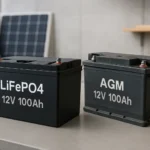
Battery storage is the fastest-growing part of the story. China deployed roughly 30 gigawatts of grid-scale battery storage in 2023, much of it co-located with solar and wind farms. The economics work because Chinese battery manufacturers, led by CATL and BYD, have driven costs down aggressively.
A four-hour battery system in China now costs less per kilowatt-hour than a new natural gas peaker plant in most regions.
One metric that does not get enough attention is capacity factor. Solar panels in western China generate at around 15 to 20 percent of their rated capacity on average, because the sun does not shine at night and clouds block some daytime output. Wind turbines run at 20 to 30 percent.
That means 200 gigawatts of solar nameplate capacity produces real electricity equivalent to about 30 to 40 gigawatts of a coal plant running around the clock. The difference matters when you think about grid reliability.
Where the Pain Points Are — Grid Limits, Overcapacity, and Coal's Shadow
The renewable story has real friction points, and pretending otherwise does nobody any favors. The first and most persistent problem is grid congestion. The western generation bases produce more power than local demand can absorb.
The UHV lines help, but they cannot carry everything. The result is curtailment, where wind turbines and solar farms are deliberately shut down because there is nowhere for the power to go.
Curtailment rates peaked around 2016 at 15 to 20 percent for wind in some provinces. They have fallen to roughly 2 to 3 percent nationally as of 2023, thanks to better transmission and more flexible coal plant operation. But curtailment spikes remain during spring and autumn, when electricity demand is lower and renewable output is high.
Provincial grid operators face a constant balancing act.
Overcapacity in solar manufacturing is another headache. China can produce far more solar panels than the entire world can buy. That drives prices down, which is great for buyers, but it has triggered trade disputes.
The European Union reintroduced anti-dumping tariffs on Chinese solar imports in 2024. The United States has restrictions tied to the Uyghur Forced Labor Prevention Act, targeting polysilicon produced in Xinjiang. These trade barriers create uncertainty for manufacturers, though they have not slowed China's domestic deployment.
The coal shadow is the hardest part to reconcile with the renewable story. China built more than 70 gigawatts of new coal power capacity in 2023, the most of any country. The conventional argument is that coal provides reliability while renewables provide clean energy.
That is true in the short term. But if China is simultaneously building the world's largest renewable fleet and the world's largest coal fleet, it is not decarbonizing in any simple sense. It is expanding its total power system.
There is a practical reason for this. China's electricity demand is still growing by 5 to 7 percent annually. Industrial output, data centers, and electric vehicle charging all need power.
The grid cannot handle the full renewable load yet because solar and wind are intermittent. Coal plants run as backup. Some have been retrofitted to operate more flexibly, ramping up and down faster than traditional coal plants.
This "flexibility retrofit" program is part of the national grid modernization plan.
The question nobody has answered cleanly is how China phases out these coal plants. The 2060 carbon neutrality pledge is real, but it is far enough away that current policies do not require hard trade-offs. As long as new coal plants keep getting approved, the renewable expansion sits alongside continued fossil fuel use rather than replacing it.
Institutional Advantages — Why No Other Country Can Replicate This
The question that comes up constantly is whether any other country can do what China has done. The honest answer is probably not, at least not in the same way, because the institutional advantages are so specific to China's system.
The most obvious advantage is central planning. The National Energy Administration sets national targets. Provincial governments are evaluated on meeting them.
Permitting for a massive solar base takes months, not years. Land acquisition uses eminent domain powers that would be politically impossible in most democracies. The UHV transmission lines, which cross multiple provinces, do not get bogged down in jurisdictional disputes because the central government can override local objections.
Then there is finance. The big Chinese state-owned banks, including China Development Bank and Industrial and Commercial Bank of China, offer project loans at interest rates well below what commercial lenders would charge. A 2 to 3 percent loan for a 30-year solar project changes the economics entirely.
Western solar projects typically face 5 to 8 percent financing costs. Over the life of the project, that difference can add up to billions of dollars.
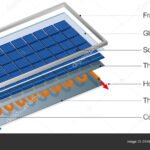
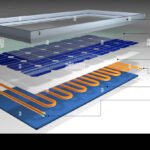
The key components that make a solar panel work, from the silicon cells to the encapsulant materials, are also concentrated in China. This vertical integration means a Chinese manufacturer can build a solar module using components from factories located within the same industrial park. No shipping delays.
No currency risk. No tariff exposure for intermediate goods. Every stage of the supply chain is optimized for cost.
Labor costs are lower, but that is not the main driver anymore. Automation has reduced the labor share of solar panel manufacturing to less than 5 percent of total cost. The real advantage is ecosystem density.
When thousands of engineers, chemists, and production line workers live in the same city and work for competing companies, innovation happens faster. GCL, Tongwei, Longi, and JA Solar are all located within a few hundred kilometers of each other. They share suppliers.
They poach talent. They drive each other to improve efficiency by a fraction of a percent every quarter.
No other country has this combination: a government that can override local opposition, banks that lend at below-market rates for strategic industries, a supply chain that covers every component, and a domestic market large enough to absorb production during global downturns. The European Green Deal and the U.S. Inflation Reduction Act are trying to build similar ecosystems, but they started years behind and lack the centralized decision-making that makes China's system work.

Similar Posts